 Scan on WeChat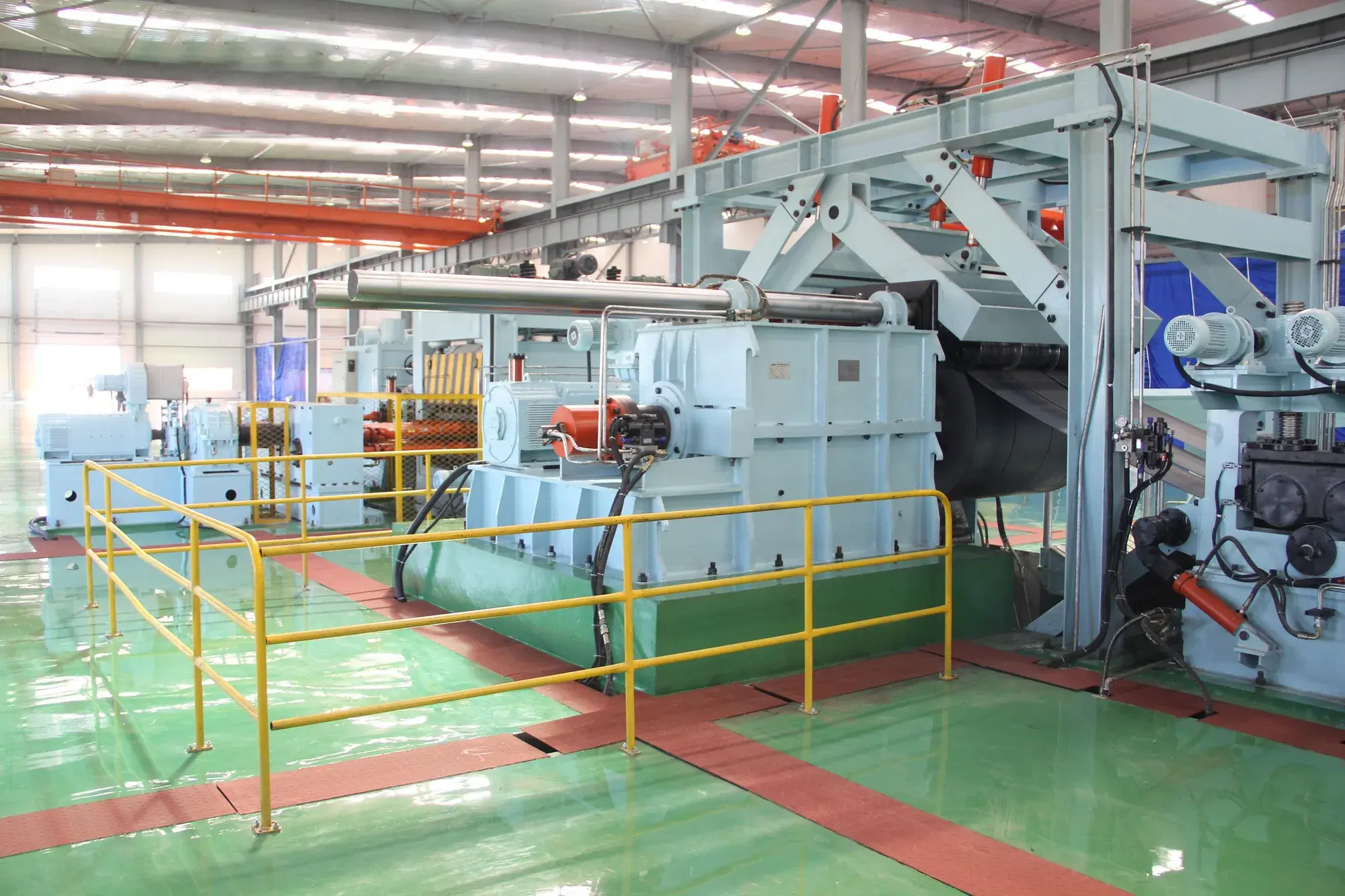
Tube Mill for Sale
Start Here
Dealer & Agent Programmes
For System Integrators
Wholesale & Trade Supply
Price, Scope & Factory
Quick Contact
Hebei TengtianYuanle@tentubemill.com
+86-311-83025332
WhatsApp +852 5425 3155
Tengtian builds and supplies new tube mill lines only. If you are comparing a second-hand mill with a new one, the points below show what a new Tengtian line includes and what to check on any machine.
How a New Line Is Delivered and Signed Off
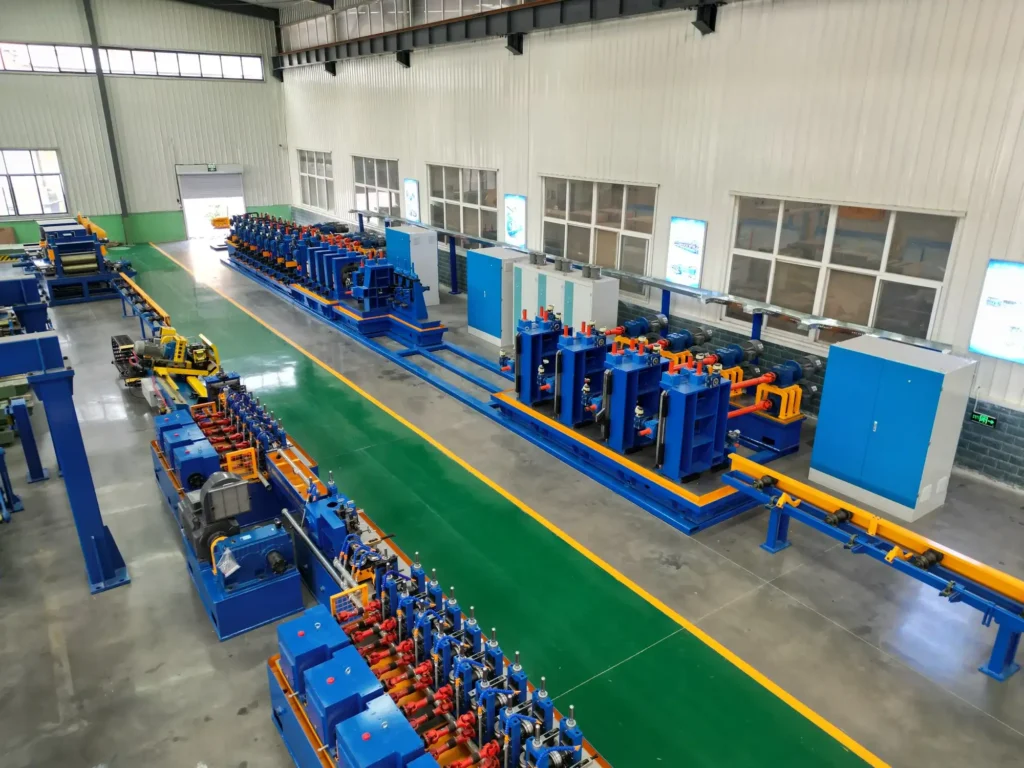
- Delivery: new lines from our own production base — installation and commissioning included.
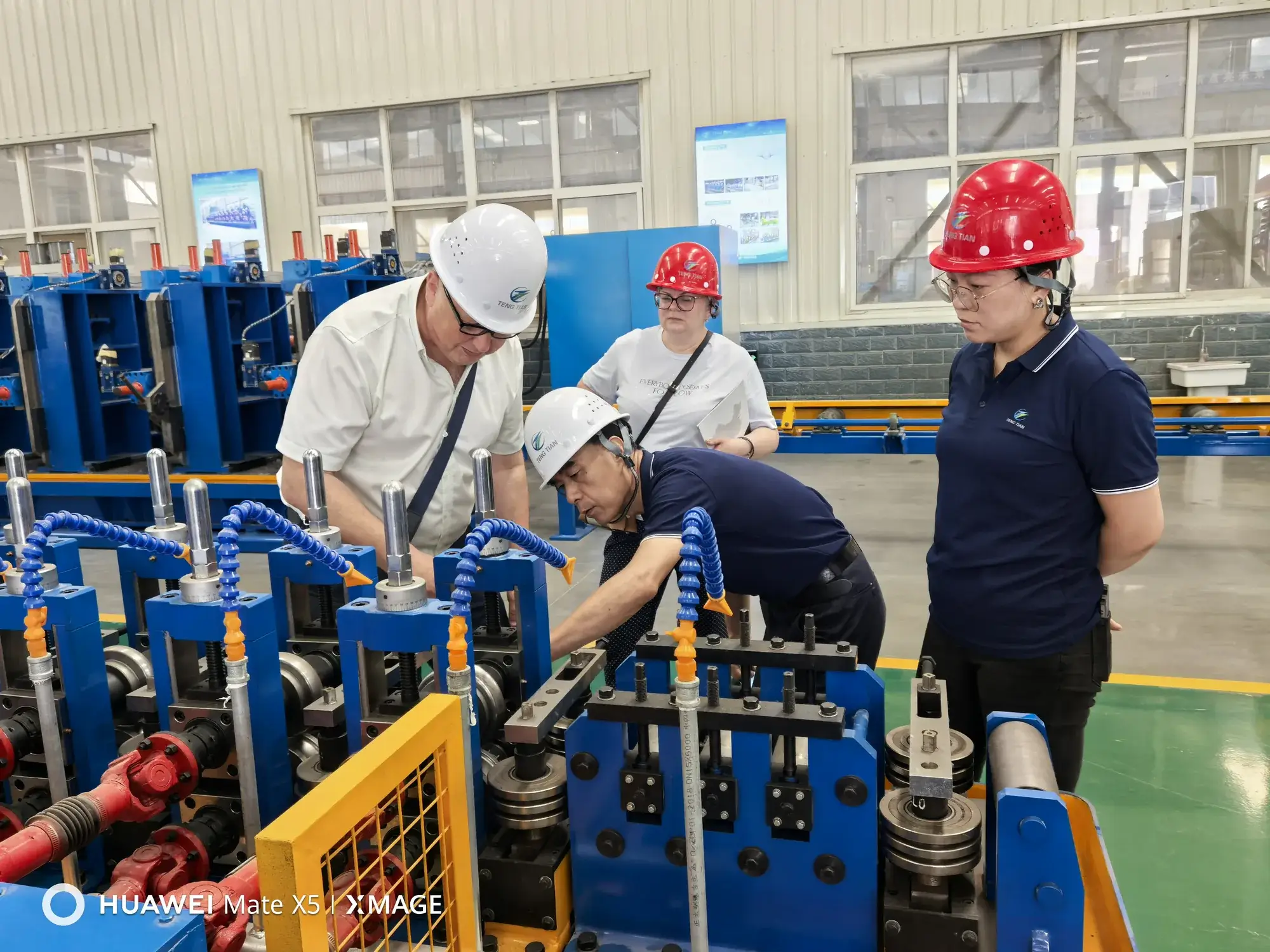
- Support: one point of contact, round-the-clock response and engineers on site — direct spare-parts supply.
- Acceptance: a new line is signed off on two sizes, four hours each, running continuously and smoothly.
- Wear parts: rolls, saw blades, induction coils and impeders, with rolls machined in-house.
- Process control: the variables that decide whether any mill holds weld quality and dimension.
Programme Scope and Who It Is For
What we offer is new-line supply: tiered configuration, 50 to 90 day delivery, installation and commissioning included, and continuous roll and spare supply from in-house CNC machining. The programme is aimed at intermediaries: distributors reselling stock, regional agents holding a territory, and integrators assembling a plant for an end customer. Their concerns are resale margin and turnover, punctual delivery, and whether after-sales will back them when their own customer calls.
These concerns weigh more heavily on any machine that comes without full warranty and support.
Configuration Tiers and What Each Tier Includes
Scope classification applies to new supply: turnkey line or single unit, with pricing tiered by configuration and the difference reflecting scope rather than quality. Within a tier the variables are automation level, presence of an in-line inspection train, and forming route.
Commercial Terms: Lead Time, Payment and Incoterms
For new supply the terms are: 50 to 90 day delivery from our own base; thirty per cent deposit against seventy per cent before shipment with third-party escrow and staged payment available; multiple trade terms supported; export shipment knocked down in containers with precision parts crated and a spare-parts pack included.
Territory, Support and Spare-Parts Supply
Who can supply them. Rolls are machined in-house on our own CNC equipment — both a manufacturing capability and as the answer to whether spares keep up after delivery. Continuous supply of spares and rolls is a repeat-purchase driver, and its failure at a previous supplier is a switching trigger.
Territory and inventory terms. Available on request.
What wears and is replaced. Forming and sizing rolls are wear-replacement spares, not consumables; saw blades and cutting tools are consumed by cutting volume; induction coils and impeders are fast-wearing items replaced by welding hours; cooling water or emulsion and hydraulic oil are process media.
What Decides Weld Quality and Dimension
A small set of variables decides whether any high-frequency welded tube mill holds weld quality and dimension. Each is a controlled variable with a known failure mode, and they apply to a twenty-year-old line exactly as they do to a new one.
Impeder and induction coil condition concentrate the welding current; when worn, welding energy disperses, seam quality fluctuates and consumption rises. Control and servo stability keep line speed and cut length repeatable, and instability shows up as speed fluctuation, cut-length error and downtime. Post-weld cooling stabilises the seam structure and has to be matched to weld speed.
Roll material and heat treatment govern shape stability; under-specified rolls show up as early wear, diameter drift and crooked corner lines — which on an older machine is the wear you can actually see.
Weld fusion is governed by high-frequency power, frequency and welding speed, with lack of fusion, cold welds and burn-through as the failures. Squeeze and seam alignment govern seam offset, mismatch and flash. Sizing and straightening set final outside diameter, straightness and ovality.
Machine Factors and Operating Factors
On the equipment side: welder power matching, seam alignment and squeeze for weld fusion; sizing accuracy and straightening capability for dimensional accuracy; process and automation design supporting material yield above 93%; quick tooling change and servo positioning limiting drift after a size change.
On the buyer’s side: incoming strip grade, thickness tolerance and flatness; operation and scheduling; the changeover procedure itself. The general position across all lines is that levelling and incoming inspection capability is provided, but strip quality remains the buyer’s responsibility.
That split matters whenever a defect appears: the same defect can be a machine fault or an operating fault, and without an operating record you cannot tell which.
The responsibility split applies to new supply and is worth reading before buying any machine, because it defines which defects are the equipment’s fault at all.
Two Benchmarks That Apply to Any Machine
Whichever machine or seller you are considering, two benchmarks apply: the acceptance test our new lines are signed off against, and the list of wear items to inspect. On the lines we build, rolls are machined in-house.
Delivery and Handling
Heavy large-diameter units ship bare, which lowers packing cost but requires professional lifting and rust protection on arrival.
Because main units ship knocked down, on-site re-assembly and commissioning are a required step rather than an optional service, and both are included in our supply.
For export shipment, main units are broken down for containers, bare frames braced and fixed with lifting points provided, and precision and fast-wearing parts — electrical cabinets, induction coils and impeders, forming rolls, cutting tools — crated with moisture protection.
Frequently Asked Questions
What does the dealer/partner programme include?
For new lines: tiered configuration with resale margin, 50 to 90 day delivery, flexible payment with escrow, round-the-clock response from a single contact, on-site dispatch, direct spare-parts supply and in-house roll machining.
What is the minimum order and how are territories allocated?
Both are agreed case by case. There is no fixed minimum order quantity or territory allocation rule for tube mills. Separately, the automatic spray coating line has a minimum order of about one set, bundled with a main line.
What are typical lead times and payment terms?
For new supply: 50 to 90 days, thirty per cent deposit against seventy per cent before shipment, third-party escrow and staged payment available, multiple trade terms supported.
Which configuration tiers are available and what changes between them?
We supply either a turnkey line or a single unit, priced in tiers by configuration; the tiers differ in scope, not quality. The main variables are automation level, whether an in-line inspection train is included, and the forming route.
How are spare parts and rolls supplied after handover?
Rolls are machined in-house on our own CNC, so roll supply does not depend on an outside tool shop; spares ship direct.
What technical and marketing support do partners receive?
Technical: one contact, round-the-clock response, online support, engineers dispatched on site, installation and commissioning included on new supply. Please contact us to discuss marketing support.
What Transfers to Any Machine
Three points are useful when comparing any tube mill with a Tengtian line. The acceptance test is two different sizes each running continuously and smoothly for four hours.
The wear items are rolls, saw blades, induction coils and impeders, with rolls classed as replaceable spares rather than consumables. And rolls are machined in-house on our own CNC, so roll supply does not depend on an outside supplier.
How do I judge a mill before the money moves?
Whatever mill you are looking at, the acceptance criterion for a new line gives you a usable test — two different sizes, each running continuously and smoothly for four hours.
That test exercises the coil-join chain, a size change, and weld and dimension control at once.
Tube mill machine wholesale
Wholesale terms for new lines are tiered by configuration with resale margin, 50 to 90 day delivery and after-sales backing. Distributors are buying to stock a region on exactly those three.
Turnkey line or single unit, with automation level, inspection train and forming route as the variables. The API inspection train — annealing, straightening, end facing, hydrostatic, ultrasonic and eddy current — is the largest single scope difference.
From the Workshop
Send Your Enquiry
Tell us the pipe outside-diameter range, the wall thickness and the output you need. An engineer reads every enquiry — it does not land in a general sales inbox.