
 Scan on WeChat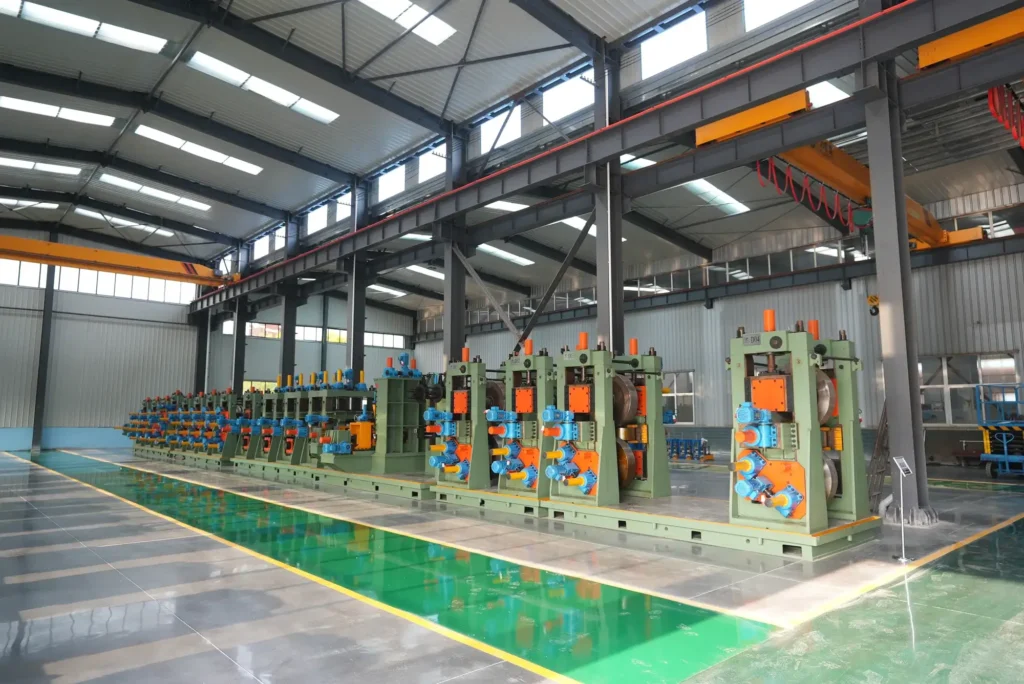
Direct Forming Square Tube Mill
In This Line
Quick Contact
Hebei TengtianYuanle@tentubemill.com
+86-311-83025332
WhatsApp +852 5425 3155
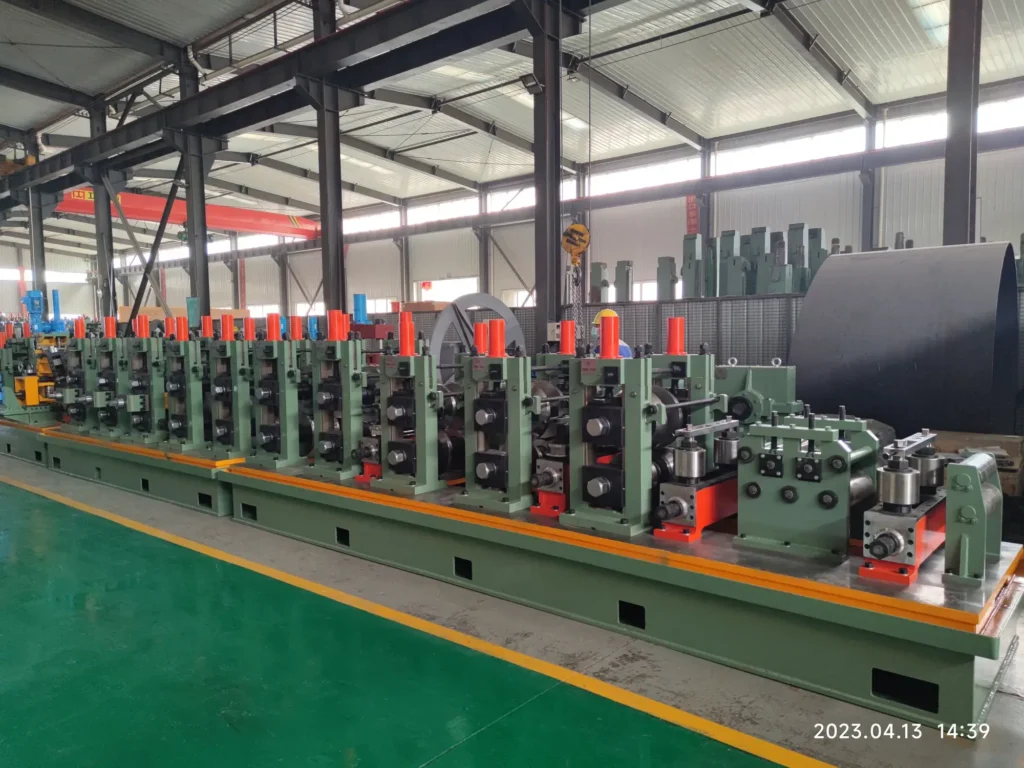
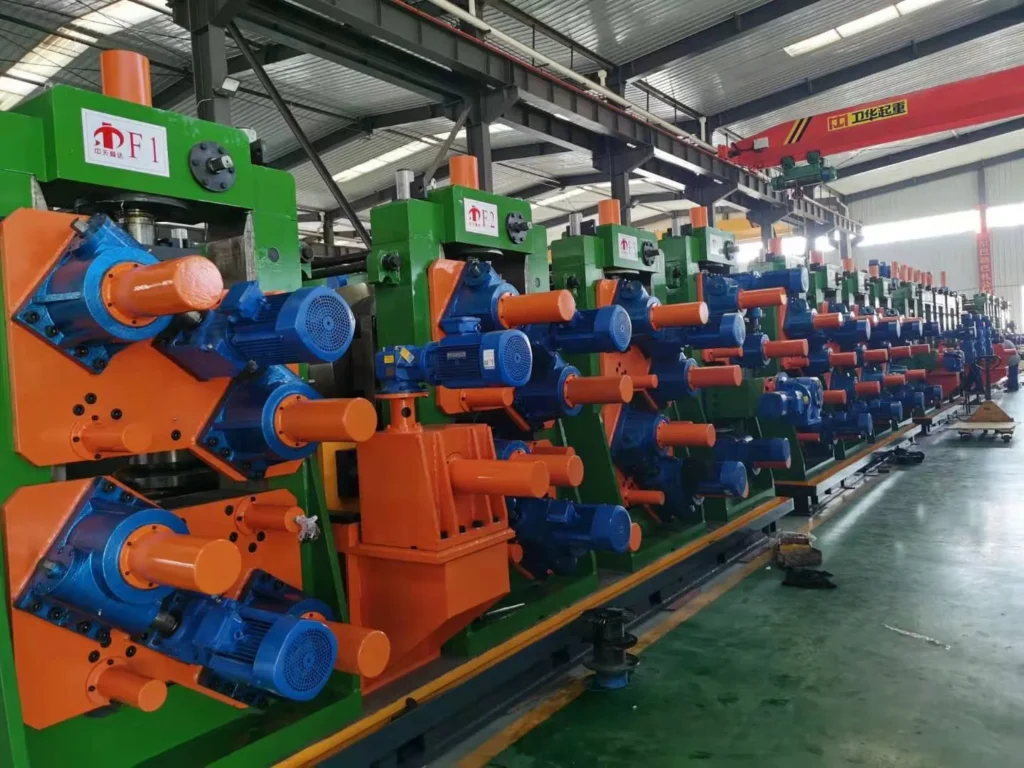
A direct-forming square tube mill makes square and rectangular tube with one combined mould instead of a size-specific roll set, so changing size is a servo adjustment rather than a roll change. Finished section runs 30 × 30 mm to 500 × 500 mm with wall 1.5 to 13 mm by step, and the roll saving is over 90%. There is one exception: making 100 × 100 mm tube needs the upper roll on the final open stand changed.
What Is Direct Forming Square Tube Mill
Contact between tooling and strip in direct forming is point contact, which reduces roll wear — and that, together with the reduced number of roll sets, is what produces the roll saving of more than 90%. Direct forming means the strip is brought to the square section directly, using one set of combined mould tooling, instead of first being rolled into a round tube and then squared down in a sizing section. The consequence is the one that matters commercially: different sizes come off the same tooling, and a size change needs only a servo adjustment, not a roll change.
 Two Routes to Square Section, Side by SideThe envelope for the direct-forming line is square tube from 30 × 30 mm to 500 × 500 mm, with wall thickness of 1.5 to 13 mm depending on class.See the line →
 Roll Saving in Direct FormingThe figure for the difference that makes is a roll saving of more than 90 per cent.See the line →
 Direct Forming Size RangeA direct forming square tube mill covers 30×30 to 500×500 mm from one combined die set.See the line →
Compared with round-to-square forming, direct forming needs fewer forming passes and fewer roll changes, and the core of the difference is the combined mould plus servo adjustment rather than any single mechanical component.
There is a second effect on the tooling itself.
Direct Forming Square Tube Mill — Range, Configuration and Output
Section range. Finished square tube from 30 × 30 mm to 500 × 500 mm.
Wall thickness. 1.5 to 13 mm, by step.
Tooling principle. One combined mould set covers multiple sizes; changing size is a servo adjustment. This is a configuration statement, not a cycle-time statement.
Key Parameters: Size Range, Wall Thickness, Line Speed and Welder Power Band
Why Point Contact Changes the Tooling Bill
Combined with the fact that one mould set serves many sizes instead of one set per size, that is what produces the figure of more than 90% roll saving.
The same effect shows up on the operating side, not only on the tooling side. Setting a new size on a conventional line means changing rolls, adjusting roll gap and re-centring, with profile drift and trial scrap as the failure mode; on a direct-forming line the same step is a servo adjustment with no roll change at all.
It shows up again on the commercial side: low roll wear, high yield and quick changeover together keep long-term running cost under control, which is the argument a plant actually makes to its own management when approving the investment.
Three angles, one mechanism. Wall thickness, line speed and shift output are confirmed against your pipe size, material grade and cut length at quotation. Send us those three and we will state the figures.
The mechanism behind the roll saving is worth stating precisely, because it is easy to repeat the headline number without the reason. Direct forming brings the strip to section through tooling that contacts it at points rather than along a continuous line of roll surface, and reduced contact reduces roll wear.
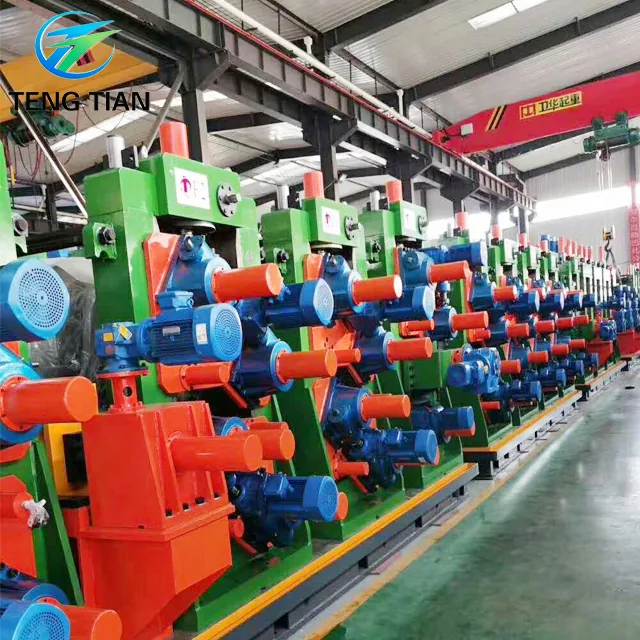
Direct Forming Versus Round-to-Square
The consequences are fewer forming passes and fewer roll-change requirements on the direct-forming route, with the core difference attributed to the combined mould and servo adjustment rather than to any single machine.
The comparison is about changeover and tooling, not about which route gives better weld quality, better dimensional tolerance, or higher output.
Round-to-square forms the strip into a round tube, welds it, and then squares it down through a sizing section. Direct forming brings the strip to the square section without the intermediate round stage.
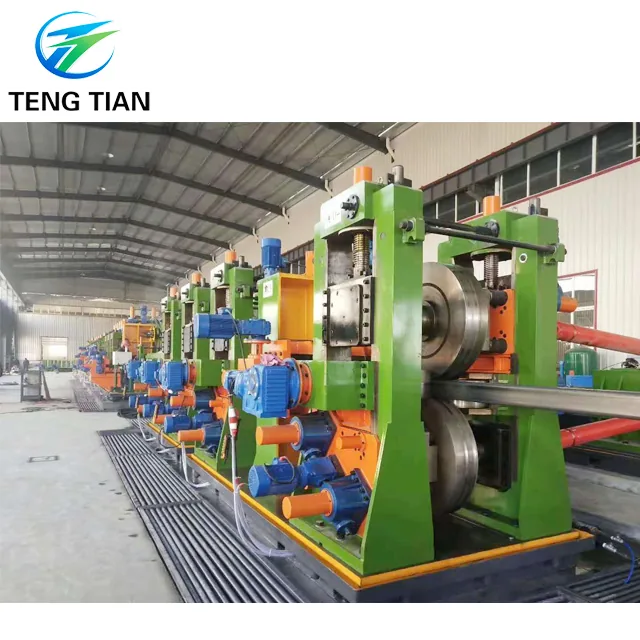
Control, Incoming Material and the Limits of the Machine
Control is PLC industrial-computer based with variable-frequency and servo drive, and the benefit is stable, repeatable operation with a selectable degree of automation from semi-automatic to fully automatic. On a direct-forming line that control layer is doing more work than usual, because the size change itself is a servo operation rather than a mechanical one.
Incoming strip stays the buyer’s responsibility. The line offers levelling and incoming inspection capability, but strip grade and flatness are the customer’s side of the split, and poor incoming material produces finished-section defects that no amount of forming accuracy will correct.
That split matters commercially as well as technically. When a plant reports section defects after commissioning, the first question is which side of the line the cause sits on, and the answer changes who pays for it.
Two facts set the boundary of what the line itself can be held responsible for.
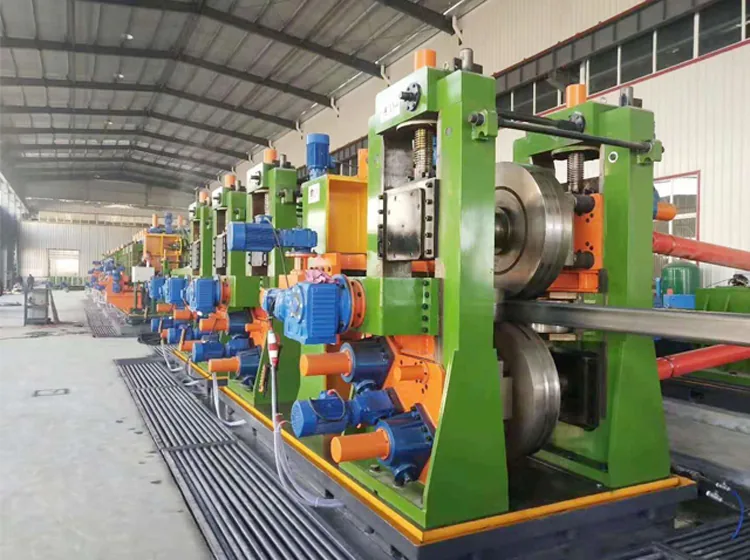
Supply Chain Behind the Tooling
Because this line’s whole argument is about tooling, it is fair to ask who makes the tooling. Rolls and key parts are machined in-house on our own CNC equipment, so lead time, cost and consistency do not depend on an outside tool shop. The risk it mitigates is supply-chain volatility in bought-in parts and steel.
Continuous supply of spares and rolls is also a repeat-purchase driver, and the after-sales route is a single contact responding round-the-clock with direct spare-parts shipment.
What a Square Tube Plant Is Really Buying
The target buyer is a square tube plant that switches specification frequently across the whole 30 × 30 to 500 × 500 range, and the pain is the cost side of that switching rather than the forming itself: roll consumption cost and changeover downtime.
That is a different buying committee from a plant buying its first line. The triggers differ: a new plant is sizing its first line to a target diameter and needs delivery plus commissioning, whereas entering a new product category — square tube, API line pipe or H-beam — needs a dedicated line rather than a reconfigured one.
This line speaks directly to two buyer profiles. Regional pipe and section makers judge on payback, changeover efficiency, tooling and energy cost.
Automotive and new-energy component makers judge on dimensional precision and stable control, and our answer to them is the PLC industrial-computer control with variable-frequency and servo drive that gives repeatable operation.
Buyers also arrive with a prior belief — that changing size on a welded tube mill is inherently slow and expensive in rolls — and it comes from real experience with conventional equipment rather than from misinformation.
Capacity expansion is a third trigger, where compatibility with the existing plant layout matters more than headline specification.
How to Choose the Right Model
Do you actually change size often? The target is square tube plants that switch frequently across the 30 × 30 to 500 × 500 range. The buying situation for this line is narrow and specific, which makes the selection logic unusually clear.
The pain being solved is the cost of roll changes and the downtime they cause — in short, “no roll change, adjustment only”. If a plant runs one size all year, that advantage largely disappears and a conventional line may suit better.
Which figures will you be judged on? Buyers judge the line on three criteria: changeover time, roll saving rate and tooling life.
Who operates it? Our users are the plant operators and the die-change crew; beneficiaries are the construction, furniture and mechanical-structure buyers downstream. That matters because the servo-adjustment workflow moves skill from the roll shop to the control desk.
The same logic appears from the market side. Slow changeover and high roll cost on existing equipment are a supplier-switching trigger, and buyers arrive with a prior belief that changing size on a welded tube mill is inherently slow.
Scope of Supply, Installation and Commissioning
Delivery is 50 to 90 days with plant-level customisation scheduled from our own manufacturing base.
Payment terms are flexible: a thirty per cent deposit against seventy per cent before shipment, with third-party escrow and staged payment available, and multiple trade terms supported.
Direct forming square tube mill manufacturer
About the manufacturer, as distinct from the machine: in-house CNC machining and our own manufacturing base which buyers can visit, twenty research and development engineers averaging twenty years of experience, a single point of contact responding round-the-clock, and engineers dispatched on site.
Tengtian holds two registrations: a high and new technology enterprise certificate numbered GR202413001148, and an international trademark registration for the Tengtian mark under WIPO number 1 707 606 in Nice class 7, designating New Zealand, France and Germany.
Rectangular tube mill for construction
Construction is the dominant application among our deliveries. The square and rectangular sections among them include 250 × 250 mm, 200 × 200 mm, 200 × 200 × 12 mm and 150 × 150 × 6 mm, delivered to Afghanistan, Turkey, South Korea and Kenya respectively.
Lines ship knocked down in containers: units broken down, bare frames braced, precision and wear parts crated with moisture protection, and a spare-parts pack with tooling travelling with the shipment. Site re-assembly and commissioning are part of the delivery, not an extra.
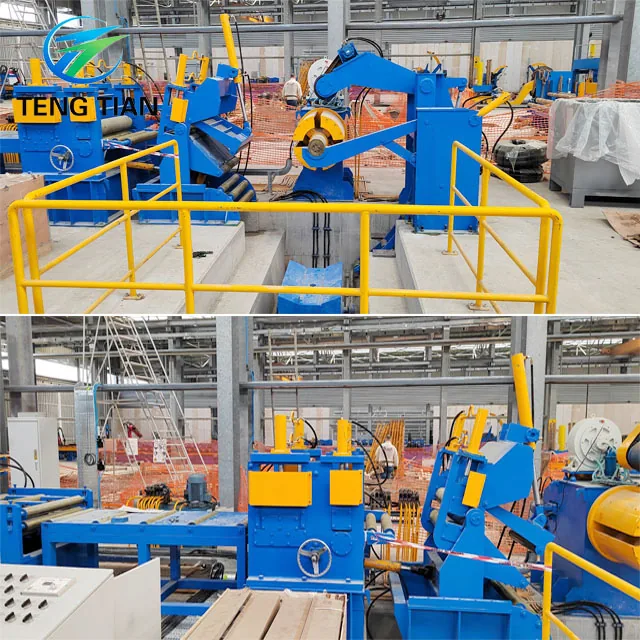
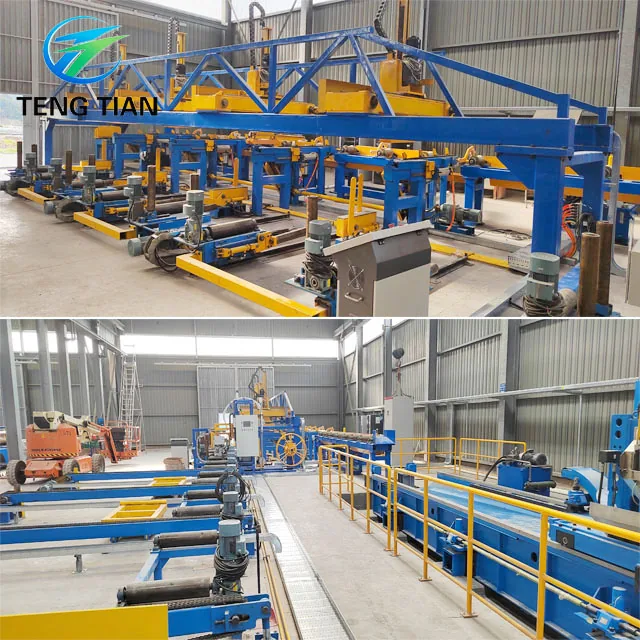
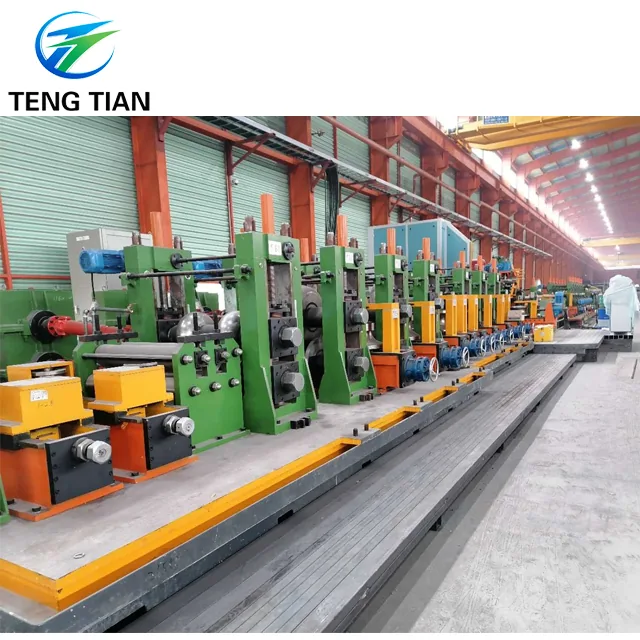
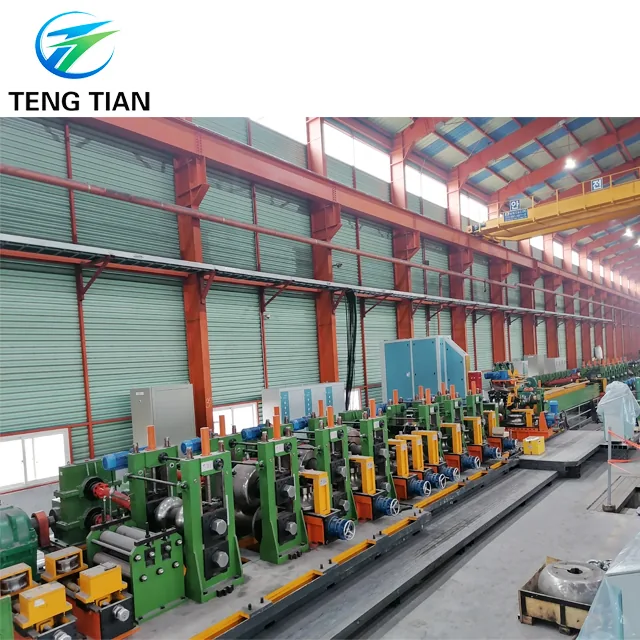
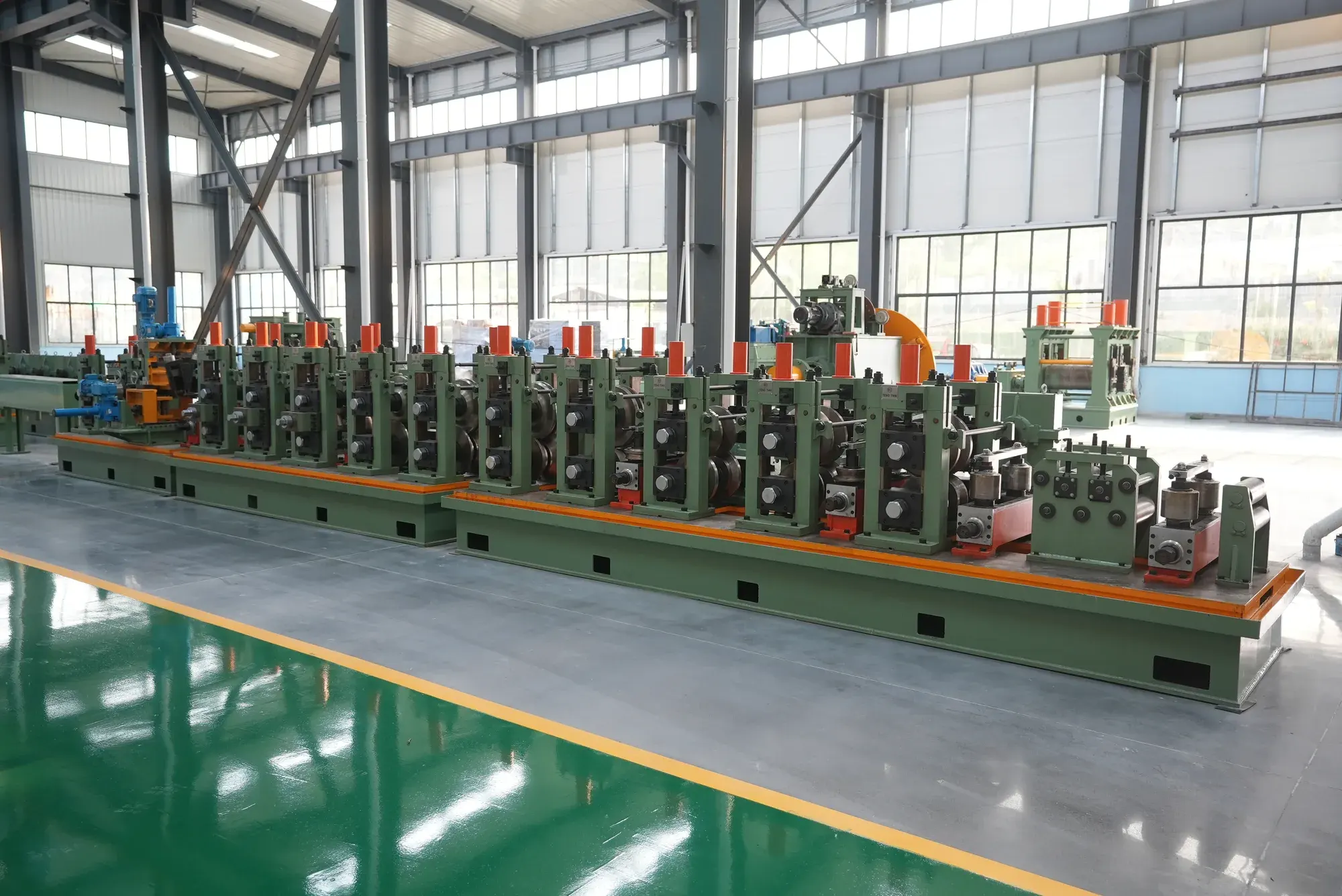
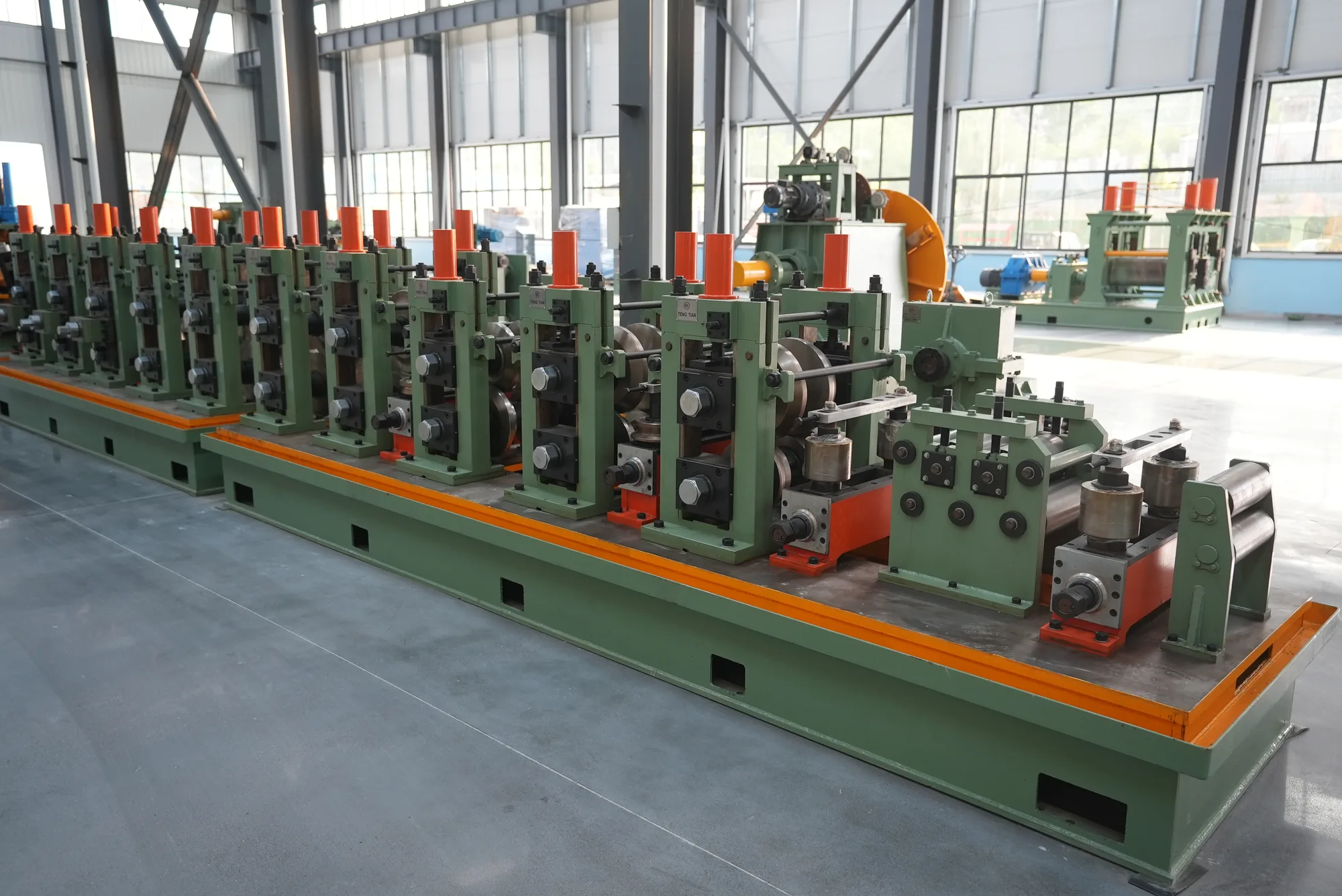
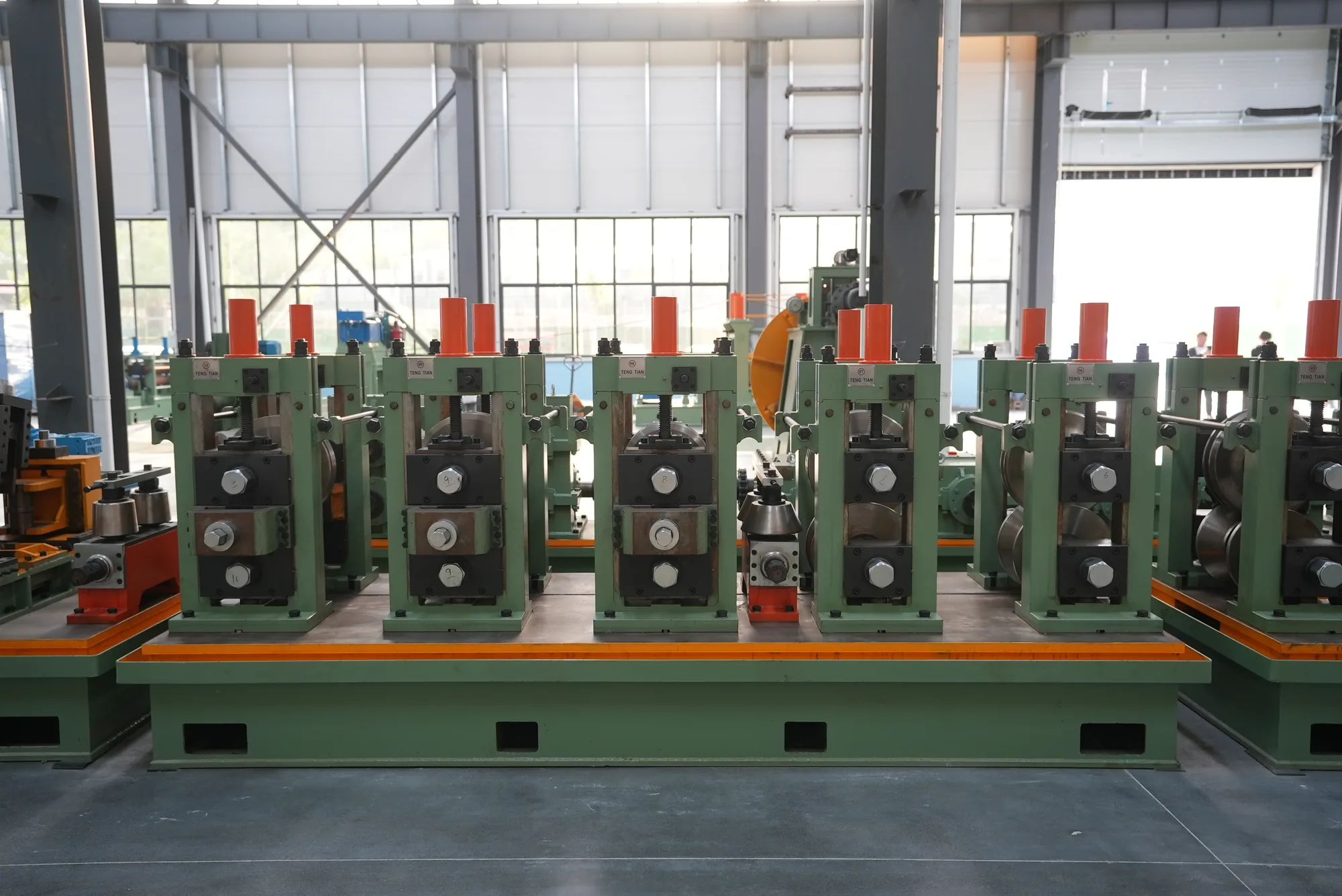
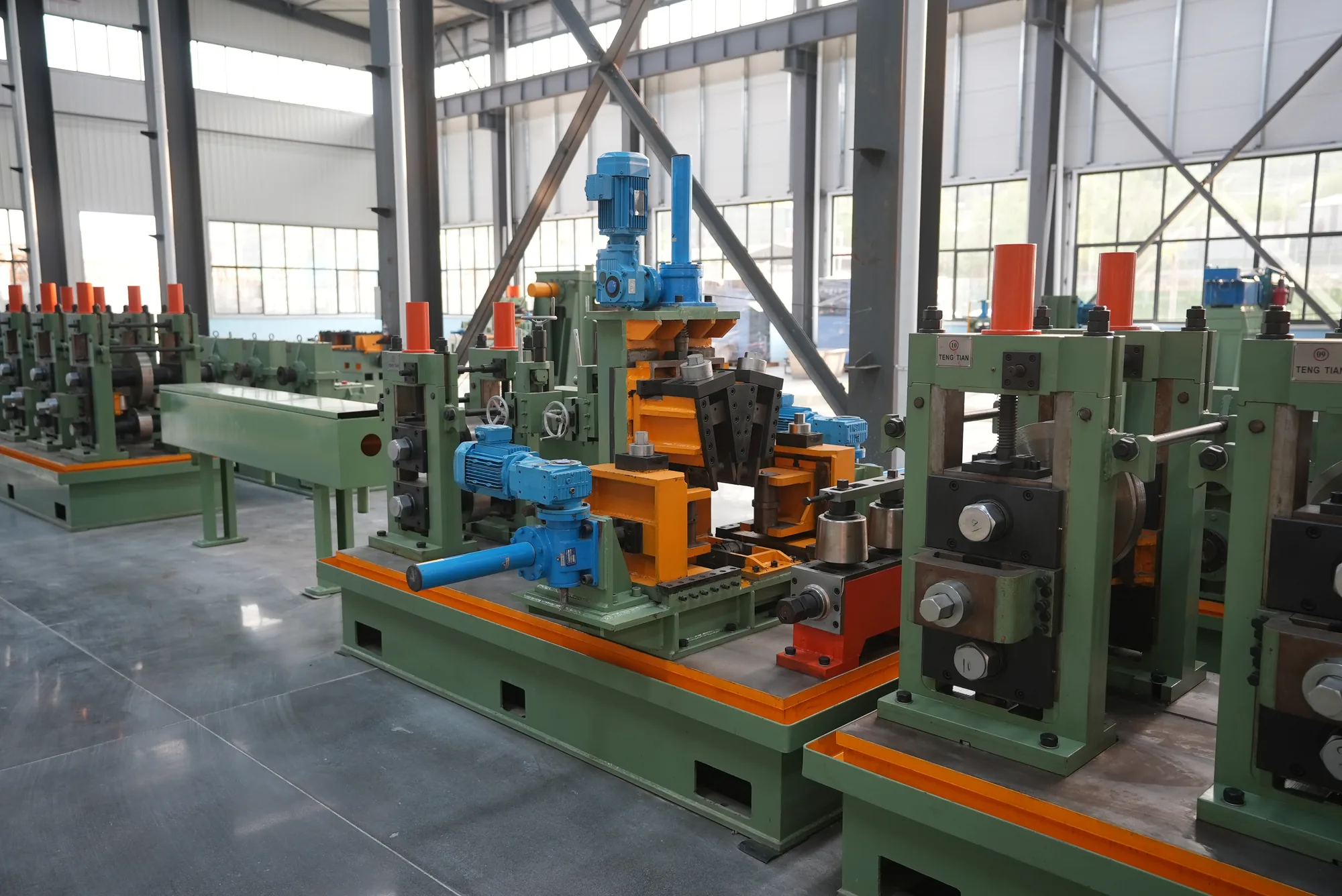
Line Photos from the Works
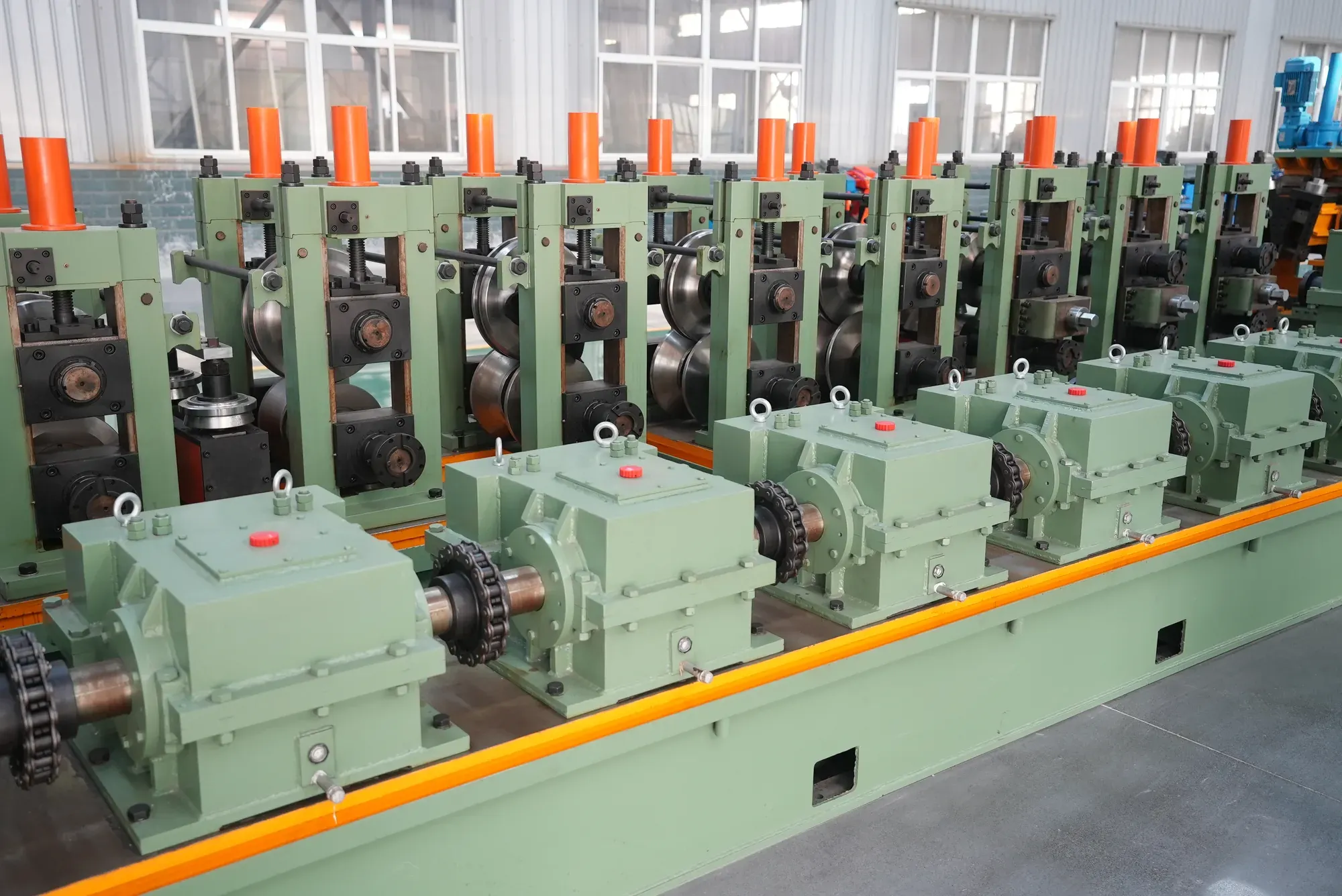
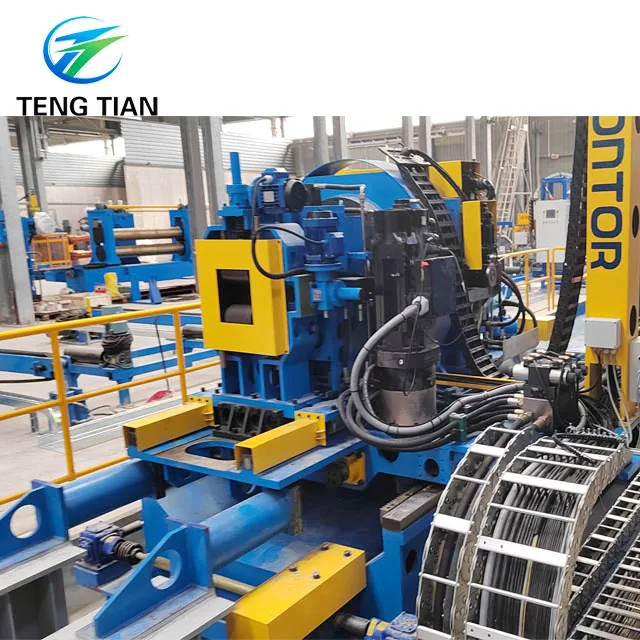
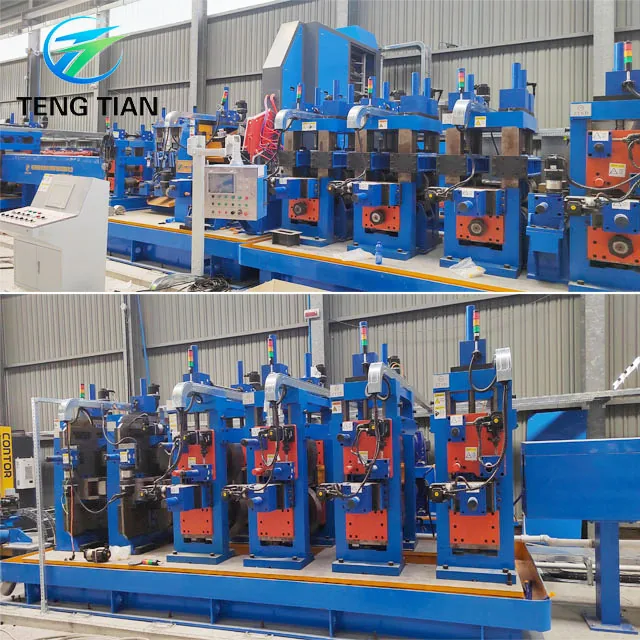
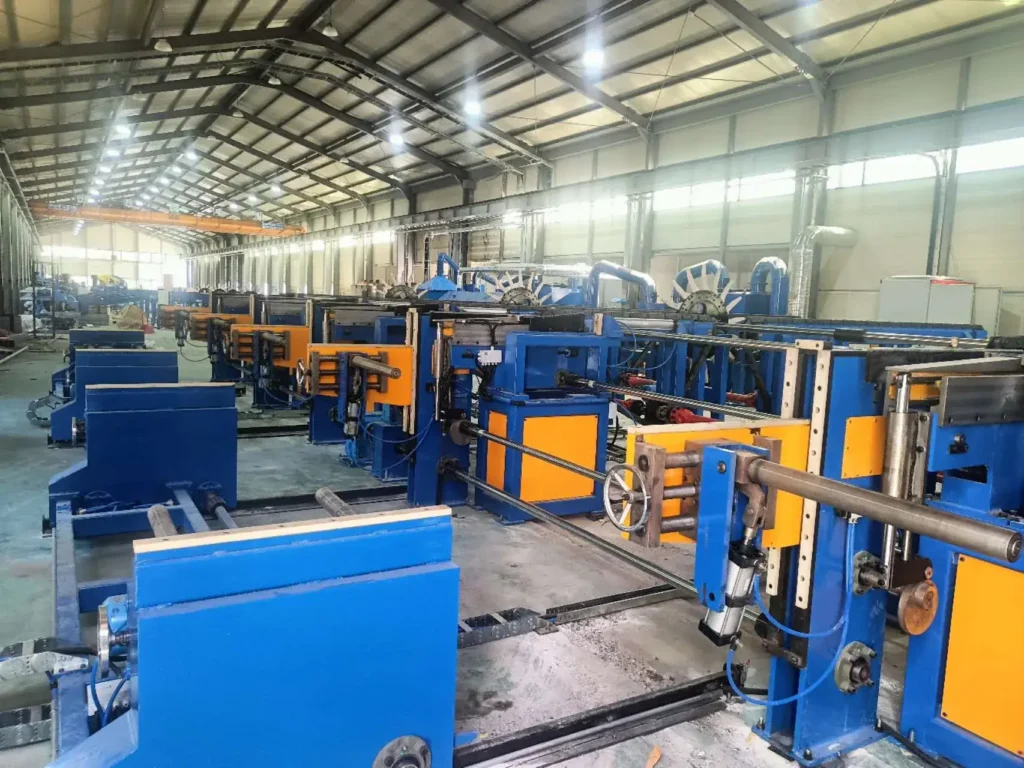
Eight photographs of this line, taken in our own workshop. Click any photo for the full-size image.
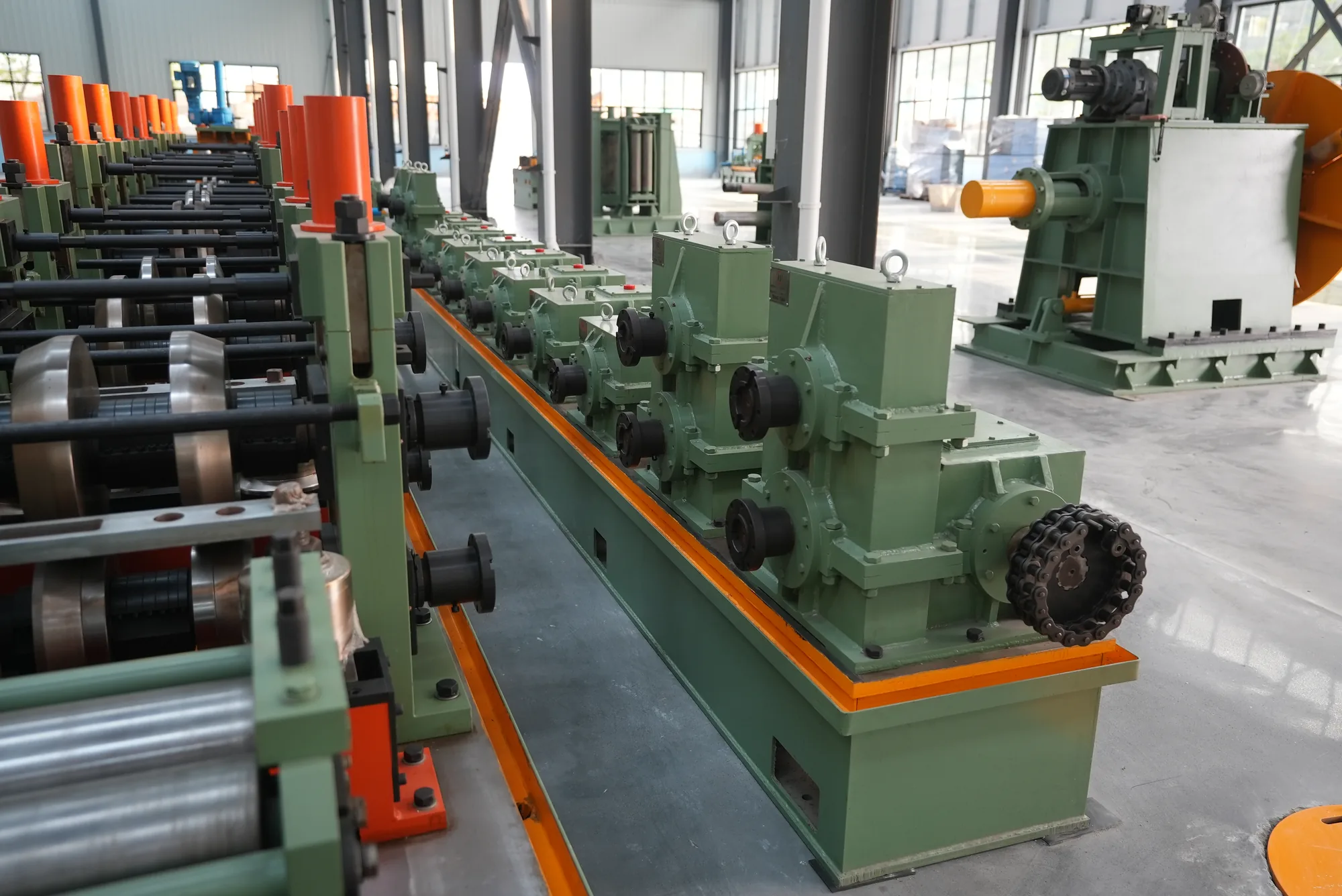
More from this line
More on this line — specifications, model steps and photographs.
Other Lines We Build
 Cut-to-Length Line
 Auto Spray Paint Line
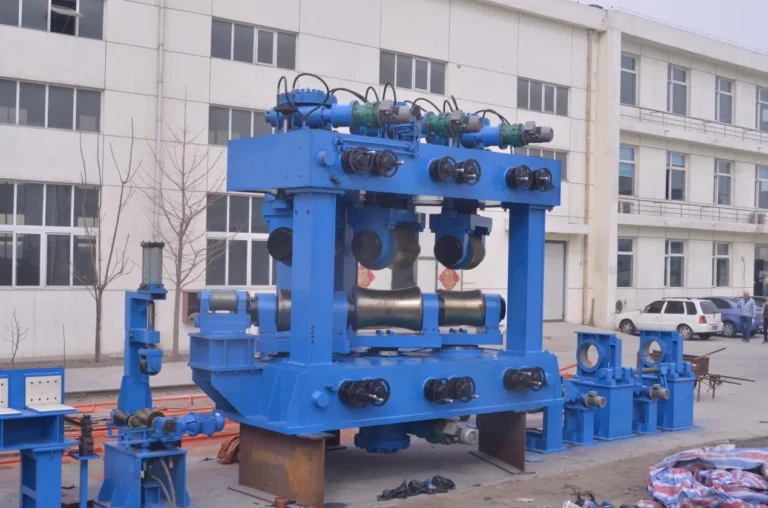 API Line Pipe Mill
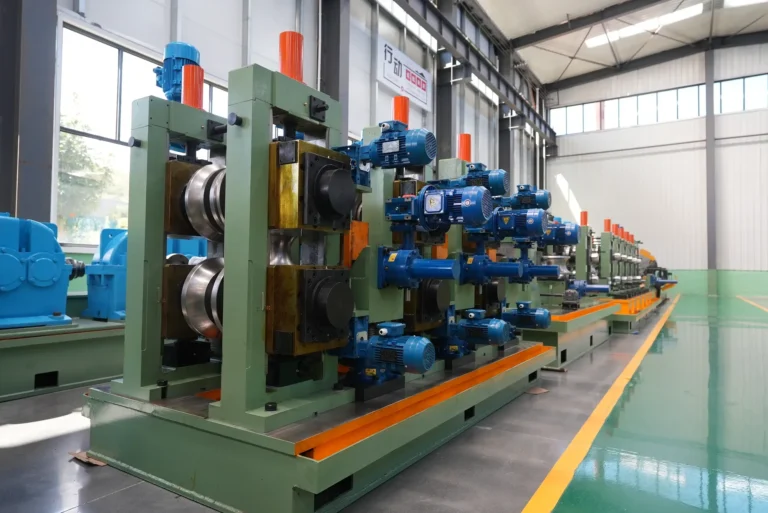 Tube Mill Rolls and Spares
Send Your Enquiry
Tell us the pipe outside-diameter range, the wall thickness and the output you need. An engineer reads every enquiry — it does not land in a general sales inbox.