 Scan on WeChat
Home › Cut-to-Length Line › Steel Coil Cutting Machine
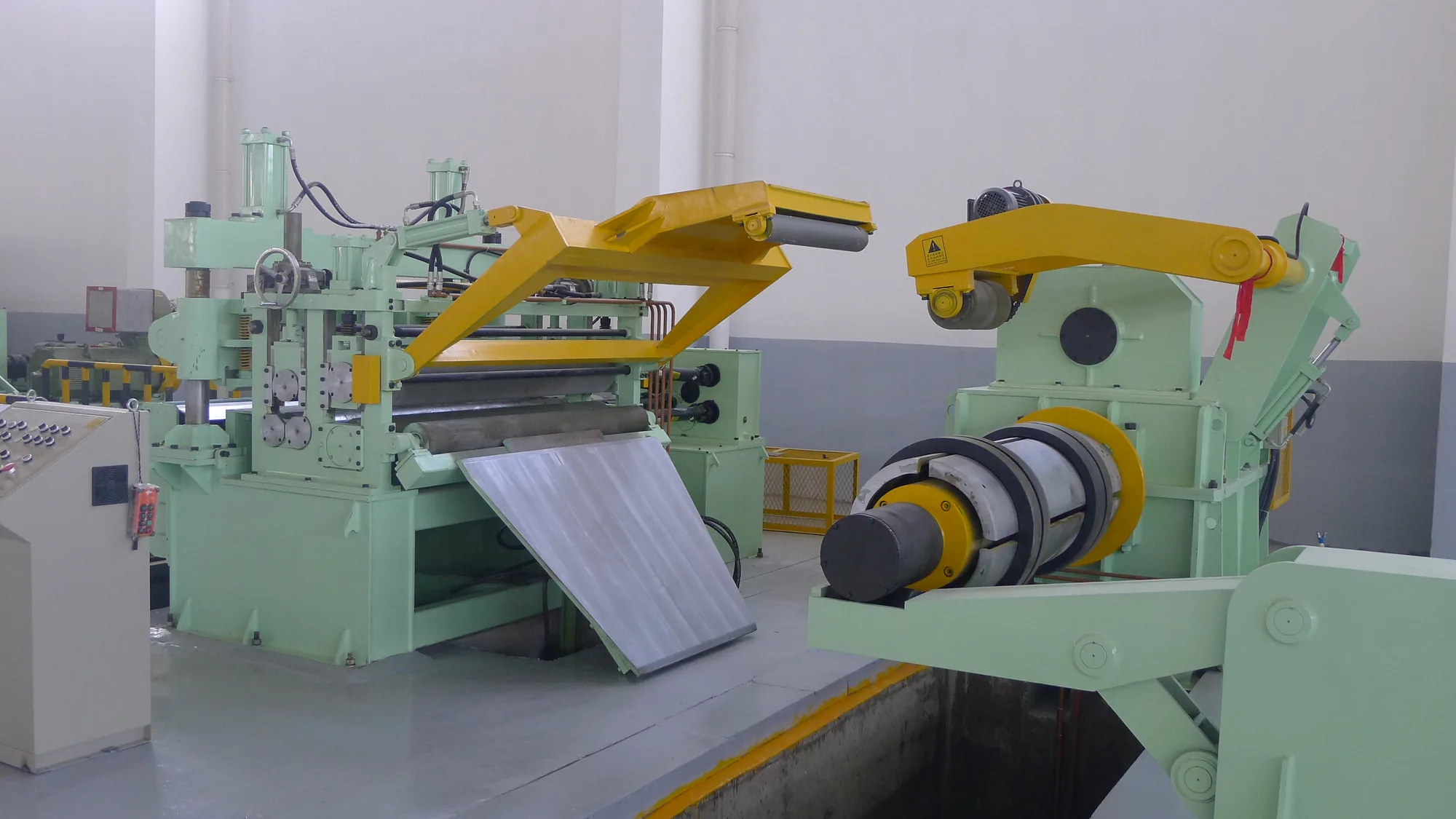
A steel coil cutting machine is one line running in either of two modes: it slits wide coil into narrow coil, or it cuts coil to length into sheet.
Quick Contact
Hebei TengtianYuanle@tentubemill.com
+86-311-83025332
WhatsApp +852 5425 3155
Input window is 1–12 mm thick, 800–2000 mm wide, up to 32 t.
Technical Specification Table
The table below separates what the line accepts from what it guarantees, and it separates the two operating modes, because the output tolerances listed apply to slitting mode.
- INPUT WINDOW — shared by both modes
- Strip thickness: 1–12 mm
- Strip width: 800–2000 mm
- Coil weight: up to 32 t
- SLITTING MODE — output tolerances
- Slit width accuracy: ±0.2 mm
- Camber: ≤0.5 mm per 1000 mm
- Burr: ≤4% of material thickness
- Telescoping on recoil: ≤±10 mm
- Strip count per pass: configured by thickness — around fifteen at 2 mm, around four at 8 mm
Cut length, length tolerance, sheet squareness, stacking rate and shear/stacker parameters are all configured to order — send your sheet size and output target for a quotation.
What applies to both modes is the line itself — its input window, its unit list, its process flow, and its role as the upstream preparation step for downstream mills. All of that is set out in full below.
Line Configuration and Scope of Supply
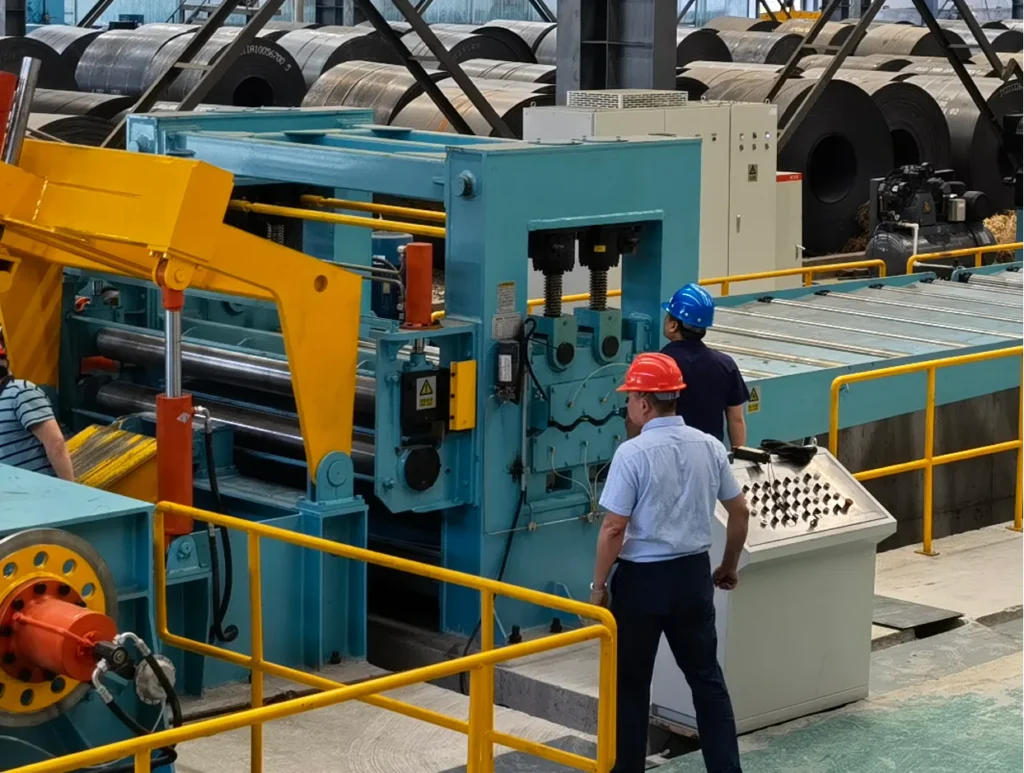
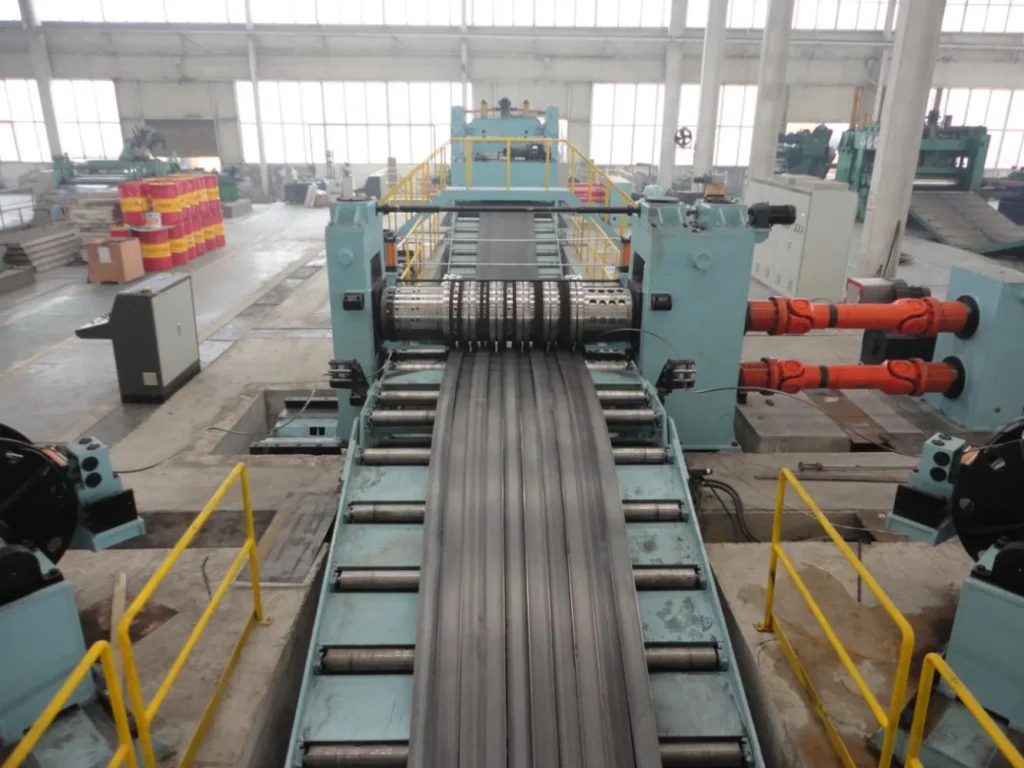
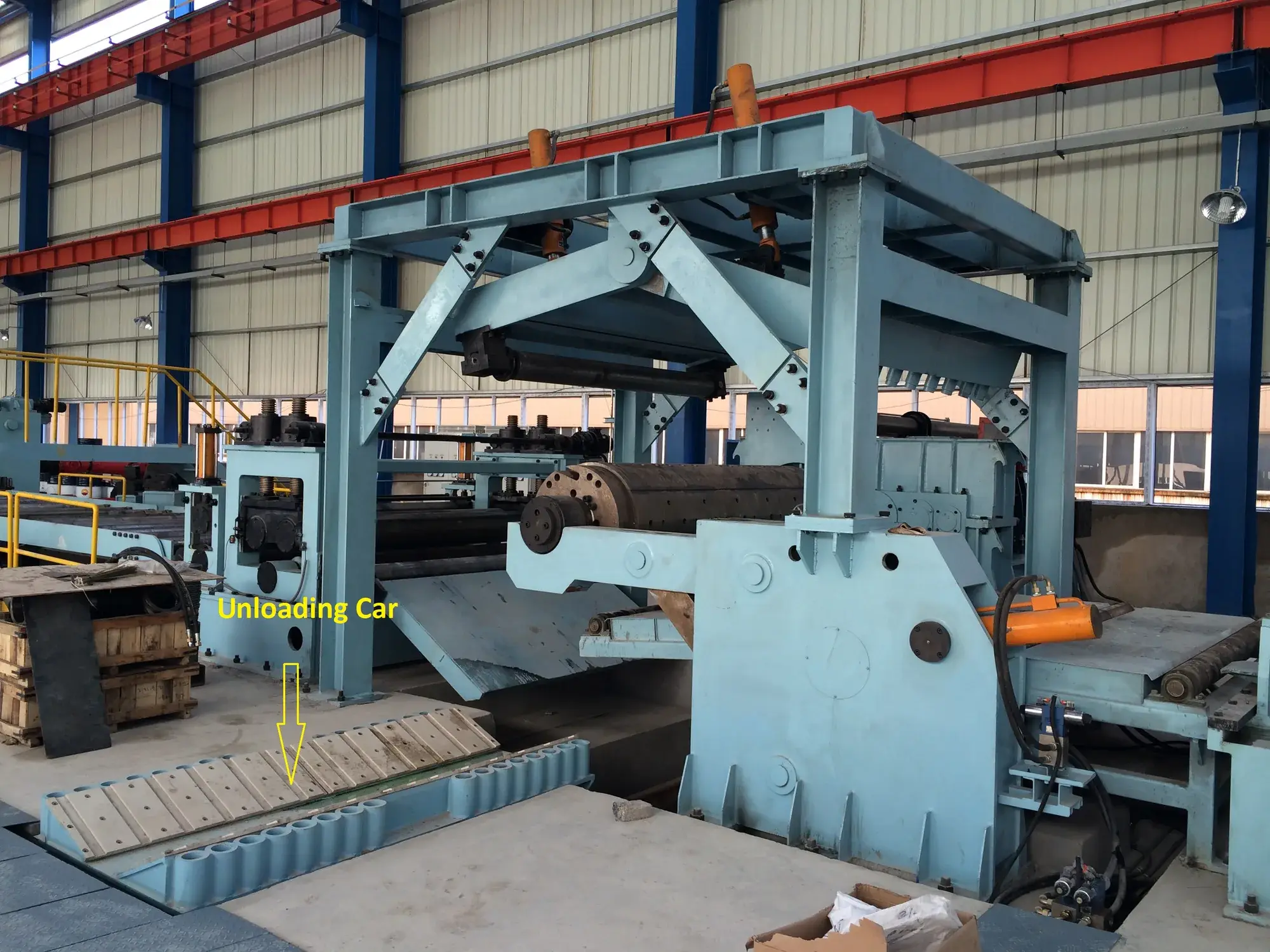
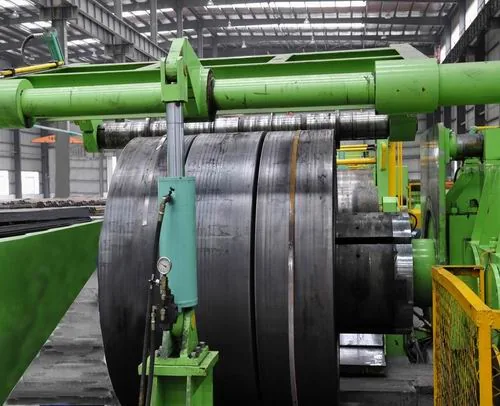
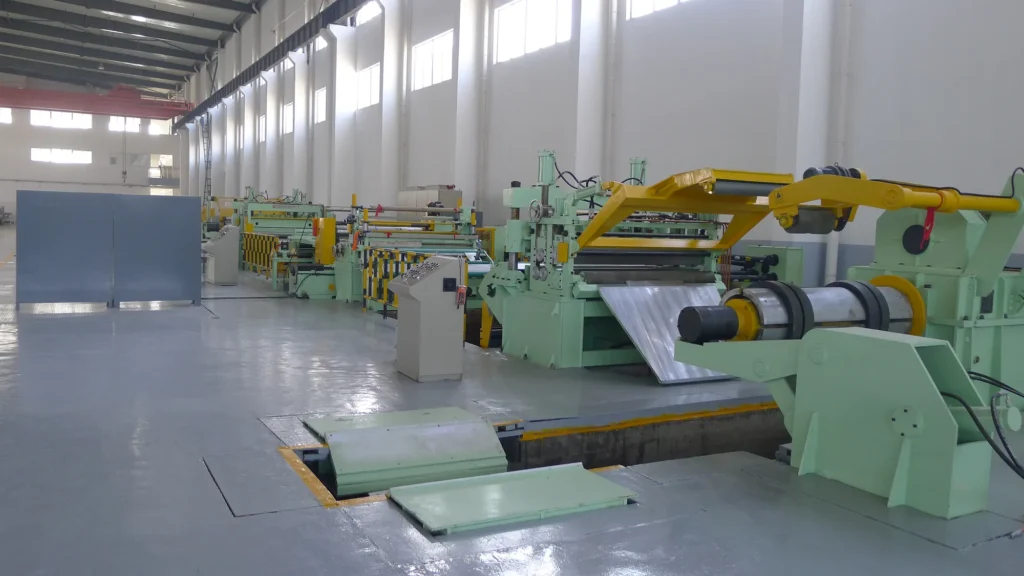
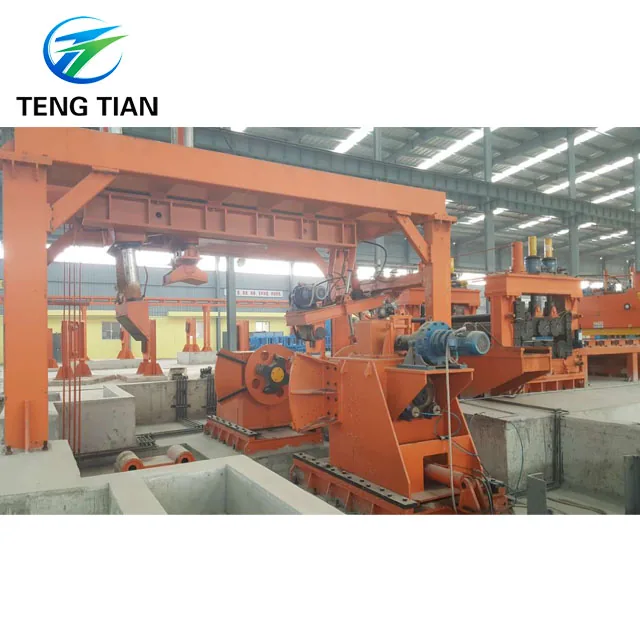
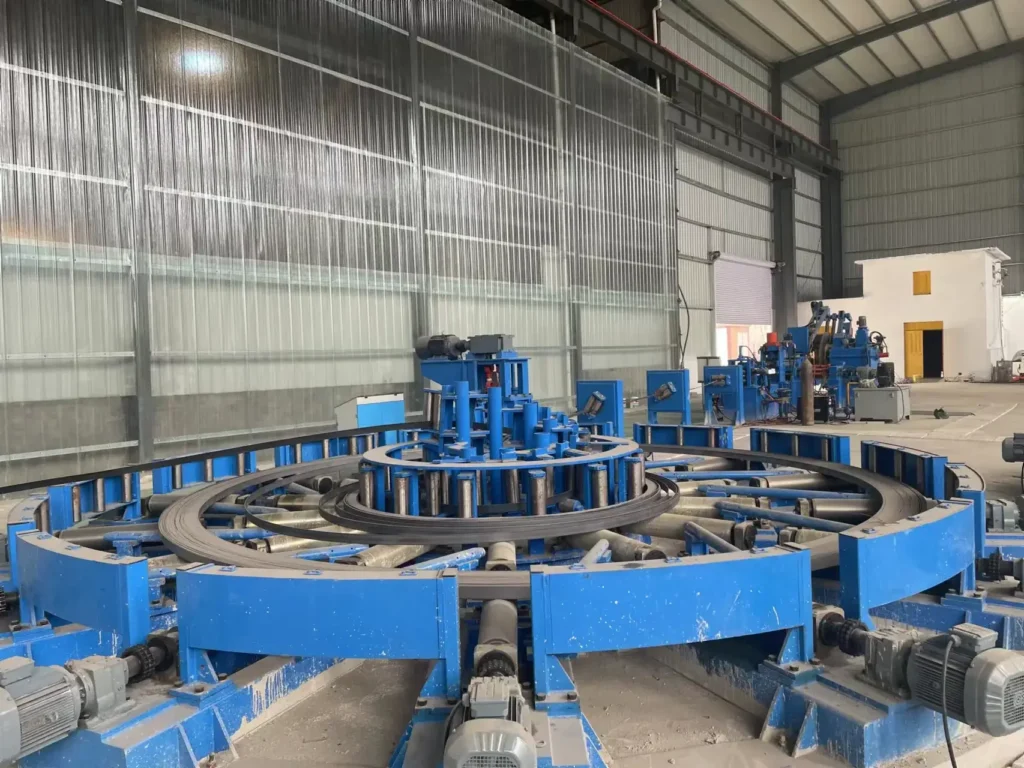
The line is a CNC uncoiling, slitting and recoiling line, and its process flow runs: coil car, uncoiler, leveller, hydraulic shear, slitting or cross-cutting, scrap-edge winder, looper, separator, tension unit, recoiler.
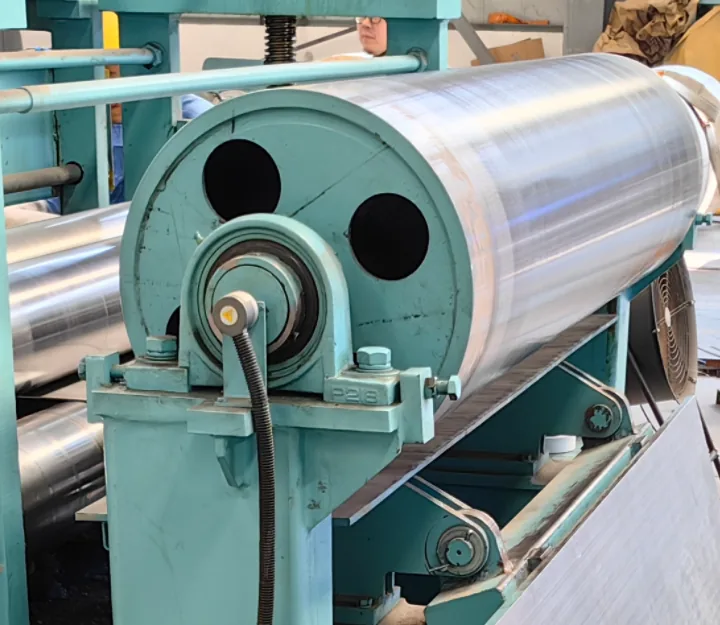
Following that flow step by step is the clearest way to see where quality is won and lost. The coil car brings the coil to the uncoiler, which tensions it. The leveller flattens the strip so that what enters the knives is straight rather than merely unwound. A hydraulic shear crops the head and tail square.
A tension unit sets the pull that determines how tightly the coil winds. And the recoiler builds the finished coil. Of those ten steps, three are where the output tolerances are actually created: levelling sets the baseline flatness, the knife set determines width and burr, and tension plus looper control determine camber and telescoping.
The other seven either prepare for those three or protect what they produced.
Two unit groups do the work.
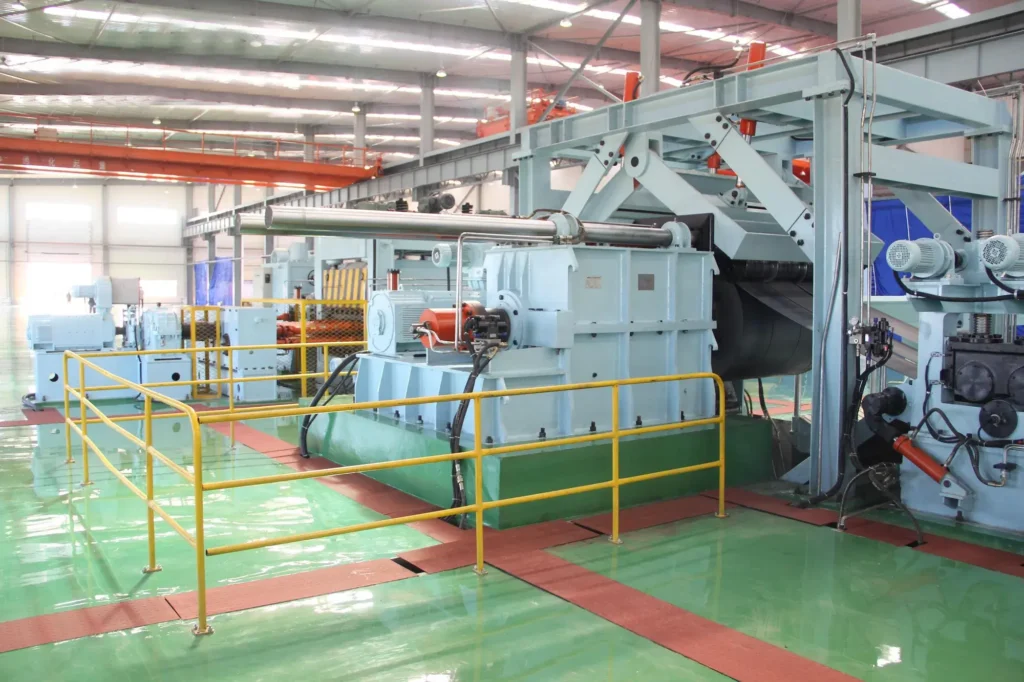
- Double-head uncoiler, slitter and recoiler — the main train, rated for coils up to 32 t.
- Hydraulic shear, looper and tension-separation mechanism — the units that hold strip quality through the cut and onto the recoil.
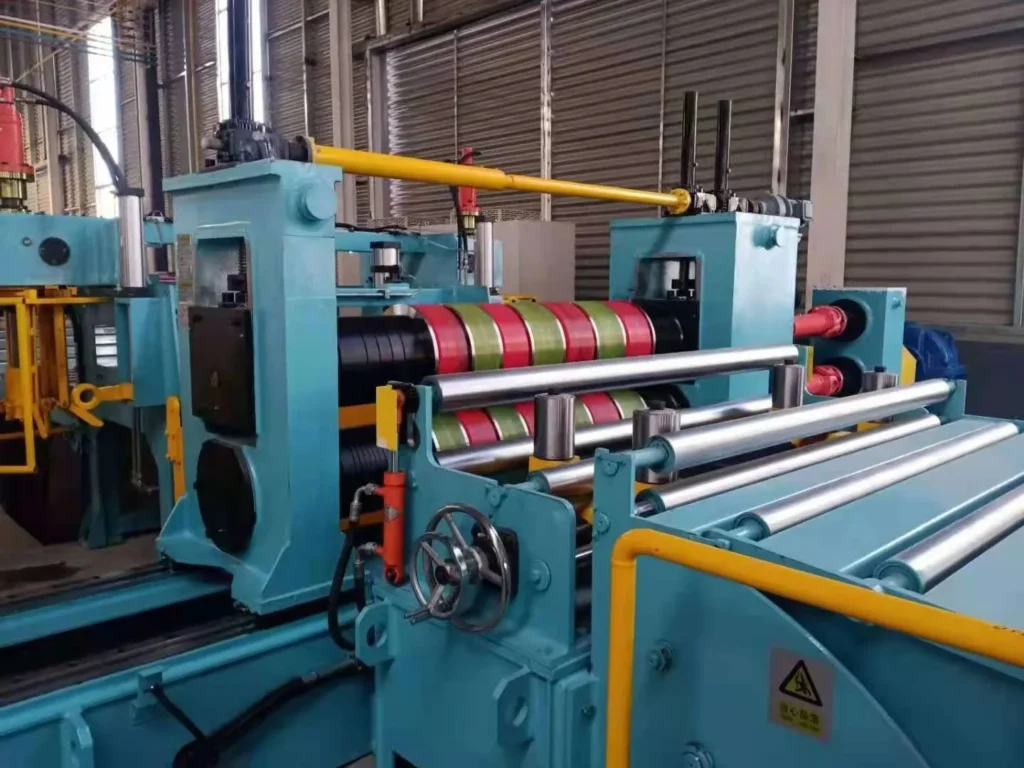
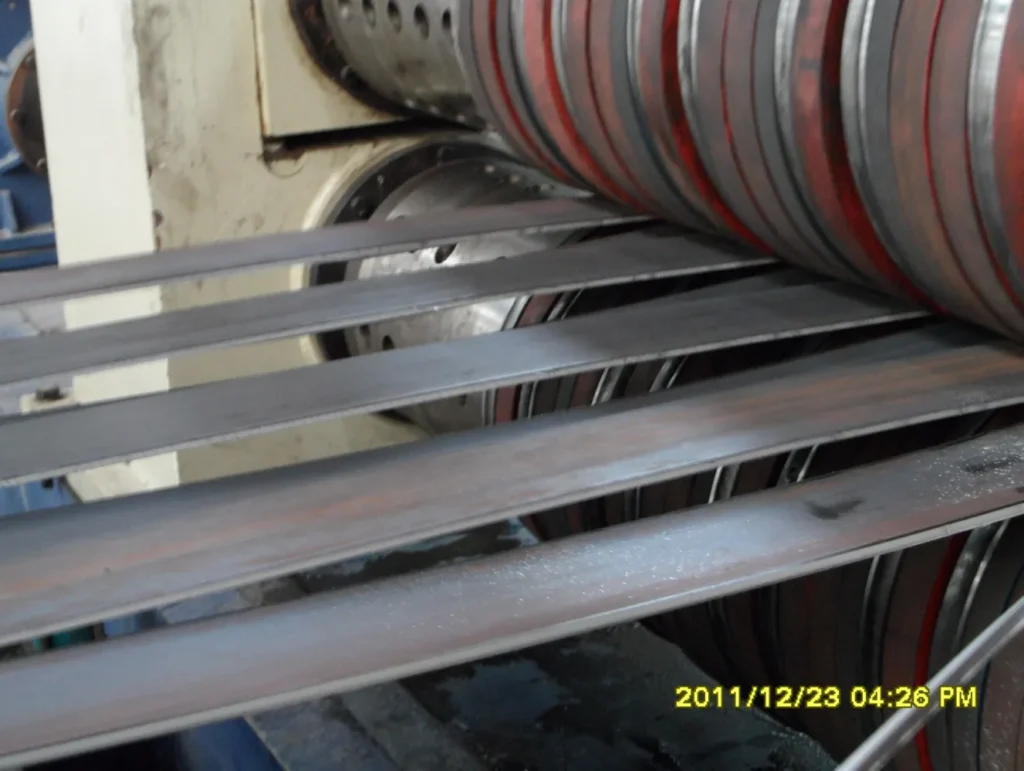
The tooling is where slit quality is actually decided: slitting knives, spacers, rubber sleeves and separator discs, configured as a set against strip thickness. That configuration is what holds slit width to ±0.2 mm and burr to 4% of thickness, and it is why the same machine produces around fifteen strips at 2 mm but around four at 8 mm.
Where the knife set or the spacer stack is wrong for the thickness, the symptoms are specific and immediate: width out of tolerance, heavy burr, and camber.
Tension and looper control govern the second half of the problem. Loss of tension control, or a looper that runs out of buffer, shows up as camber along the strip and telescoping on the finished coil — the two defects that make a coil unusable to a downstream mill even when its width is correct.
The strip then passes through the slitting knives, or through the cross-cut in cut-to-length mode. Scrap edges are wound off separately rather than allowed to travel with the strip. A looper buffers the line so that upstream and downstream do not have to run at exactly the same instantaneous speed. A separator holds the slit strips apart so they cannot rub or overlap.
Size Change, Roll Wear and Running Cost
Set it correctly and width holds at ±0.2 mm with burr under 4% of thickness; set it wrongly and both degrade at once. On this line, “size change” means changing the knife set, and it is the single operation that determines both output quality and running cost.
The knife set is configured to strip thickness, and the gap between knives is the variable that decides width accuracy and burr height together.
Because strip count changes with thickness, a change of thickness is not just a knife change but a re-planning of the pass: fifteen strips at 2 mm and four at 8 mm are different jobs on the same machine.
Hydraulic oil and grease are consumed on a maintenance interval, with specification supplied by us and purchase local.
The running-cost case for owning this line rather than buying prepared coil is about compliance rather than price. The line exists to solve incoming coil that is the wrong width, has poor edges, or is not cut to the length a downstream process needs.
The wear items are the knives, spacers, rubber sleeves and separator discs. The tooling is configured per thickness and supplied as a set.
Applications and Output Examples
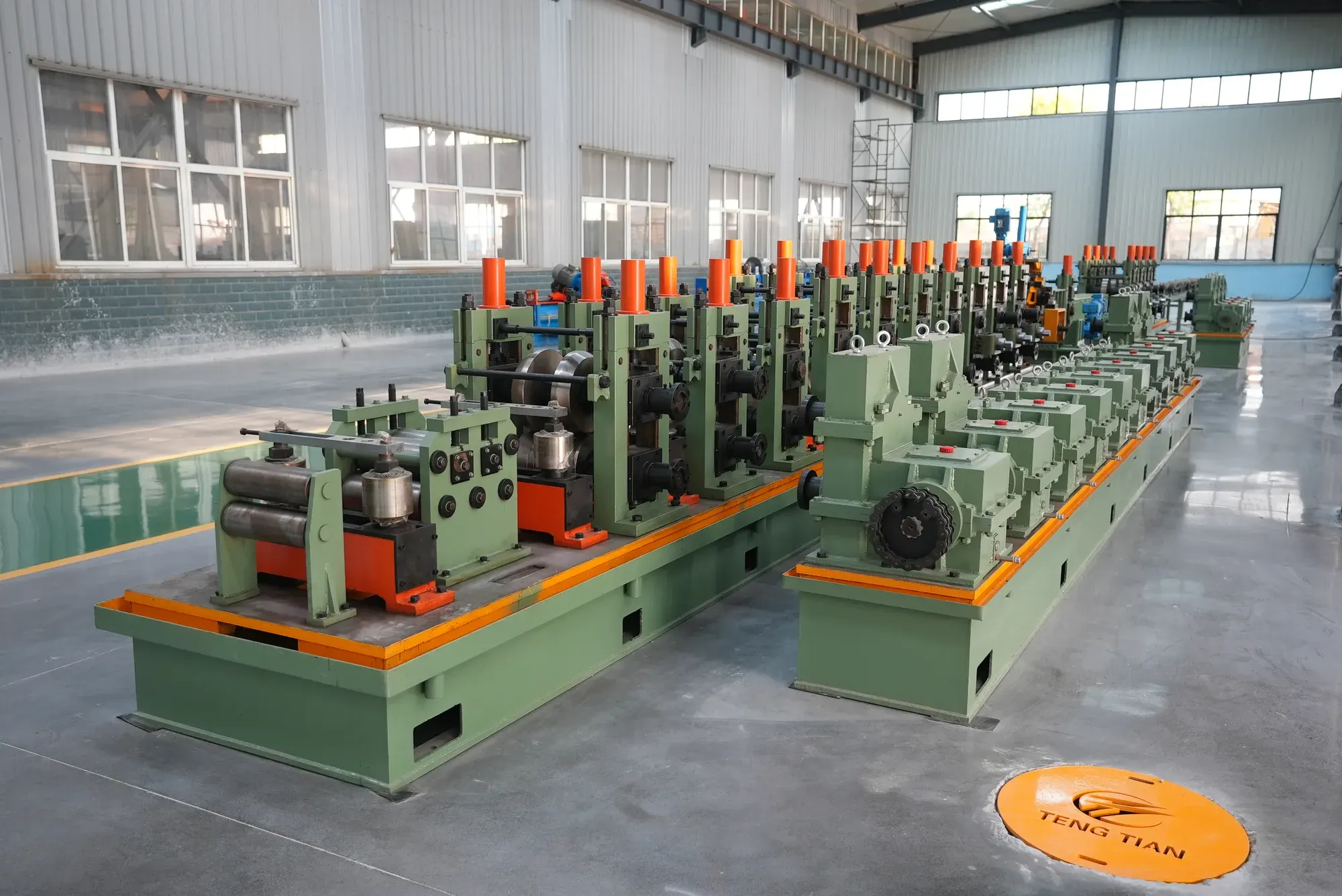
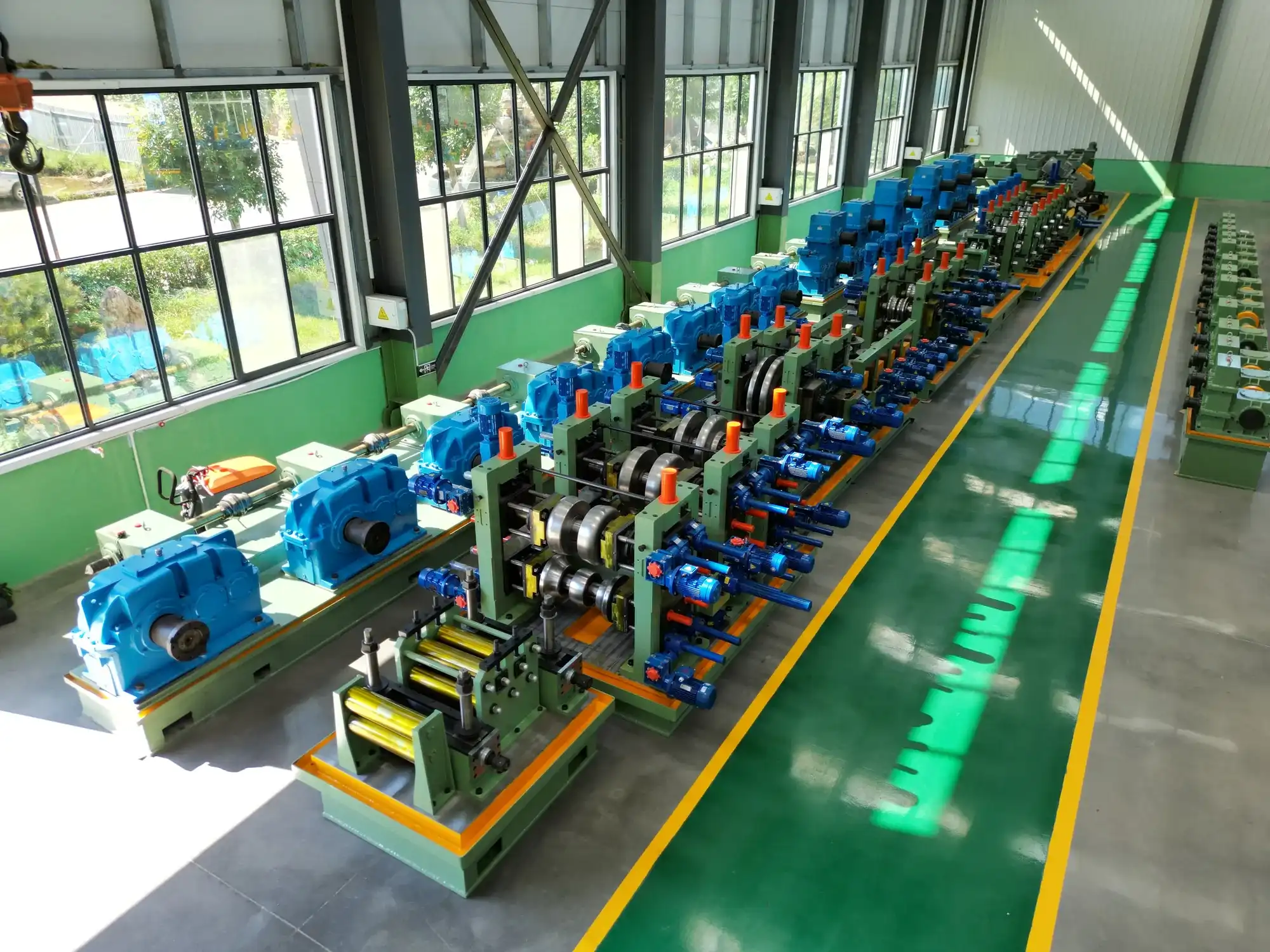
A welded tube mill begins with an uncoiler and a five-roller leveller, and strip flatness at that point is the precondition for everything after it — residual curvature becomes seam wander later. This machine sits upstream of other machines, which is the fact that explains most of its enquiries. Steel processing and pipe plants run it to slit and cut coil into compliant narrow coil or cut-to-length sheet for downstream lines. The operators are the line’s own crew and inspection staff; the beneficiaries are welded pipe plants, roll-forming plants and steel service centres.
The downstream connection is worth making concrete. An h-beam welding line takes hot-rolled strip in slit coil form, so web and flange arrive already cut to width.
In both cases the tolerance this line holds is the tolerance the next line inherits.
Two purchase triggers bring buyers to this machine rather than to a downstream one. Capacity expansion or an automation upgrade drives a plant that already runs coil processing to add a line.
And a large downstream order pushes a plant to add capacity quickly enough to deliver on schedule — which on a coil-processing line usually means the plant has won work whose width or length list its current tooling cannot cover.
For end users in precision-driven sectors, the emphasis is on dimensional stability and technical response rather than on headline throughput, and this is the line where dimensional stability begins: everything a tube mill or a forming line can do downstream is bounded by the width accuracy and camber of the coil it is fed.
Responsibility divides in the same way it does across our other equipment. Knife configuration, tension control and looper control are the equipment side. Incoming coil grade, thickness tolerance and flatness are the buyer’s side: the line offers levelling and incoming checks, but levelling does not rescue out-of-specification strip.
Which of the two modes a plant actually needs is usually settled by what it feeds. A welded tube mill wants narrow coil at a controlled width, so it buys the line for slitting. A press shop or a fabricator wants flat sheet at a fixed length, so it buys the same line for cut-to-length work. A plant doing both buys one line and changes mode.
We treat them as two operating modes of one machine rather than as two machines.
What those buyers measure is a short and specific list: slit width accuracy, camber, burr, and telescoping control on the recoil — and they measure it because each one of those is a reason a downstream mill will reject the coil.
Delivery, Installation and Training
Lead time is 50–90 days.
After handover, support is a first reply through a single named point of contact, all-hours online support, on-site dispatch when required, and direct spare-part shipment — which on this line mostly means knife sets and separator discs.
Behind that sits in-house CNC machining capacity for tooling and key wear parts, an engineering team of twenty averaging twenty years each, and an owned production base open to factory audit.
One certification detail is especially relevant to this machine: the certificate scope matches it exactly. Our CE certificate for slitting lines is No. M.2022.206.C72173, issued by UDEM.
Certifications: GB/T 19001-2016 / ISO 9001:2015 (quality management system, certificate No. 18524Q11269R2S); CE for slitting lines, UDEM No. M.2022.206.C72173. The product standard the finished coil or sheet is made to depends on the buyer’s downstream specification; the equipment follows destination-market machinery-safety rules.
Export packing is specified per item. Control cabinets and precision tooling — knives, spacers and separator discs among them — travel in moisture-protected wooden cases with a spare-parts pack; heavy frames ship bare, braced on cradles with designated lifting points and rust protection.
Cut to length machine for steel coil
Wear Parts and Consumables
Watch This Line Running
Cut-to-Length Line — Coil to Sheet, up to 32 t Coil
From the Workshop
 Cut-to-Length Accuracy
 The API Pipe Mill Inspection Chain
 Pipe Coating Line Configuration
 H Beam Welding Line
Send Your Enquiry
Tell us the pipe outside-diameter range, the wall thickness and the output you need. An engineer reads every enquiry — it does not land in a general sales inbox.