 Scan on WeChat
Home › API Line Pipe Mill › The API Pipe Mill Inspection Chain
In This Line
Quick Contact
Hebei TengtianYuanle@tentubemill.com
+86-311-83025332
WhatsApp +852 5425 3155
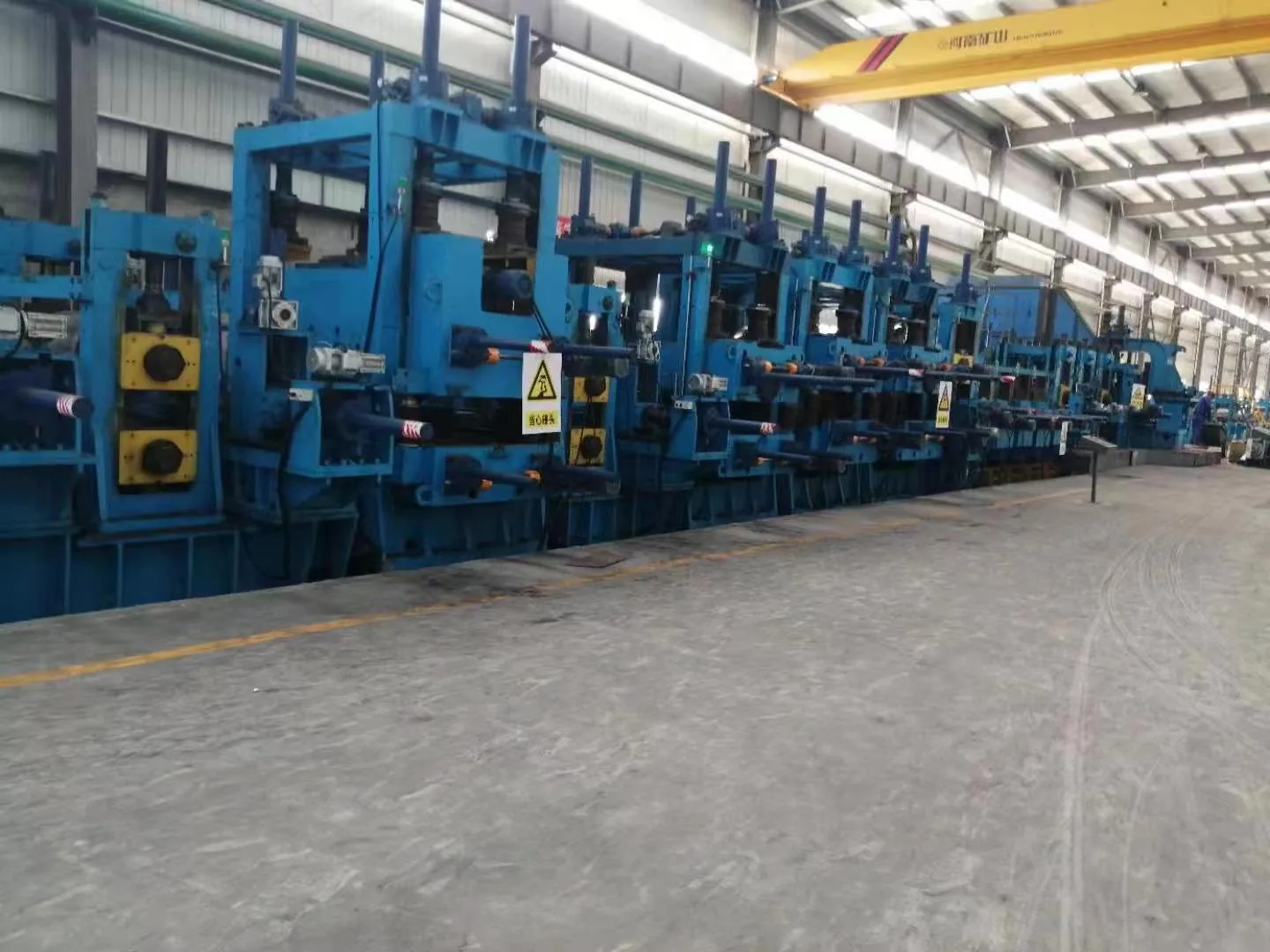
Tengtian’s API line pipe mill carries the full post-weld and inspection chain: medium-frequency annealing, straightening, end facing, hydrostatic test, ultrasonic and eddy-current inspection. Certification of the finished pipe is handled under the pipe maker’s own quality system.
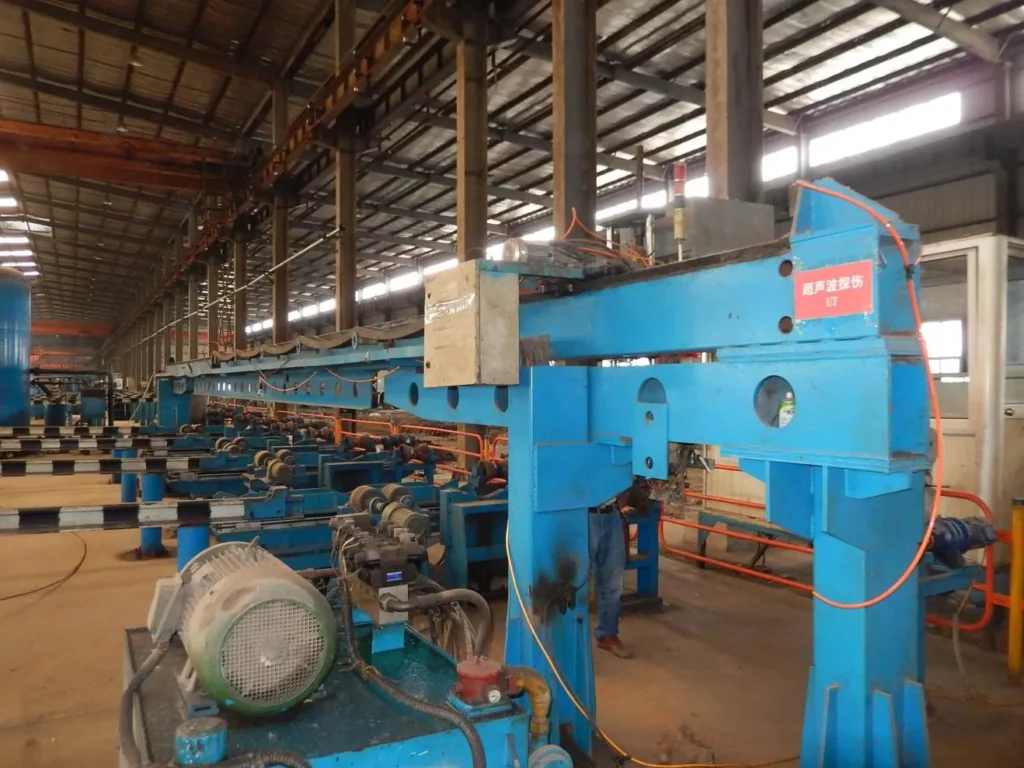
The Inspection Chain That Makes It an API Line
- Inspection chain: medium-frequency annealing → straightening → end facing → hydrostatic test → UT → ECT.
- API-line size bands: API 219 / 406 / 426 / 508, OD 114–508 mm, wall 6–24 mm by band.
- What separates this line from an ordinary welded line is post-weld heat treatment plus the full NDT set.
- Operating the in-line NDT requires specialist NDT training or qualification.
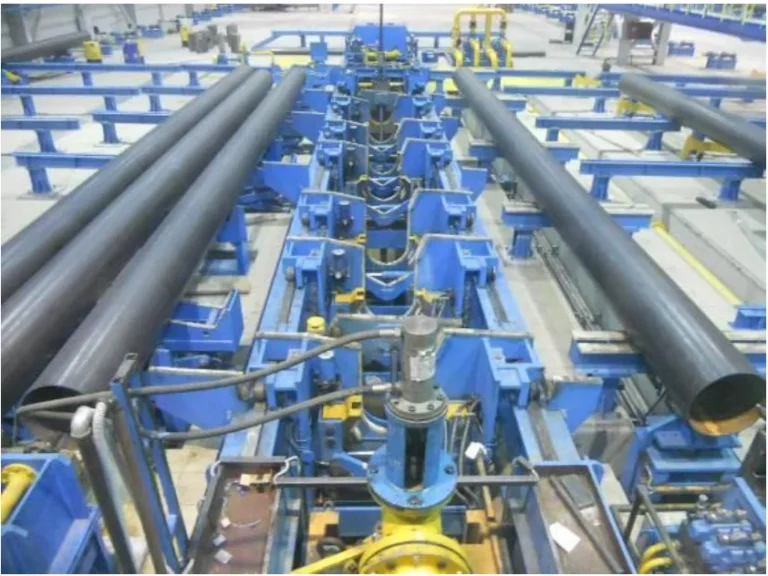
What the Inspection Chain on This Line Is Configured to Do
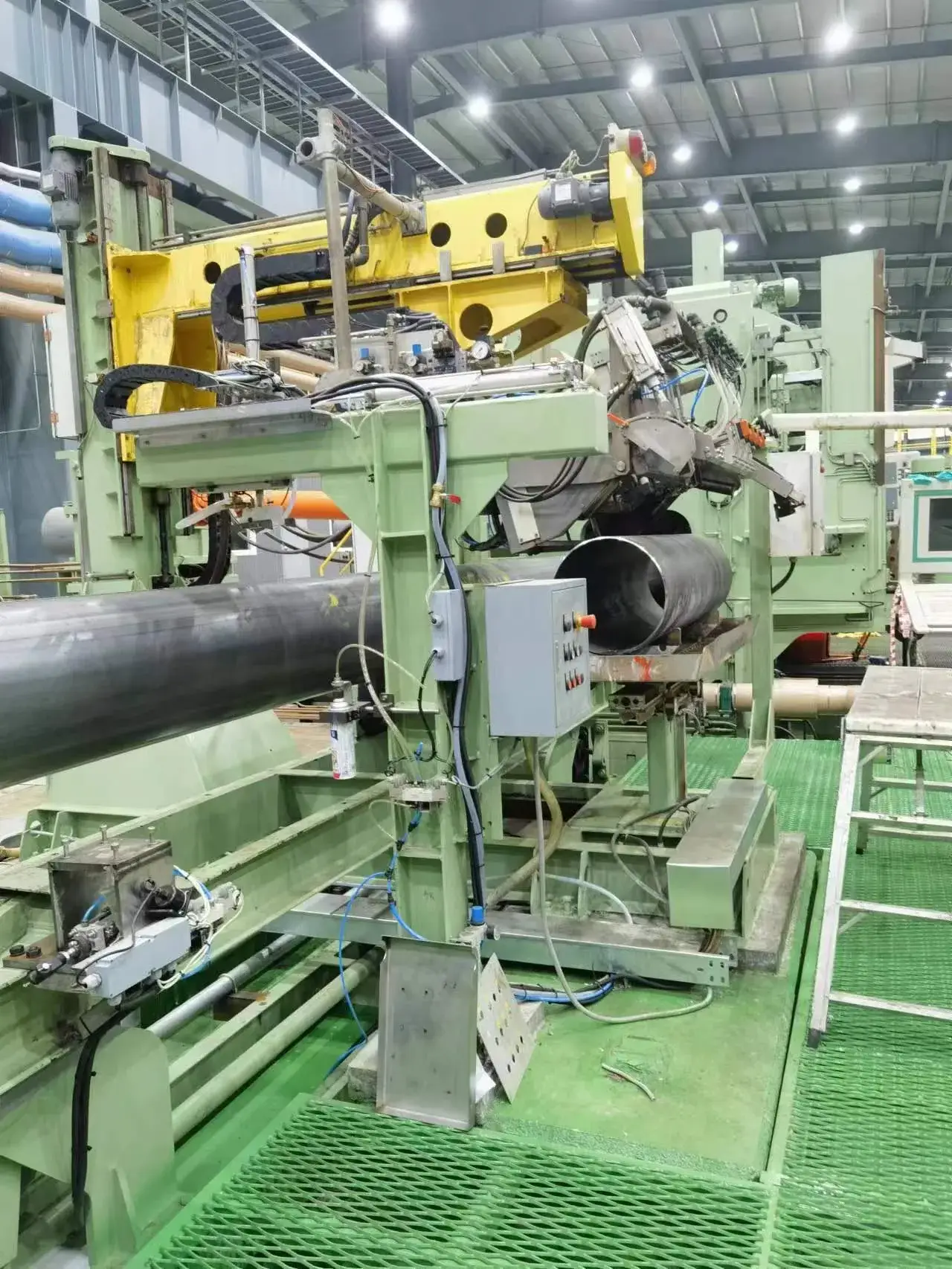
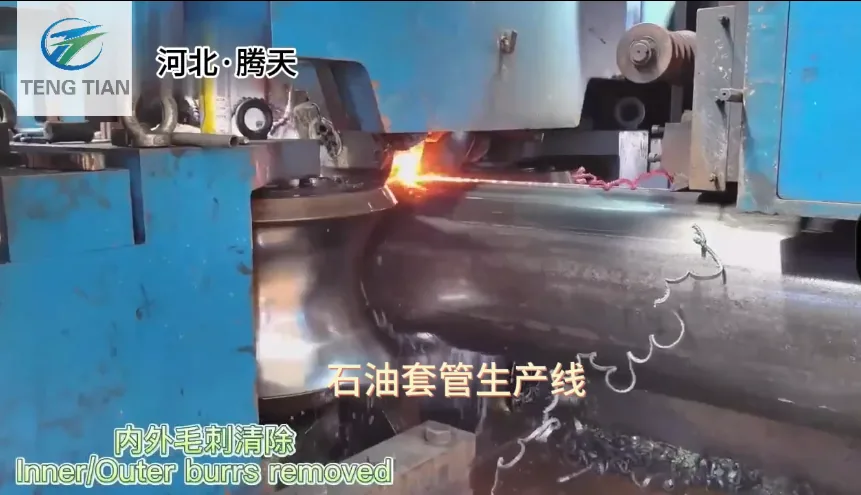
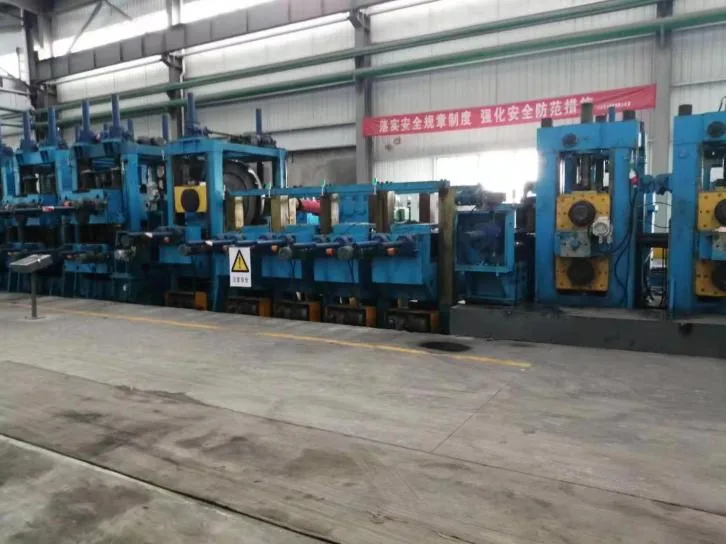
The added stages — medium-frequency annealing, straightening, end machining, hydrostatic testing, ultrasonic inspection and eddy-current inspection — are the in-line inspection and post-processing steps added to produce API 5L line pipe. The API line pipe mill is a high-frequency welded line with additional stages built on top of it.
The same distinction separates two product classes: an ordinary welded line without NDT, and an API line pipe line that adds annealing, hydrostatic testing, UT, ECT and end facing. That addition is what places a line in the compliance-oriented class.
The need comes from the order side. For oil and gas long-distance transmission line pipe, weld performance and compliance inspection — hydrostatic, UT and ECT — are the order threshold; the equipment is used by the line-pipe plant’s process, quality and NDT staff, and the beneficiaries include pipeline EPC contractors and energy infrastructure owners.
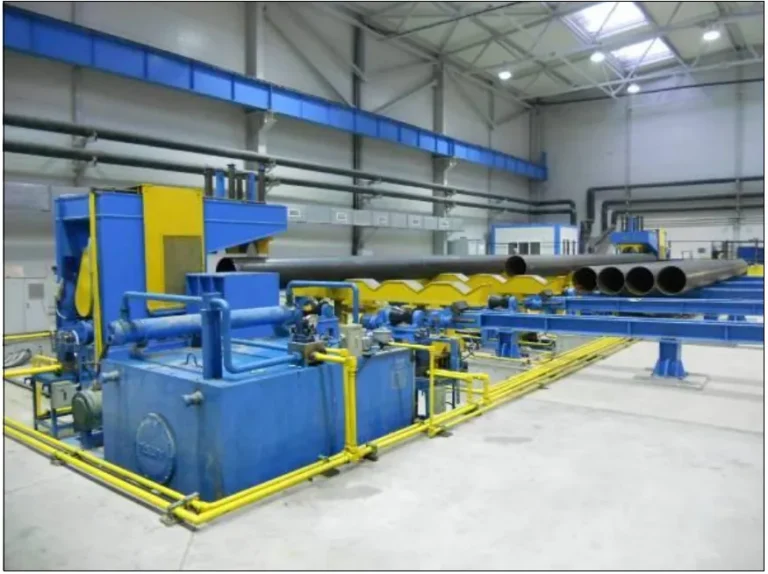
Equipment Configuration Checklist
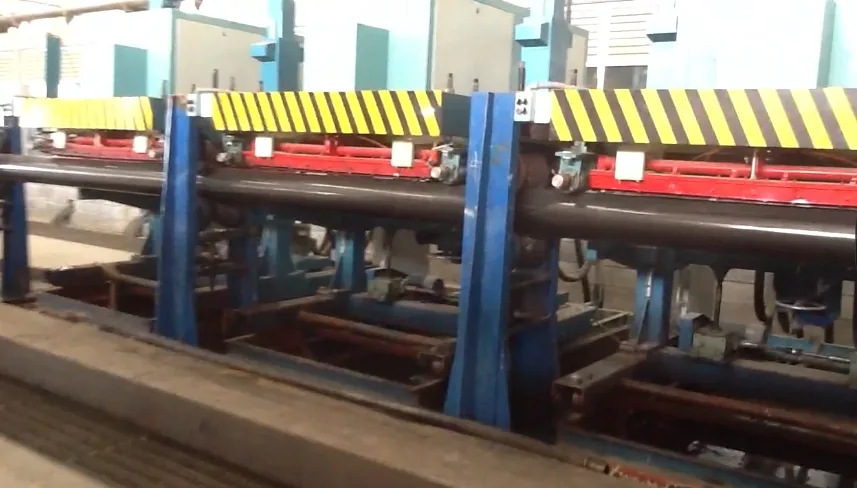
The inspection group comprises annealing, straightening, end facing, hydrostatic, UT and ECT units for API 5L.
In-line UT and ECT components, together with the hydrostatic tester, form the API 5L compliance inspection chain, the order threshold for line pipe; an ordinary welded line has none of these, while an API line carries them as standard.
The size bands are API 219, 406, 426 and 508, with outside diameter 114 to 508 mm and wall thickness 6 to 24 mm by band.
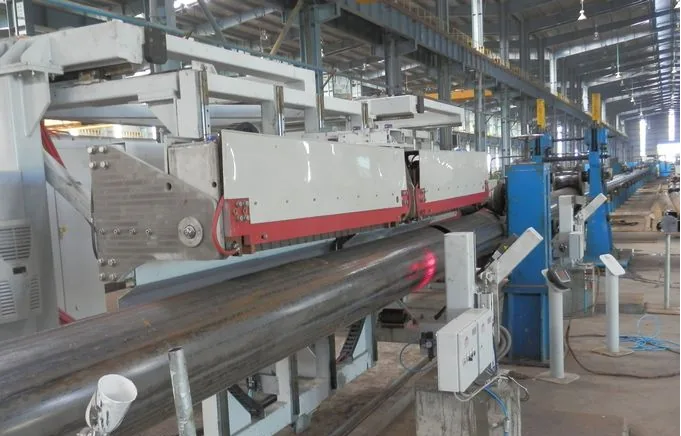
How the Line Is Configured to Meet Those Checks
The process order is: medium-frequency annealing, then straightening, then end machining, then hydrostatic testing, then ultrasonic, then eddy current. That whole sequence is the decisive stage for compliance and delivery of API line pipe.
Two of the stages carry a mechanism. Post-weld annealing applies medium-frequency heating to the weld zone followed by natural cooling, and it changes the metallographic structure and toughness of the weld and heat-affected zone.
The inspection stability side is a factor of equal weight. Stable hydrostatic, UT and ECT operation is what produces compliant and traceable pipe; unstable operation is producing missed detections, misjudgements and a loss of traceability.
The governing parameters are annealing temperature and heating power, and what they decide is the weld’s mechanical performance and its compliance. Annealing is also a quality-influencing factor in its own right, with a hard and brittle weld zone and insufficient toughness as the consequence of getting it wrong.
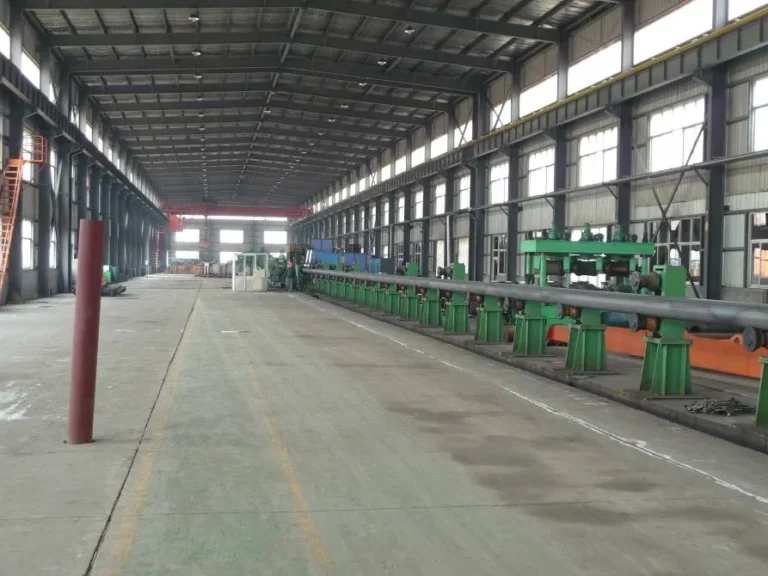
Equipment Status vs Mill Certification — Read This First
On the equipment side the position is clear: the API pipe line integrates the complete API 5L inspection chain — annealing, hydrostatic, UT and ECT — and all API 5L inspection chain equipment is part of the line.
Two things are often confused: what the equipment is built to do, and whether the plant running it is certified. We build and configure the equipment; certification is earned by the pipe plant under its own quality system.
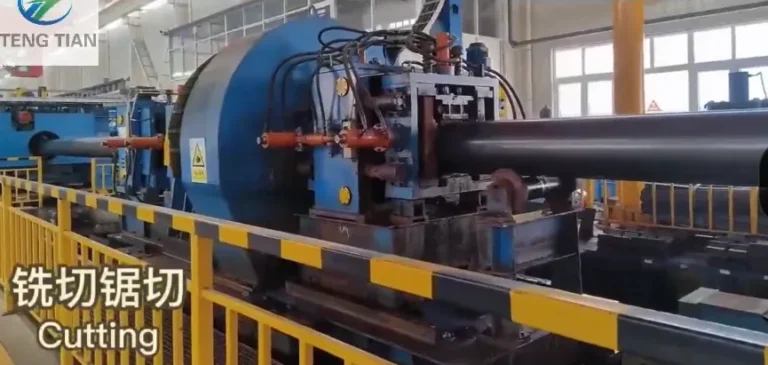
Certification and Scope
Pipe produced on the line is not automatically certified line pipe: the finished pipe is made by the buyer under the buyer’s own quality system.
For detailed requirements, coverage figures, acceptance levels and PSL grading, refer to the API 5L standard itself.
Tengtian draws this division explicitly. The equipment side covers the full inspection chain for compliant and traceable line pipe; the customer side covers incoming material and operation. The same split holds for weld quality, where equipment provides annealing plus the hydrostatic, UT and ECT chain while incoming material and operation remain with the buyer.
Records, Traceability and Third-Party Witnessing
Large energy and infrastructure groups are described as weighting technical standards and delivery date above other factors, with the purchasing decision sitting with an engineering or procurement committee, and what they need is equipment meeting API 5L or GOST, a full non-destructive testing set, and long-term parts and service.
Traceability is a property of stable inspection rather than of a separate documentation system. Stable hydrostatic, UT and ECT operation is the basis for compliant, traceable pipe, and instability produces missed detections, misjudgement and loss of traceability.
The consumables that keep that judgement honest are their own class: NDT couplant and calibration test blocks, replenished according to inspection volume, and Tengtian can advise on purchasing and supply. A related buyer question is how the NDT consumables and test blocks should be specified.
The continuity of that supply is set at company level rather than for this line alone, and it is our answer to a buyer objection about after-sales and spares from an overseas supplier. Continuous supply of spares and tooling is one of the factors behind repeat orders, and the mechanism given for it is in-house CNC machining of key parts together with direct spares delivery.
Who buys this line, and what they check first
The buyer segment is set at company level and it is the most standards-driven of the buyer segments Tengtian serves.
The question those buyers actually ask is direct: whether the equipment can meet the required technical standard, naming API 5L and GOST together. The way to answer it is to show the API 5L inspection chain and the GOST H-beam equipment with its grade coverage — in other words, to show how the lines are configured.
Entering a market governed by a different standard is a trigger for changing equipment supplier; the buyer then needs a supplier that has the API 5L inspection chain or GOST capability.
The commercial framing explains why the certification question matters so much. Target markets are classified by standard — conventional structural and fluid pipe, API 5L line pipe, GOST Russian-standard H-beam, and GB — and equipment is offered either as a turnkey line or as single machines and units.
How the line ships
The API line is called out separately for shipping, because it falls at the heavy end of the range.
For large-diameter and heavy whole lines — the HG508 to HG630 bands and the API line — the main frames ship bare, lashed and secured to frames or pallets with lifting points provided, with rust protection applied; the trade-off is lower packing cost against a need for specialist lifting and heavy-item transport, handled per project.
Precision and vulnerable parts follow the general rule: control cabinets, induction coils and impeders, forming rolls and cutting tools are crated in wooden cases with moisture protection.
Two service facts belong with that, because a heavy line in a remote plant makes them operational rather than commercial. Delivery is set at 50 to 90 days with staged supply and whole-plant customisation.
After-sales is a single point of contact responding round-the-clock, round-the-clock online support, on-site dispatch and direct spares delivery, with installation and commissioning included in the after-sales scope.
The in-line inspection operation itself is testing the weld and body by hydrostatic test, ultrasonic and eddy current, judging pass or reject against the standard, and requiring specialist NDT training or qualification to run.
Applicable Standards
API 5L is mandatory for line pipe orders in the global oil and gas market and applies to the API line pipe product only.
Separately, the enterprise standard Q/GYLTT01-2023, covering HGF150 high-frequency welded pipe equipment, was issued on 31 August 2023, took effect on 15 September 2023, and is published on the national enterprise-standard information platform as a twelve-page document.
For North America, ASTM specifications are the usual reference.
Resource Downloads
More from this line
From the Workshop
 Pipe Coating Line Configuration
 H Beam Welding Line
 Tube Mill Supply Scope, Commissioning & Acceptance Criteria
 Configuration Tiers Behind a Pipe Making Machine Price
Send Your Enquiry
Tell us the pipe outside-diameter range, the wall thickness and the output you need. An engineer reads every enquiry — it does not land in a general sales inbox.