 Scan on WeChat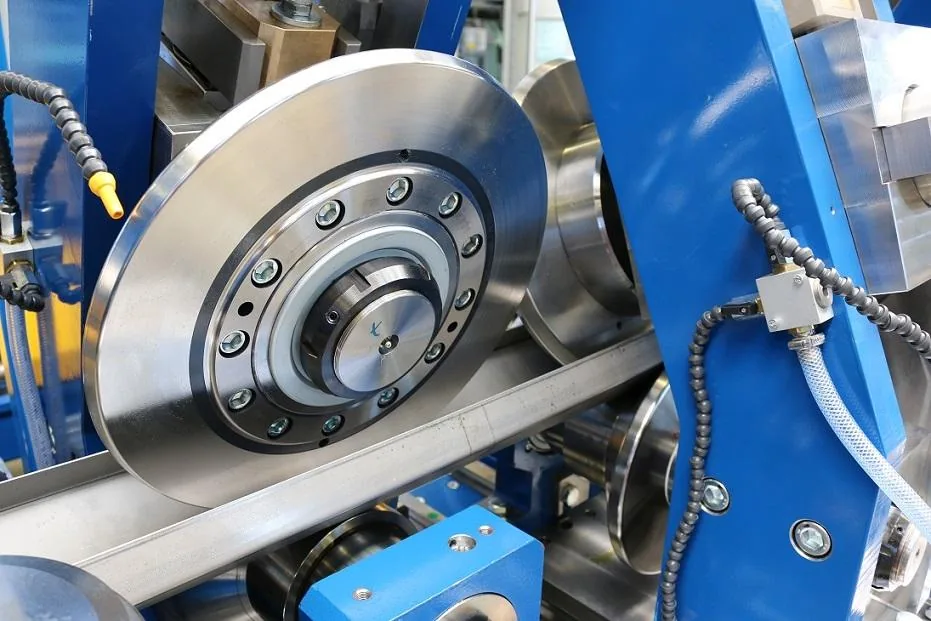
Purlin Machine Lines
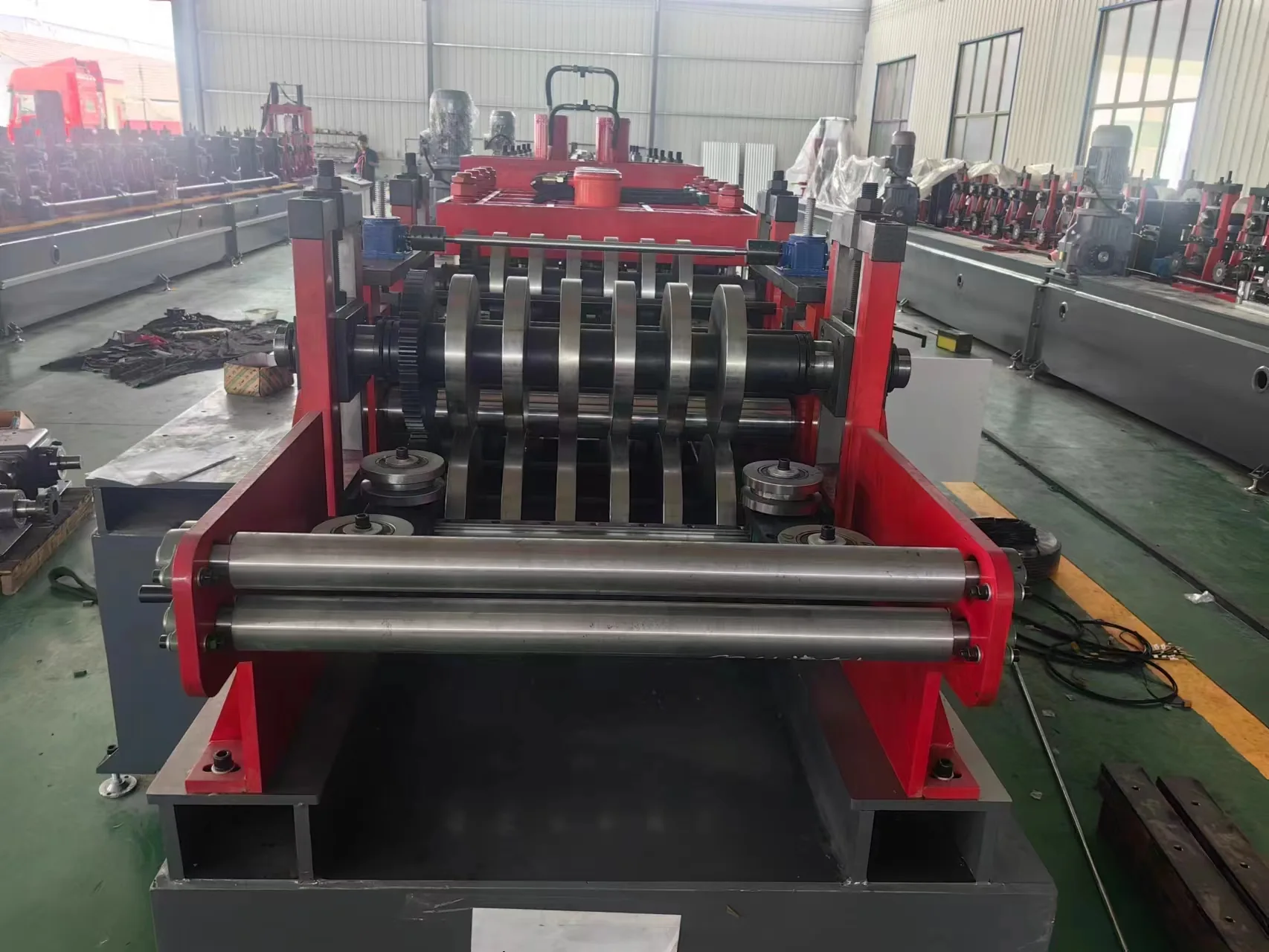
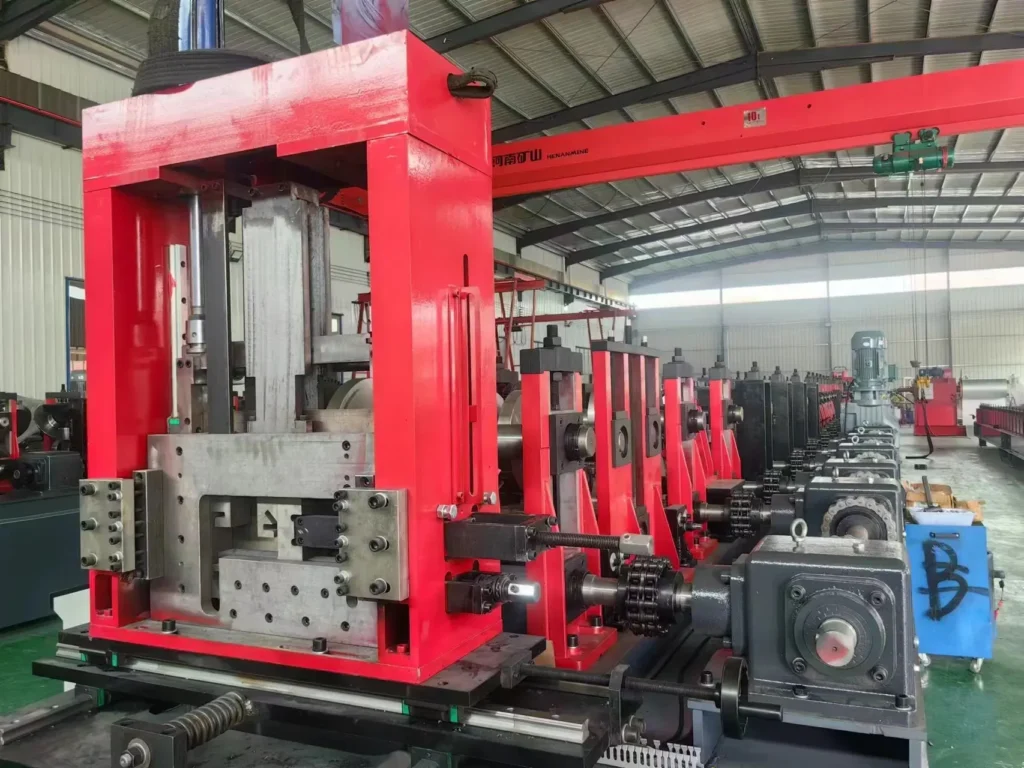
This range covers the C, Z and Ω purlin roll forming machine: a cold forming line that punches, cuts
and forms structural purlins from strip, with no welding anywhere in the
process.
Quick Contact
Hebei TengtianYuanle@tentubemill.com
+86-311-83025332
WhatsApp +852 5425 3155
What Is Purlin Roll Forming Machine
The machine is a semi-automatic C/Z interchangeable line: one set of tooling produces multiple
purlin sizes through stepless adjustment, so changing size does not mean changing rolls. It punches
holes, cuts and forms automatically, reaches 20 m/min forming speed, and works material 2–4 mm
thick.
It is explicitly cold forming with no welding — strip is bent progressively into an open section by
roll pressure and then punched and cut hydraulically. That is the structural difference from the
welded pipe lines we build, which form and then weld a closed
section.
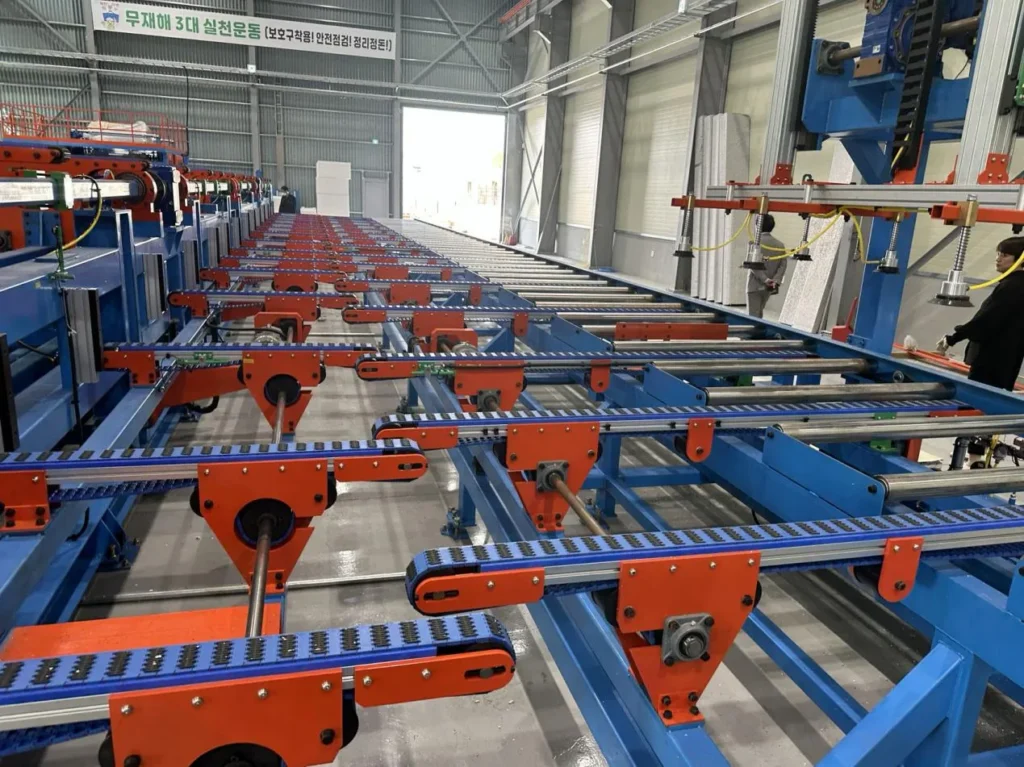
 CZ Purlin Roll Forming MachineOne set of dies and cutters travels with the line, so the plant is not sourcing tooling during commissioning.See the line →
 Changing Section Size on a Purlin Roll Forming MachineA purlin roll former is a cold forming line, not a welding line.See the line →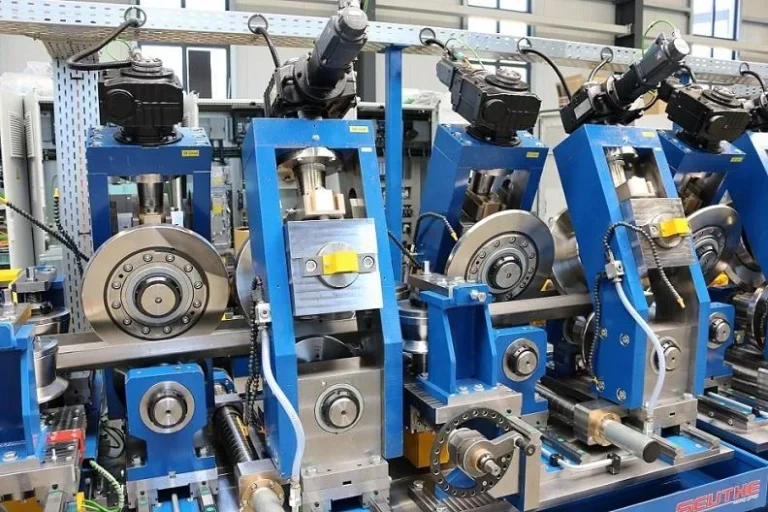
Purlin Roll Forming Machine — Range, Configuration and Output
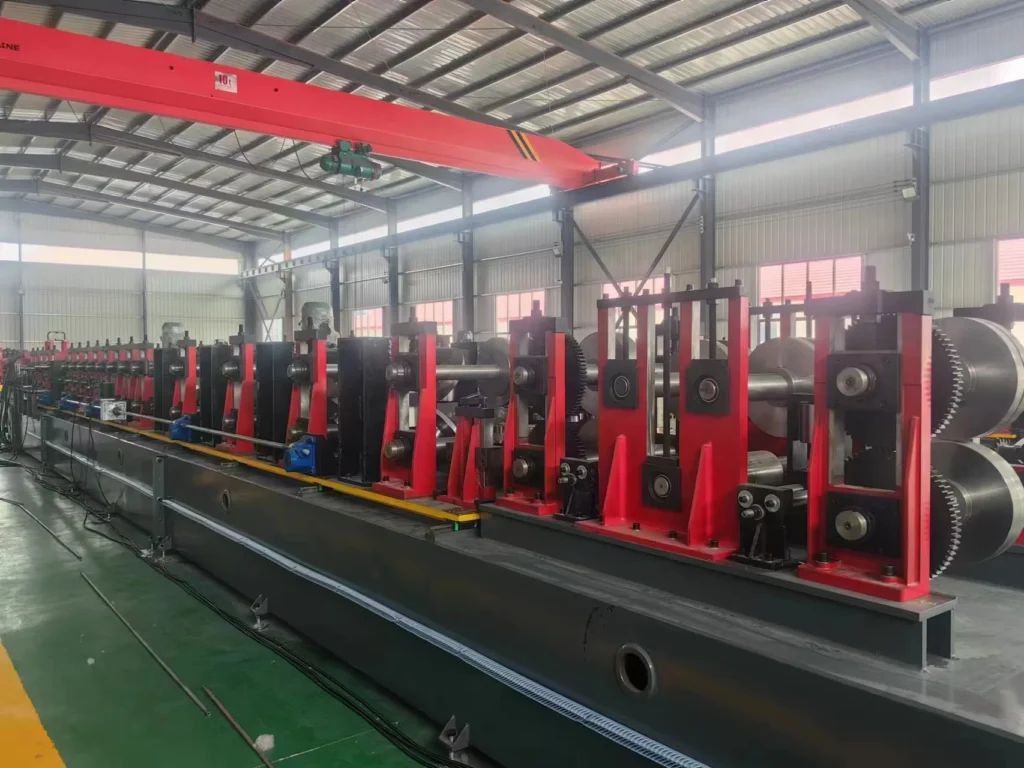
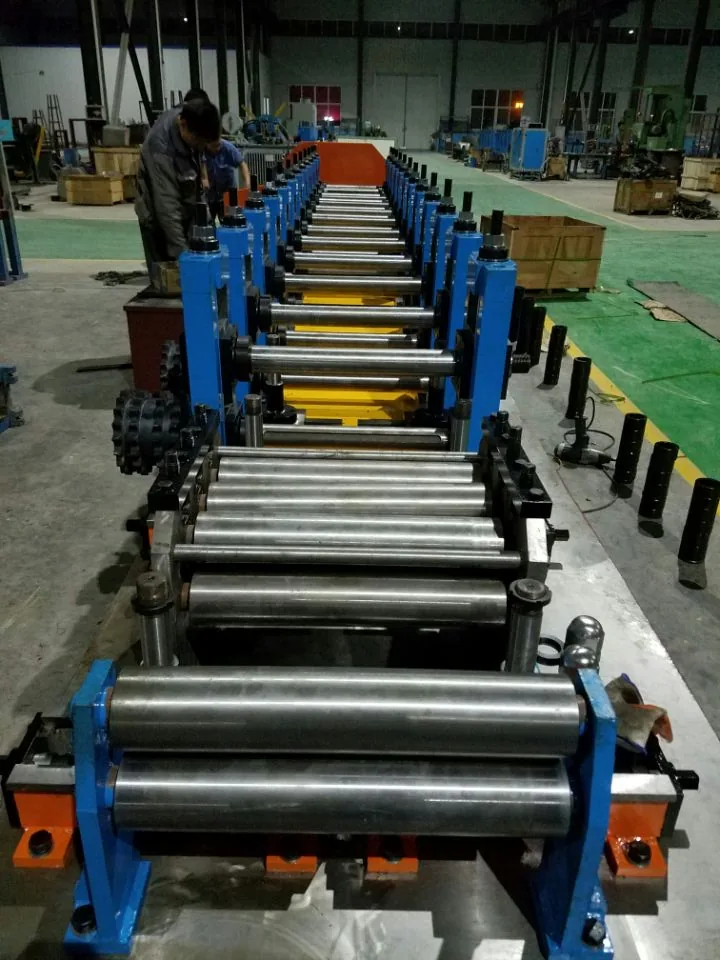
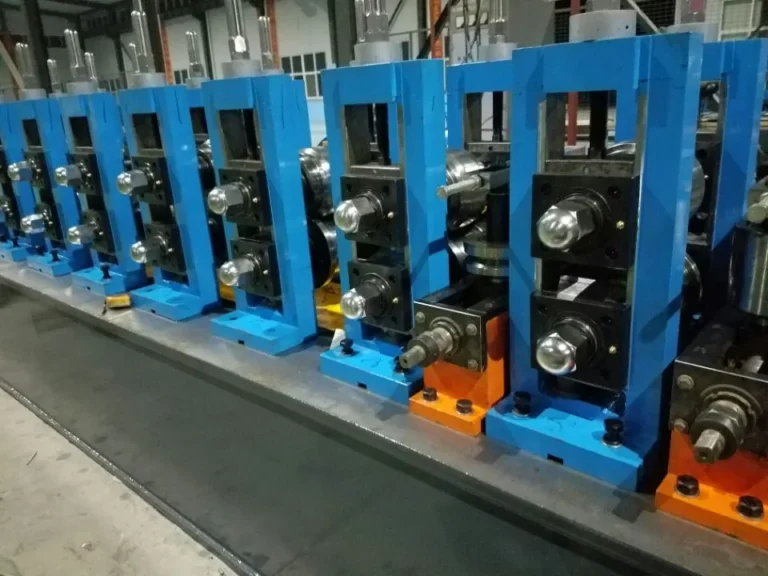
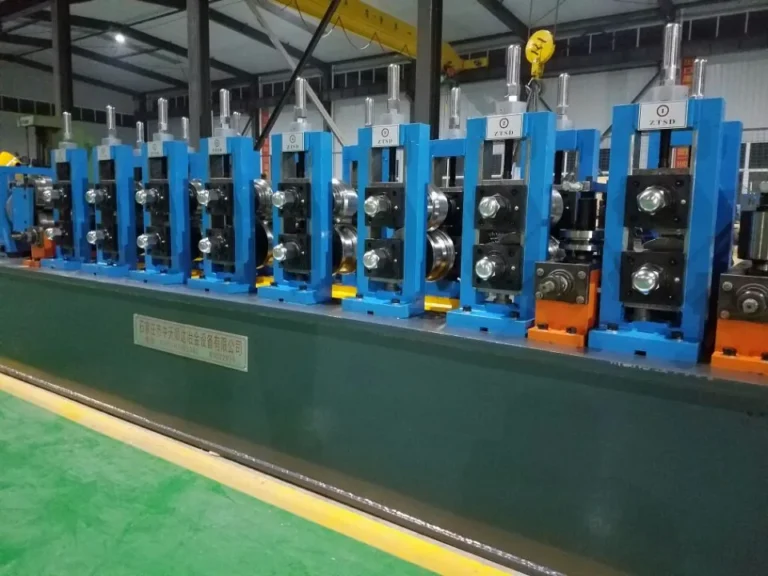
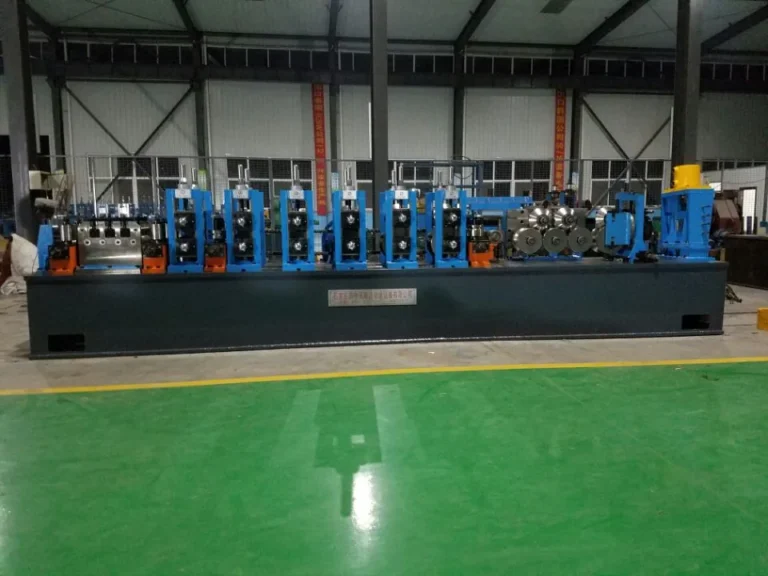
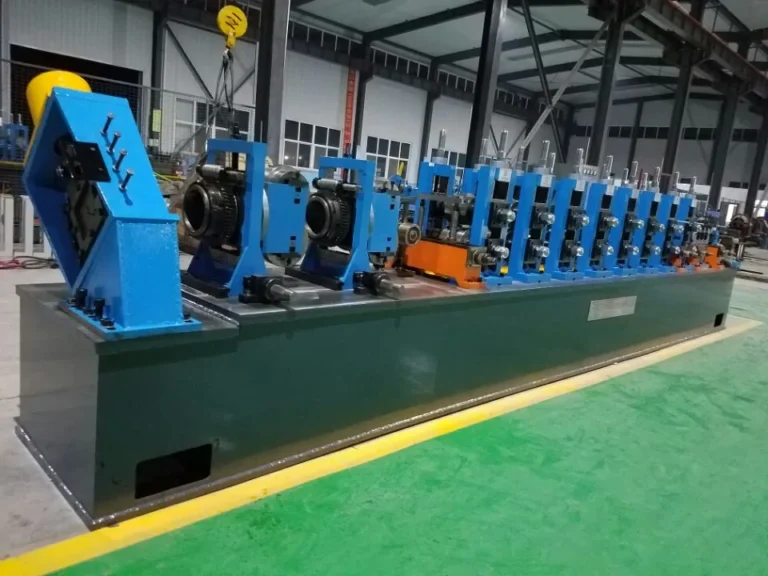
The forming section is an 18-pass roll former with hydraulic punching and cutting, running up to
20 m/min.
The operating pattern is parameter-driven rather than tooling-driven: the operator enters purlin
length, hole pitch and quantity, and the line punches, forms and cuts to those numbers
automatically.
What the process physically does is worth stating because it explains the tolerances: cold roll
forming bends strip through 18 passes at room temperature with no phase change — pure plastic
deformation. Pass count, roll profile and the yield strength of the material are what decide
geometric accuracy and springback control.
Three profile types come off the same machine — C, Z and Ω — with stepless adjustment between
them.
Key Parameters: Size Range, Wall Thickness, Line Speed and Welder Power Band
- Profile types: C / Z / Ω, interchangeable on the same machine.
- Material thickness: 2–4 mm.
- Forming speed: up to 20 m/min.
- Forming passes: 18.
- Roll material: bearing steel, hardened after machining.
- Die and cutter material: hardened Cr12.
Material thickness, line speed and output are confirmed against your profile section, steel grade and finished length at quotation. Send us those three and we will state the figures.
How to Choose the Right Model
The buyer is a steel structure or PV mounting fabricator, and the decision is driven by product
mix rather than by throughput. The acceptance concerns are exactly that: whether changing
size needs a roll change, how accurately holes are positioned, and forming
speed.
Because stepless adjustment covers C and Z on one machine, the question to answer before quoting is
the spread of purlin sizes actually run, not the peak size. A mix that stays inside the adjustment
range removes the roll change entirely; a mix that does not is a different
conversation.
The second question is hole pattern. Since punching is parameter-driven, hole pitch changes are a
setting rather than a tooling change — but punch and die wear is driven by punching count, so a
dense hole pattern consumes tooling faster.
Scope of Supply, Installation and Commissioning
One set of dies and cutters ships with the line, and Cr12 dies and cutters can be supplied
continuously as they are reground or replaced by punching count.
Die and cutter service life in strokes is available on request.
Export packing is specified per item, with control cabinets and precision tooling — dies, cutters,
rolls — in moisture-protected wooden cases and heavy frames braced bare on cradles with designated
lifting points.
CE certification for cold roll forming equipment is held from UDEM under its own certificate
number.
What decides accuracy on a cold-formed profile
Two things are decisive, and they sit in different places.
The first is tooling material. Forming rolls are bearing steel hardened after machining; dies and
cutters are hardened Cr12. When either is under-specified the result is not immediate failure but
drift: poor profile edge lines, hole positions moving, and cutting edges going blunt
early.
The second is the process itself. Cold roll forming through 18 passes at room temperature is pure
plastic deformation with no phase change, so pass count, roll profile and the yield strength of the
incoming material are what set geometric accuracy and springback
control.
Springback is the reason the same tooling on a different steel grade does not give the same
profile, and it is why incoming material specification belongs in the enquiry rather than in
commissioning.
Where responsibility sits on the finished purlin
The split is explicitly. Hole position and profile geometry are controlled on the
equipment side by hydraulic punching accuracy and roll profile; parameter setting is on the
operator’s side. Operator training is therefore listed as a requirement rather than an
extra.
The failure chain runs the same way: a parameter or stepless-adjustment error produces
hole positions off and profile twist, and the consequence is downstream — the purlin does not
assemble.
Who buys this line
The buyer is a steel structure or PV mounting fabricator, with the operator on the shop
floor as user and the construction or PV project as
beneficiary.
Their purchase triggers are entering a new product type — moving into purlin production —
or expanding existing capacity.
Their switching trigger is tooling and changeover cost on existing
equipment.
Certification, and what each certificate actually covers
ISO 9001 is held under certificate number 18524Q11269R2S, issued by National Standard Integration
(Beijing) Certification Co., Ltd. under IAF MLA and CNAS accreditation.
CE certificates are held from UDEM under three separate numbers, and each covers a different line
type: welded pipe equipment under M.2022.206.C72171, cold roll forming equipment under
M.2022.206.C72172, and slitting lines under M.2022.206.C72173. A fourth CE certificate for cold
forming is held from Ente Certificazione Macchine in Italy under
0P250616.HTWTT37.
Each number can be checked at the issuing body rather than taken on trust, which is why we
publish numbers and verification routes instead of certificate images.
An enterprise standard, Q/GYLTT01-2023 for HGF150 high-frequency welded pipe equipment, is
published on the national enterprise-standard platform.
High-Tech Enterprise certificate GR202413001148 is held.
The Madrid international trademark for TENGTIAN is registered under number 1 707
606.
The patent portfolio is 30 granted utility model patents, with 7 invention patents applied for.
Delivery, payment and after-sales
Lines are dismantled into units and shipped in containers: heavy frames braced bare on cradles with
designated lifting points and rust protection, precision and wear items in moisture-protected
wooden cases with a spare-parts pack.
Delivery takes 50 to 90 days.
Installation and commissioning are part of the supply rather than a separate quotation, backed by
on-site dispatch and round-the-clock online support.
There is a single point of contact, with a response time of under one
hour.
Payment is staged — 30 per cent deposit, 70 per cent before shipment — with third-party escrow and
multiple trade terms available.
Anonymised reference deliveries
Our lines are running in more than a dozen countries — mostly on construction tube, and also on fire-extinguisher tube, furniture tube and other sections.
Delivery cards show region and model or size.
The line stage by stage
Two operating stages apply to this line, and both are parameter-driven rather than
tooling-driven.
Forming with punching and cutting: the line roll-forms the section cold and punches and cuts
hydraulically according to the entered length, hole pitch and quantity. This is the decisive stage
for purlin geometry and hole position, and the failure chain is a parameter or
stepless-adjustment error producing offset holes and profile twist, with assembly failure
downstream.
Parameter-driven automatic punching and cutting: the operator enters purlin length, hole pitch and
quantity, and the machine punches, forms and cuts to those numbers. The risks to watch are parameter
setting and stepless-adjustment alignment; outcomes when wrong are offset holes, wrong
length and twisted profile. Operator training is
required.
The tooling, in the terms that decide cost
Rolls, punch dies and cutters are the core component group: rolls in bearing
steel hardened after machining, dies and cutters in hardened Cr12. The selling points are
exactly three — bearing-steel hardened rolls, Cr12 hardened dies and cutters, and stepless
adjustment without a roll change.
On the consumables side, dies and cutters are wear items reground or replaced by
punching count, with Cr12 dies and cutters available as continuing supply and one set shipping with
the line.
What this line does not do
It does not weld — explicitly as cold forming with no
welding.
It does not make closed sections; the products are open C, Z and Ω
profiles.
It does not have a output figure in tonnes or pieces per shift; what is is
forming speed at up to 20 m/min, which is a line speed rather than an
output.
What to send with an enquiry
The profile type and drawing, material thickness and grade, hole pitch and length range, and the
size spread you expect to run. Because punching is parameter-driven and adjustment is stepless,
the spread matters more than the peak size.
Material grade belongs in the enquiry rather than in commissioning, because springback control
depends on the yield strength of the strip going in — the same tooling on a different grade does
not give the same profile.
A risk to plan for
This line can fail from two directions, and both end in the same
place: assembly.
From the process side, a parameter or stepless-adjustment error produces offset holes and a twisted
profile, and the consequence is that the purlin does not
assemble.
From the product side, punching and forming deviation produces the same outcome, with the equipment
controlling hydraulic punch positioning and roll profile while the operator controls the parameter
setting.
Responsibility for the finished purlin is split: hole position and profile geometry
are controlled on the equipment side by hydraulic punching accuracy and roll profile, while
parameter setting is on the operator’s side — which is why operator training is listed as a
requirement rather than an option.
More from this line
More on this line — specifications, model steps and photographs.
From the Workshop
 Pipe Production Applications
 Large Diameter Tube Mill
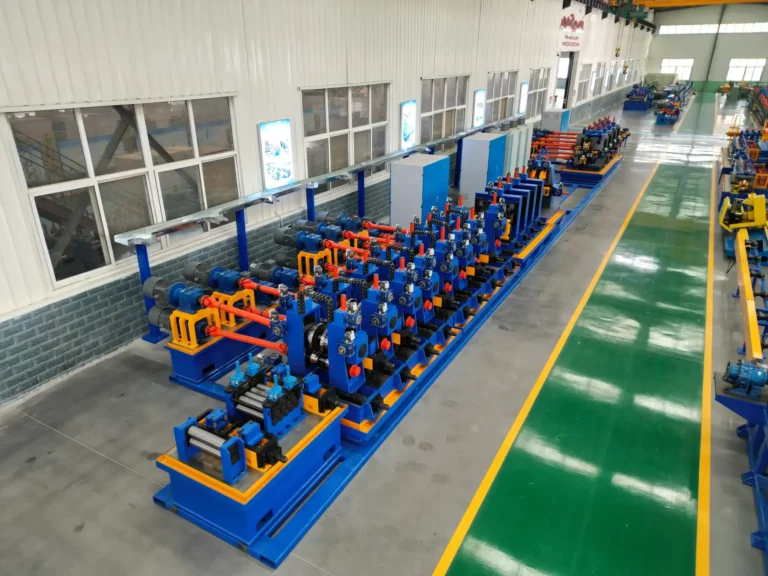 High-Frequency Welded Pipe Mill
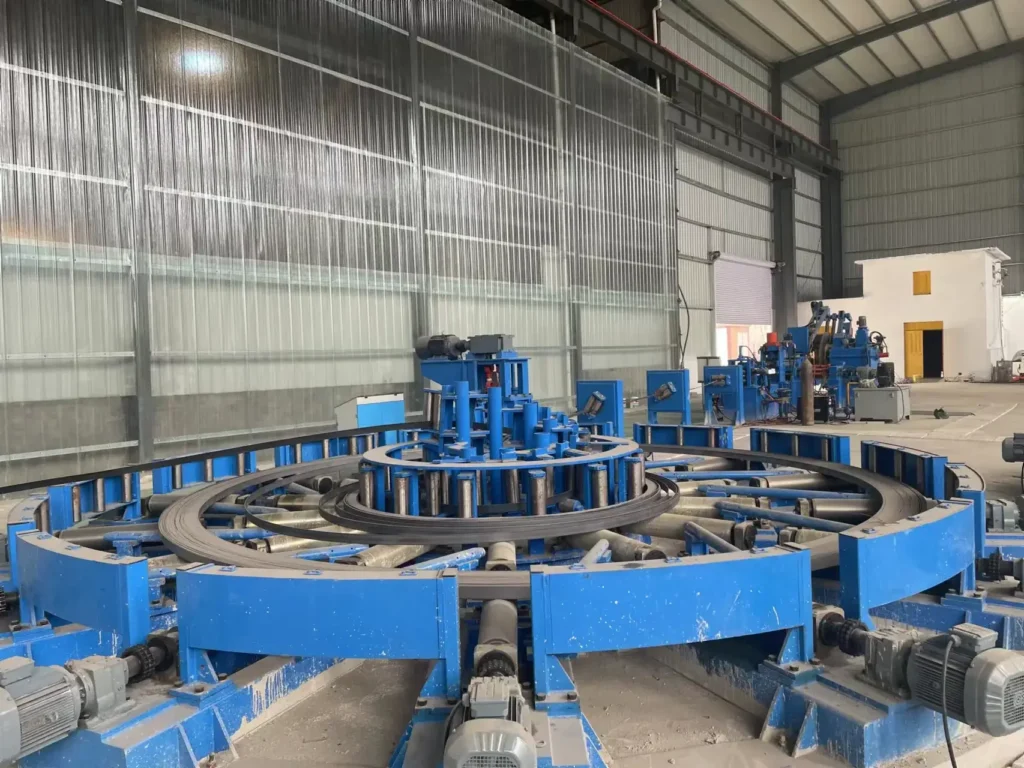 H-Beam Production Line
Send Your Enquiry
Tell us the pipe outside-diameter range, the wall thickness and the output you need. An engineer reads every enquiry — it does not land in a general sales inbox.