 Scan on WeChat
Home › Roll Forming Machine › Cold Roll Forming Machine for C, Z and Omega Purlins
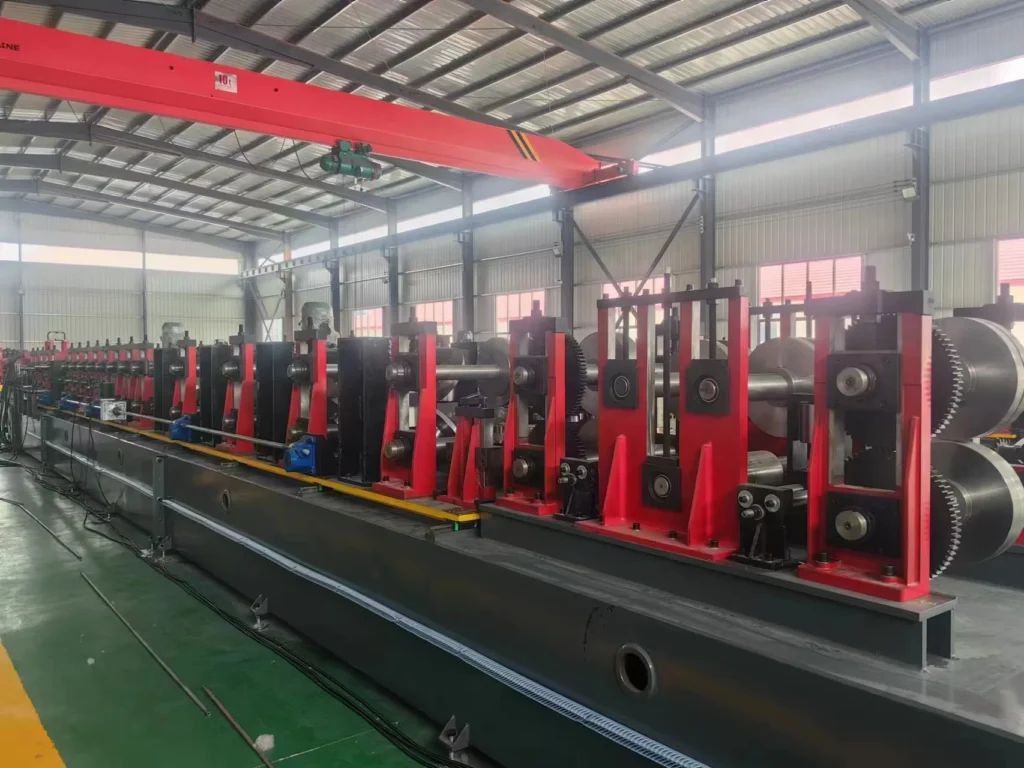
A cold roll forming machine shapes steel strip at room temperature: successive roll passes bend it progressively into an open section, which is then hydraulically punched and cut.
In This Line
Quick Contact
Hebei TengtianYuanle@tentubemill.com
+86-311-83025332
WhatsApp +852 5425 3155
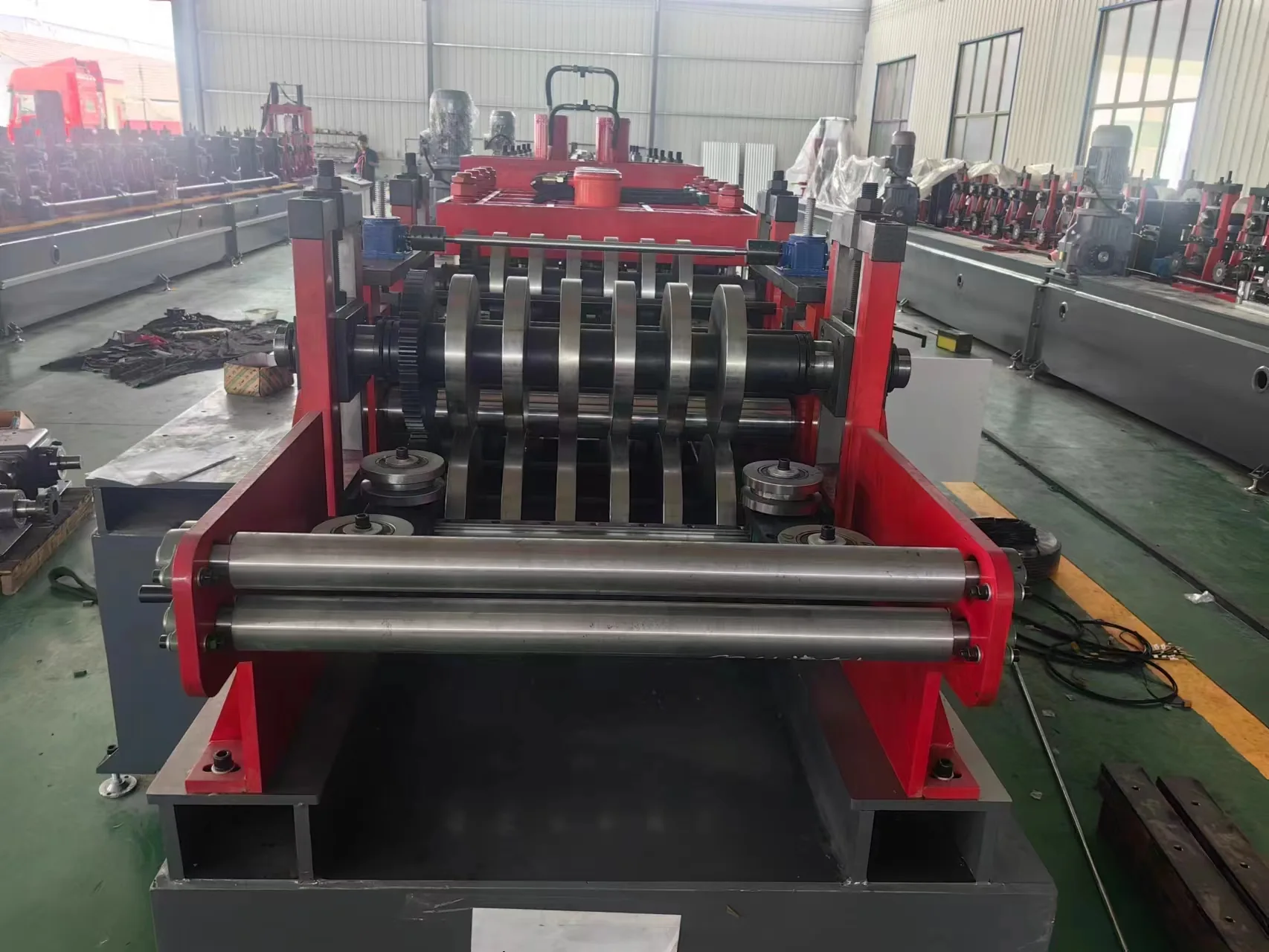
There is no welding and no phase change — purely plastic deformation.
Technical Specification Table
| Parameter | Value |
|---|---|
| Forming principle | Room-temperature progressive roll bending into open section; no phase change, purely plastic deformation |
| Forming passes | 18 passes |
| Sections produced | C / Z / Ω purlin sections on one machine, stepless adjustment |
| Certified profile coverage | C / Omega / Zeta / Z / open / close profile |
| Size change | Stepless adjustment — no roll change between sizes |
| Punch & cut | Hydraulic punching and cut-off to entered length / hole pitch / quantity |
| Roll material | Bearing steel, hardened |
| Die & cutter material | Cr12, hardened |
| Automation | Parameter entry → automatic punch, form and cut |
| Control | PLC industrial computer + variable-frequency / servo |
| Strip thickness | 2–4 mm |
| Forming speed | up to 20 m/min |
| Line type | Semi-automatic C/Z interchangeable purlin line |
| Output (sections/h, t/shift) | available on request |
| Manufacturing lead time (this line) | available on request |
A second document exists for cold forming: the technical file verified by Ente Certificazione Macchine Srl (Italy), 0P250616.HTWTT37, technical construction file OCT20250611103M.
What the certificate actually covers is worth reading carefully. The CE certificate for cold roll forming equipment — UDEM M.2022.206.C72172 — names C, Omega, Zeta, Z, open and closed profile. That is broader than “purlin” and narrower than “any section”.
It is worth reading that profile list literally, because it sets the real scope of the certificate. C, Omega, Zeta and Z are the purlin family. Open and closed profile is broader — it says the certification covers forming equipment producing sections of either topology, not that any given section has been built and proven.
In practice, the purlin sections are specified in detail; for any other section, send us a drawing and an engineer will work through it with you.
We publish both with issuing body and certificate number so a buyer can verify them independently rather than take a logo on trust.
A tube mill forms strip into a closed section and then welds the seam; a cold roll forming line forms strip into an open section and never welds it at all — the section is held by the geometry of the bend, and the line finishes with hydraulic punching and cut-off instead of with a welder and a sizing stand.
That single difference cascades: no induction welder, no impeder or coil as wear items, no post-weld cooling stage, and no weld to inspect. What replaces them is tooling — the roll pass sequence, the punching dies and the cutters — and tooling is where both the capability and the running cost of a forming line sit.
How cold roll forming differs from the welded-pipe lines we build is worth stating once, because buyers familiar with tube mills often assume they are variations of one machine. They are not.
Line Configuration and Scope of Supply
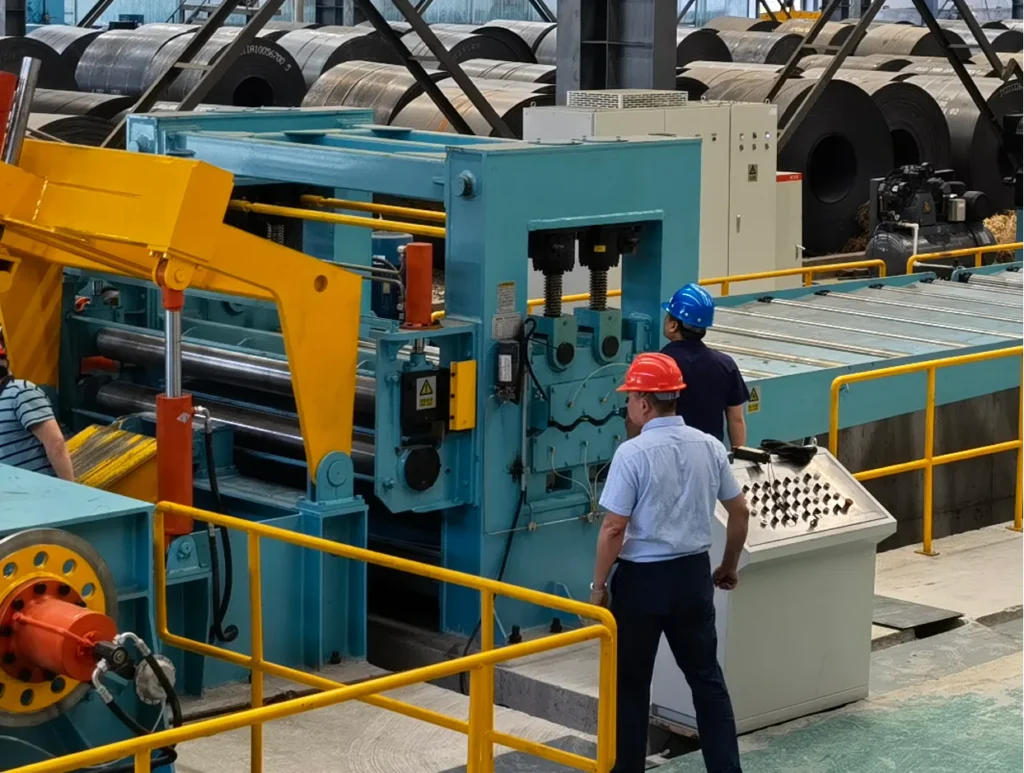
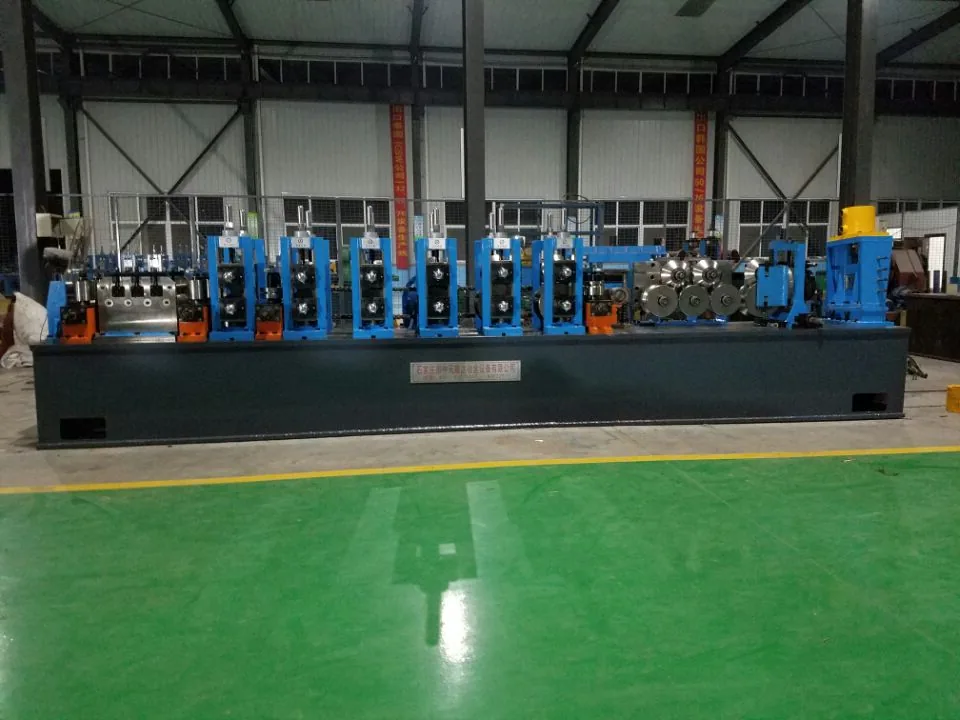
- A cold roll forming line is a shorter machine than a tube mill, and the units are fewer:
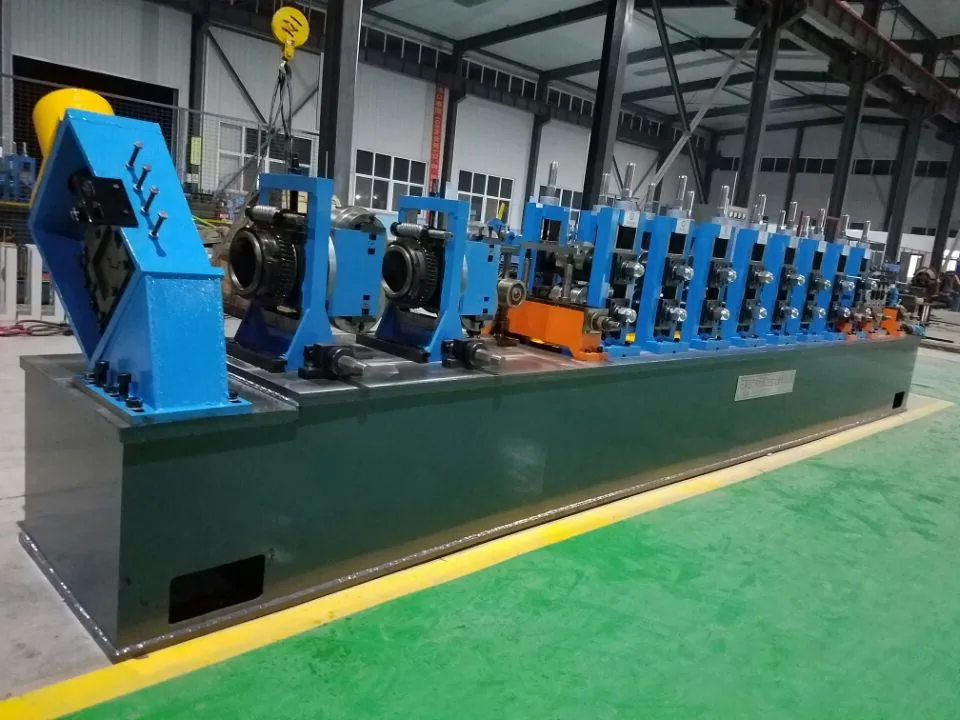
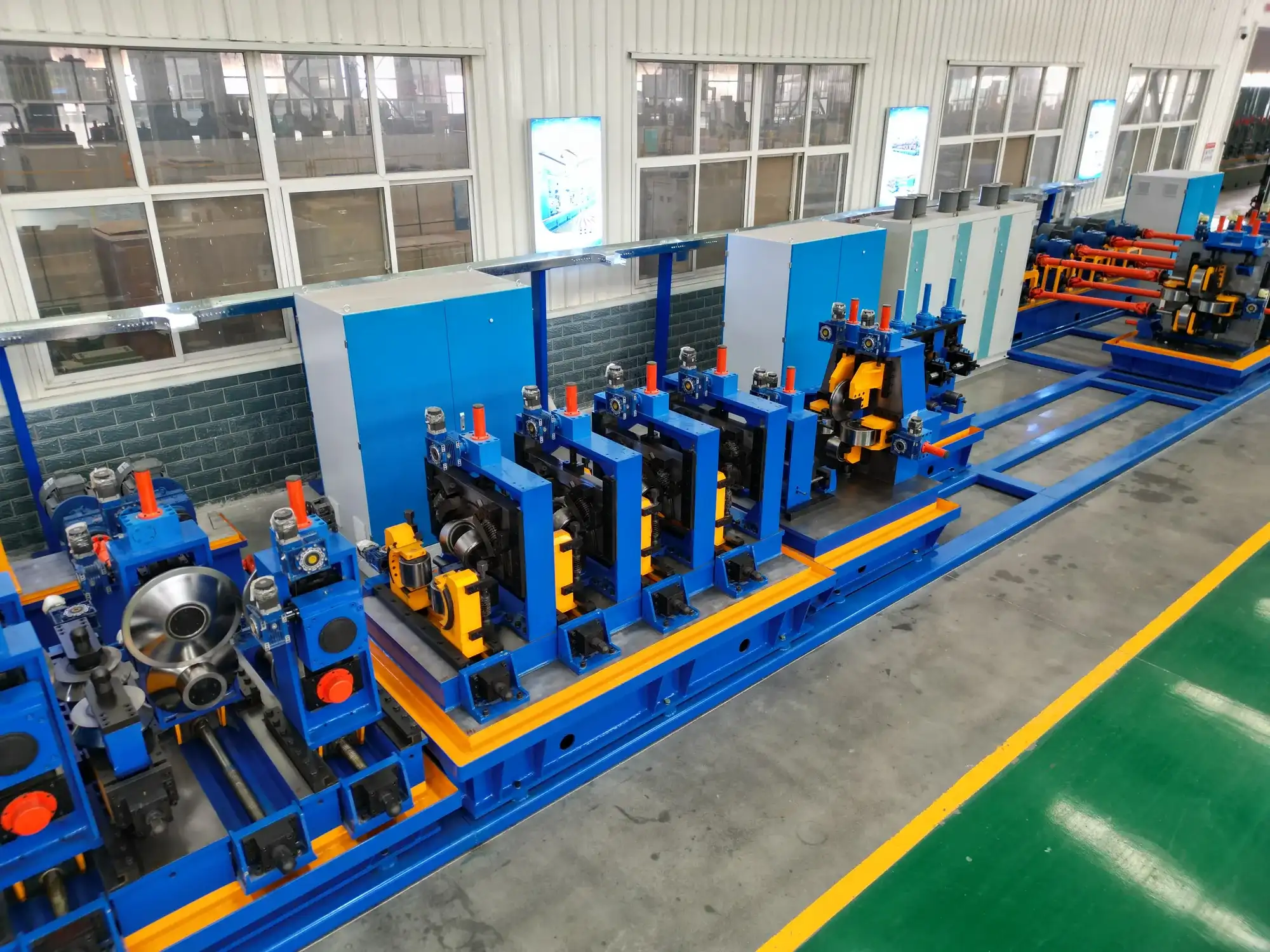
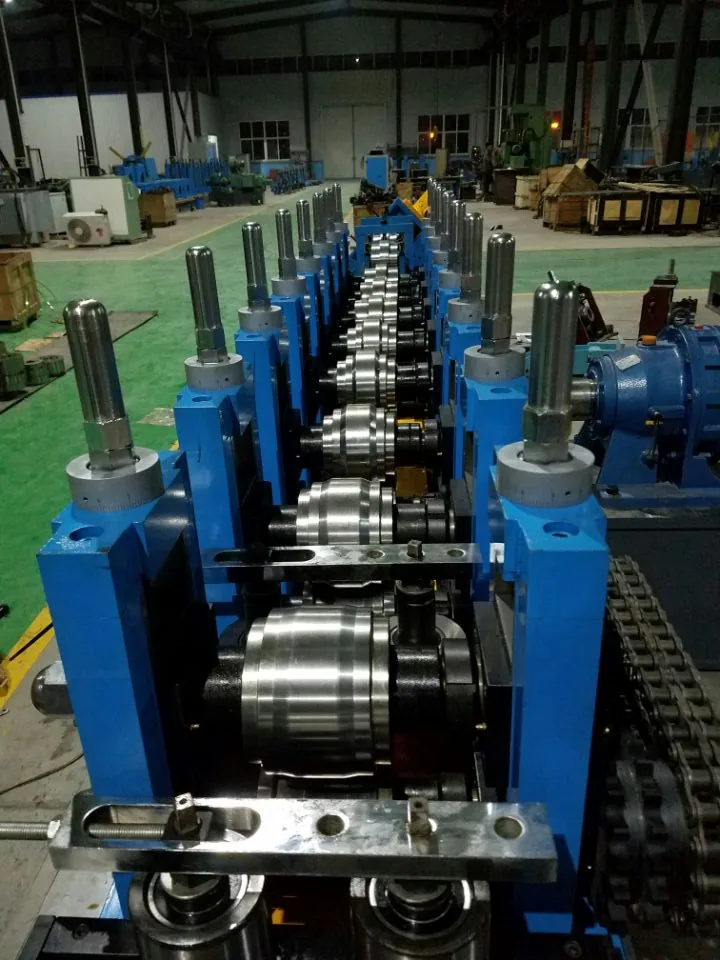
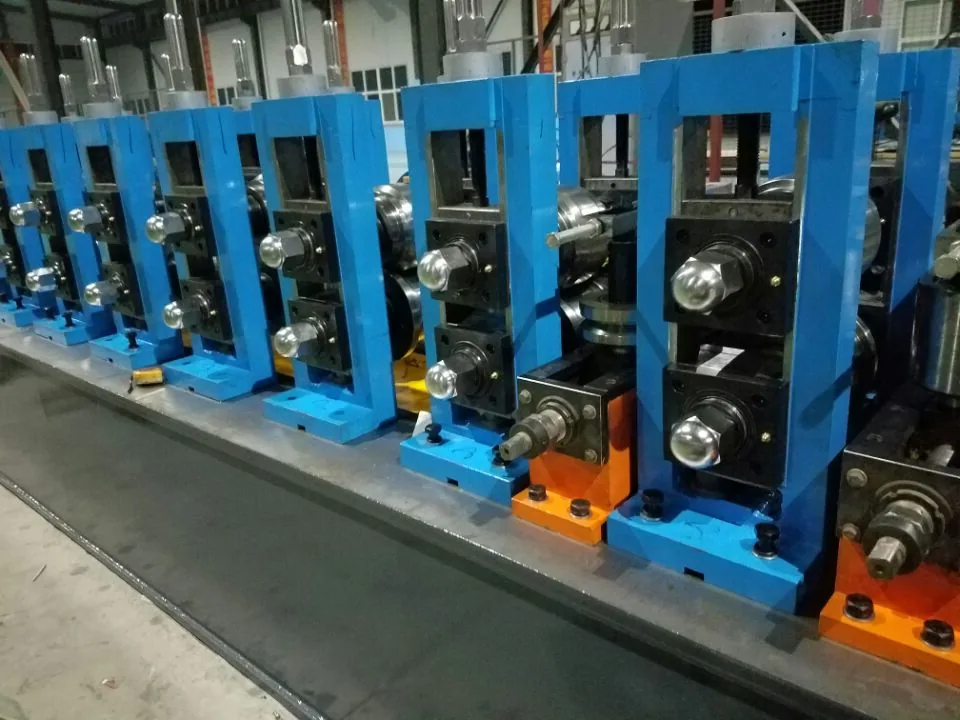
- Forming rolls — the pass sequence that does the bending. Roll material and heat treatment govern shape stability and how long it holds.
- Hydraulic punching dies and cutters — Cr12, hardened; these punch the hole pattern and cut the section to length.
- Parameter entry and control — length, hole pitch and quantity are entered, and the line punches, forms and cuts automatically.
- PLC and drive layer — industrial computer with variable-frequency and servo control, common across Tengtian’s line families.
Scope of supply is quoted two ways across all Tengtian families — a turnkey line delivered complete, or individual machines and units where the plant already has part of the chain. Automation level is selectable, semi-automatic through fully automatic.
- What Tengtian supplies around the machine is common across all four equipment families and applies here unchanged:
- Forming rolls and key wear parts are machined in-house on the works’ own CNC equipment, rather than bought from an outside shop. On a forming line, where tooling is the capability, that matters more than it does on a tube mill.
- A single named point of contact carries the enquiry through delivery and after-sales, with a first reply from a single named contact and all-hours online support.
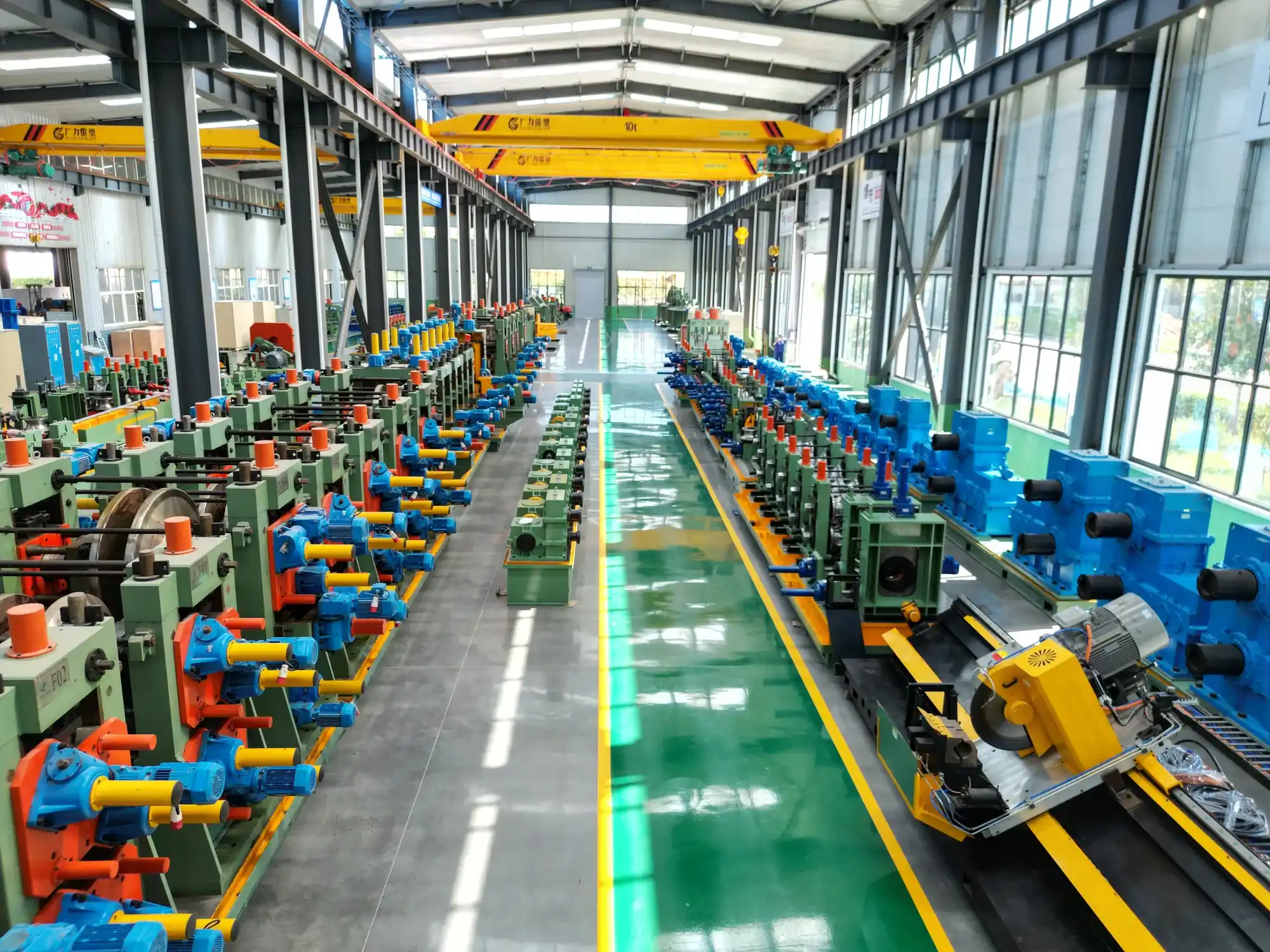
- The works operates its own production base and is open to factory audit, in person or by live video walk-through.
- An engineering team of 20, averaging 20 years each, does the line sizing rather than a configurator.
- Commercial terms flex: tiered configuration mapped to written scope, staged payment, an adjustable deposit ratio, third-party escrow and several workable Incoterms.
The distinction is worth naming because it changes the first conversation. A first-time buyer needs the section drawing turned into a pass schedule; a replacement buyer usually already has the drawing and needs to know whether tooling will keep arriving.
Who buys a forming line, and why, follows the same two doors as the rest of the range. Either something is being built — a new fabrication shop, a capacity expansion, or a move into a new product such as PV mounting sections — or something has failed at an incumbent supplier: tooling stopped being available, changeover cost too much time, or delivery slipped.
Size Change, Roll Wear and Running Cost
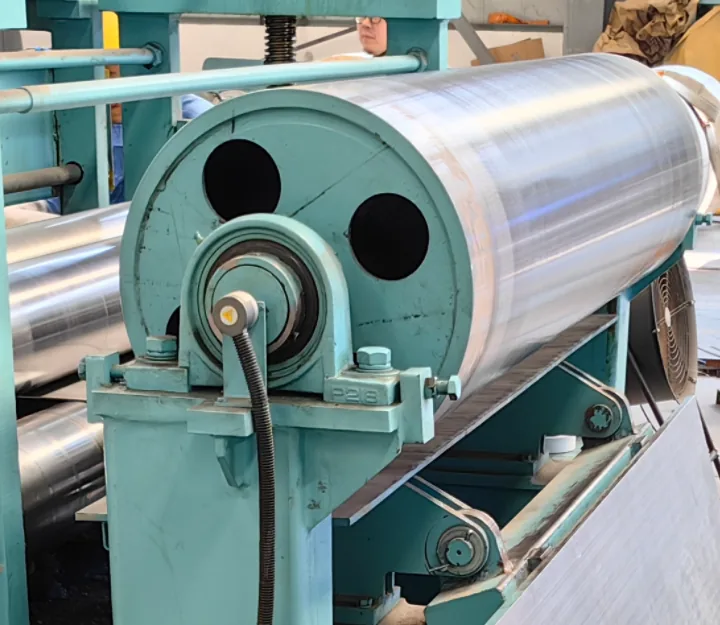
Roll, die and cutter hardness — bearing steel for rolls, Cr12 for dies and cutters — is what stands between the line and hole-position drift, section twist or a blunt edge.
What wears. Forming rolls are replacement wear parts; punching dies and cutters are both wear parts and consumables, replaced or re-ground by punch count.
Rolls and key wear parts are machined at the works on its own CNC equipment, which is what makes continuous supply possible years after handover.
Responsibility boundary. The equipment controls hydraulic punch positioning and roll profile accuracy; the plant controls the entered parameters and the setup. Hole-position and geometric accuracy of the finished section depend on both.
Incoming strip grade and flatness remain the buyer’s responsibility across all Tengtian lines; defects that originate in the raw material appear in the finished section regardless of how the machine is set.
On a forming line that boundary bites harder than on a tube mill, because there is no welding stage to absorb a defect and no sizing pass afterwards to pull the section back into shape — what the rolls produce is what ships. Entry-end inspection and levelling capability is what the equipment side provides; grade and flatness of the coil remain with the plant.
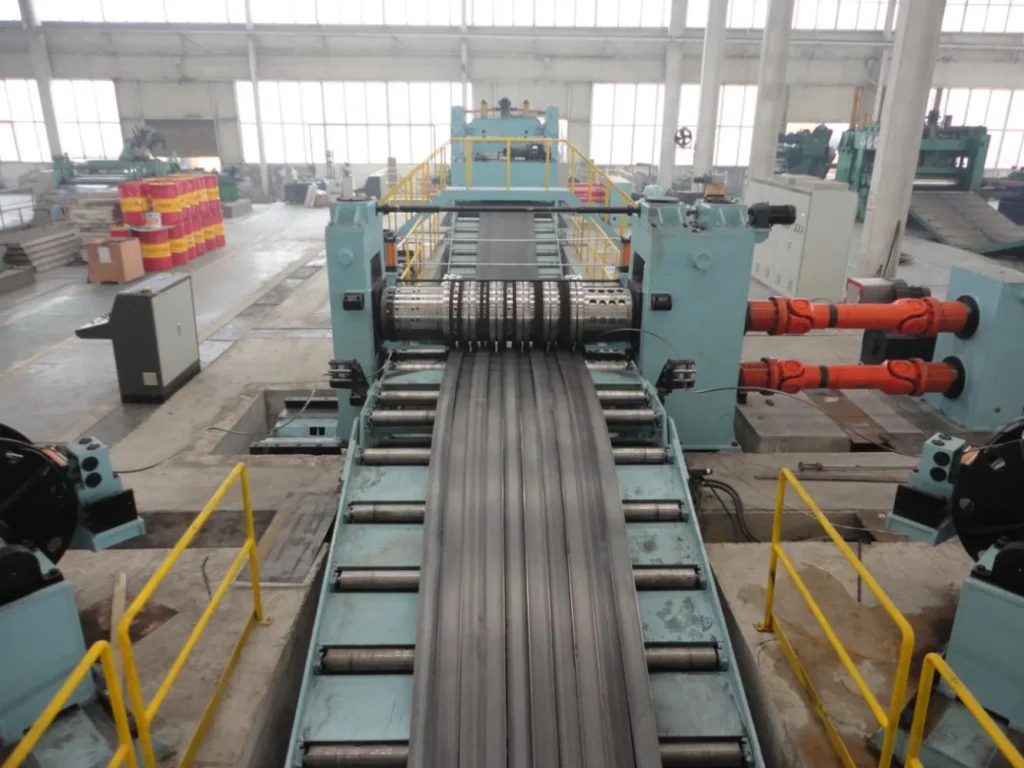
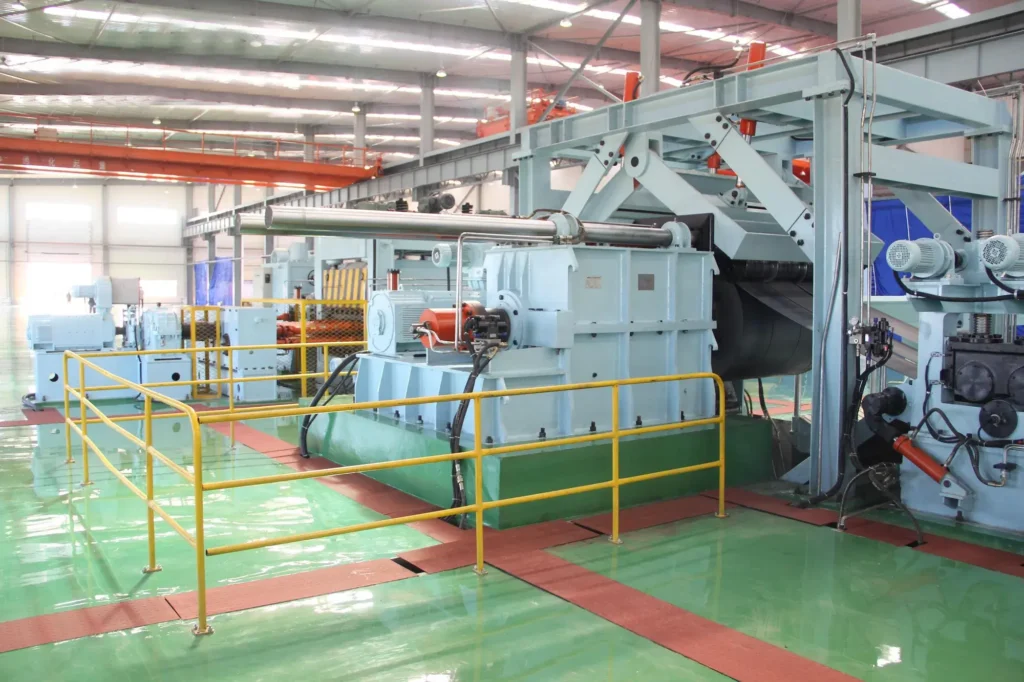
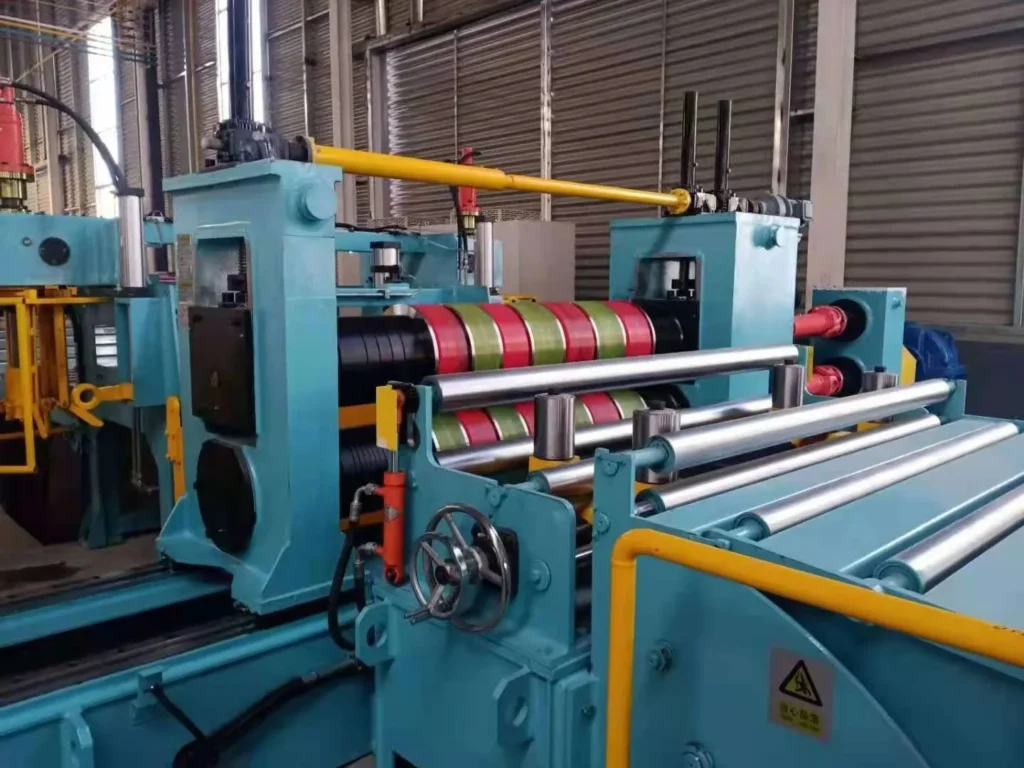
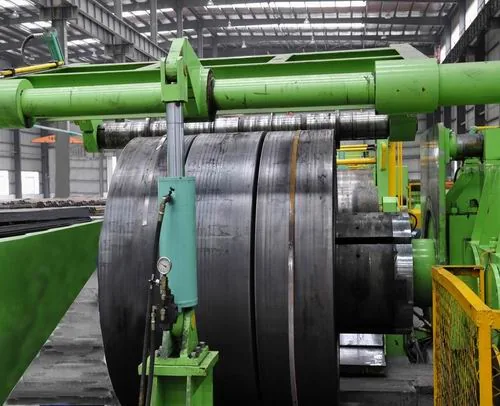
Coil preparation upstream. A forming line runs from strip of a defined width, and getting to that width is a separate operation: slitting a wide coil into narrow strip, or cutting to length.
Tengtian builds those lines too, which means the width window a forming line needs can be produced in-house rather than bought in — one supplier for the preparation line and the forming line, with the same spare-parts channel and the same contact.
Size change. On the C/Z/Ω purlin line, the same machine produces multiple section sizes by stepless adjustment, without changing rolls.
Applications and Output Examples
Its application is specific: steel structure purlins and photovoltaic mounting brackets. Structural and PV fabricators use the line to form C/Z/Ω sections, punching and cutting automatically from entered parameters.
Both users share a pattern that shapes the line: they run many lengths and hole patterns of a small number of section profiles, rather than many profiles. That is exactly what parameter entry plus stepless adjustment is built for — length, hole pitch and quantity change per order, the section itself changes rarely.
How the figures are set out. Tengtian’s cold forming line is specified at C/Z/Ω purlin line level, and everything at that level is set out above.
Material thickness, line speed and output are confirmed against your profile section, steel grade and finished length at quotation. Send us those three and we will state the figures.
Cold roll forming sits alongside Tengtian’s other three families — welded pipe production lines, slitting and cut-to-length lines, and H-beam production lines, with an automatic spray-painting line as a companion unit.
The practical consequence for a fabricator is that coil preparation upstream of a forming line (slitting to width, cut to length)can come from the same works rather than a second supplier.
For a PV mounting fabricator the consequence is that order-to-order variation is handled at the control panel rather than at the tooling bench; for a structural fabricator running building purlins it is the same mechanism against a different bill of materials.
Delivery, Installation and Training
The general 50–90 day delivery figure is an all-lines figure; the schedule for a specific roll-forming line is confirmed with the quotation.
A single named point of contact handles the enquiry and stays with it through delivery and after-sales, with a first response committed round-the-clock — the same person holding the delivery schedule, the technical thread and, later, the tooling re-order history.
Shipment follows the same pattern as the other families: precision and electrical items — control cabinets, forming rolls, dies and cutters — crated in moisture-protected wooden cases, with spare tooling travelling in the same shipment, so a fabricator is not waiting on a second consignment to start commissioning. Machine frames ship strapped on reinforced supports with lifting points designed in.
Installation, commissioning and operator training sit inside the after-sales scope; engineers are dispatched to site and support continues online after handover.
Angle steel roll forming machine
Custom metal roll forming
From the Workshop
 Roll Forming Line for Sale
 Roll Forming Tooling & Die Design
 Metal Roll Forming
 The API Pipe Mill Inspection Chain
Send Your Enquiry
Tell us the pipe outside-diameter range, the wall thickness and the output you need. An engineer reads every enquiry — it does not land in a general sales inbox.