 Scan on WeChat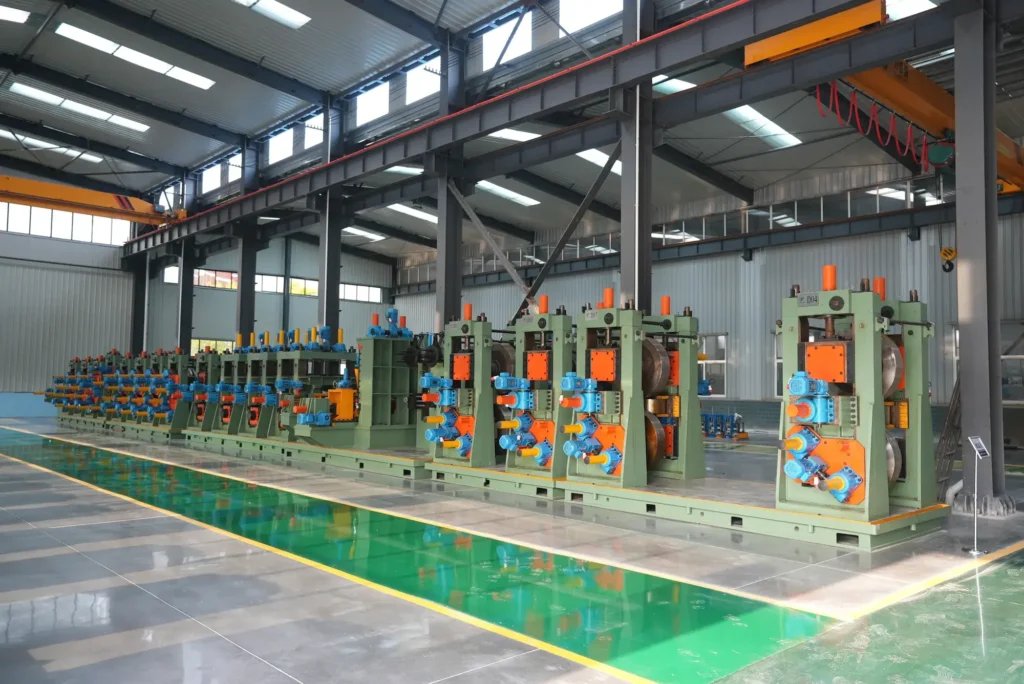
The words here are explained the way they work on our own machines — tube mills, spiral pipe lines and the equipment that runs with them.
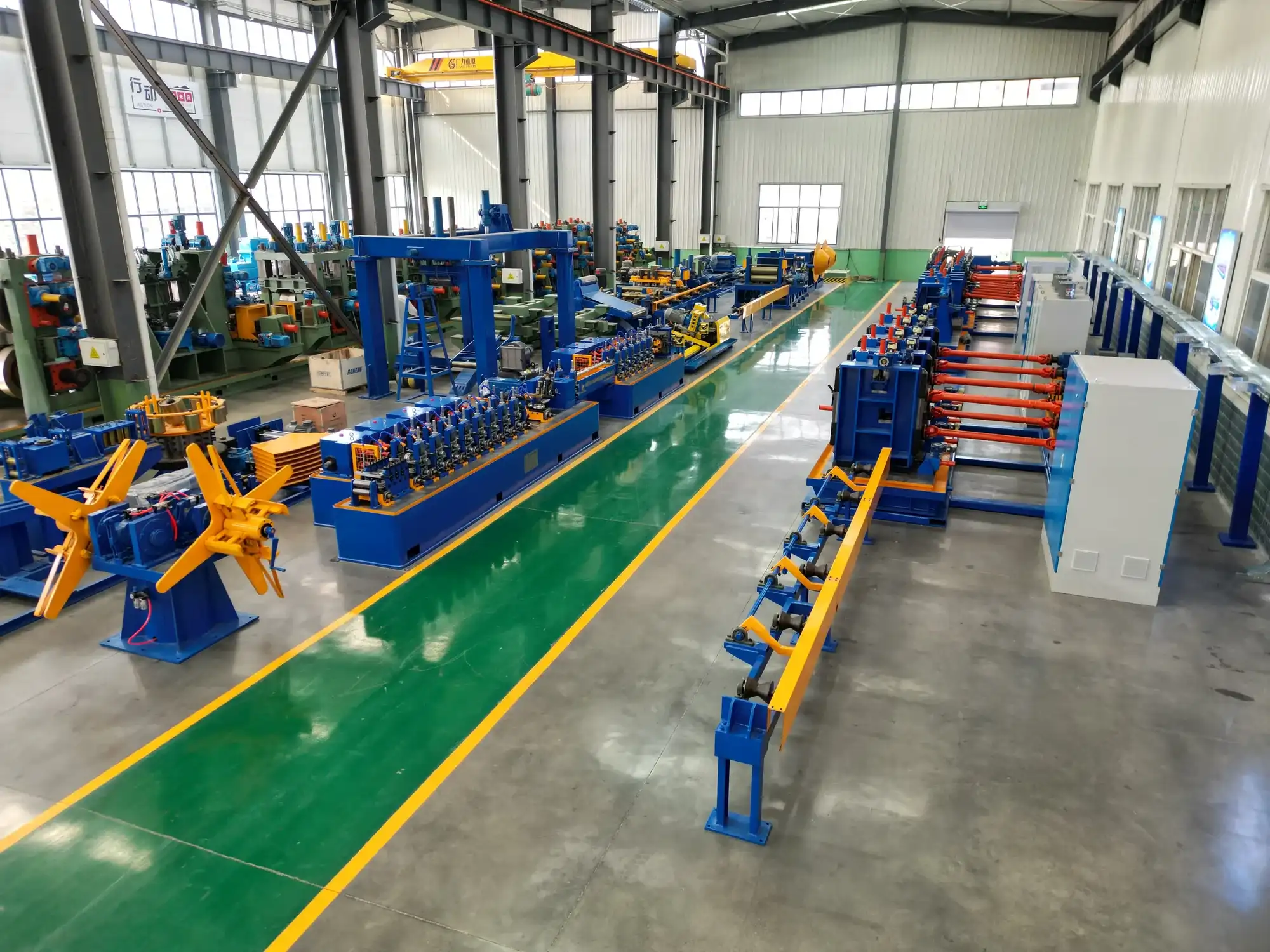
The Eight Kinds of Line Behind These Terms
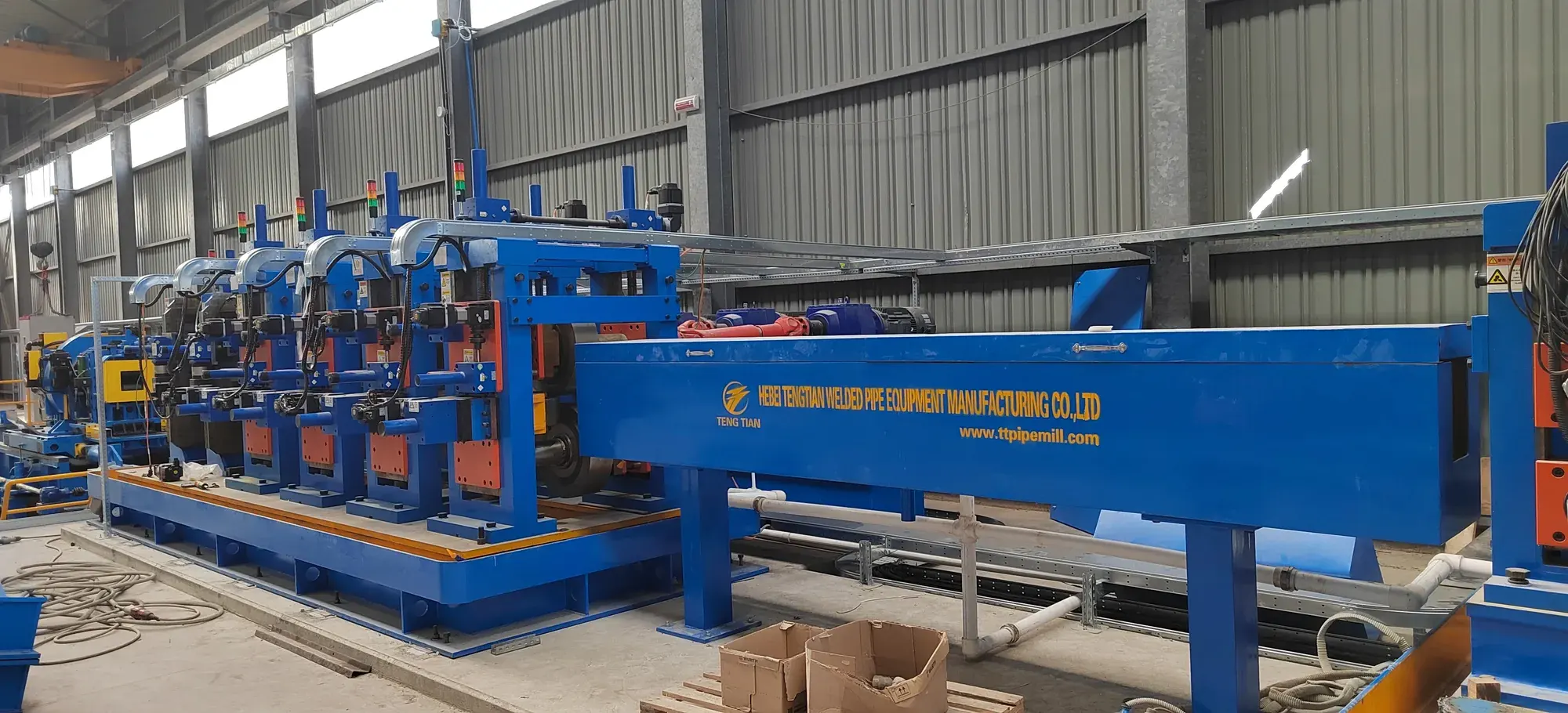
A high-frequency welded tube mill is a continuous forming, welding and sizing set that takes coil and produces straight-seam welded pipe, round or square, across twelve bands from HG32 to HG630 at Φ10 to Φ630 mm and 0.5 to 16 mm wall.
A spiral welded pipe line is a front-swinging submerged-arc set that winds hot-rolled strip into large-diameter pipe and welds it inside and out, covering Φ219 to Φ1620 mm by changing the forming angle rather than the rolls.
A direct-forming square line makes different square sizes from one combined mould set, changing size by servo adjustment with no roll change, from 30 by 30 to 500 by 500 mm. An API line pipe mill adds intermediate-frequency annealing, straightening, end machining, hydrostatic testing, ultrasonic and eddy-current inspection to a welded line.
A slitting and cut-to-length line uncoils, levels, slits or cuts and recoils wide strip to supply narrow coil or cut sheet to a downstream mill. A purlin roll forming machine cold-forms C, Z and omega sections without welding. An H-beam line high-frequency welds beams. A spray paint line coats finished sections.
Forming and Geometry Terms
Forming angle is the spiral term: strip enters the forming machine at a set angle between 39 and 80 degrees, and it is that angle, not a roll change, that sets the finished pipe diameter.
Three-roll bending with external sizing is the spiral forming method. Skin effect and proximity effect describe why high-frequency current concentrates at the open edges of the blank and heats only that line. Pressure welding is the name for what happens next: the two heated edges are pressed together by squeeze rolls and joined without filler.
Sizing and straightening is the post-weld stage that brings the cooled tube to final diameter and straightness.
Measurement Method and Tolerance
The slitting line carries two tolerance values. Slit width accuracy is set at plus or minus 0.2 mm, and camber at not more than 0.5 mm per 1000 mm. The line works within this coil envelope: 1 to 12 mm thickness, 800 to 2000 mm width and coil weight up to 32 tonnes.
Roll forming is the progressive bending of flat strip into a round or square open blank by continuously rotating rolls; the governing parameters include pass count, roll gap and roll form, and they determine shape accuracy and seam alignment.
How to Tell the Two Lines Apart
Two kinds of line show up here, and the pipe itself tells you which one you are looking at. Coil in, straight-seam pipe up to Φ630 mm out — that is a tube mill. Anything bigger than Φ630 mm has to be spiral-welded, and that limit is the whole reason spiral lines exist.
Some of what you will read here is a step on the line, some is the physics behind it, and some is just a number. Watch the numbers: they change from one diameter band to the next, so a figure means nothing until you know which band it came from.
Resource Downloads
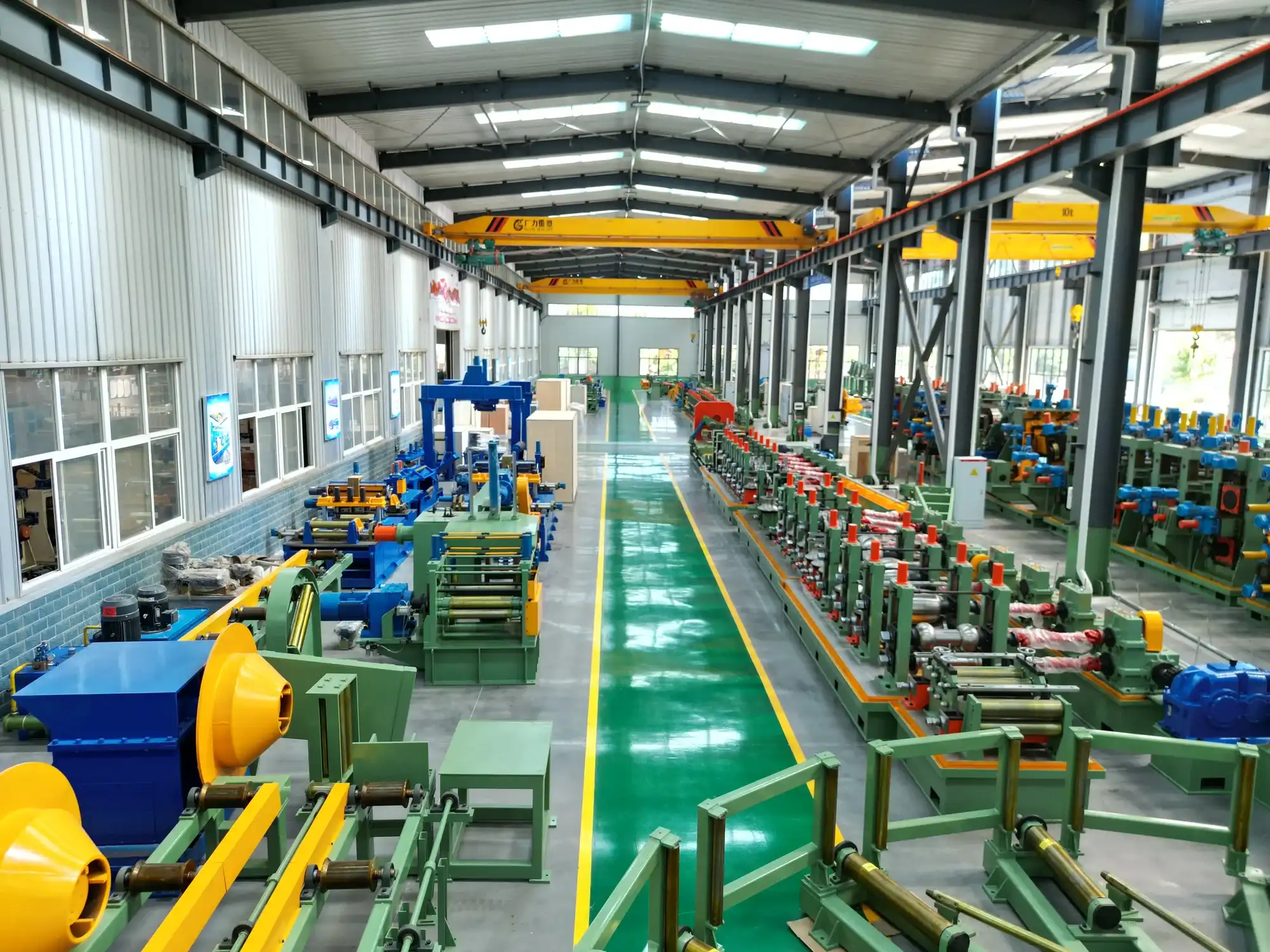
From the Workshop
Send Your Enquiry
Tell us the pipe outside-diameter range, the wall thickness and the output you need. An engineer reads every enquiry — it does not land in a general sales inbox.