 Scan on WeChat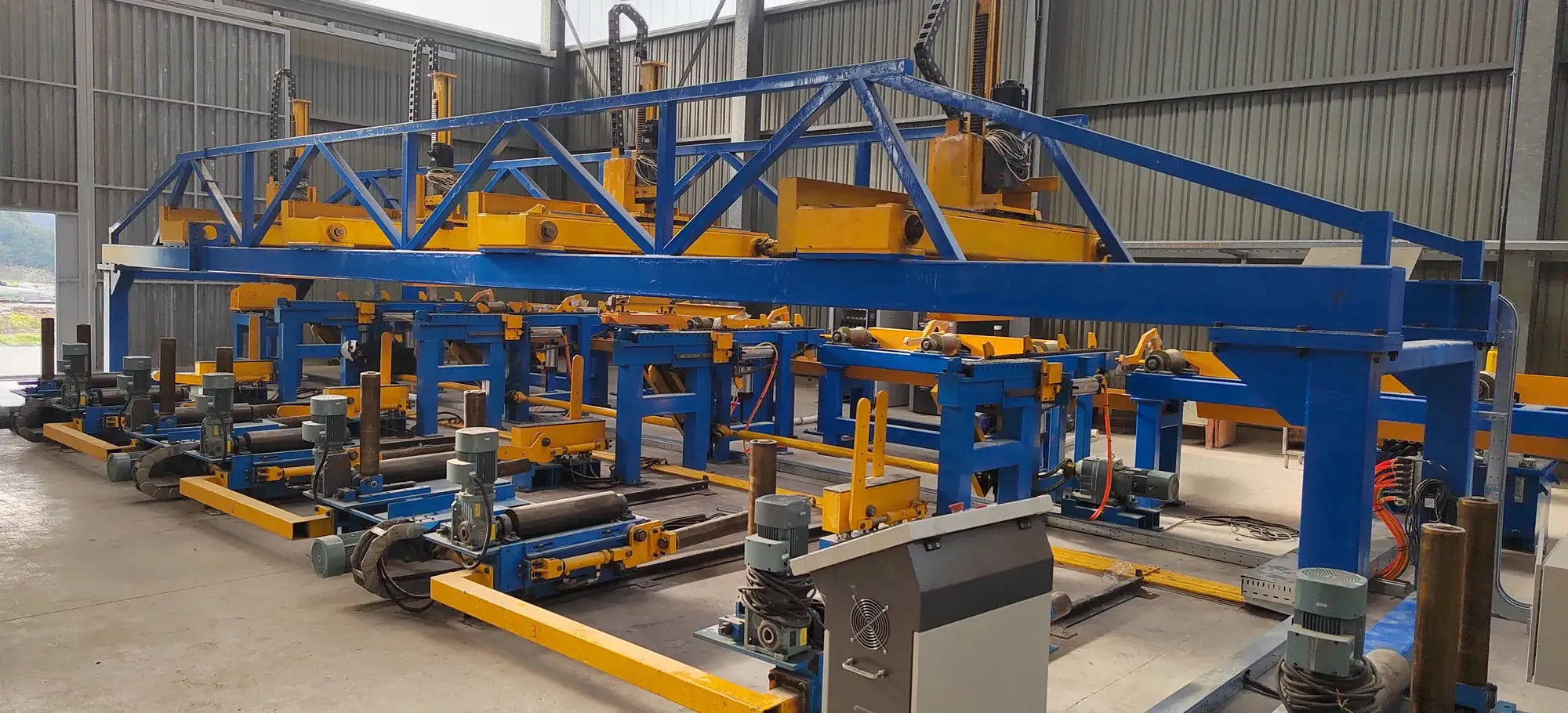
Water, Drainage & Gas Pipe Lines
Home › Pipe Production Applications › Water Supply, Drainage & Urban Gas Pipe Production Lines
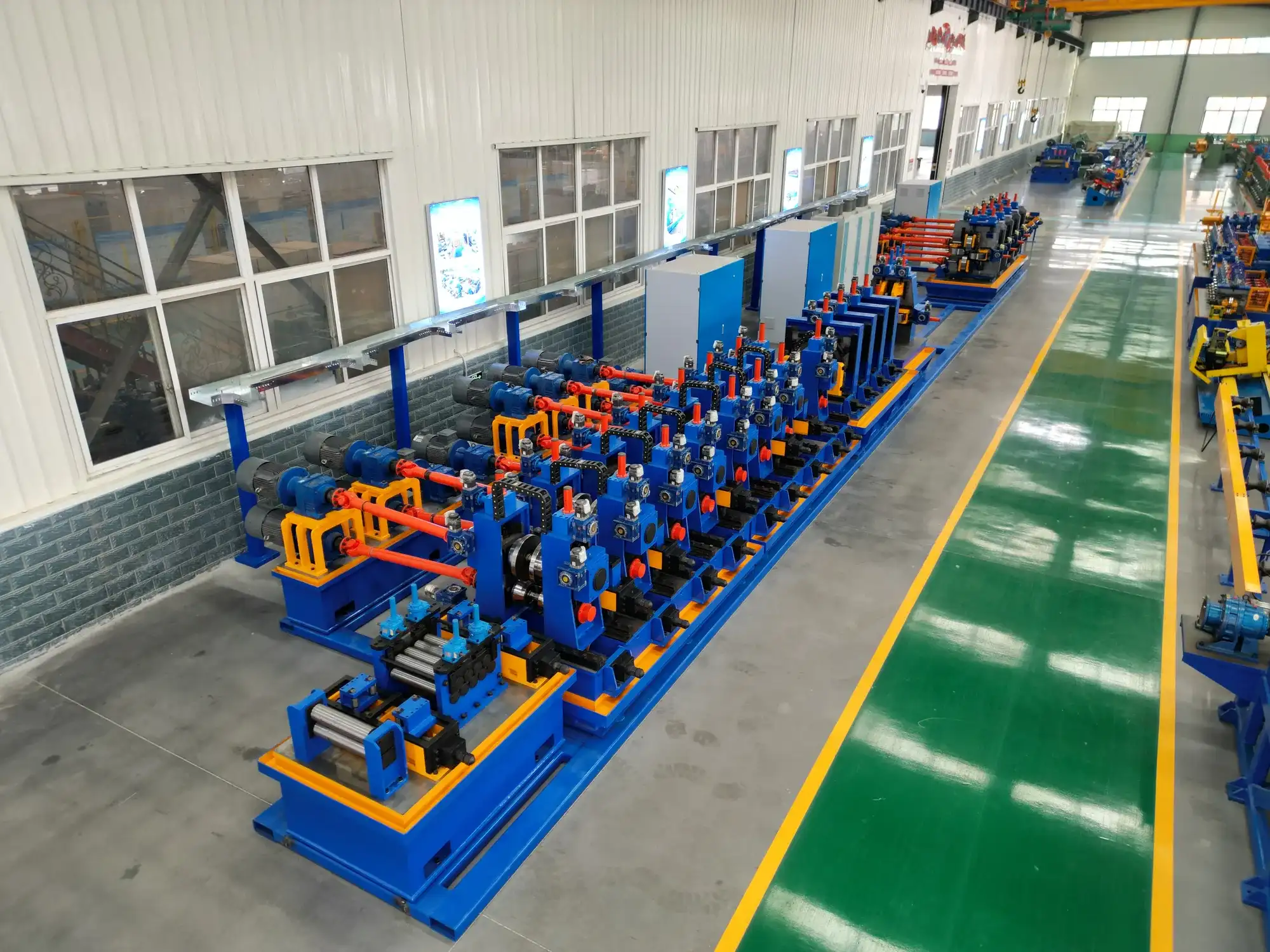
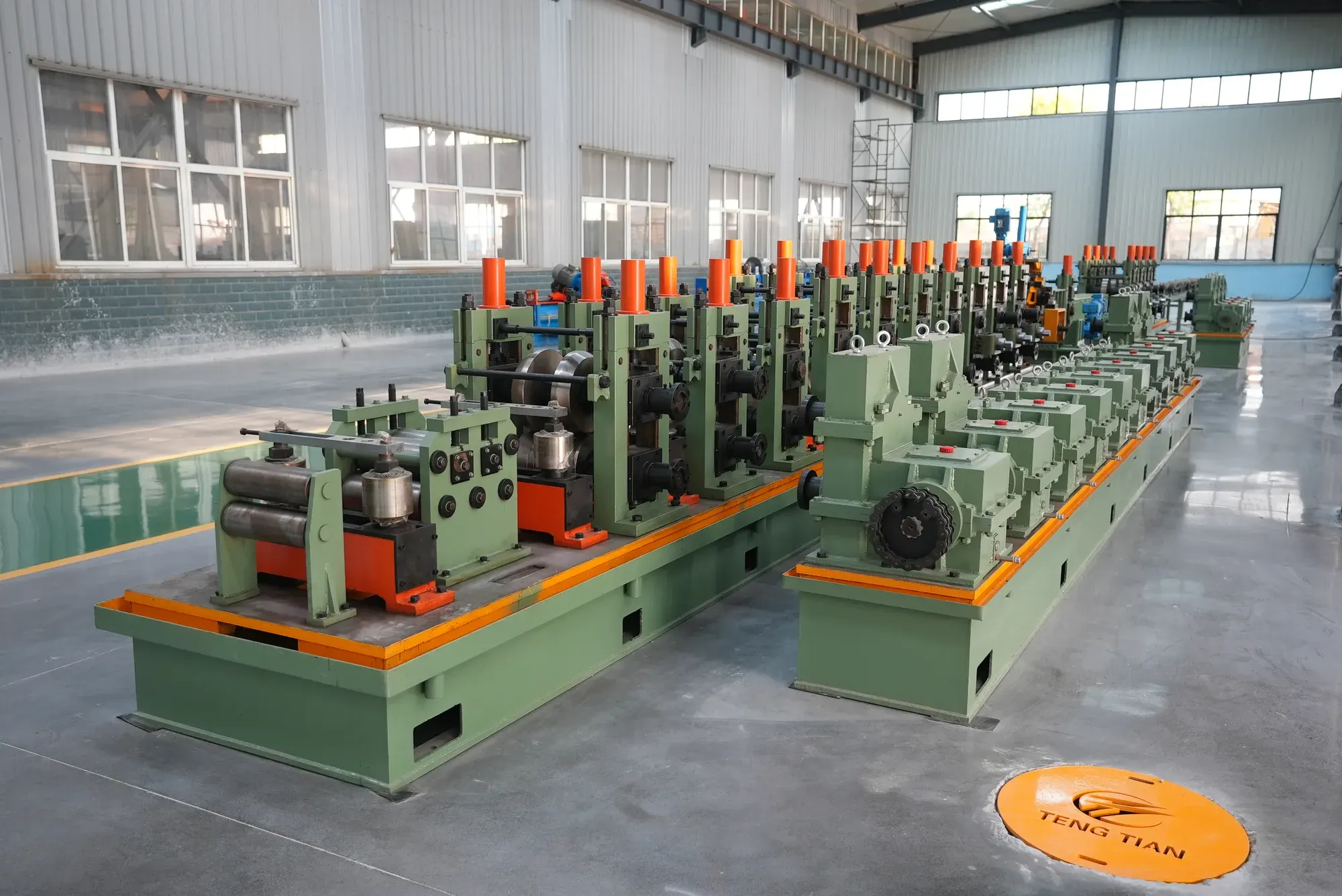
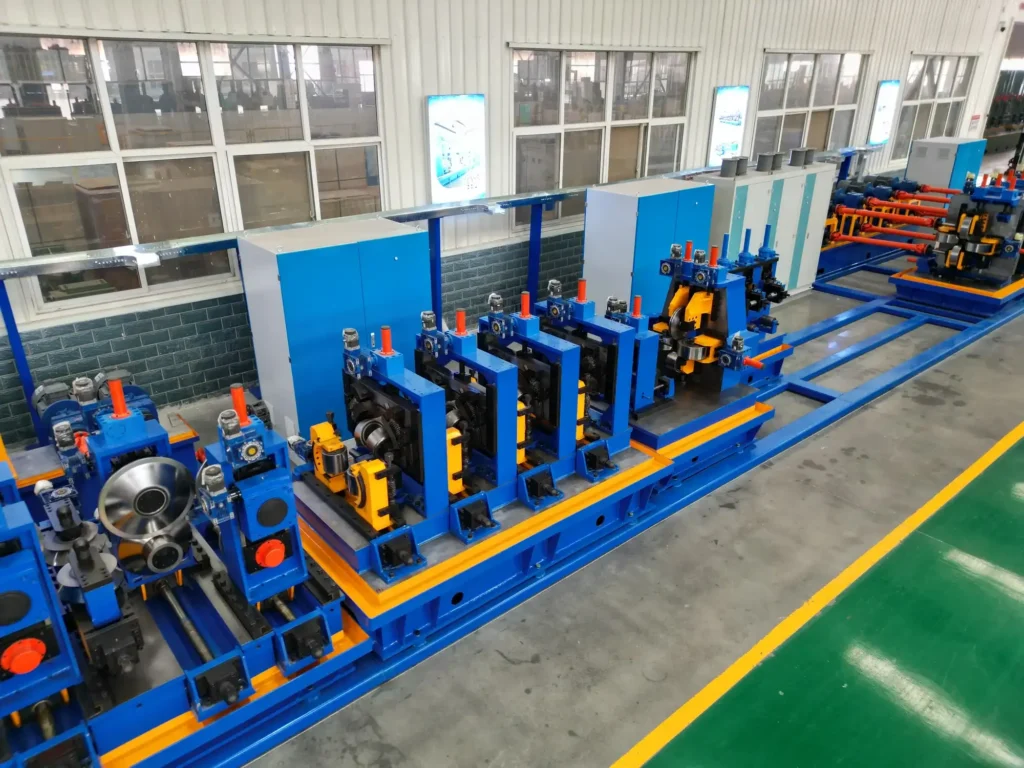
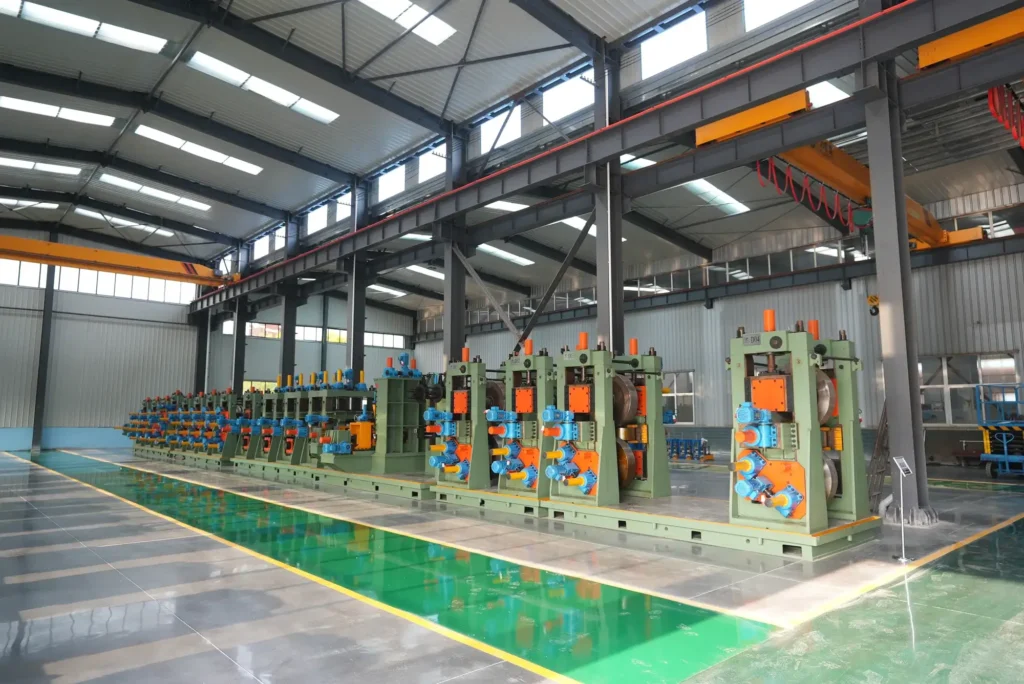
Water supply, drainage and urban gas pipe are made on the same high-frequency welded tube mills as other carbon steel pipe.
In This Line
Quick Contact
Hebei TengtianYuanle@tentubemill.com
+86-311-83025332
WhatsApp +852 5425 3155
Which mill fits is decided by target diameter and wall, not by the application name.
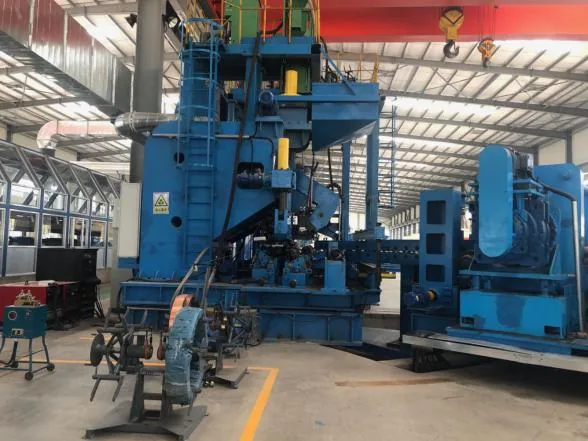
What Is Water Supply, Drainage & Urban Gas Pipe Production Lines
Wall thickness, line speed and shift output are confirmed against your pipe size, material grade and cut length at quotation. Send us those three and we will state the figures.
That is the whole of what makes this an application rather than a product. The line is a high-frequency welded tube mill; the application is what the plant’s customers do with the pipe. No separate machine exists for water pipe.
The users of that line are the pipe plant’s shop-floor operators, process engineers and equipment supervisors. The beneficiaries are the pipeline contractors and municipal purchasers downstream of them. The acceptance criteria the plant is judged on are weld pass rate, diameter and wall coverage, non-stop coil changing, and energy and material yield.
That separation matters: transmission line pipe is the API line’s territory, with its own inspection chain and its own standard.
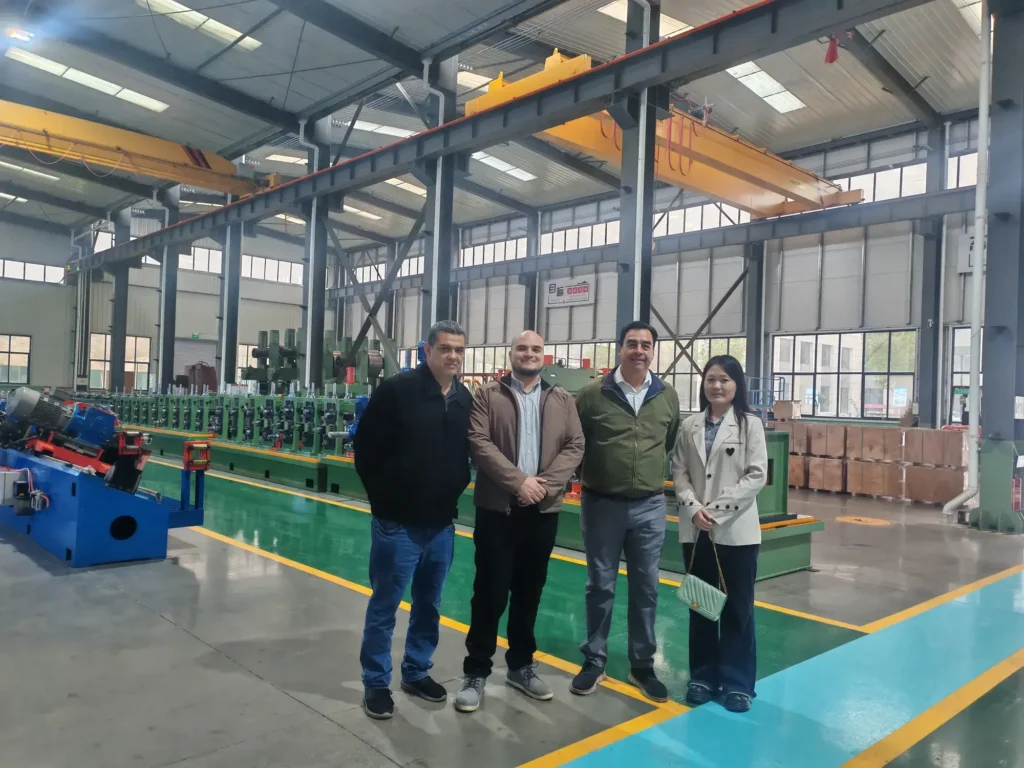
Target Pipe Sizes and Wall Thickness for This Application
Equipment envelope, high-frequency welded family. Twelve steps HG32 to HG630, finished outside diameter Φ10 to Φ630 mm, wall 0.5 to 16 mm. This is what the equipment can produce; what a particular application requires is set by the buyer’s product specification, and the two should not be confused.
The step windows are Φ10–32, Φ16–50.8, Φ12.7–76, Φ32–89, Φ45–114, Φ60–165, Φ114–219, Φ114–273, Φ165–325, Φ165–426, Φ219–508 and Φ325–630 mm.
Section shape. Round, square and rectangular are all producible on most steps; fluid pipe is normally round, but that is the buyer’s product decision rather than an equipment constraint.
Equipment envelope, spiral submerged arc family. A different mechanism for the large-diameter end: hot-rolled strip bent by three rolls at a set forming angle into a spiral tube blank, welded inside and out by submerged arc, and flying-cut off line.
| Mill step | Finished outside diameter | Wall thickness | Welder power |
|---|---|---|---|
| HG32 | Φ10–32 mm | 0.5–1.5 mm | 150 kW |
| HG50 | Φ16–50.8 mm | 0.8–2.0 mm | 200 kW |
| HG76 | Φ12.7–76 mm | 1.5–3.0 mm | 250 kW |
| HG89 | Φ32–89 mm | 1.0–4.0 mm | 300 kW |
| HG114 | Φ45–114 mm | 1.5–5.0 mm | 300 kW |
| HG165 | Φ60–165 mm | 3.0–7.0 mm | 400 kW |
| HG219 | Φ114–219 mm | 4.0–8.0 mm | 500 kW |
| HG273 | Φ114–273 mm | 4.0–10.0 mm | 600 kW |
| HG325 | Φ165–325 mm | 4.0–10.0 mm | 600 kW |
| HG426 | Φ165–426 mm | 4.0–10.0 mm | 800 kW |
| HG508 | Φ219–508 mm | 4.0–16.0 mm | 1000 kW |
| HG630 | Φ325–630 mm | 4.0–16.0 mm | 1500 kW |
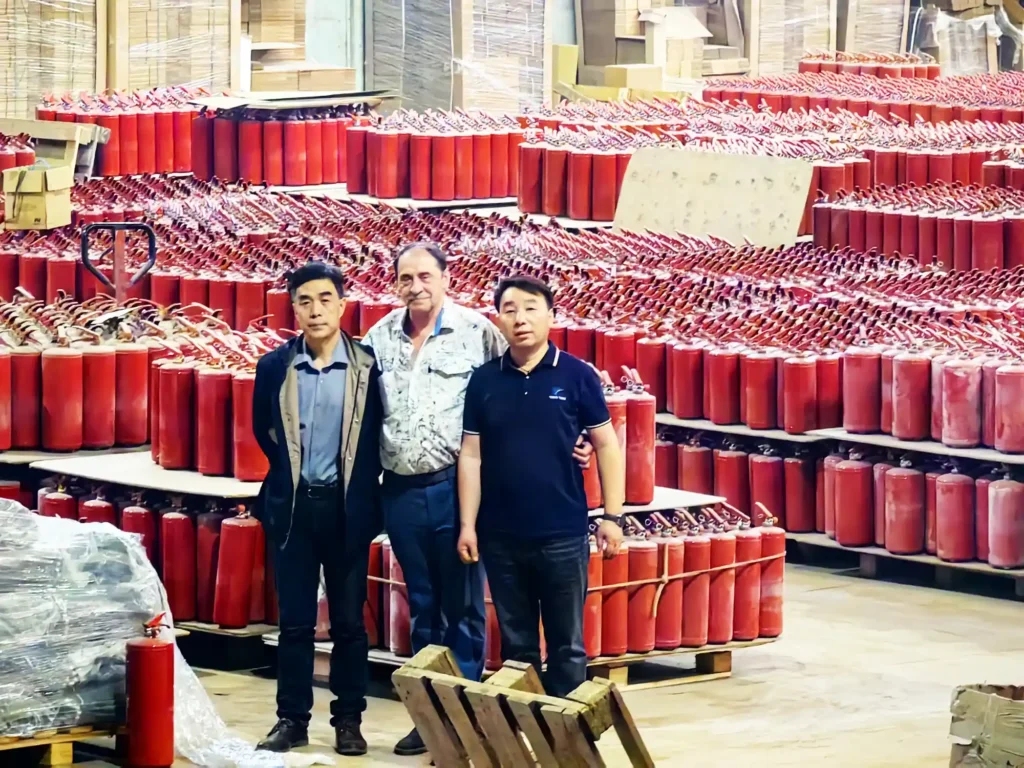
Mill Model Selection Criteria and the Welder Power Band
- By finished pipe outside diameter. This is the first thing to settle: you pick the machine from the pipe you intend to make.
- By section shape. Round, square or rectangular.
- By forming route. Conventional roll forming, or direct forming square as a separate technology.
- By automation level. Semi-automatic or fully automatic PLC.
- By whether an inspection chain is required. The classification is whether the line carries in-line NDT and post-processing at all; an ordinary welded line does not, an API line does.
Welder power is banded by mill step, as shown in the table above.
Fluid Transport Versus Transmission Line Pipe
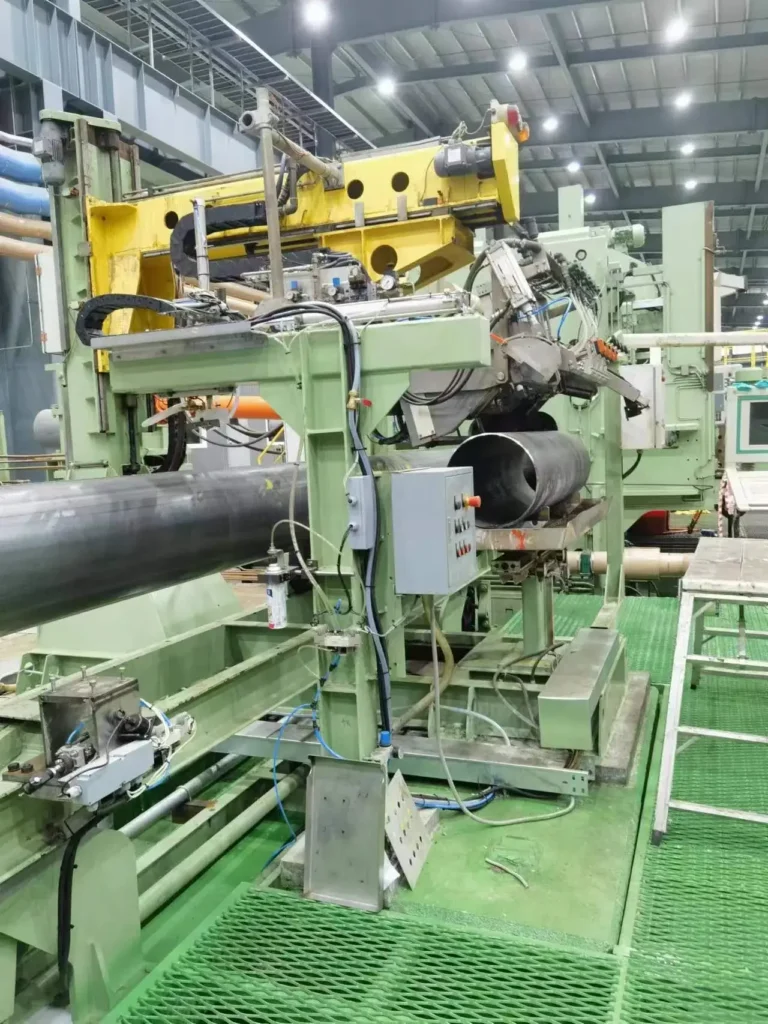
Long-distance oil and gas transmission line pipe is a separate downstream category, made on a different line. There the gate is not weld pass rate but a compliance inspection chain: post-weld heat treatment plus hydrostatic testing, ultrasonic and eddy-current inspection — together the order threshold rather than a quality preference.
Whether a particular buyer’s municipal specification imposes inspection requirements of its own is a question about that specification, not about the equipment.
Fluid transport, as an application of the high-frequency welded family, covers carbon steel welded pipe for oil and gas transport, municipal water supply, drainage and gas, and chemical and heating pipework. The plant is judged on weld pass rate, size coverage, continuity and yield.
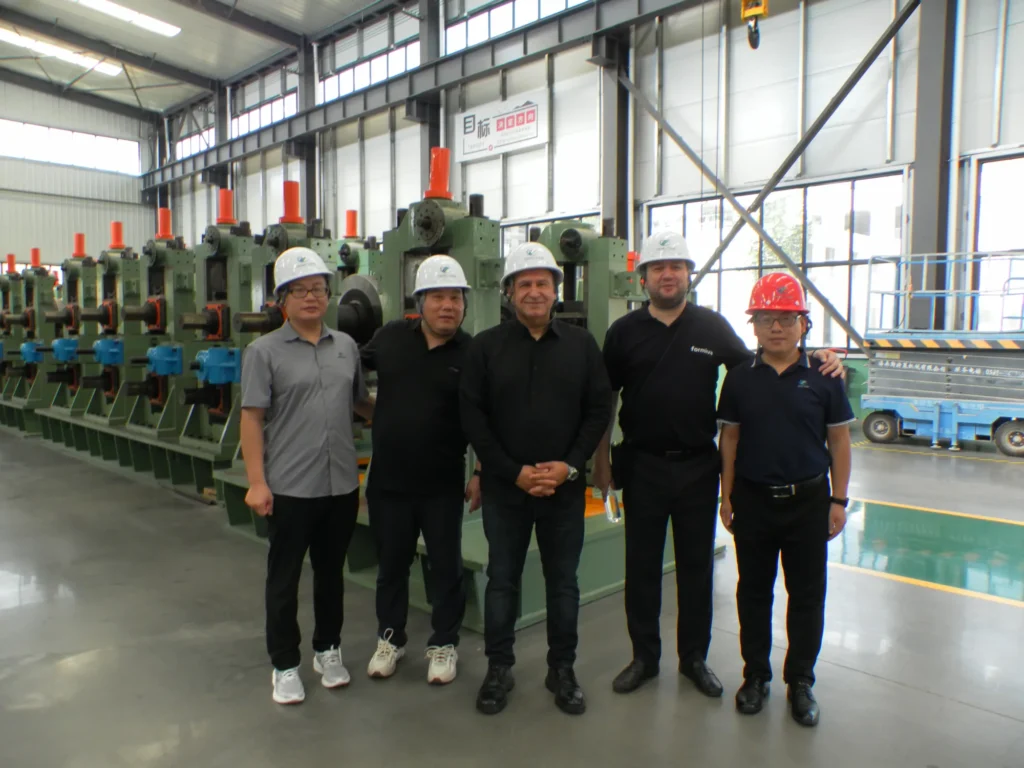
What the Line Is Responsible For
Yield and energy consumption: the process and automation design supports material yield above 93%, with actual yield also determined by the plant’s scheduling and operating standard.
Weld fusion quality: the mill controls welder power matching, seam alignment and squeeze; the buyer controls strip quality and operation. Lack of fusion or a cold weld shows up as pressure failure or inspection rejection.
Dimensional accuracy — outside diameter, wall, straightness: sizing accuracy and straightening capability are on the equipment side, incoming wall-thickness tolerance on the buyer’s side.
Consistency after a size change: quick tooling change and servo positioning reduce drift on the equipment side, disciplined changeover procedure on the customer side.
And underneath all four, a general position that applies to every line: levelling and incoming inspection capability is provided, but strip grade and flatness remain the buyer’s responsibility.
For a plant selling into municipal projects, the responsibility split is worth reading closely because it determines what an equipment supplier can be held to.
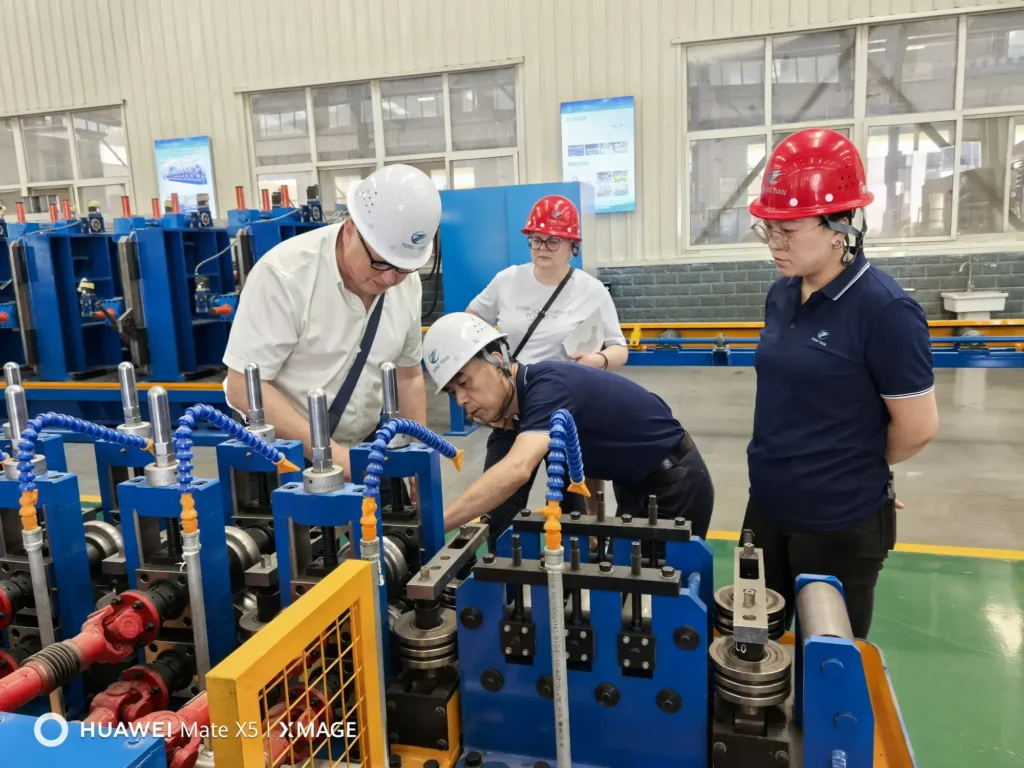
Continuity, Because Municipal Orders Are Volume Orders
Two of the eight units exist for exactly that: an automatic shear and butt welder joins the head and tail of successive coils, and a spiral accumulator stores strip so that forming and welding continue through the join. A municipal supply contract is a volume contract, so the units that keep the mill from stopping matter more here than the headline diameter.
The operator’s version of the same step is built too: shear and butt weld before the coil runs out, timed against the accumulator, with broken strip and scrap pipe at the joint as the failure mode.
Continuous supply of spares and rolls sits alongside those as a repeat-purchase driver, and stable low-fault running of a first line is the precondition for a second one.
Not stopping to change coils is one of the four reasons plants buy a line like this at all, alongside multi-size coverage on one line, stable yield and weld quality, and changeover efficiency.
Who Signs the Order
The delivery position is the same for both: 50 to 90 days, plant-level customisation scheduled from our own manufacturing base, knocked-down container shipment with precision parts crated, installation and commissioning included with engineers dispatched on site and support afterwards.
Regional pipe and section makers — small and mid-sized plants building or expanding — buy on payback, changeover efficiency, yield and energy cost, and the decision sits with the plant owner or equipment manager.
After handover the service position is a single point of contact replying round-the-clock, round-the-clock online support, on-site dispatch and direct spare-parts supply, with rolls machined in-house on our own CNC equipment so that roll supply does not depend on an outside tool shop.
Two buyer profiles come to this application from different directions. Large energy and infrastructure groups buy against technical standards and delivery dates and weigh long-term service; their decision sits with an engineering or procurement committee.
Applicable Standards and Inspection Requirements
Hydrostatic testing, ultrasonic and eddy-current inspection together make up the API 5L compliance chain and the threshold for a line pipe order — which is a statement about line pipe, not about municipal water pipe.
- API 5L — line pipe standard, mandatory for line pipe orders, applying to the API line pipe product only. Certification of the finished pipe is handled under the pipe maker’s own quality system.
- GOST R 58966-2020 — Russian H-beam standard, mandatory for Russian and CIS H-beam orders, applying to the H-beam production line’s product.
- ASTM — for North America, ASTM specifications are the usual reference.
On inspection, the equipment defines a capability boundary rather than a requirement list. An ordinary high-frequency welded line relies on final inspection as the catching step, with ultrasonic and eddy-current inspection present on API lines.
None of the three is a water, drainage or urban gas pipe standard.
Worked Output Example
- Line speed — available on request
- Material yield — a family-level design figure: the line design supports yield above 93%, with actual yield also depending on the buyer’s own operation and scheduling.
Water supply and drainage pipe mill
The accurate answer to that phrase: there is no separate water supply or drainage pipe mill. There is a high-frequency welded tube mill family in twelve diameter steps whose applications include municipal water supply and drainage pipe, and the machine is selected by the diameter and section the plant intends to produce.
Gas pipe production line
Urban gas pipe sits alongside municipal water and drainage pipe as one of the carbon steel welded pipe types produced on this family. Standards, test pressure and inspection requirements specific to gas distribution pipe come from the buyer’s own project specification, and they matter more for gas than for water.
A worked output example needs line speed, working hours per shift, and a yield figure.
From the Workshop
 Structural & Scaffolding Tube Production
 Oil & Gas Line Pipe Mill
 Furniture & Fence Tube Production
 The API Pipe Mill Inspection Chain
Send Your Enquiry
Tell us the pipe outside-diameter range, the wall thickness and the output you need. An engineer reads every enquiry — it does not land in a general sales inbox.