
 Scan on WeChat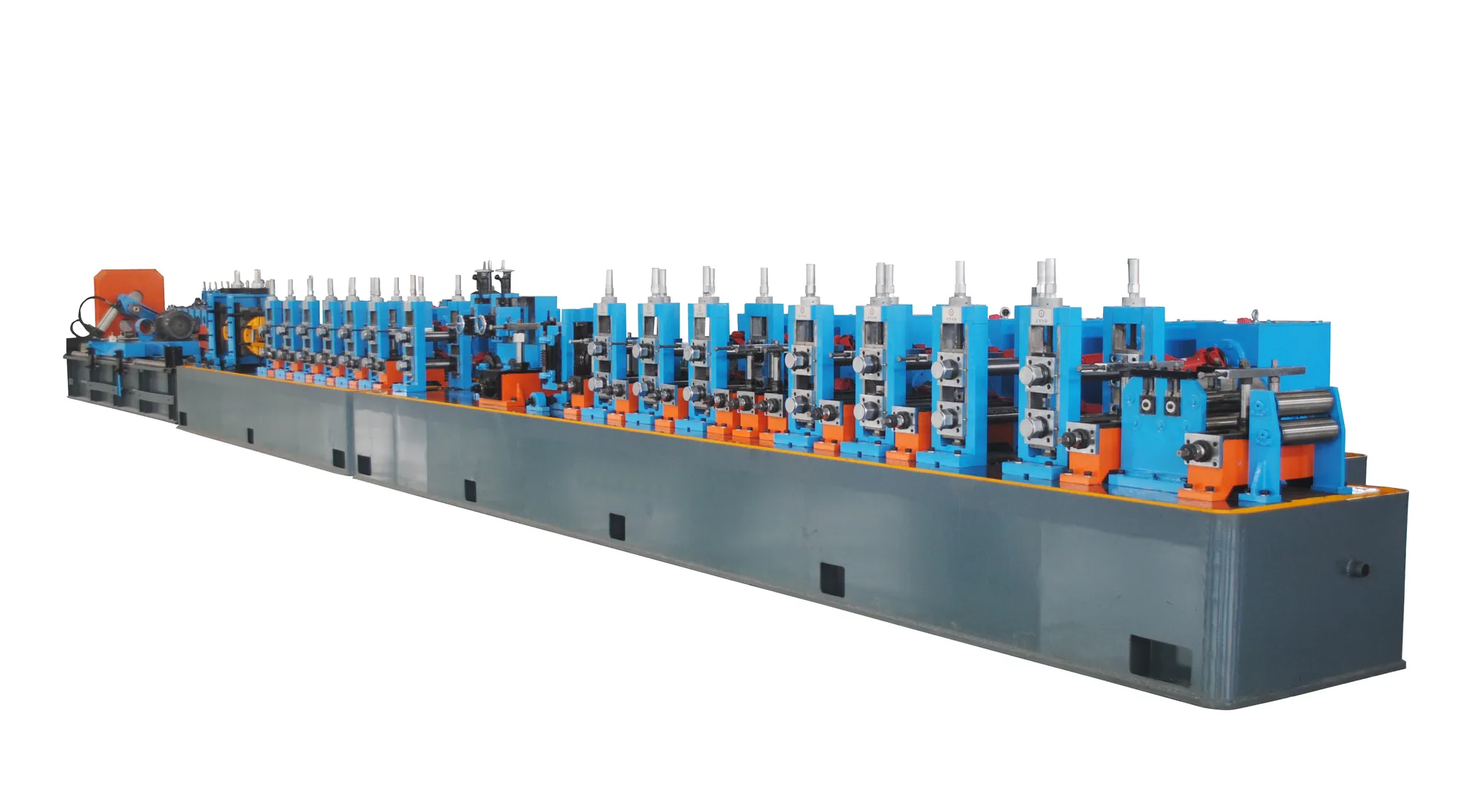
Small Diameter Tube Mill
In This Line
Quick Contact
Hebei TengtianYuanle@tentubemill.com
+86-311-83025332
WhatsApp +852 5425 3155
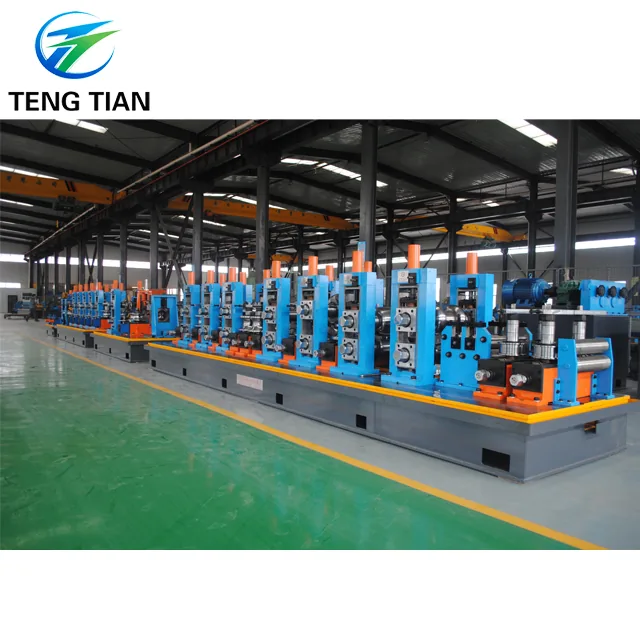
The small-diameter HFW tube mills are the first five of twelve diameter steps, HG32 through HG114, covering finished pipe from about Φ10 up to Φ114 mm. Each step is a separate machine size, not a setting. The series ranges span all five steps; each step has its own specification.
What Is Small-Diameter HFW Tube Mill
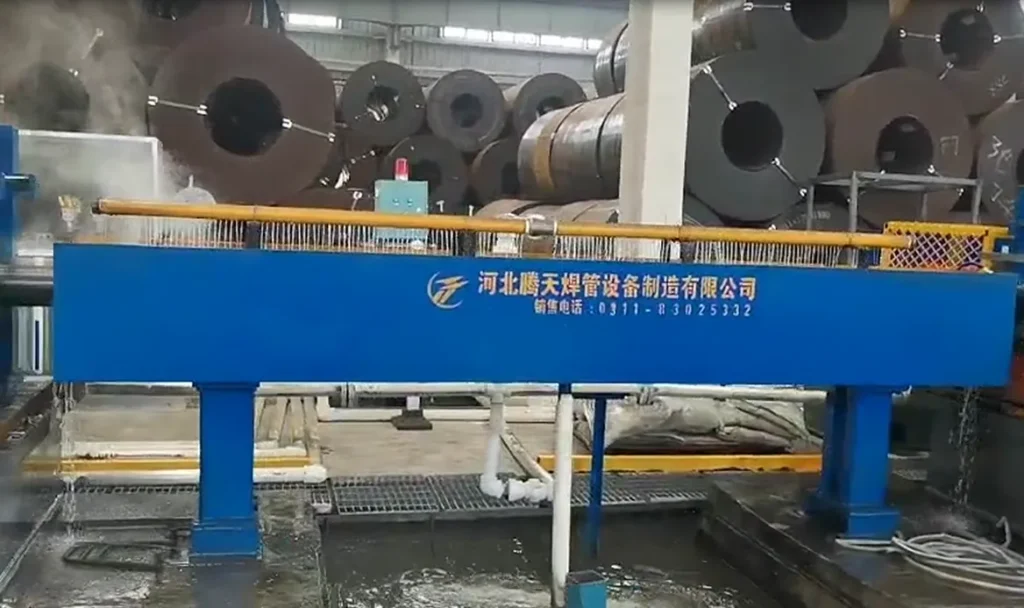
The whole product family runs HG32 to HG630 across twelve steps, finished outside diameter Φ10 to Φ630 mm, wall 0.5 to 16 mm. A high-frequency welded tube mill is a continuous forming, welding and sizing line. Coil goes in; it is uncoiled, roll formed, welded by high-frequency induction, sized and cut, and straight-seam welded pipe — round, square or rectangular — comes out.
 HG114 HFW Tube MillThe fifth of the twelve model steps — Φ45 – Φ114 mm round pipe and 35×35 – 90×90 mm square section, on a 300 kW high-frequency welder.See the line →
 HG32 HFW Tube MillThe first of the twelve model steps — Φ10 – Φ32 mm round pipe and 10×10 – 20×20 mm square section, on a 150 kW high-frequency welder.See the line →
 HG50 HFW Tube MillThe second of the twelve model steps — Φ16 – Φ50.8 mm round pipe and 12×12 – 40×40 mm square section, on a 200 kW high-frequency welder.See the line →
 HG76 Tube Mill Line for Φ12.7–76 mm PipeThe third of the twelve model steps — Φ12.7 to 76 mm round pipe and 10×10 to 60×60 mm square section, on a 250 kW high-frequency welder.See the line →
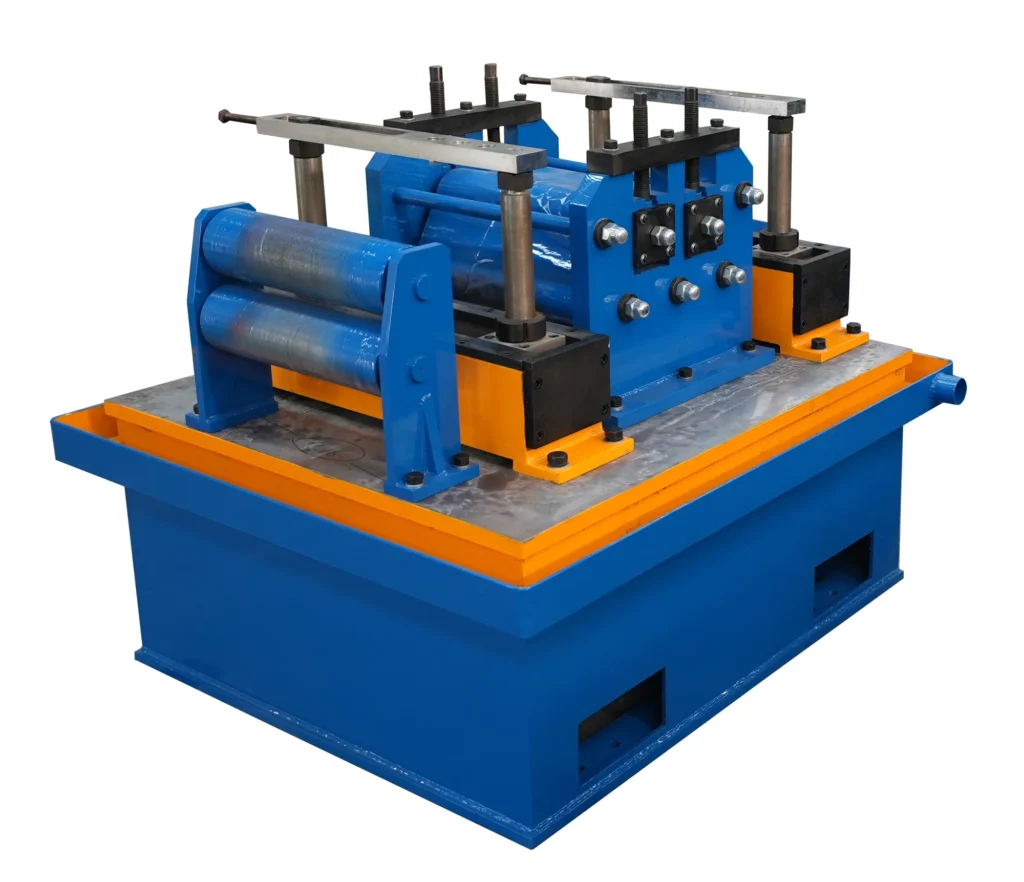 HG89 HFW Tube MillThe fourth of the twelve model steps — Φ32 – Φ89 mm round pipe and 25×25 – 70×70 mm square section, on a 300 kW high-frequency welder.See the line →
Wall thickness, line speed and shift output are confirmed against your pipe size, material grade and cut length at quotation. Send us those three and we will state the figures.
The small-diameter end is the first five of those twelve steps. Their diameter windows are HG32 at Φ10–32 mm, HG50 at Φ16–50.8 mm, HG76 at Φ12.7–76 mm, HG89 at Φ32–89 mm and HG114 at Φ45–114 mm.
Note that these windows overlap rather than tile. HG76 starts lower than HG50 does, and HG89 starts above both. Choosing a step is therefore not a matter of finding which band a diameter falls into — several will contain it — but of matching the whole intended product range to one machine.
More from this line
More on this line — specifications, model steps and photographs.
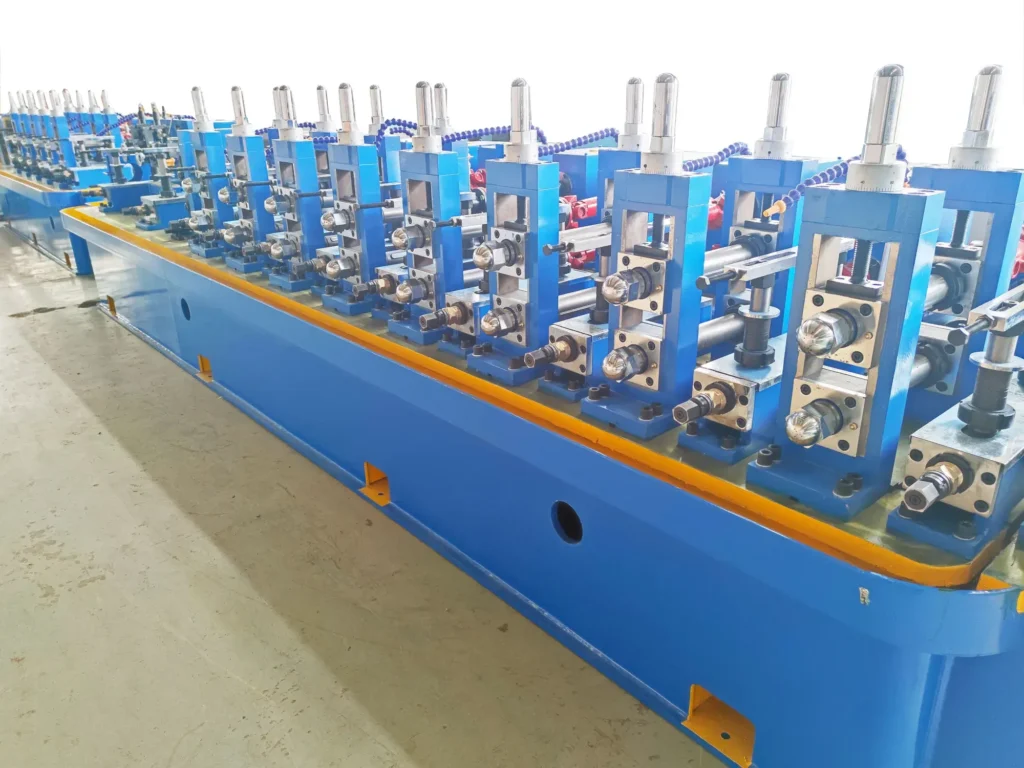 HG32 HFW Tube Mill — Φ10–32 mm Round & Square Pipe Line
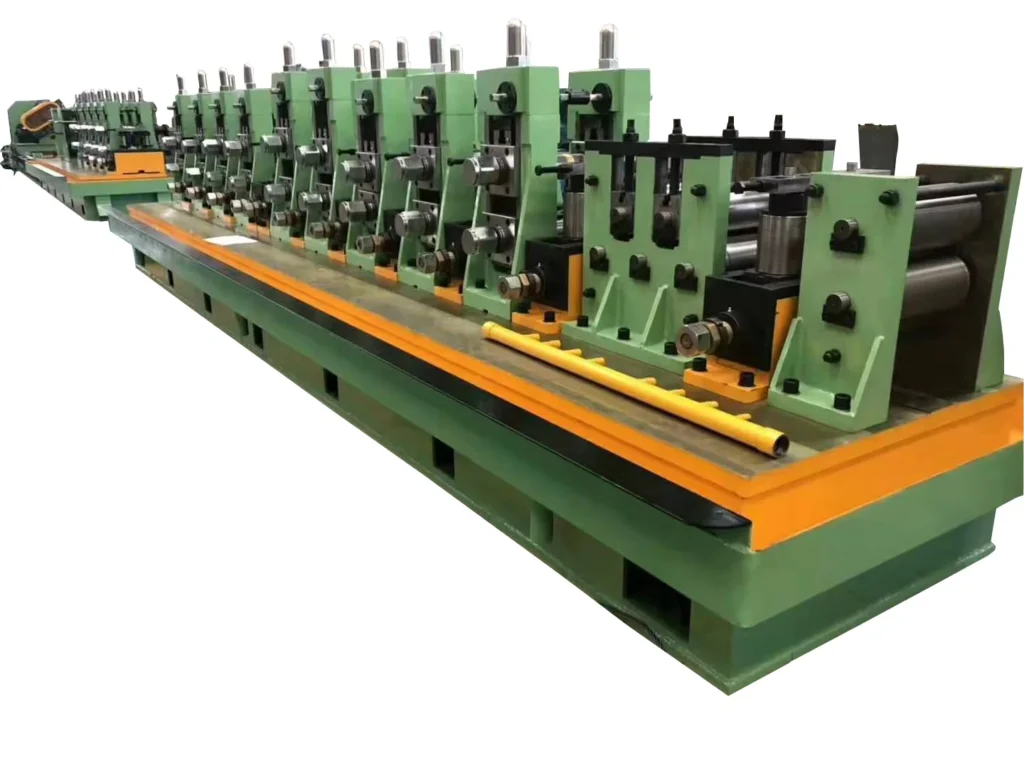 HG50 HFW Tube Mill — Φ16–50.8 mm Round & Square Pipe Line
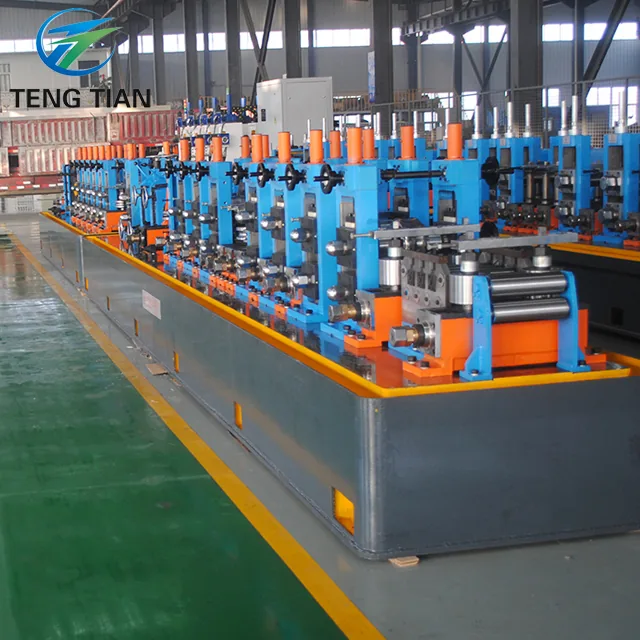 HG76 Tube Mill Line for Φ12.7–76 mm Pipe
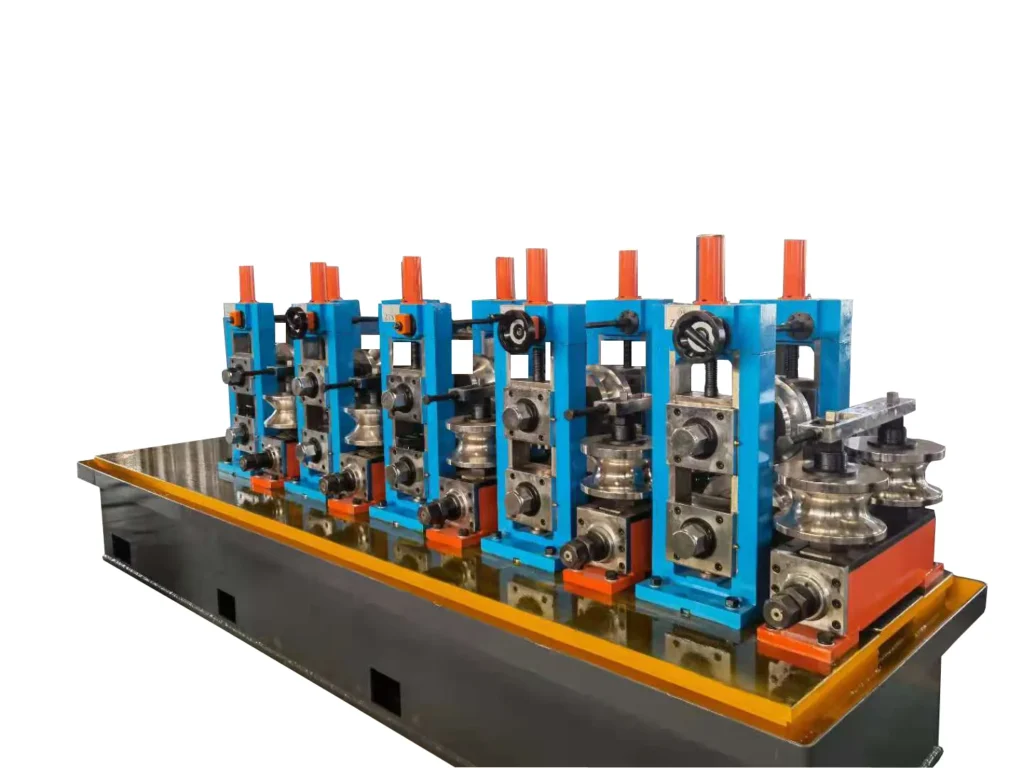 HG89 HFW Tube Mill — Φ32–89 mm Round & Square Pipe Line
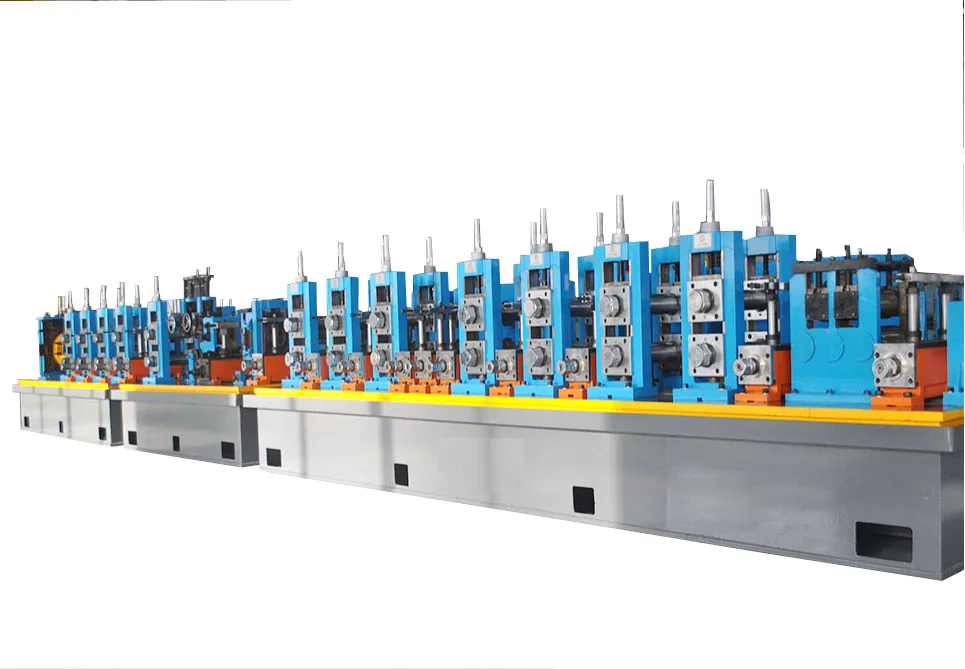 HG114 HFW Tube Mill — Φ45–114 mm Round & Square Pipe Line
Small-Diameter HFW Tube Mill — Range, Configuration and Output
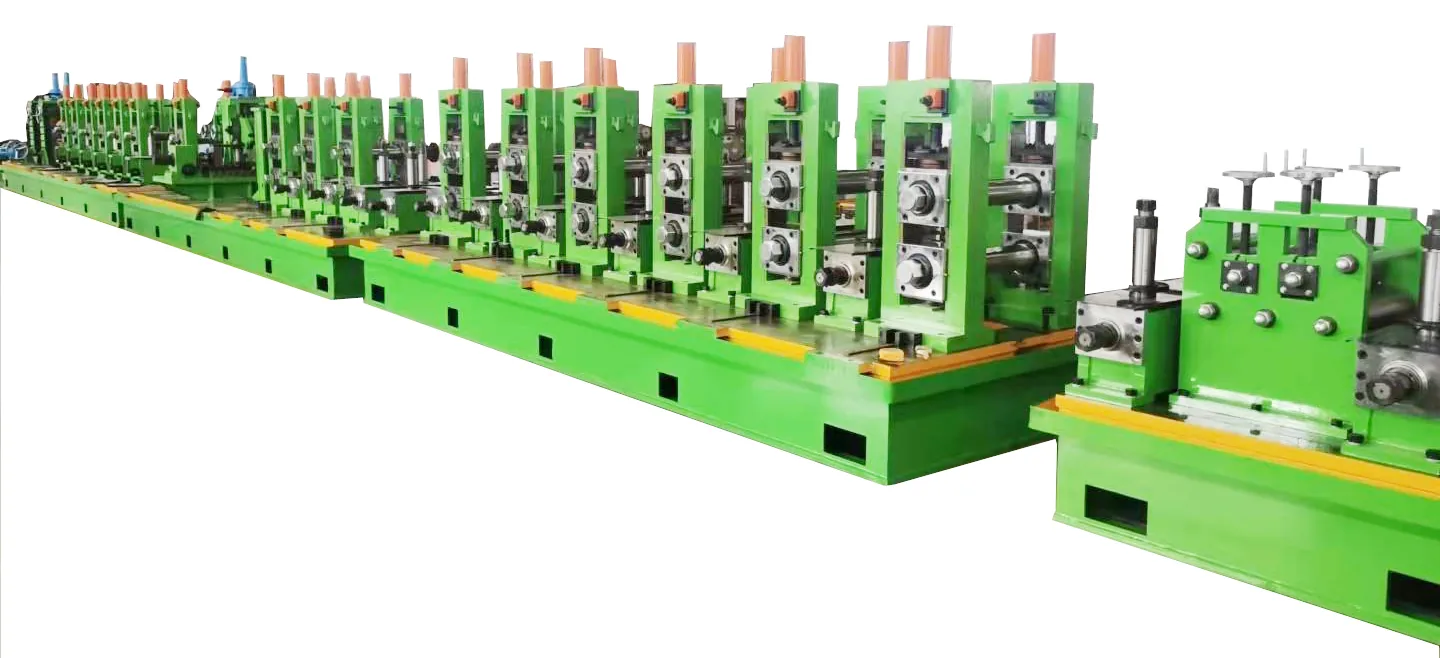
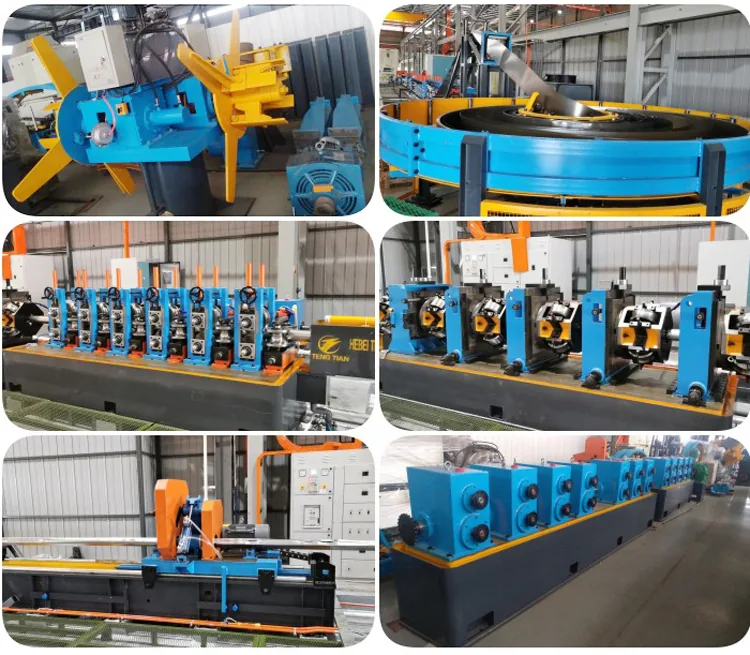
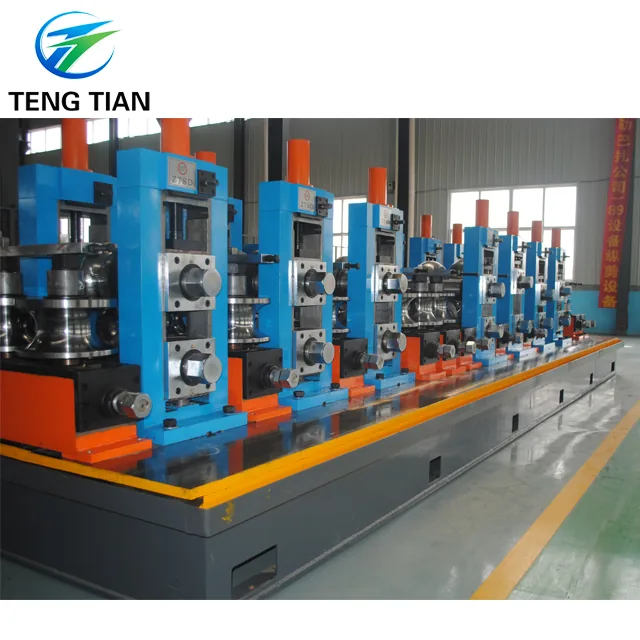
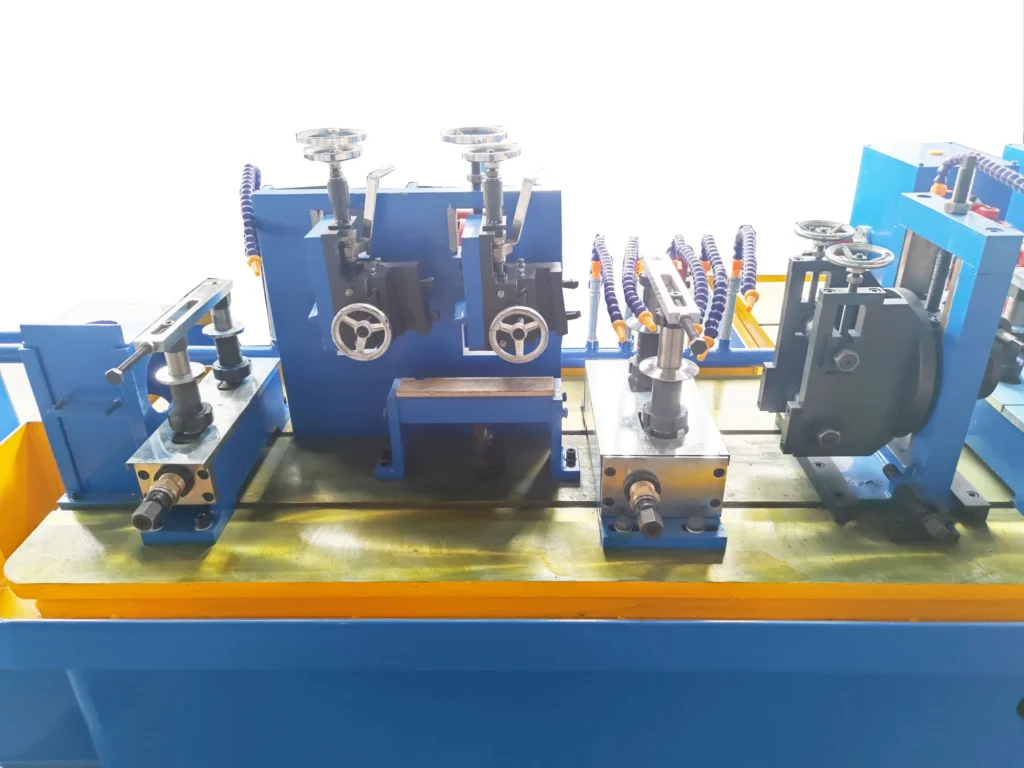
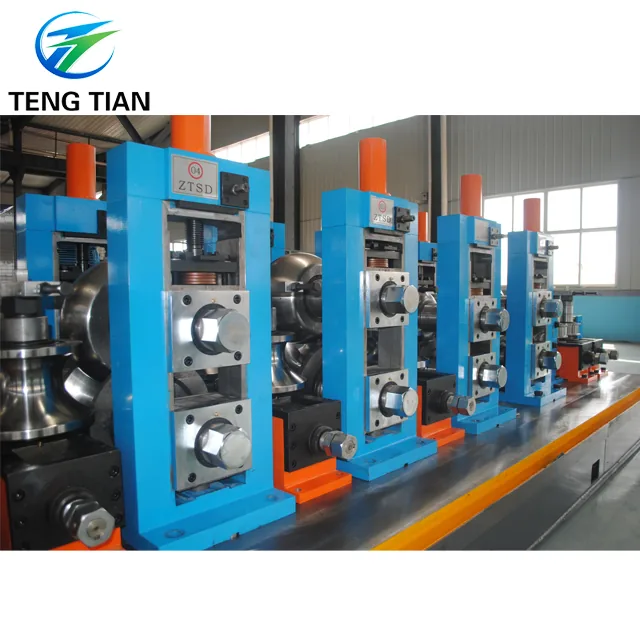
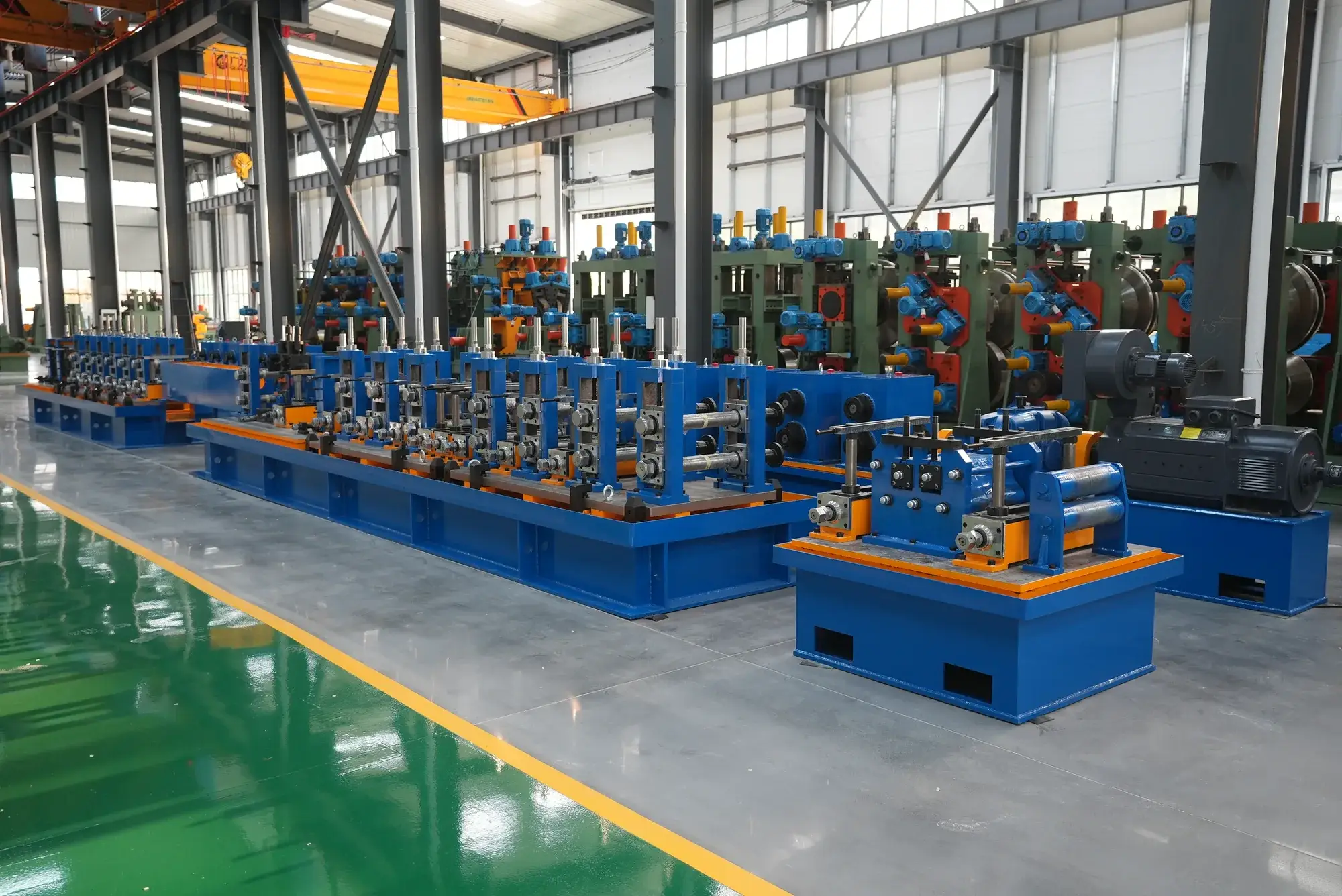
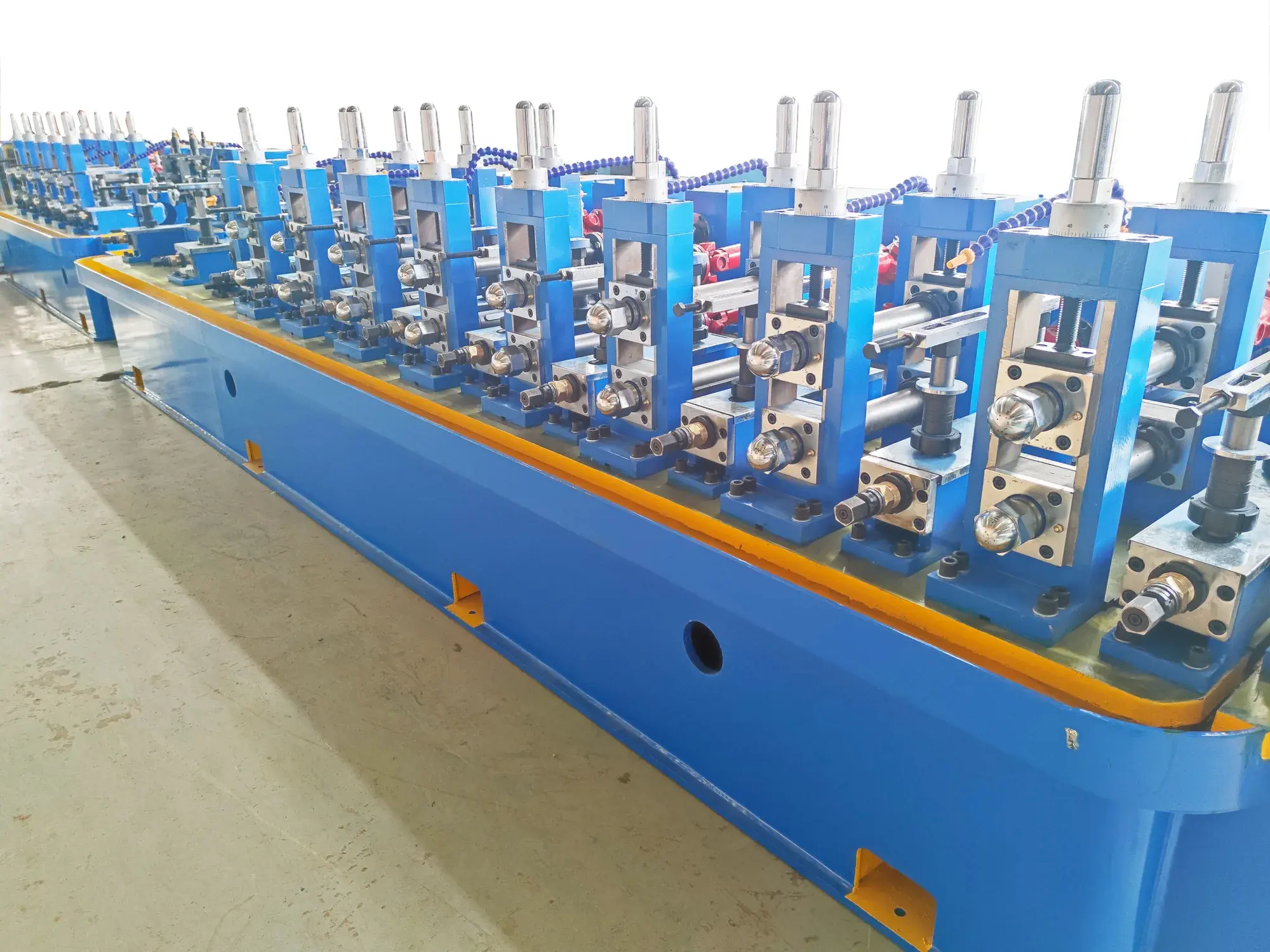
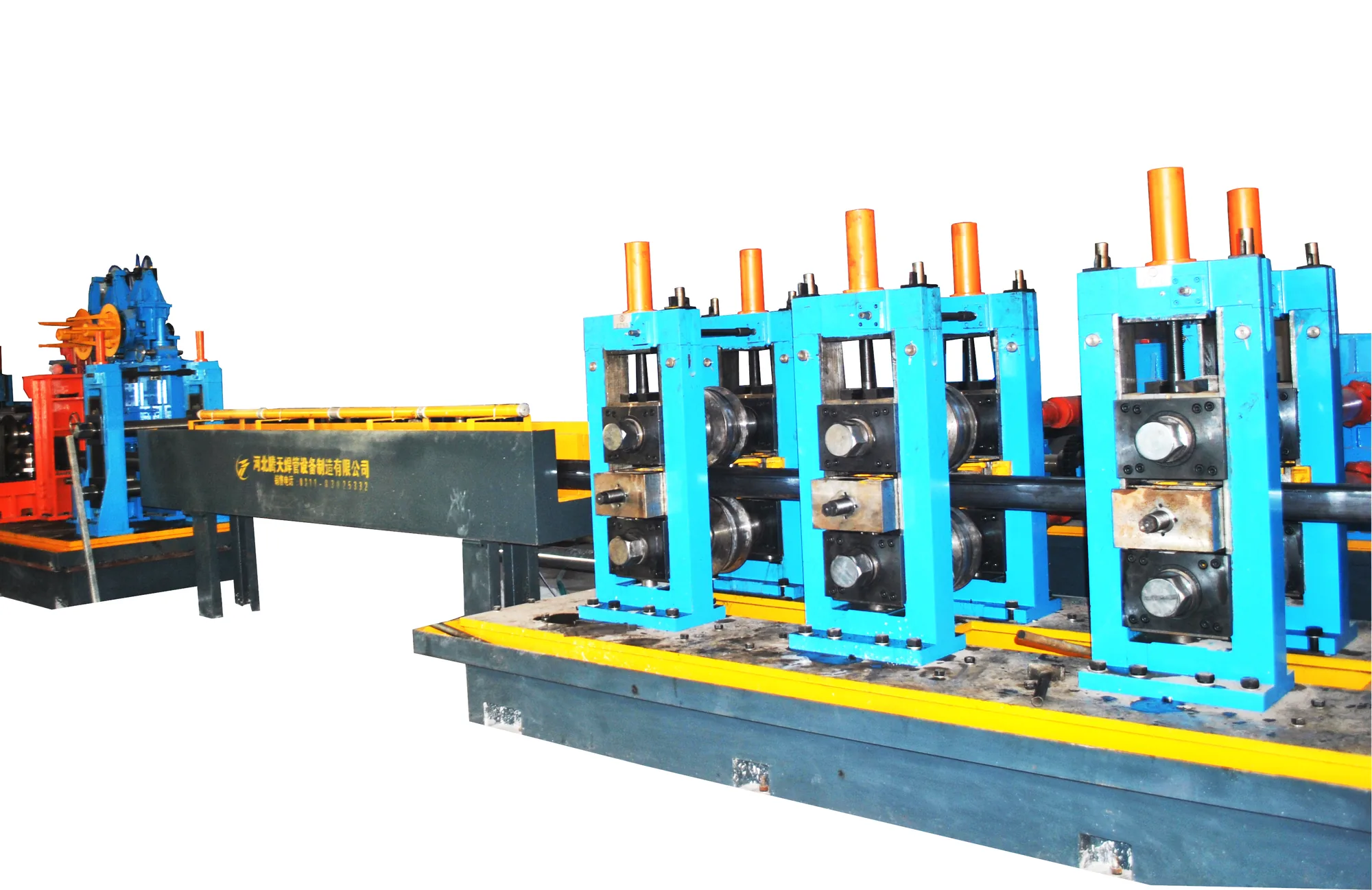
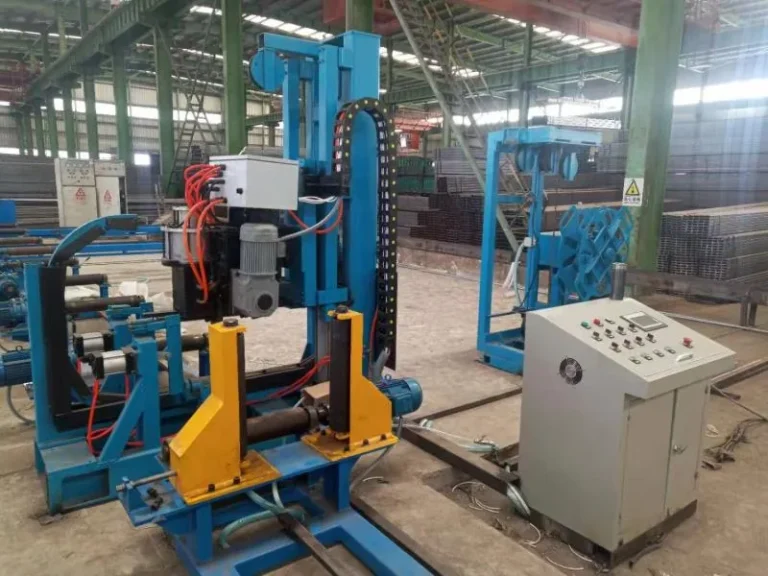
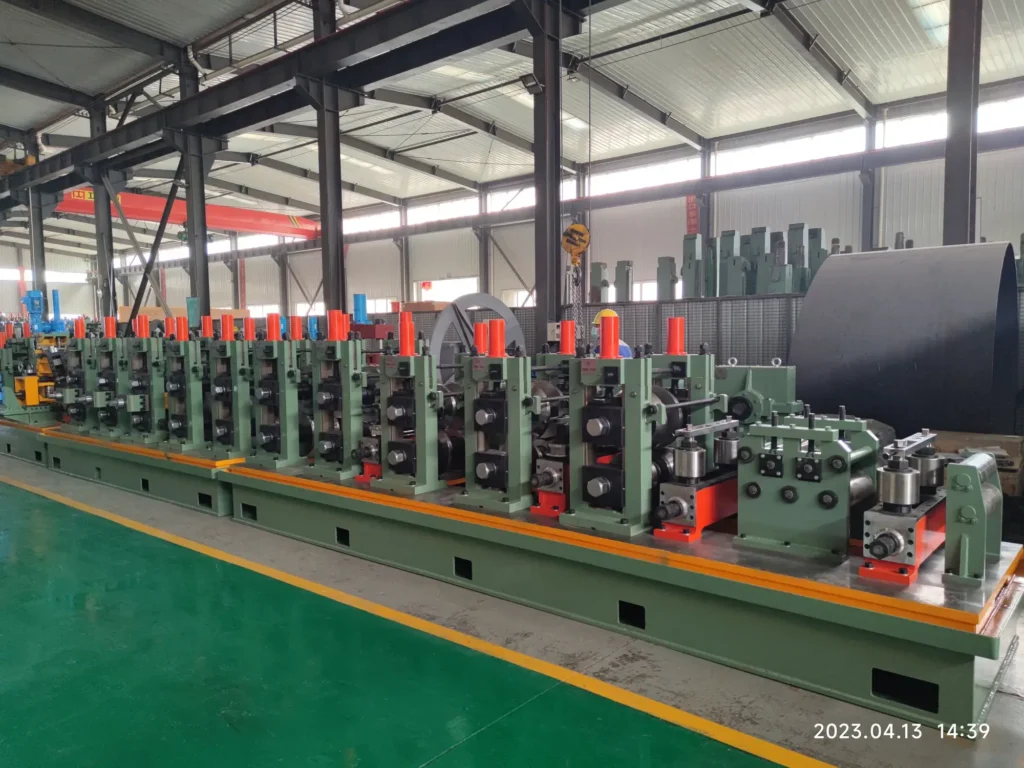
Unit train — eight units. Expanding-mandrel uncoiler; five-roller leveller; automatic shear and butt welder; spiral accumulator; forming and sizing mill; high-frequency induction welder; flying or cut-off saw; PLC and variable-frequency control system.
The five steps and their windows.
| Model | Finished OD Range |
|---|---|
| HG32 | Φ10–32 mm |
| HG50 | Φ16–50.8 mm |
| HG76 | Φ12.7–76 mm |
| HG89 | Φ32–89 mm |
| HG114 | Φ45–114 mm |
Forming route. Conventional roll forming, or direct forming square as a separate technology with its own line.
Welding method. High-frequency induction welding across the whole family, using the skin and proximity effects to concentrate current at the strip edges.
Automation. Semi-automatic or fully automatic PLC control, with the fully automatic tube mill as the high-automation variant.
Section shapes. Round, square and rectangular. Most HG steps can produce all three.
Key Parameters: Size Range, Wall Thickness, Line Speed and Welder Power Band
| Item | Family Level (HG32–HG114) | By Model |
|---|---|---|
| Welder power | HG32 runs a 150 kW welder; welder power rises with diameter up to 1500 kW on HG630 | Wall thickness and output for HG50, HG76, HG89 and HG114 are quoted to your specification. |
How the Line Stays Continuous
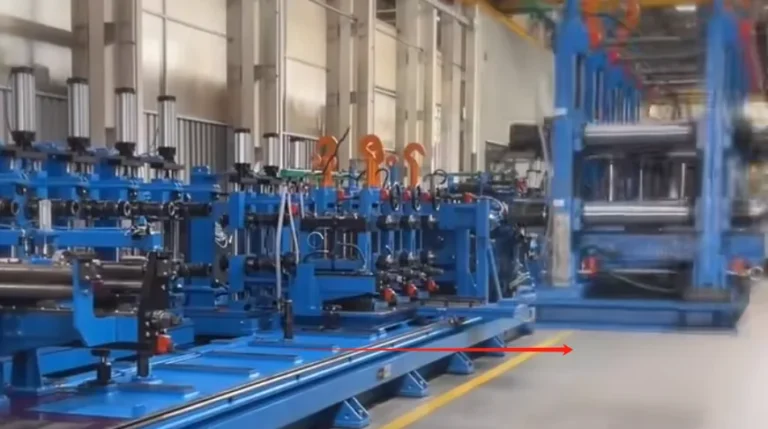
A spiral accumulator stores strip so that the line’s entry section can pause for that join while the forming and welding section keeps running. The word continuous in the definition is doing real work, and two of the eight units exist only to protect it. An automatic shear and butt welder cuts the head and tail of successive coils and welds them together, so a coil change does not stop the mill.
Seen from the operator’s side: before a coil runs out, the head and tail are sheared and butt welded, timed against the accumulator so that the line does not stop, with broken strip and scrap pipe at the joint as the failure mode.
That is one of the four things buyers come to us about — continuous production without stopping to change coils, multi-size coverage on one line, stable yield and weld quality, and changeover efficiency.
The two remaining entry units serve the same purpose differently. An expanding-mandrel uncoiler tensions the coil accurately, with unstable tension producing strip wander and loose coil; a five-roller leveller flattens the strip before forming, with poor levelling leaving residual curvature that shows up later as a wandering seam.
What Small-Diameter Pipe Is Made For
Fluid transport pipe: pipe plants running HG lines continuously to make carbon steel welded pipe for oil and gas transport, municipal water supply, drainage and gas, and chemical and heating pipework. The acceptance criteria are weld pass rate, diameter and wall coverage, non-stop coil changing, and energy and yield.
Structural and scaffolding tube: plants making load-bearing, scaffolding and general mechanical section in square, rectangular and round. Here the criteria shift to corner definition and straightness on square and rectangular section, changeover efficiency, and unit electricity consumption.
Furniture and home tube appears as a third downstream application at the small end, and it is the one where an in-line coating step is most often added.
Two applications dominate this end of the range, and they ask for different things from the same machine.

Automation Level Is a Selection Decision
There are two levels: semi-automatic, and fully automatic PLC control — the automatic tube mill is the fully automatic one.
For buyers whose acceptance is dimensional rather than structural — the automotive parts and new-energy profile — that stability is the specification, and our answer to them is exactly this PLC and variable-frequency or servo control giving repeatable operation.
What the control layer governs: PLC and variable-frequency control unify the takt and speed of forming, welding, sizing and cutting, and the consequence of instability is speed fluctuation, cut-length error and higher downtime.
Field Evidence in This Diameter Band
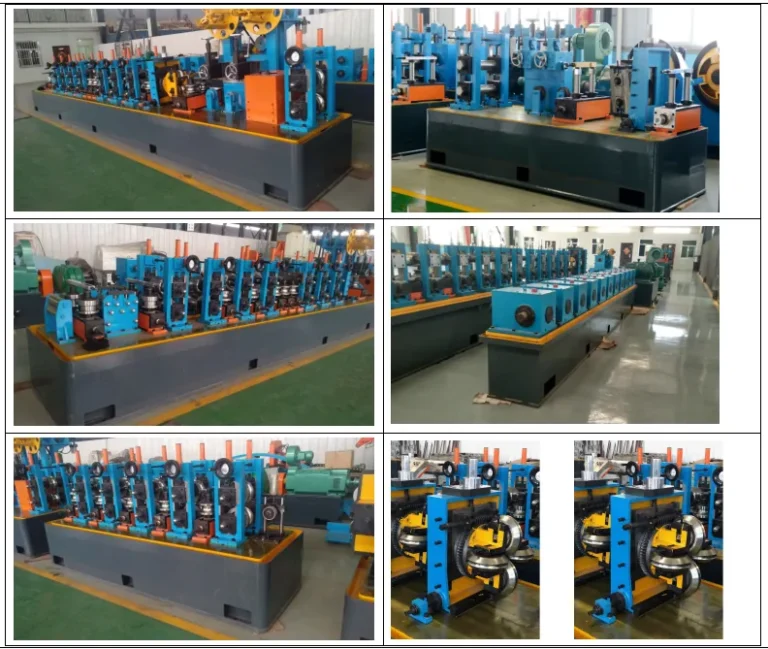
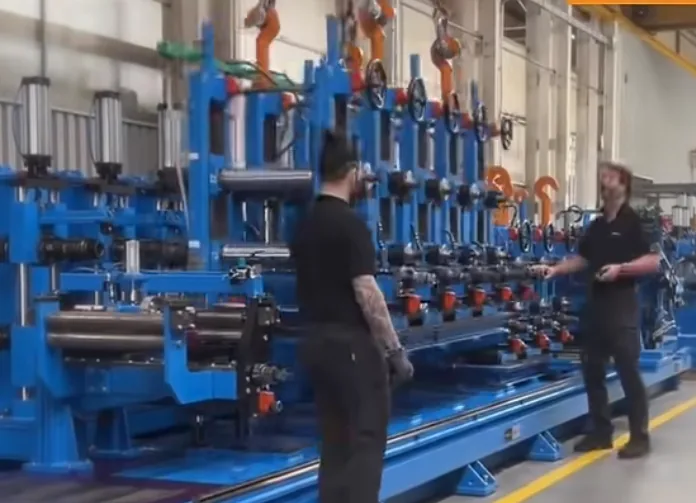
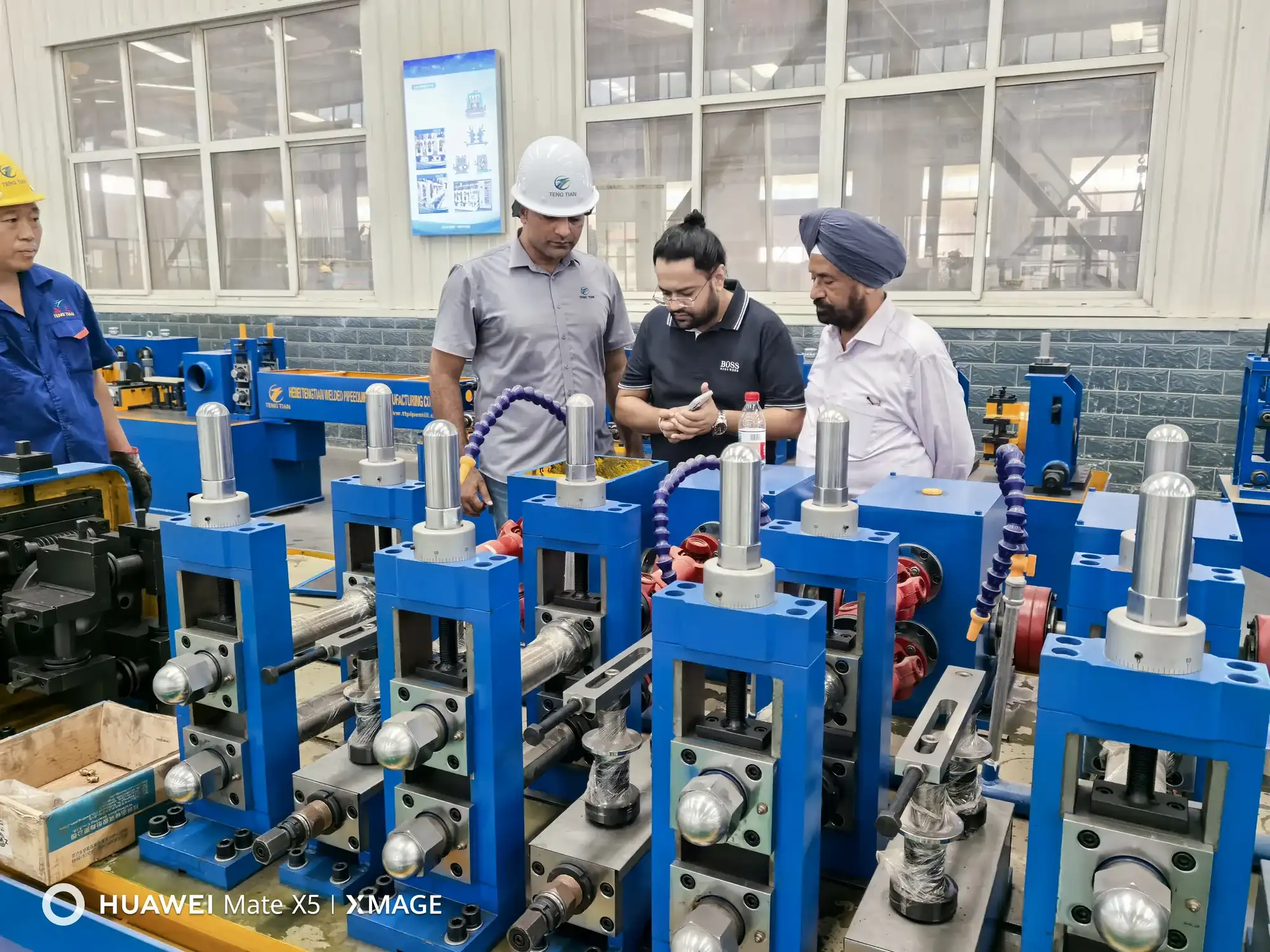
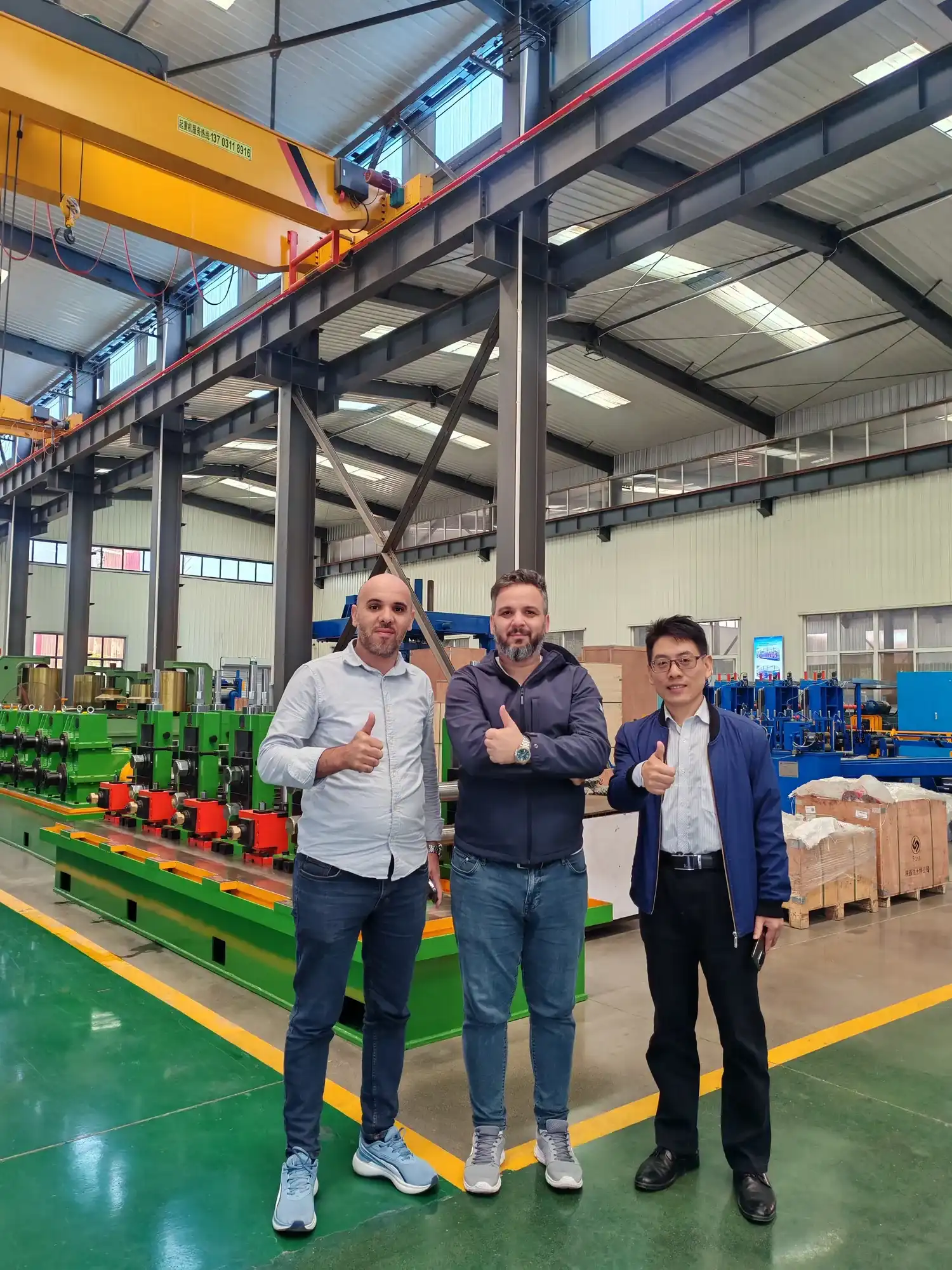
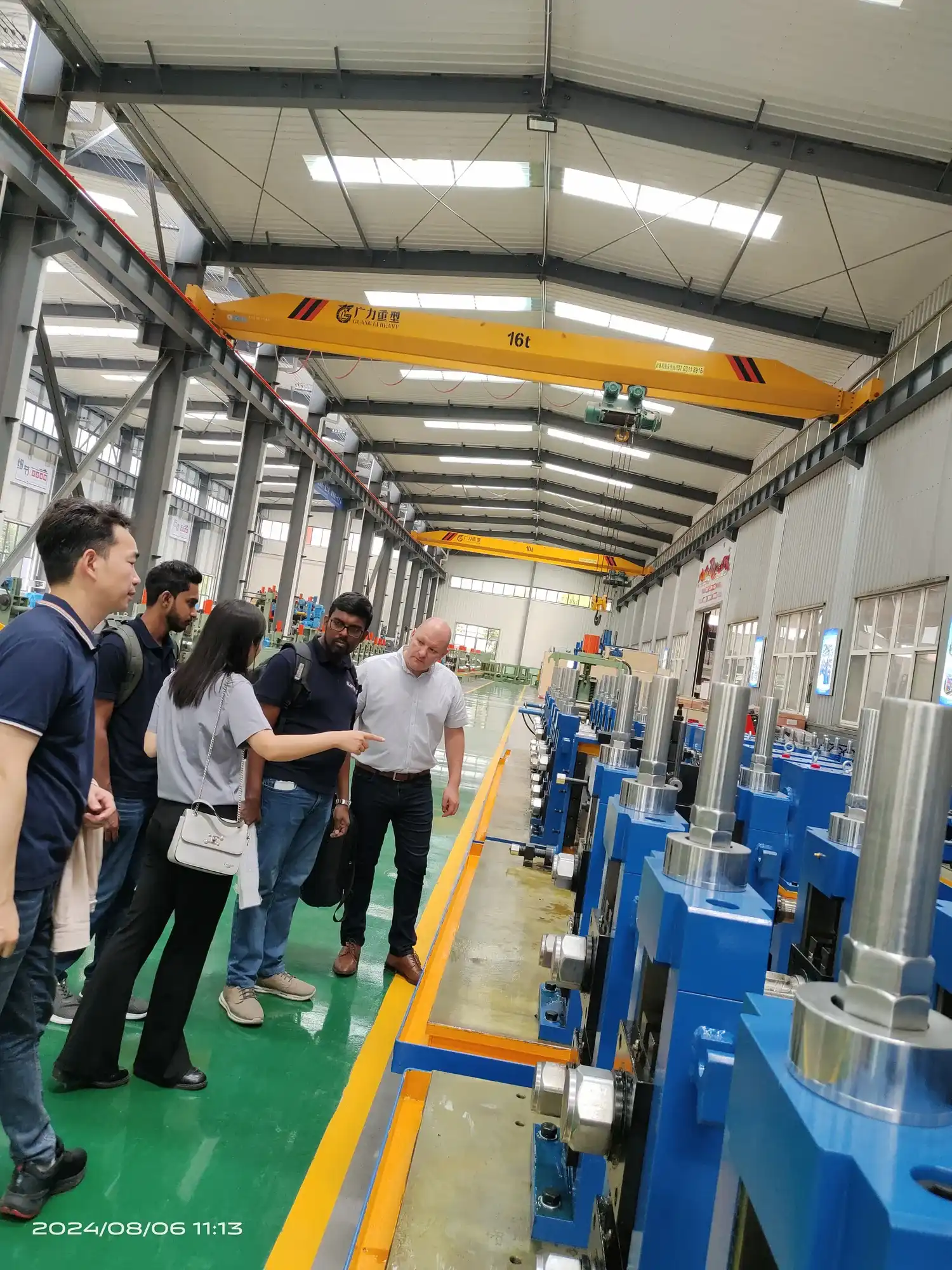
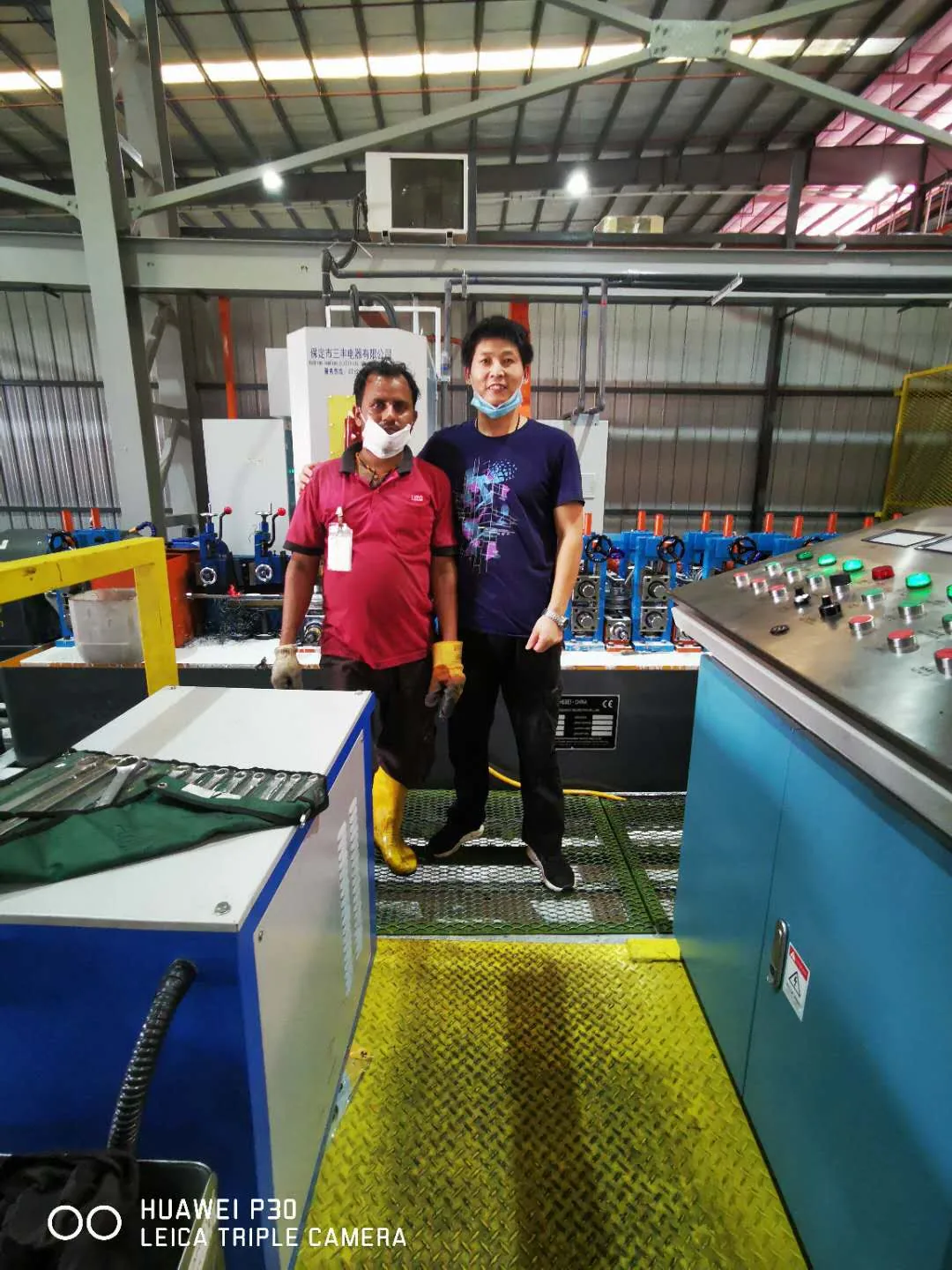
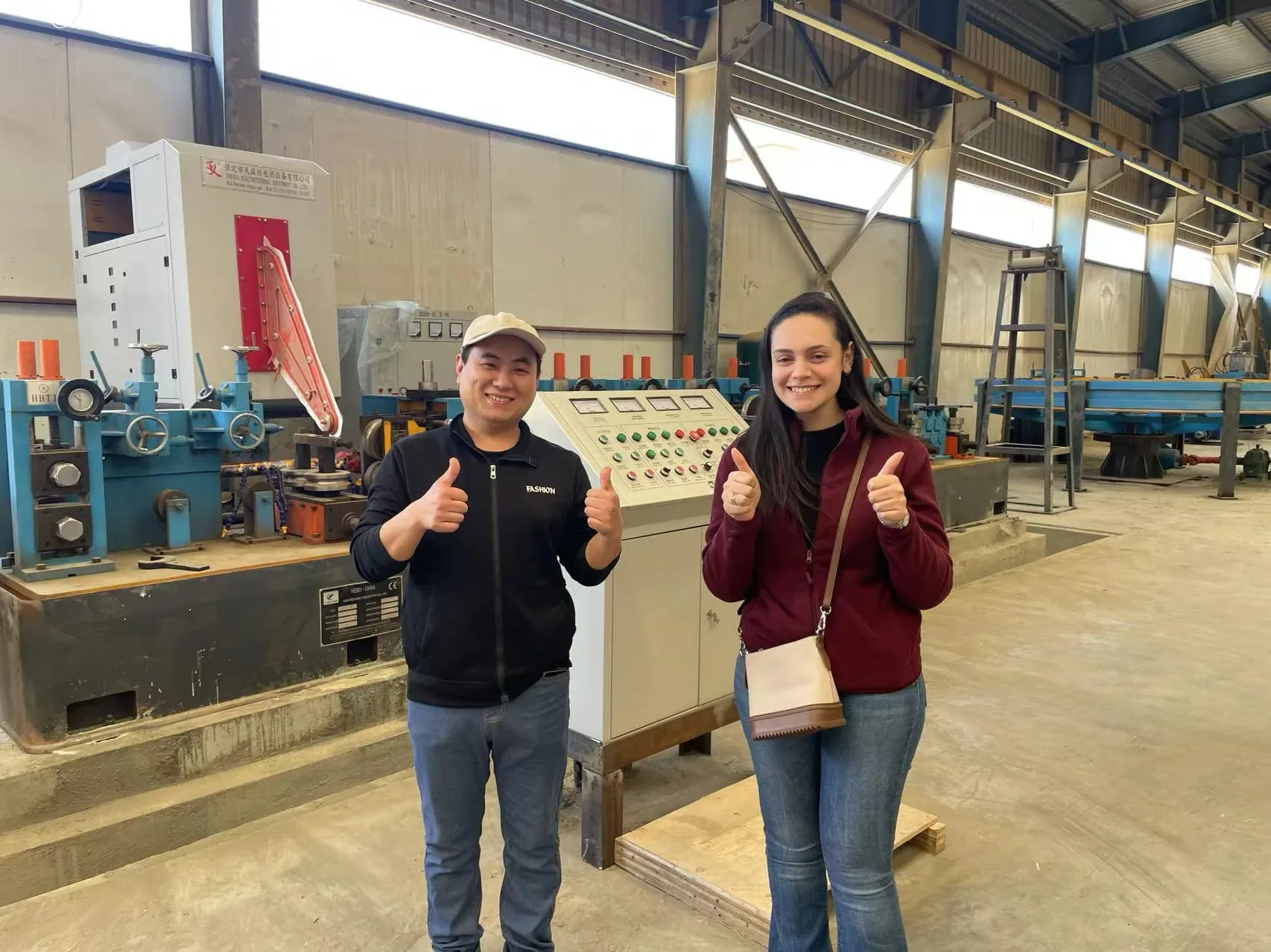
Deliveries in or near this band: Egypt at HG76 × 3 and HG89 × 5, Malaysia at HG60 × 3, Mexico at HG114 × 4, Sri Lanka at 89 × 5, and India at 76 × 3.
Every one of them carries a site photograph.
Operating Reality After Handover
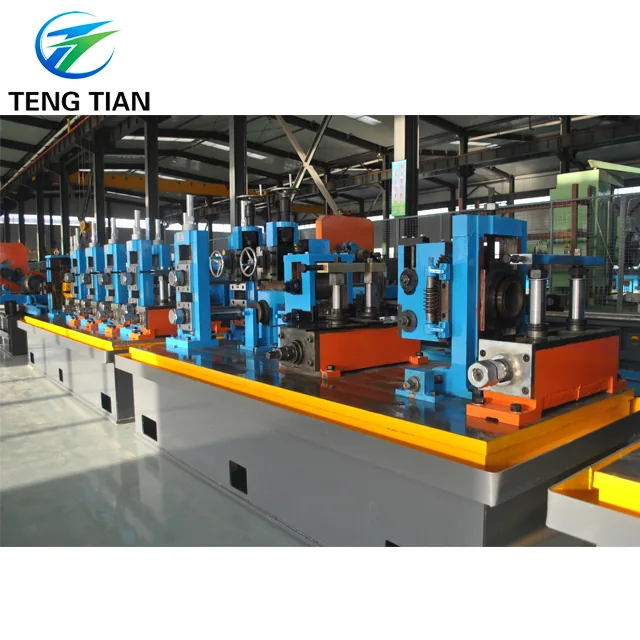
The line has five operating steps, and three of them require training rather than ordinary skill: coil loading and strip threading, where centring, tension and head flattening decide whether the strip wanders; shear-weld coil joining, where butt-weld parameters and accumulator timing must be coordinated;
Size setting is the fourth, as roll change on a conventional line versus servo adjustment only on a direct-forming line, with profile drift and trial scrap as the cost of getting it wrong. Cutting and collecting is the fifth and is ordinary operation.
Two support facts follow from that. Operator setup and quick tooling change are reducing scrap on a size change, and impeder and induction coil condition are directly affecting weld energy — which is why they sit on the spares list rather than the maintenance list.
and setting welding power and speed, where power, weld speed and squeeze have to be matched against each other.
How to Choose the Right Model
A plant making Φ20 to Φ100 mm is not choosing between five steps; it is choosing the one step whose window contains 100. Start from the widest pipe you will actually make, not the average. Because the windows overlap, the binding constraint is the top of your product range.
Then check section shape. Round, square and rectangular are all producible on most steps, but the square and rectangular route has its own dedicated line where frequent size changes are the priority.
Then decide automation level. Semi-automatic and fully automatic PLC are a classification dimension, not an option list, which means it is decided at selection rather than retrofitted.
Then look at what the line is actually responsible for. The split is precise: the mill controls weld power matching, seam alignment and squeeze; the buyer controls strip quality and operation. Dimensional accuracy comes from sizing and straightening on the equipment side, with incoming wall-thickness tolerance on the buyer’s side.
Material yield above 93% is supported by the line design, with actual yield also depending on the plant’s own operation.
What these lines are bought to fix is worth saying plainly, because it drives the specification: continuous production without stopping to change coils, multi-size coverage on one line, stable yield and weld quality, and changeover efficiency.
Scope of Supply, Installation and Commissioning
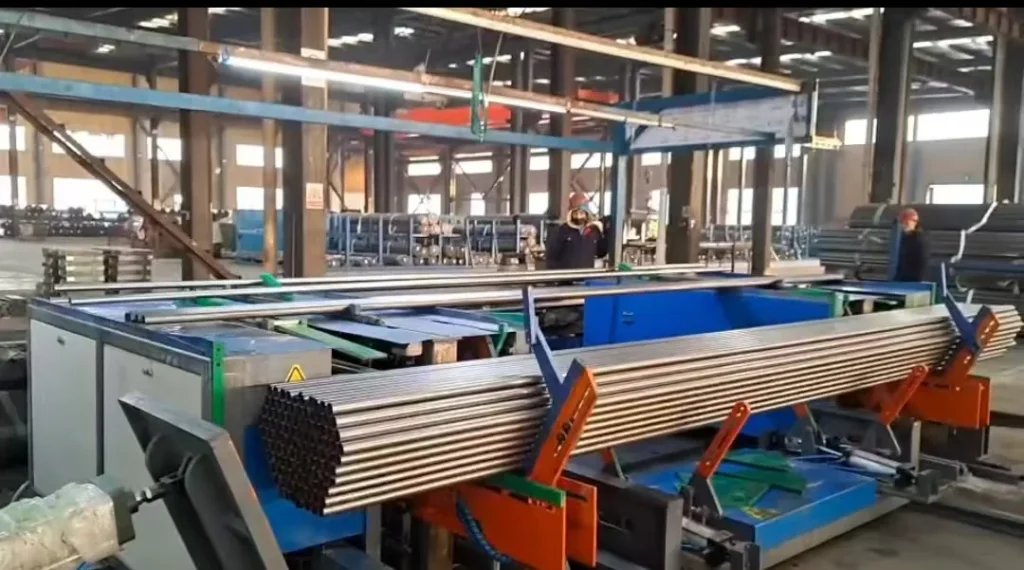
The process flow the line delivers, end to end, is uncoiling, shear and butt welding, spiral accumulator, forming and sizing, and flying saw — which is also the shortest accurate description of what a complete line includes.
Operation is step by step and gives a fair picture of what commissioning has to cover: loading the coil and threading the strip; shear-welding coil joins ahead of the accumulator so the line does not stop; setting the size; setting welding power and speed and running; and cutting to length and collecting. Three of those five require training.
Delivery is knocked down in containers with precision parts crated, installation and commissioning included with engineers on site, and 50 to 90 days lead time.
Small diameter tube mill machine
In one line: five machine sizes, HG32 to HG114, covering finished pipe from about Φ10 to Φ114 mm, high-frequency induction welded, PLC controlled, with the machine chosen by the largest diameter in the plant’s product plan.
Tube mill for 114mm pipe
Φ114 mm sits at the top of the HG114 window, which runs Φ45–114 mm. It is also inside the HG165 window, which runs Φ60–165 mm and belongs to the large-diameter hub. Which of the two is right depends on the rest of the range, not on the 114 figure alone — and this is exactly the case where choosing by “the band that contains my diameter” gives the wrong answer.
Lines Delivered in This Diameter Band
Photographs taken at customer plants. Customer names are withheld; each card shows the country, the industry and the model or size.
From the Workshop
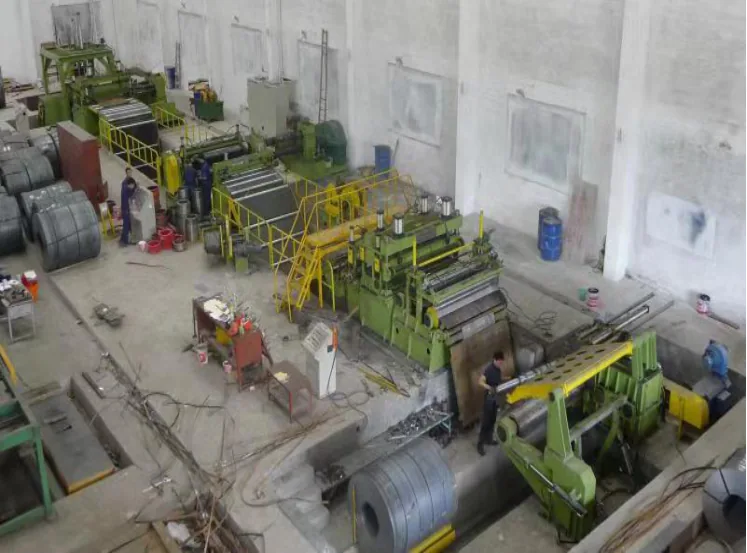 Steel Coil Slitting Line
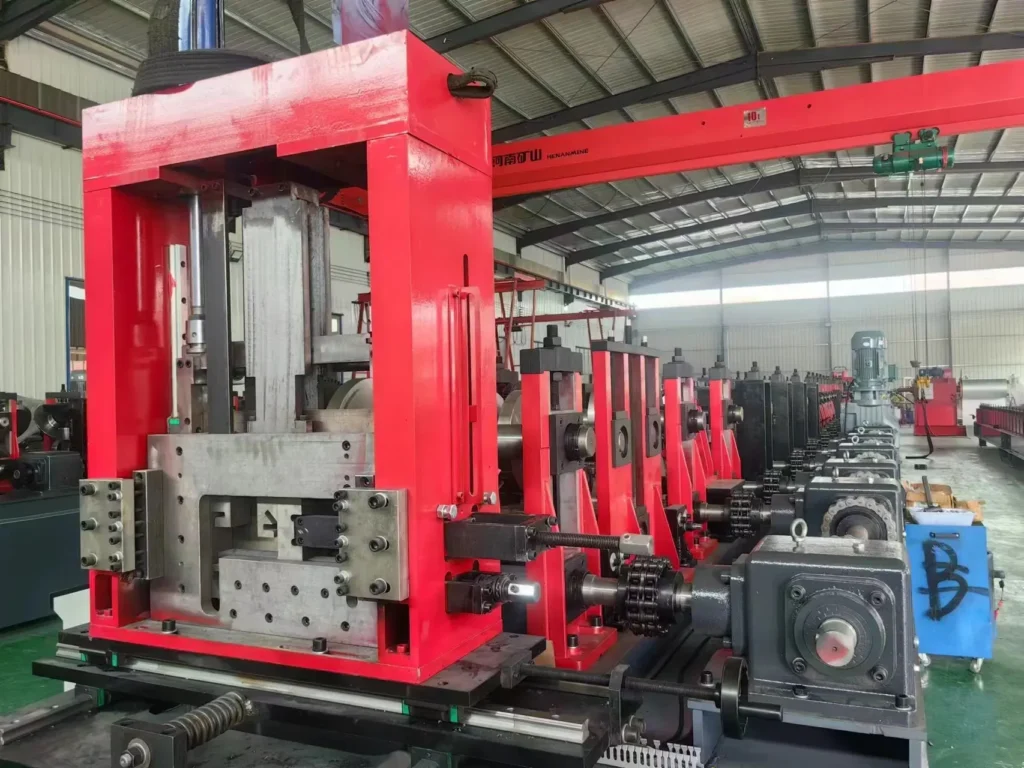 Roll Forming Machine
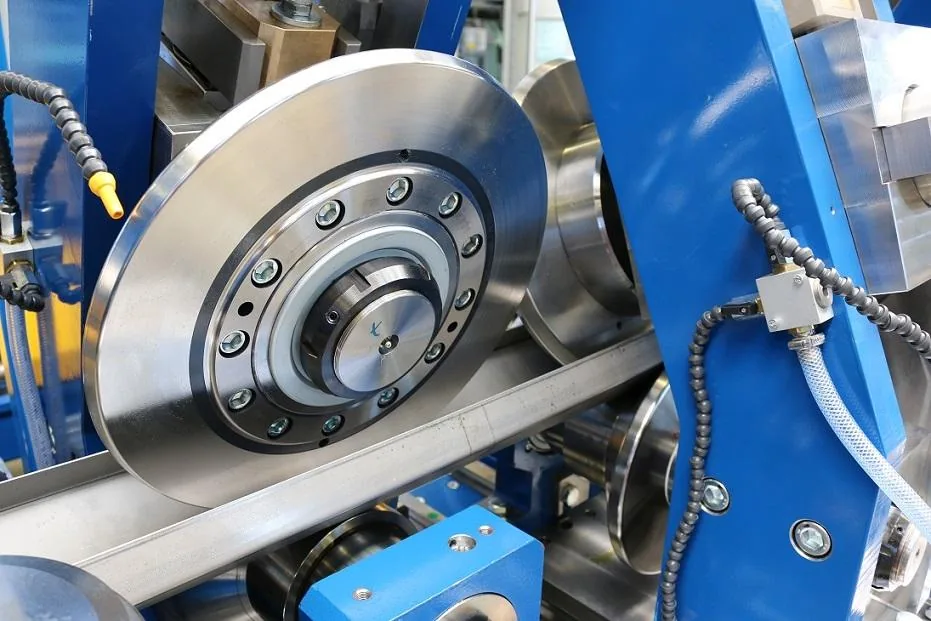 Purlin Machine Lines
 Pipe Production Applications
Send Your Enquiry
Tell us the pipe outside-diameter range, the wall thickness and the output you need. An engineer reads every enquiry — it does not land in a general sales inbox.