
 Scan on WeChat
Home › Tube Mill › Small-Diameter Tube Mill › HG50
The second of the twelve model steps — Φ16 – Φ50.8 mm round pipe and 12×12 – 40×40 mm square section, on a 200 kW high-frequency welder.
Model Steps
In This Line
Quick Contact
Hebei TengtianYuanle@tentubemill.com
+86-311-83025332
WhatsApp +852 5425 3155
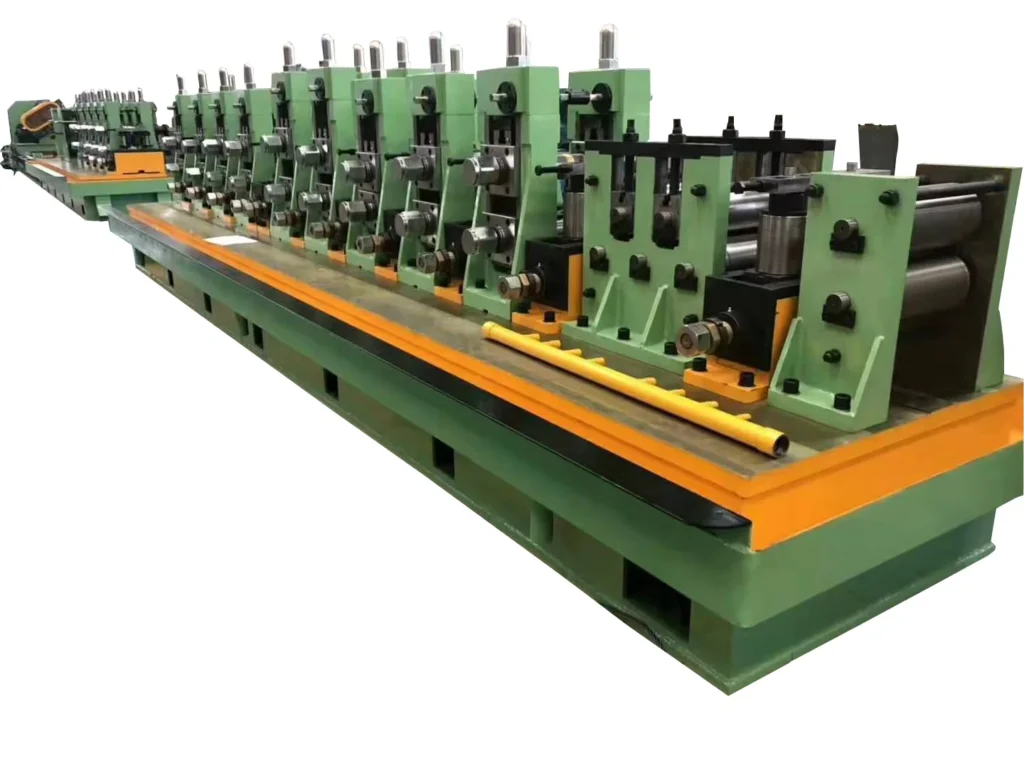
HG50 is the second of the twelve model steps. Its band, Φ16–50.8 mm, is the one most often quoted for furniture tube, fence and light fluid line, and it is the first step in the series where the same mill is routinely asked for round, square and rectangular section on the same shift.
Line Specification — HG50×2.0
| Round tube outside diameter | Φ16 – Φ50.8 mm |
|---|---|
| Wall thickness | 0.8 – 2.0 mm |
| High-frequency welder | 200 kW |
| Square / rectangular tube | Square 12×12 – 40×40 mm; rectangular 30×50 mm; wall 0.8 – 2.0 mm |
Watch This Line Running
HG50 High-Frequency Welded Pipe Mill — O.D. 16-50.8 mm
Technical Specification Table
- Outside diameter range: Φ16–50.8 mm, the second of twelve steps from HG32 to HG630.
- Section shapes: round, square and rectangular.
- Forming: conventional roll forming.
- Welding: high-frequency induction welding.
- Automation: semi-automatic or full PLC control.
- Welder power for this step: 200 kW
Wall thickness for this step is 0.8 – 2.0 mm; the series band 0.5–16 mm applies to HG32 to HG630 as a whole and is not broken down per step. Line speed and shift output are available on request.
Line Configuration and Scope of Supply
The mill is delivered as eight linked units. The list is set at series level and applies to this step; per-step motor ratings are confirmed with the quotation.
- Expanding-mandrel uncoiler with pneumatic four-link tensioning.
- Five-roller leveller ahead of the forming section.
- Automatic shear-welder for coil-to-coil joining.
- Spiral accumulator buffering strip during coil change.
- Forming and sizing mill.
- HF induction welder.
- Flying saw for cut-to-length at speed.
- PLC and VFD control.
Which units are in the base package and which are quoted separately is available on request.
Tube mill for 50mm pipe
Three of those stages decide whether pipe passes: strip flatness into forming, seam alignment and squeeze at the weld box, and sizing after cooling. The rest are handling stages that keep the line continuous rather than steps that set quality.
Wear Parts and Consumables
Impeders and induction coils are the wear items that concentrate weld energy at the seam; they are consumed by welding hours and we supply them continuously. Saw blades are consumed by cutting volume. Forming and sizing rolls are replaced by wear rather than consumed, and are machined on our own CNC equipment.
Service lives for all of these are available on request.
The process chain on this step is the standard one: uncoil, straighten and level, shear and weld the coil ends, accumulate, roll form, weld the seam by high-frequency induction, size and straighten, then cut to length.
Size Change, Roll Wear and Running Cost
On a conventional roll-forming step, moving within Φ16–50.8 mm means changing the roll set. Servo setup and repeatable positioning are what keep dimensions consistent from batch to batch after that change, and PLC with variable-frequency control keeps line speed and cut length repeatable.
Line design supports a material yield above 93 per cent; the yield actually reached also depends on how the mill is scheduled and run. Dimensional accuracy divides the same way: sizing and straightening are on the equipment side, incoming strip thickness tolerance is on the buyer’s.
Send outside diameter, wall and target output and we will confirm the step and list what is still open.
Where this step sits in the twelve
HG50 is the second rung of a twelve-step ladder that runs HG32, HG50, HG76, HG89, HG114, HG165, HG219, HG273, HG325, HG426, HG508, HG630. Its band overlaps HG76 above it across most of its own range, so a plant that expects to grow into larger tube should read both bands before fixing on this step.
What the buyer for this step usually is
The second is an auto-parts or new-energy manufacturer, where dimensional accuracy and stability matter more than price and where technical response time is part of the decision.
Those two read the same specification differently. The first asks how fast a size change can be made and what a roll set costs; the second asks how tightly diameter holds across a long run. The line answers the second through PLC and variable-frequency control, which is what makes speed and cut length repeatable rather than operator-dependent.
Delivery, installation and support
The line ships dismantled in containers with bare heavy frames braced and precision items cased; delivery is 50 to 90 days. Installation and commissioning are included, with on-site dispatch and round-the-clock online support. A single contact replies round-the-clock. Payment is 30 per cent deposit and 70 per cent before shipment, with third-party escrow available.
Anonymised delivery record
The process chain behind the specification
Three of the eight stages set quality rather than continuity: levelling, which makes strip flatness a precondition for forming; welding, where fusion is decided; and sizing with straightening, where final dimension and straightness are set.
The other five keep the line running: uncoiling, shear-welding, accumulating, forming and cutting.
What to send with an enquiry
Outside diameter, wall thickness, section shape and target output, plus the standard the finished pipe is written against. Correct line sizing — diameter against power against unit configuration — is its own risk item, which is why the enquiry asks for all four rather than diameter alone.
One more boundary on this step
Automation is a grade of the same series rather than a different mill, so a plant that starts semi-automatic on this step is not buying a different machine from one that starts fully PLC-controlled. What the fully controlled option changes is repeatability of line speed and cut length, not the diameter band or the weld process.
Two end-user profiles are that map onto this band. The first is a regional pipe or section maker building or expanding capacity, price and lead-time sensitive, whose acceptance criteria are return on investment, changeover efficiency, roll cost and energy.
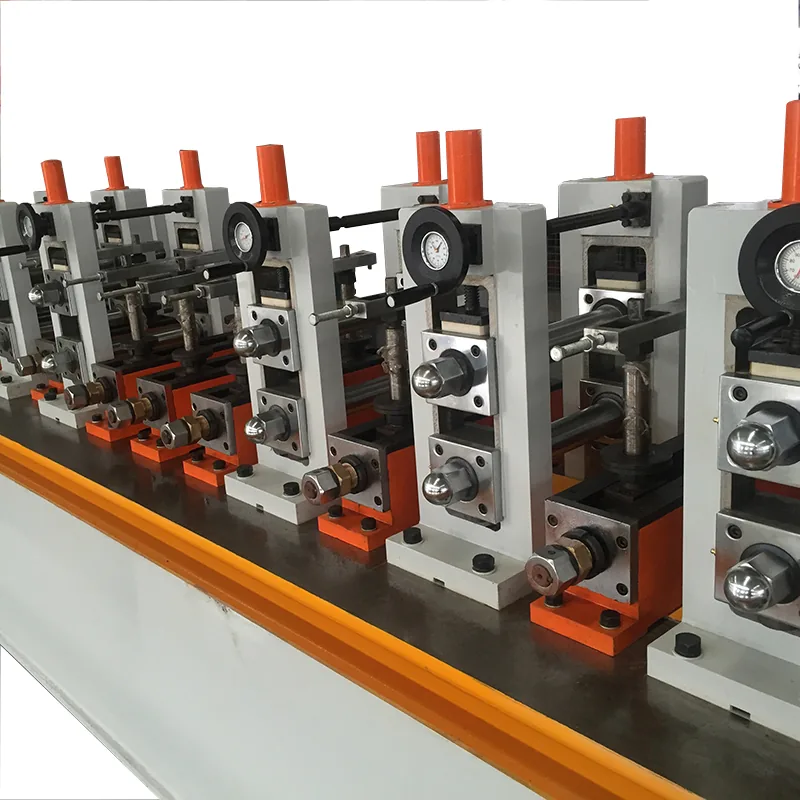
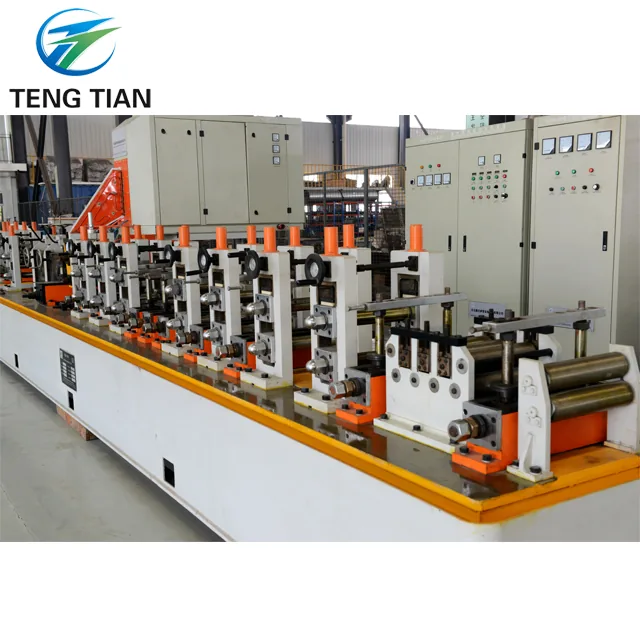
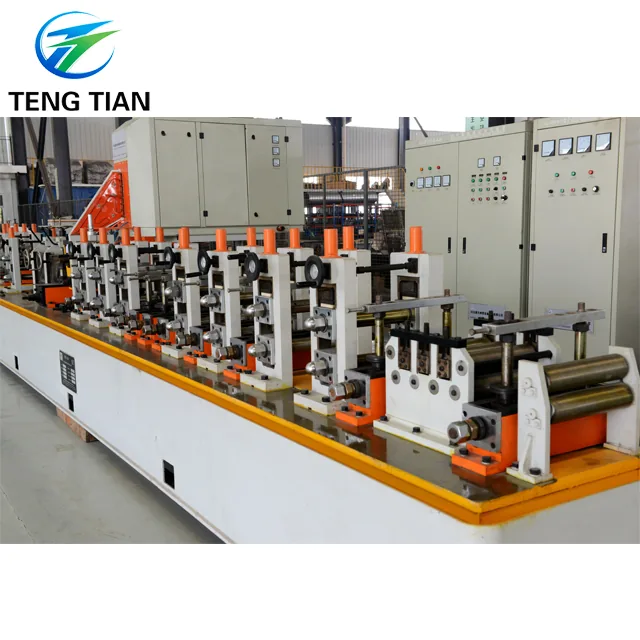
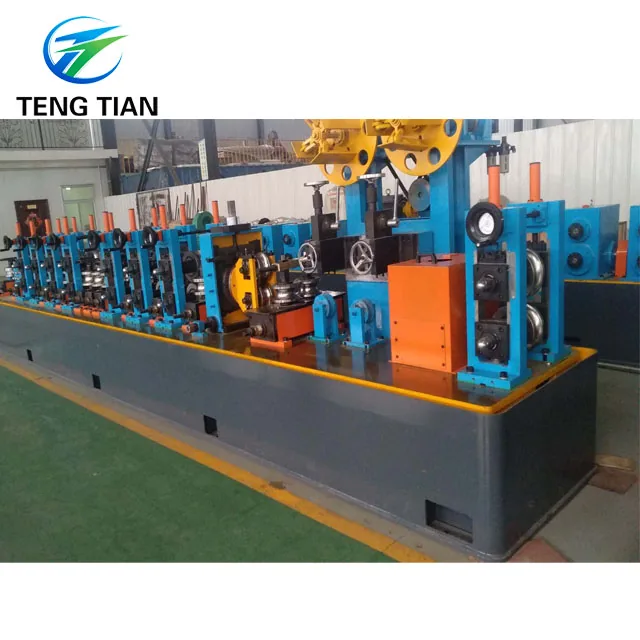
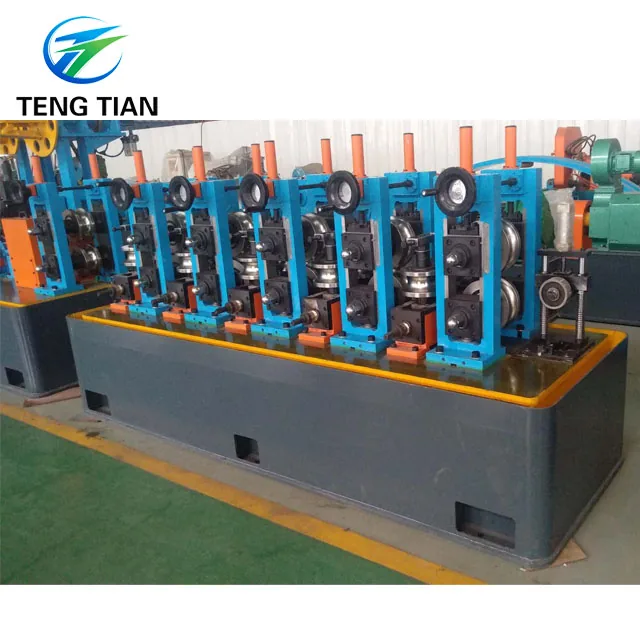
Line Photos from the Works
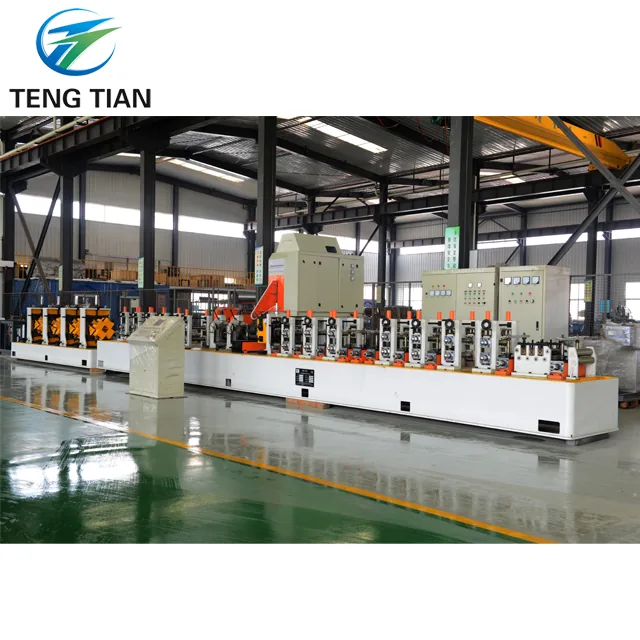
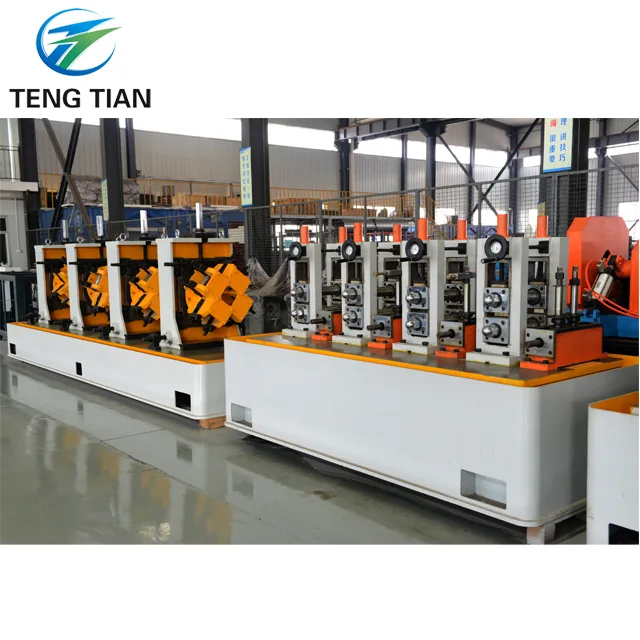
Six photographs of this line, taken in our own workshop. Click any photo for the full-size image.
More from this line
 HG32
HG32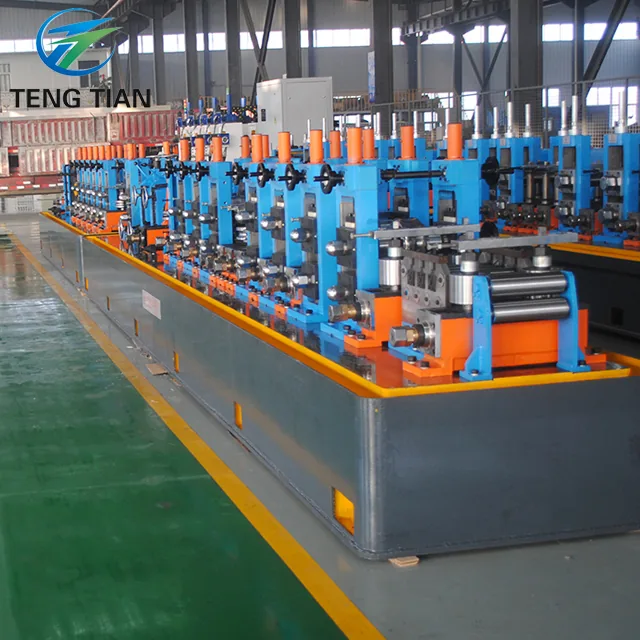 HG76
HG76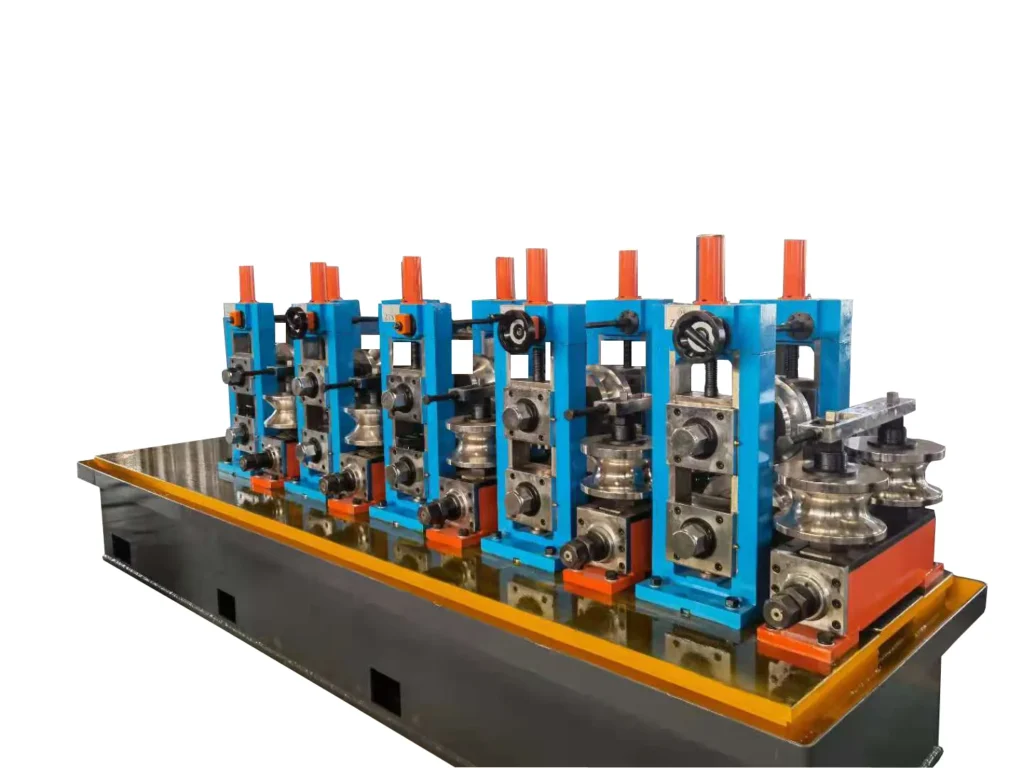 HG89
HG89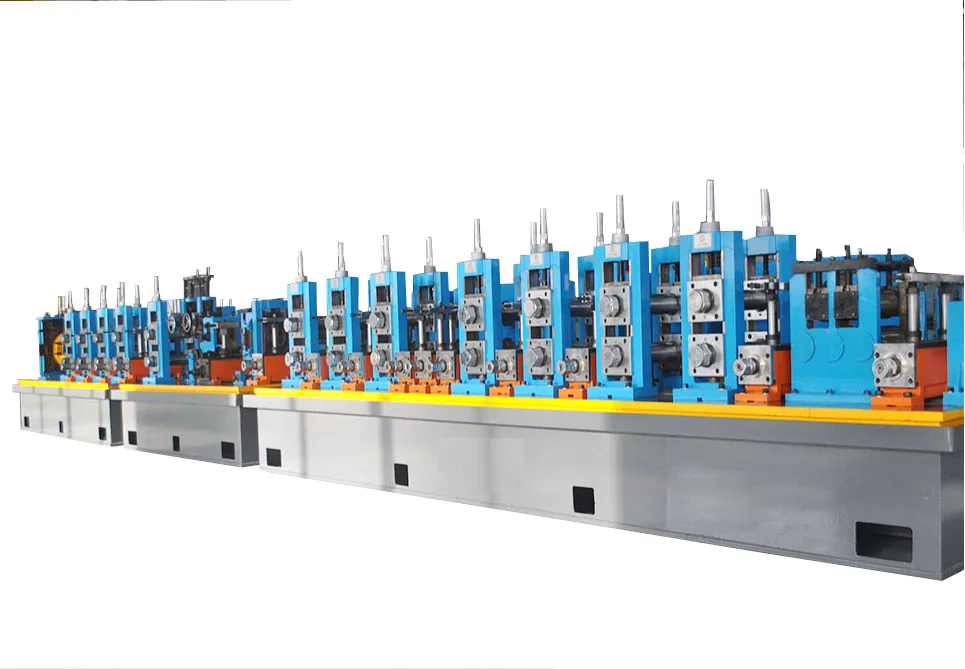 HG114
HG114Send Your Enquiry
Tell us the pipe outside-diameter range, the wall thickness and the output you need. An engineer reads every enquiry — it does not land in a general sales inbox.