 Scan on WeChat
Home › Steel Coil Slitting Line › Steel Coil Slitting Machine
A steel coil slitting line takes a wide hot-rolled coil, uncoils and levels it, slits it lengthwise into narrower strip — or cuts it to length — and recoils the result.
In This Line
Quick Contact
Hebei TengtianYuanle@tentubemill.com
+86-311-83025332
WhatsApp +852 5425 3155
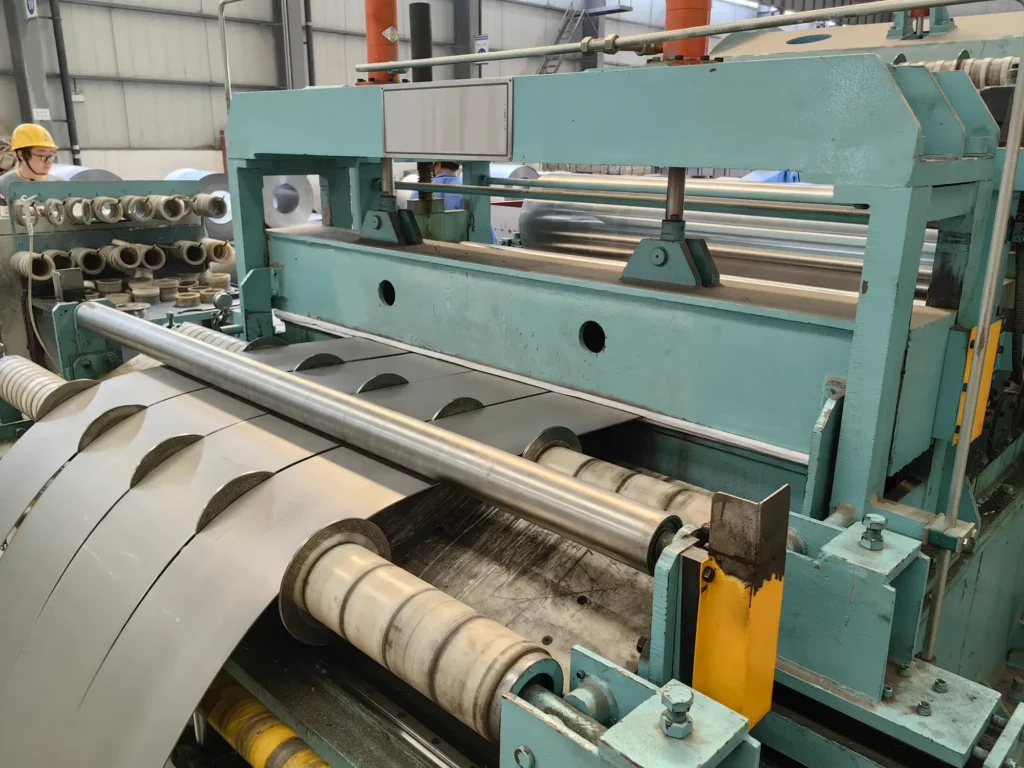
Strip 1–12 mm thick, 800–2000 mm wide, coils up to 32 tonnes.
Technical Specification Table
| Parameter | Value |
|---|---|
| Line type | CNC uncoiling–slitting–recoiling line |
| Working modes | Slitting (lengthwise) and cut-to-length (transverse) |
| Strip thickness | 1–12 mm |
| Strip width | 800–2000 mm |
| Coil weight | up to 32 t |
| Slit width accuracy | ± 0.2 mm |
| Burr | ≤ 4% of strip thickness |
| Camber | ≤ 0.5 mm per 1000 mm |
| Telescoping (recoil) | ≤ ± 10 mm |
| Main units | Double-cone uncoiler + slitter + 32 t recoiler |
| Secondary units | Hydraulic shear + looper + tension separator |
| Slitting tooling | Knives + spacers + rubber sleeves + separator discs |
| Tooling change basis | Knife set changed by strip thickness |
| Number of cuts / min & max slit width | available on request |
| Manufacturing lead time (this line) | available on request |
Width accuracy of ±0.2 mm decides whether the narrow coil feeds a tube mill without constant forming-angle correction; burr under 4% of thickness decides edge quality at the weld seam; camber within 0.5 mm per metre decides whether the strip tracks straight; telescoping within ±10 mm decides whether the recoiled coil can be handled and mounted at all.
Why four numbers rather than one. A slitting line is bought against tolerances, not against throughput, because everything it produces is an input to somebody else’s machine.
Line Configuration and Scope of Supply
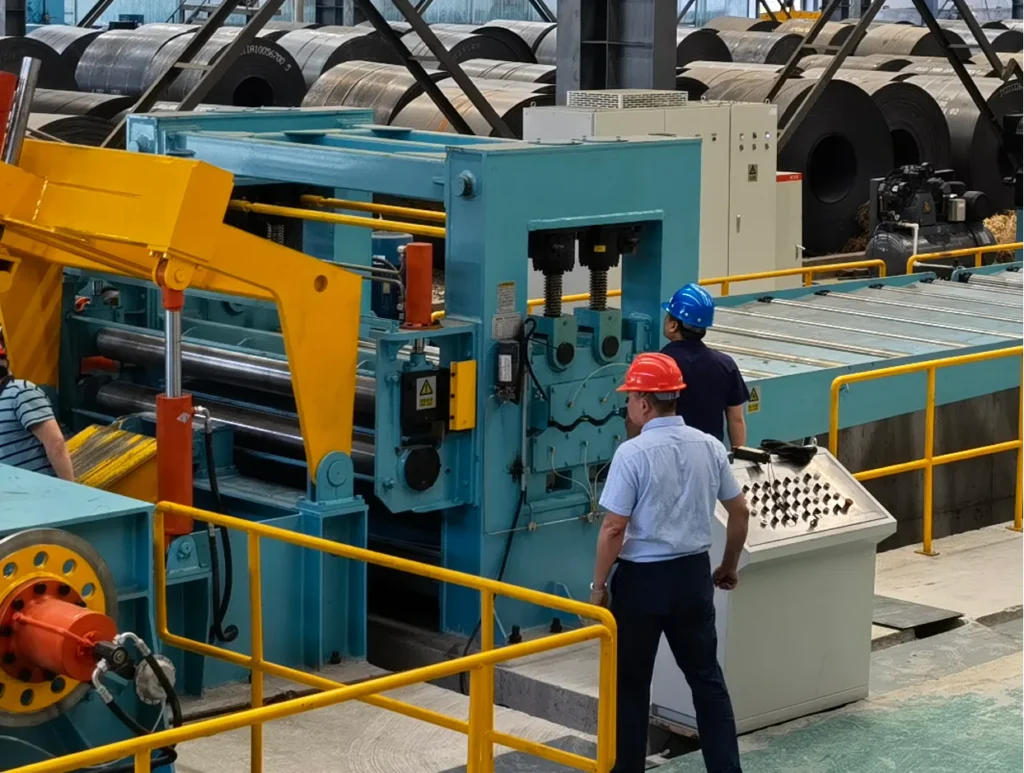
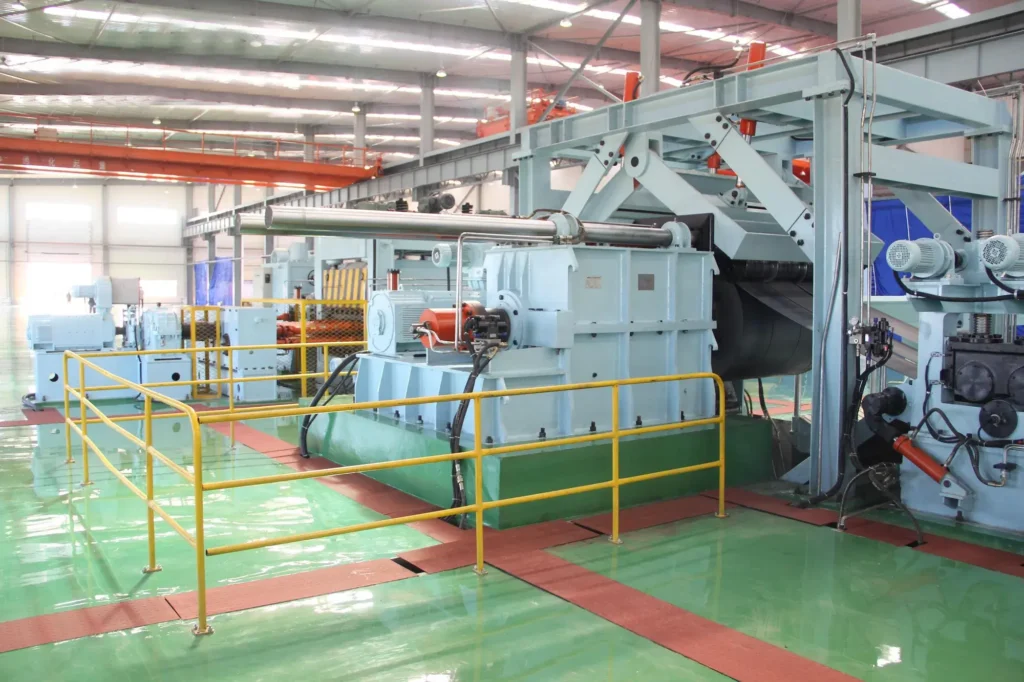
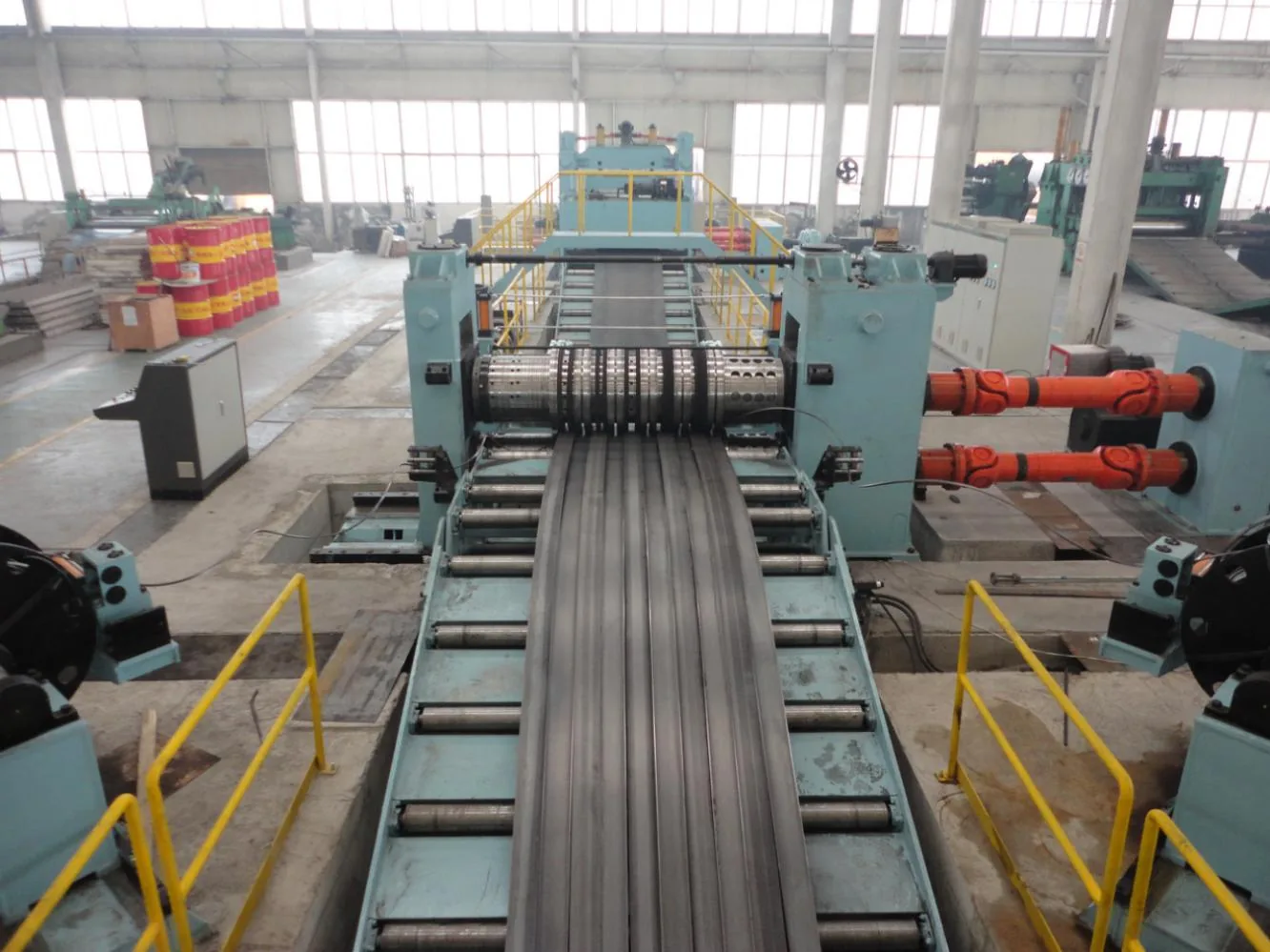
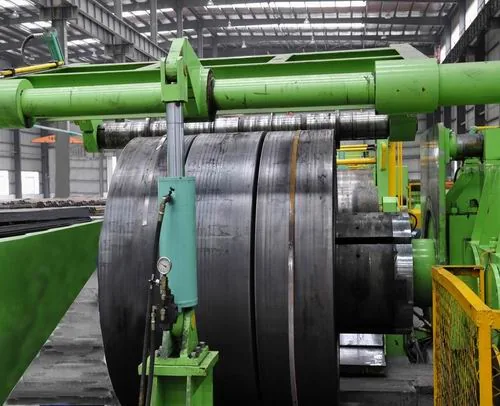
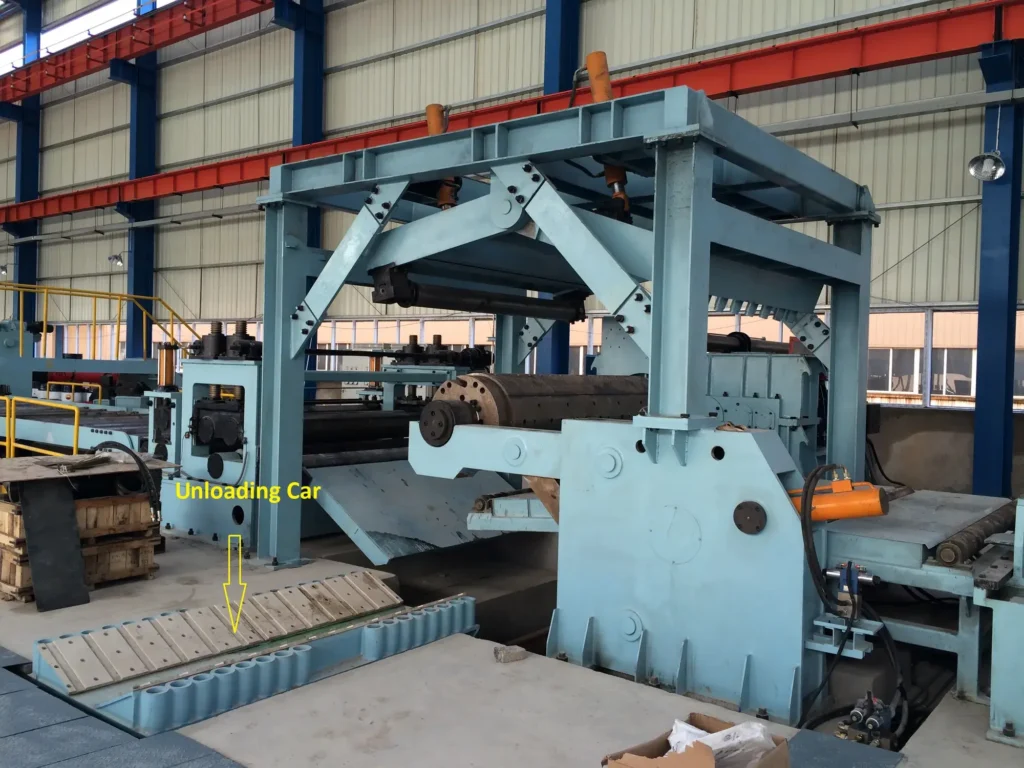
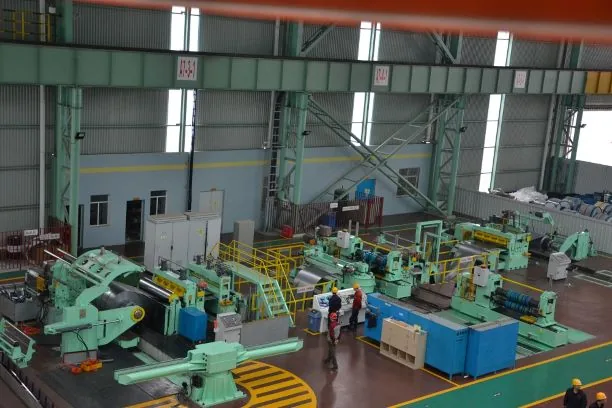
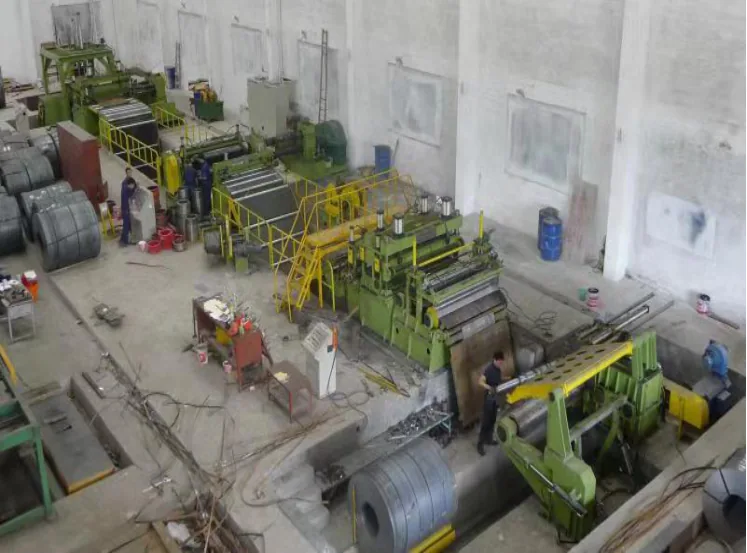
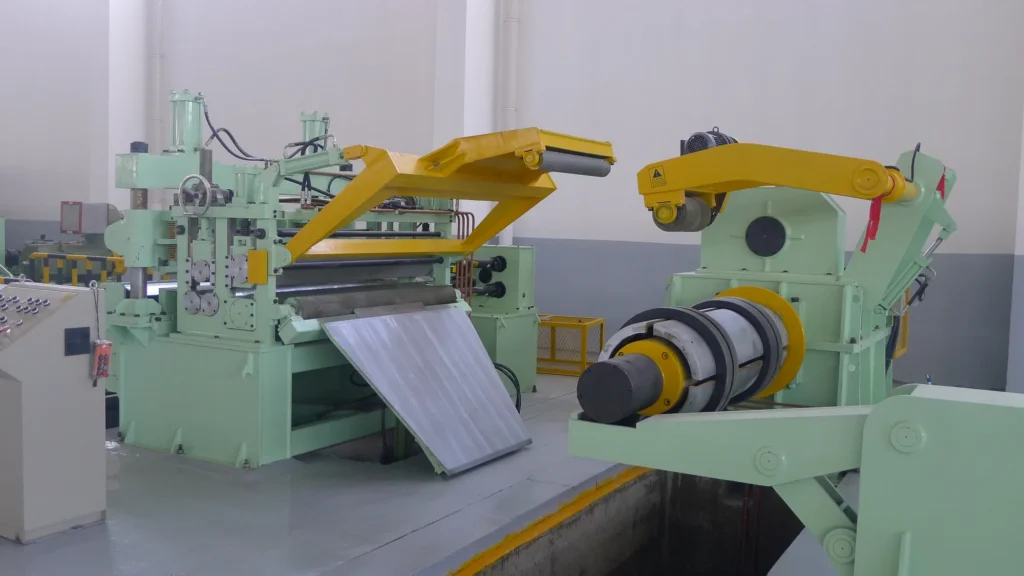
Main units. A double-cone uncoiler, the slitter itself, and a 32-tonne recoiler. The line runs in a fixed sequence, and each station owns one of the four numbers above: coil loading → uncoiling → levelling → hydraulic shear → slitting (or cross-cutting) → scrap-edge winding → looper → separation → tensioning → recoiling.
Secondary units. A hydraulic shear, a looper for accumulation, and a tension-separation mechanism. Loss of control over tension or the looper is what produces camber and telescoping — the two defects that a buyer discovers only when the coil reaches their mill.
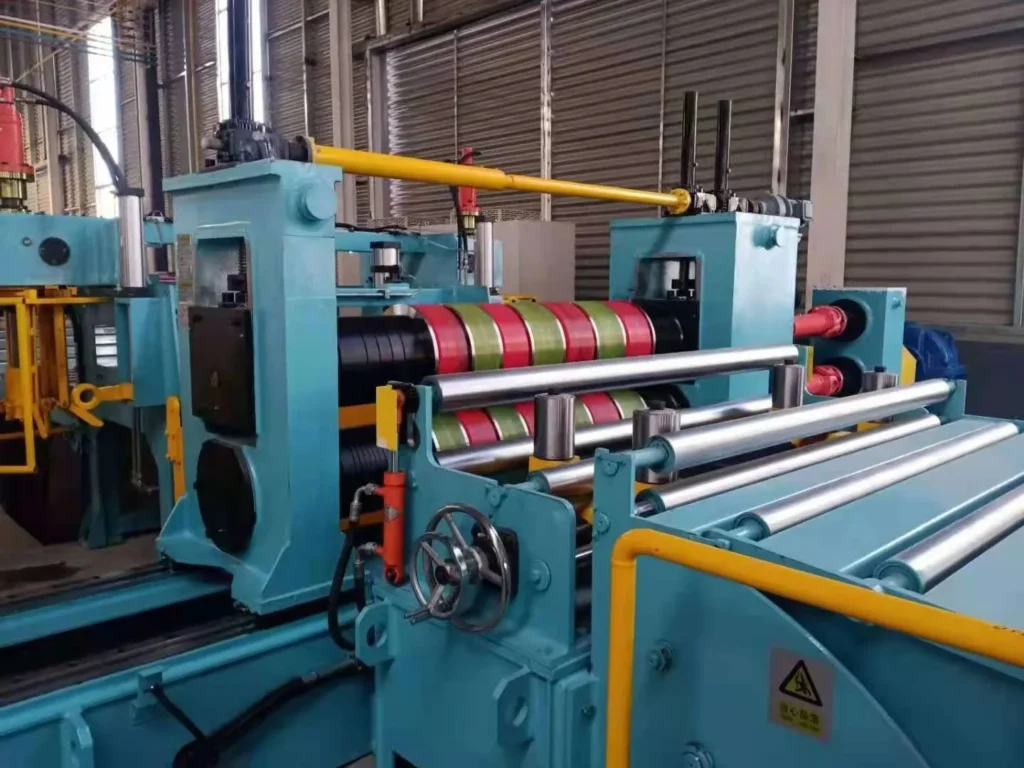
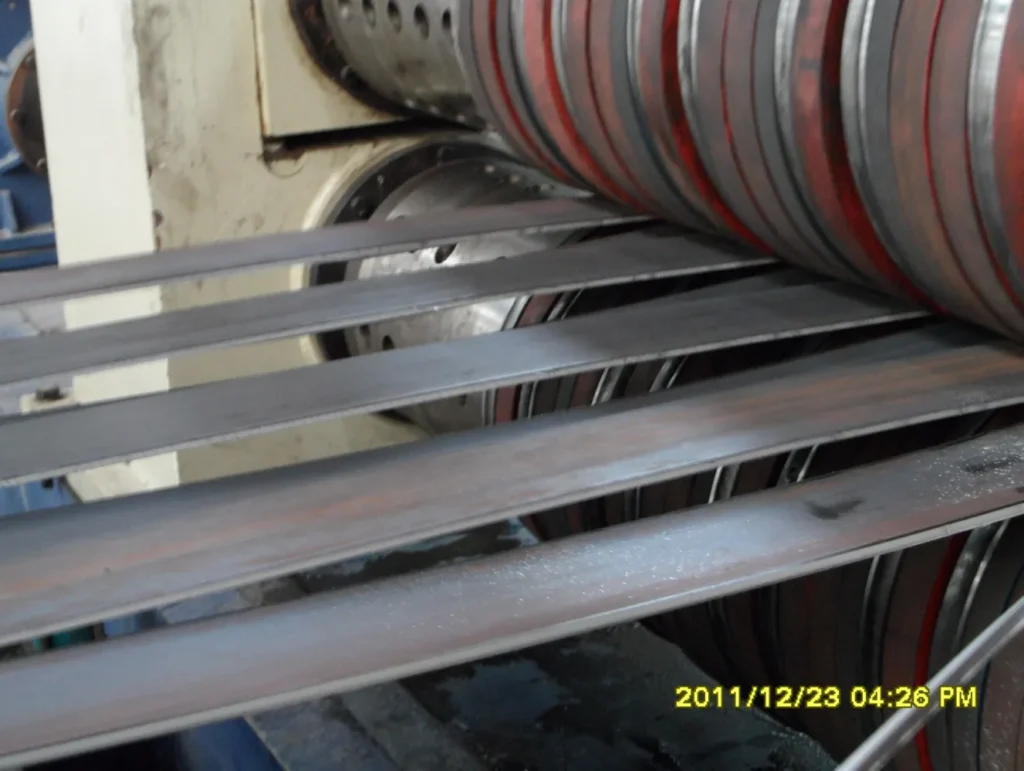
Slitting tooling. Circular knives, spacers, rubber sleeves and separator discs. This assembly is where slit width accuracy, burr and edge quality are actually decided — the machine frame holds it, but the tooling set does the work.
Reading the sequence as a buyer. Each of the ten stations exists because of a specific failure it prevents, and knowing which is which is what separates a real specification conversation from a price comparison.
Coil loading and uncoiling set the coil on centre and under tension; a coil that is off-centre or slack arrives at the knives already displaced. Levelling takes residual curvature out of the strip before it is cut — cut a bowed strip and every slit inherits the bow. The hydraulic shear trims the head and tail so the line starts on clean material rather than on the deformed end of a coil.
Slitting itself is the moment the four tolerances are set, and it is over in an instant — after the knives there is nothing that can put width or burr back. Scrap-edge winding takes the trimmed edges away continuously; without it the line stops to clear them.
The last four stations are the ones buyers under-estimate. The looper accumulates strip so that speed differences between slitting and recoiling do not translate into tension spikes. Separation keeps the slit strips apart so they do not cross or scuff. Tensioning holds each strip at an even pull.
Recoiling winds them into coils that have to be handled, transported and mounted on somebody else’s uncoiler — which is why telescoping within ±10 mm is a delivery specification and not a cosmetic one.
Scope of supply is quoted two ways across all Tengtian families — a turnkey line delivered complete, or individual machines and units — and automation level is selectable.
Insufficient precision in these three shows directly as width deviation and telescoping — there is no downstream station to correct it.
Size Change, Roll Wear and Running Cost
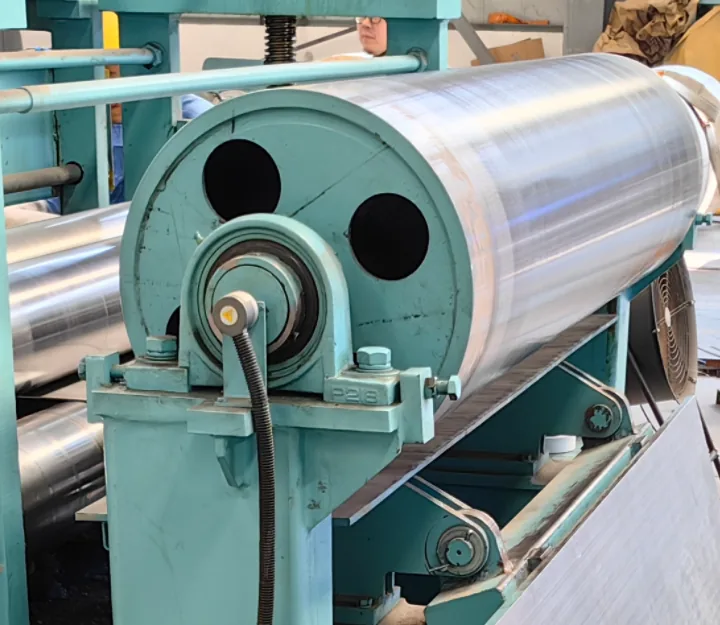
A line whose knife supply depends on a third-party shop is a line whose ±0.2 mm depends on that shop’s order book — and slit width accuracy is precisely what the downstream mill was buying. Changeover on this line is a knife-set change, and it is driven by strip thickness. Knives, spacers and separator discs are configured per thickness; a wrong configuration or worn tooling produces out-of-tolerance width, heavy burr and camber all at once.
- What wears:
- Circular knives — consumed by cutting volume; blunt knives raise burr immediately.
- Spacers and rubber sleeves — configuration parts that also wear; misconfiguration is as damaging as wear.
- Separator discs — keep the slit strips apart before recoiling. Key wear parts are machined at the works on its own CNC equipment, so replacement tooling years later matches what was delivered with the line.
That in-house machining point carries more weight on a slitting line than on most equipment, because the tooling set is the tolerance.
- What Tengtian supplies around the machine, common to all four families:
- Own production base, open to factory audit in person or by live video walk-through.
- An engineering team of 20 averaging 20 years each, doing the line sizing rather than a configurator.
- Tiered configuration mapped to a written scope of supply; staged payment, adjustable deposit ratio, third-party escrow and several workable Incoterms.
Where quality is decided, in the order the coil meets it: knife set configuration and clearance per thickness; then tension, looper and recoil control. The first governs width and burr; the second governs camber and telescoping.
Those two groups fail differently, and it is worth knowing which symptom points where. Width out of tolerance and heavy burr point at the knife set — wrong clearance for the thickness, or tooling past its edge. Camber and telescoping point at the tension side — the looper, the separator or the recoil pull.
Responsibility boundary. The line controls slit width, burr, camber and telescoping within the stated figures; incoming coil grade and flatness remain the buyer’s responsibility, as on every Tengtian line. A defect that arrives in the mother coil is not removed by slitting it.
A plant that reads a camber complaint as a knife problem will change tooling and see the defect again on the next coil.
Applications and Output Examples
A tube mill needs strip within a stated width window — outside it, the forming angle needs repeated correction and diameter drifts; a spiral mill states its incoming width tolerance as ±5 mm and its usable width band explicitly. This line exists to feed other lines. Its documented application is upstream coil preparation for tube mills and forming lines: steel-processing and pipe-making plants uncoil, slit to width or cut to length, and produce compliant narrow coil or cut sheet for the production line downstream.
Line speed and output are confirmed against your coil width, material thickness and target strip width at quotation. Send us those three and we will state the figures.
Slitting to ±0.2 mm sits comfortably inside that requirement.
Users are the shearing and slitting operators at the plant; the beneficiaries are the downstream tube and section production lines.
Who buys one, and when. Two situations recur. A plant standing up a new tube mill or forming line discovers that buying strip already slit to width means paying somebody else’s margin on every tonne and living with their delivery schedule; bringing slitting in-house removes both.
And a plant already running a mill finds that incoming coil width drift is costing it forming corrections and rejects — at which point the cheapest fix is upstream, not on the mill.
Within Tengtian’s own four equipment families — welded pipe production lines, slitting and cut-to-length lines, cold roll forming lines, and H-beam production lines — this is the upstream member. A plant buying a tube mill or a purlin line can source its coil preparation from the same works, with the same spare-parts channel and the same contact.
The four tolerance figures are worth restating in that context, because each one is consumed by a specific downstream station rather than by the buyer directly. Width feeds the forming section; burr feeds the weld seam; camber feeds strip tracking through the mill; telescoping feeds the uncoiler at the far end.
A slitting line is therefore specified against the mill it will feed, not against a catalogue.
Three mismatches, three different fixes, all on the same line. Width is solved by slitting to a target strip width; edge condition is solved by trimming the mother coil’s edges away as scrap during the same pass; length is solved by the cut-to-length mode rather than by slitting at all. That is why the four tolerance figures matter more here than throughput does.
Delivery, Installation and Training
Certification: CE — UDEM, slitting lines, M.2022.206.C72173, covering ZJ800 / 1250 / 1500 / 1600 / 1800 / 2000 / ZJL2000 / 2200.
A line handed over without that training will meet its specification on the commissioning coil and drift on the next thickness the plant runs.
A single named point of contact carries the enquiry through delivery and after-sales, with a first reply committed round-the-clock and all-hours online support.
Shipment: precision items — control cabinet, knives, spacers and separator discs — crate in moisture-protected wooden cases with the spare tooling travelling in the same consignment; machine frames ship strapped on reinforced supports with lifting points designed in. crated) and lifting requirement at destination are NOT stated for this line specifically.
The general 50–90 day figure is an all-lines figure;
Installation, commissioning and operator training sit inside the after-sales scope; engineers are dispatched to site and support continues online after handover. Training carries real weight on this line: knife-set configuration per thickness is an operator decision, and it is the single largest lever on width accuracy and burr.
Coil slitting machine line
Wear Parts and Consumables
Watch This Line Running
Coil Slitting Line — ±0.2 mm Width, Camber ≤0.5 mm/1000 mm
More from this line
From the Workshop
 Slitting vs Cut-to-Length
 Slitting Precision
 Slitting Line Running Cost
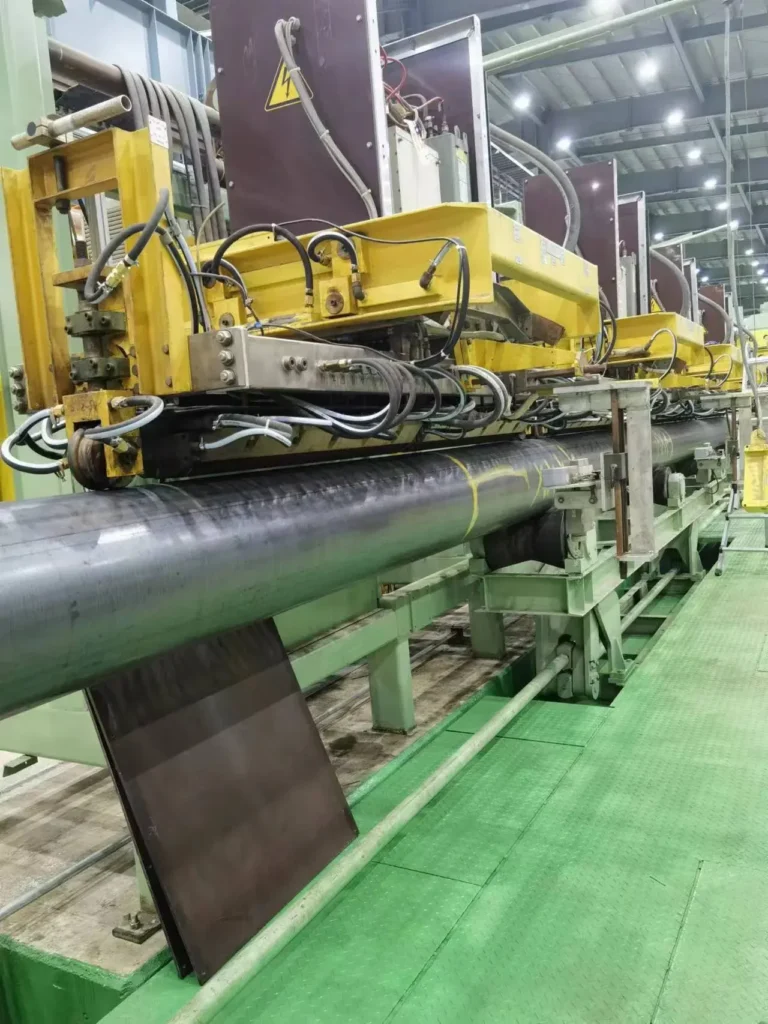 The API Pipe Mill Inspection Chain
Send Your Enquiry
Tell us the pipe outside-diameter range, the wall thickness and the output you need. An engineer reads every enquiry — it does not land in a general sales inbox.