
 Scan on WeChat
Home › Steel Coil Slitting Line › Slitting Precision
In This Line
Quick Contact
Hebei TengtianYuanle@tentubemill.com
+86-311-83025332
WhatsApp +852 5425 3155
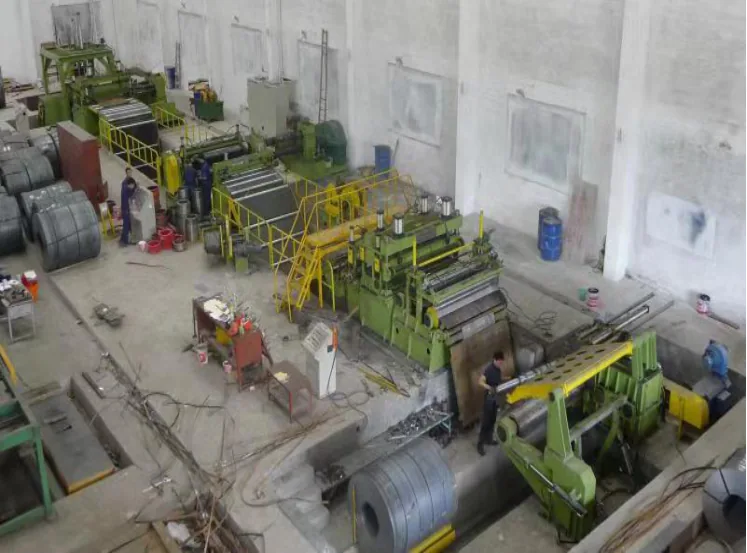
Four tolerance values apply to the slitting side: slit width to ±0.2 mm, camber not more than 0.5 mm per 1000 mm, burr not more than 4 per cent of strip thickness, and telescoping within ±10 mm. All four apply to slitting, not to cut-to-length.
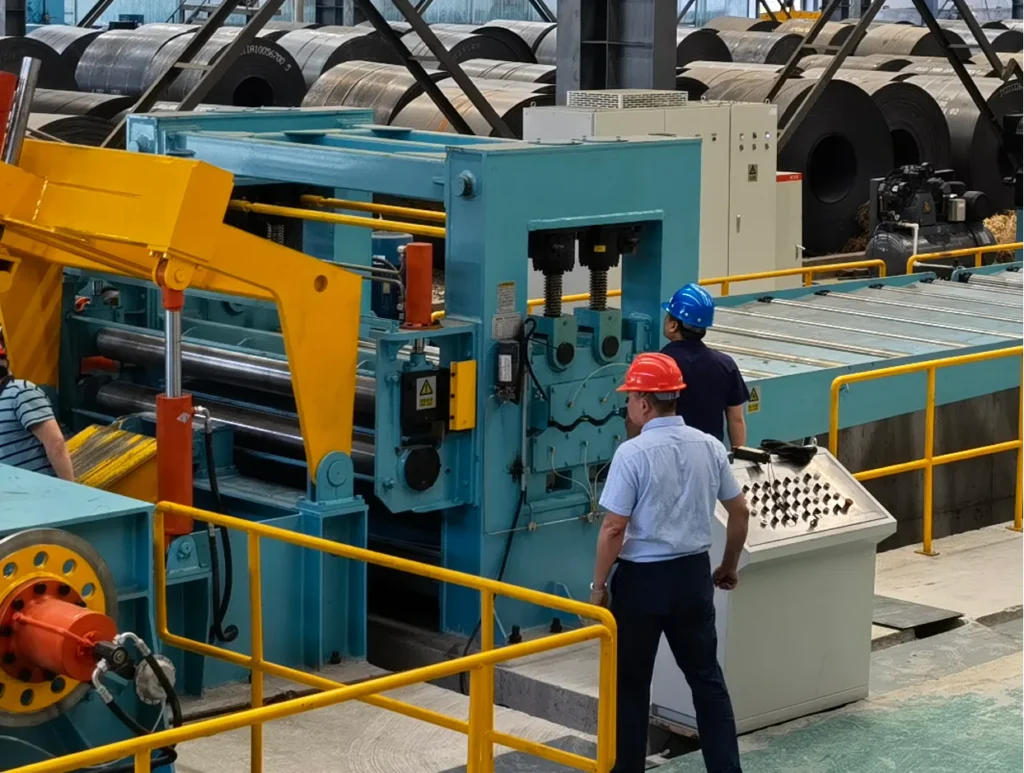
The Tolerances This Line Holds
- Slit width tolerance: ±0.2 mm.
- Camber: not more than 0.5 mm per 1000 mm.
- Burr: not more than 4 per cent of strip thickness.
- Telescoping on the rewound coil: within ±10 mm.
- Material window: 1 to 12 mm thick, 800 to 2000 mm wide, coil weight up to 32 t.
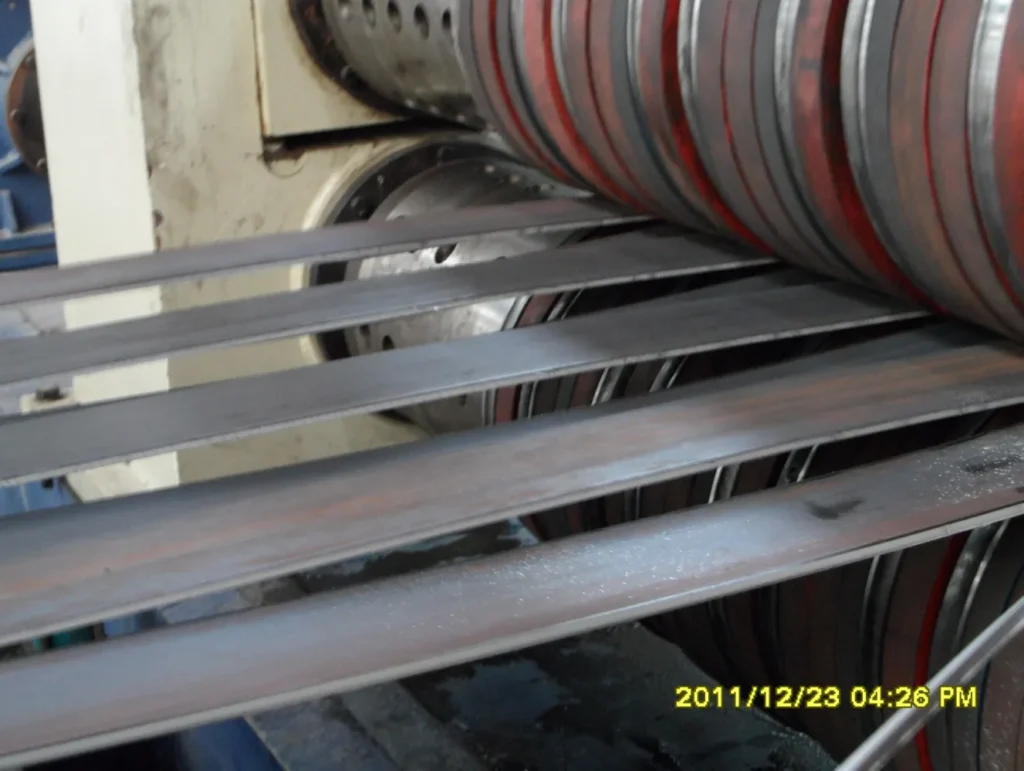
- Knife sets are configured by strip thickness — 15 strips at 2 mm, 4 strips at 8 mm.
What Is Slitting Precision
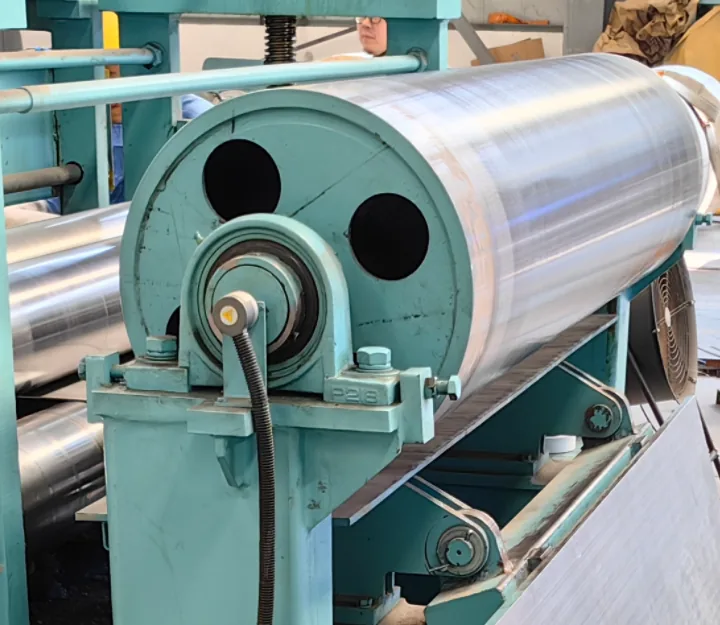
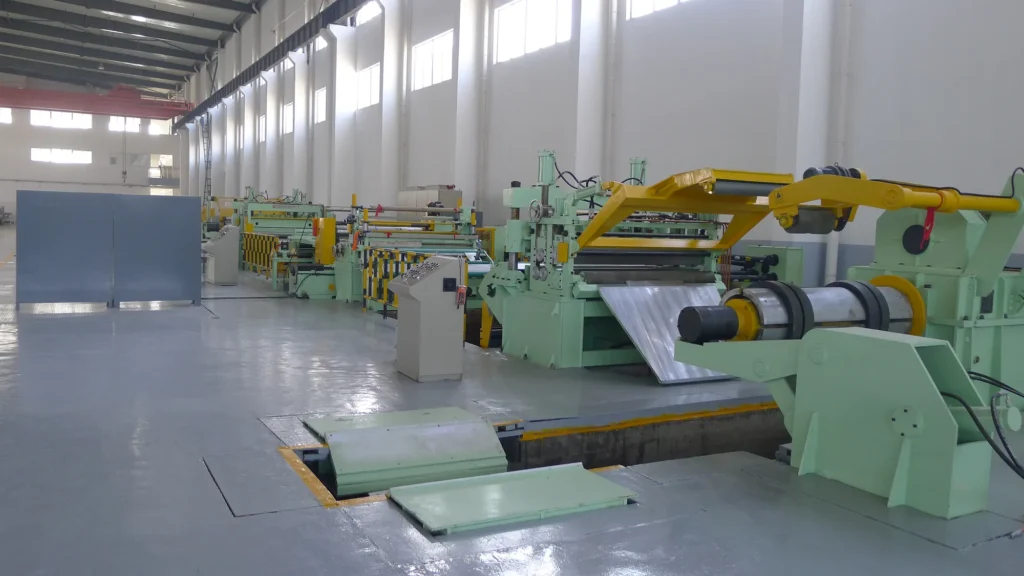
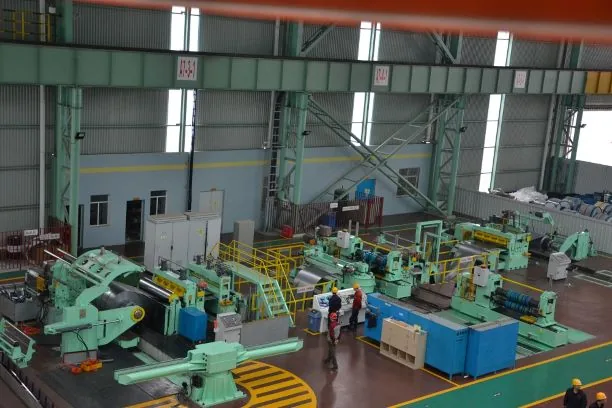
Slitting knives, spacers and rubber sleeves are configured according to strip thickness, and that configuration is what holds width to ±0.2 mm and burr to not more than 4 per cent of thickness. A slitting and cut-to-length line is upstream preparation equipment. It uncoils a wide master coil, levels it, either slits it lengthwise into narrower strips or shears it to length as sheet, and rewinds the result — supplying compliant narrow coil or cut sheet to tube mills and forming lines downstream.
Precision on such a line is not one number. Four separate characteristics are specified, and a buyer comparing suppliers should keep them apart because they fail for different reasons and are measured at different points. Slit width is measured across the finished strip. Camber is the sideways bow of that strip along its length. Burr is the raised edge left by the knives.
Telescoping is the sideways stagger of the rewound coil.
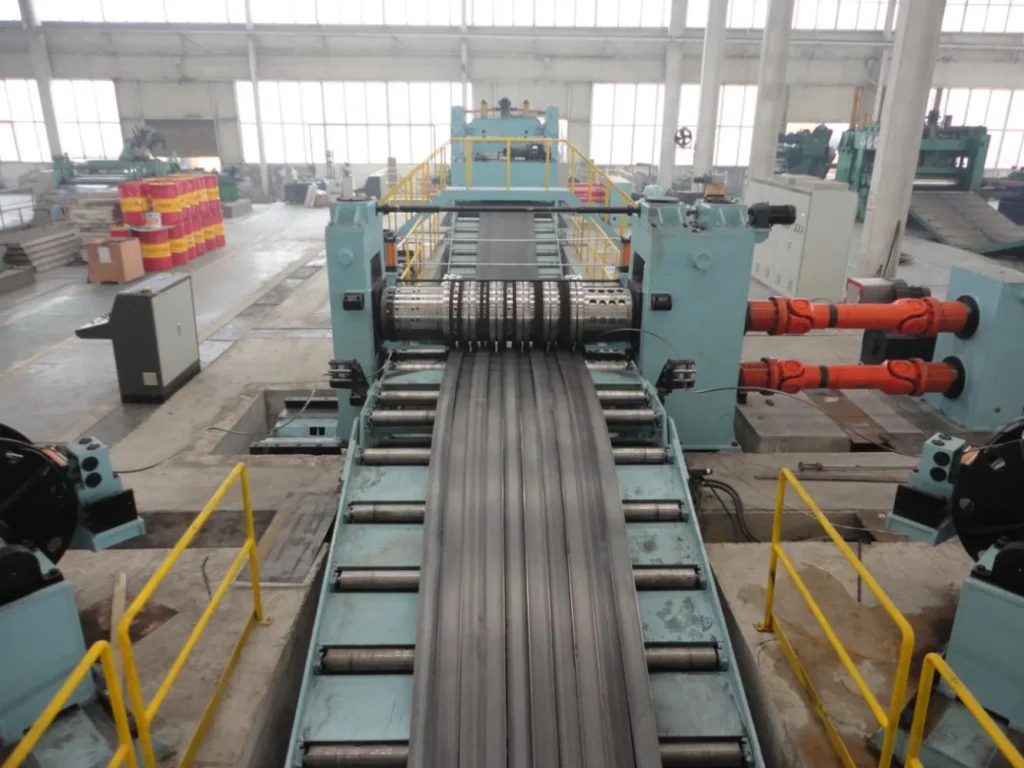
Slitting line tolerances
Two of the four values apply to the knife set itself.
The failure mode is equally specific: when knives or spacers wear, or the set is configured wrongly, the results are out-of-tolerance width, heavy burr and camber.
The other two apply to tension and coil handling. Tension, looper and rewind control are what limits camber and telescoping, with telescoping held within ±10 mm; when tension or looper control is lost, the symptoms are camber and telescoping.
That split matters when a coil is rejected. A width problem and a telescoping problem point at different parts of the line, and we specify them separately rather than rolling them into a single accuracy claim.
The problem the line solves is incoming coil whose width, edge condition or length does not match what the downstream line needs.
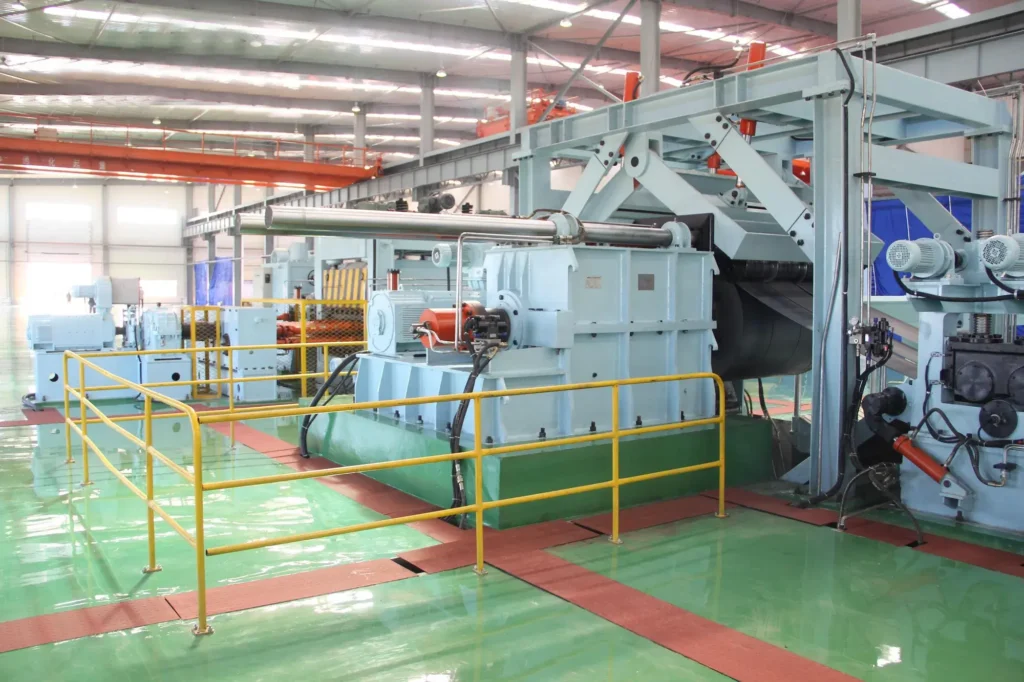
Slitting Precision — Method and Measured Values
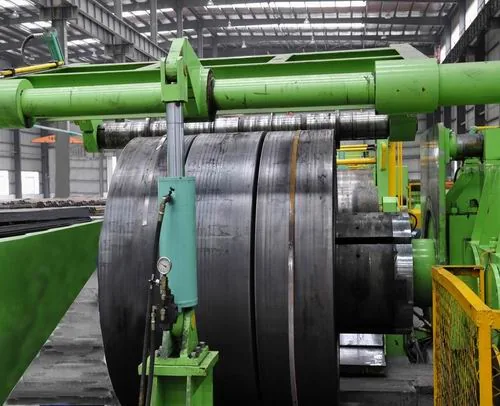
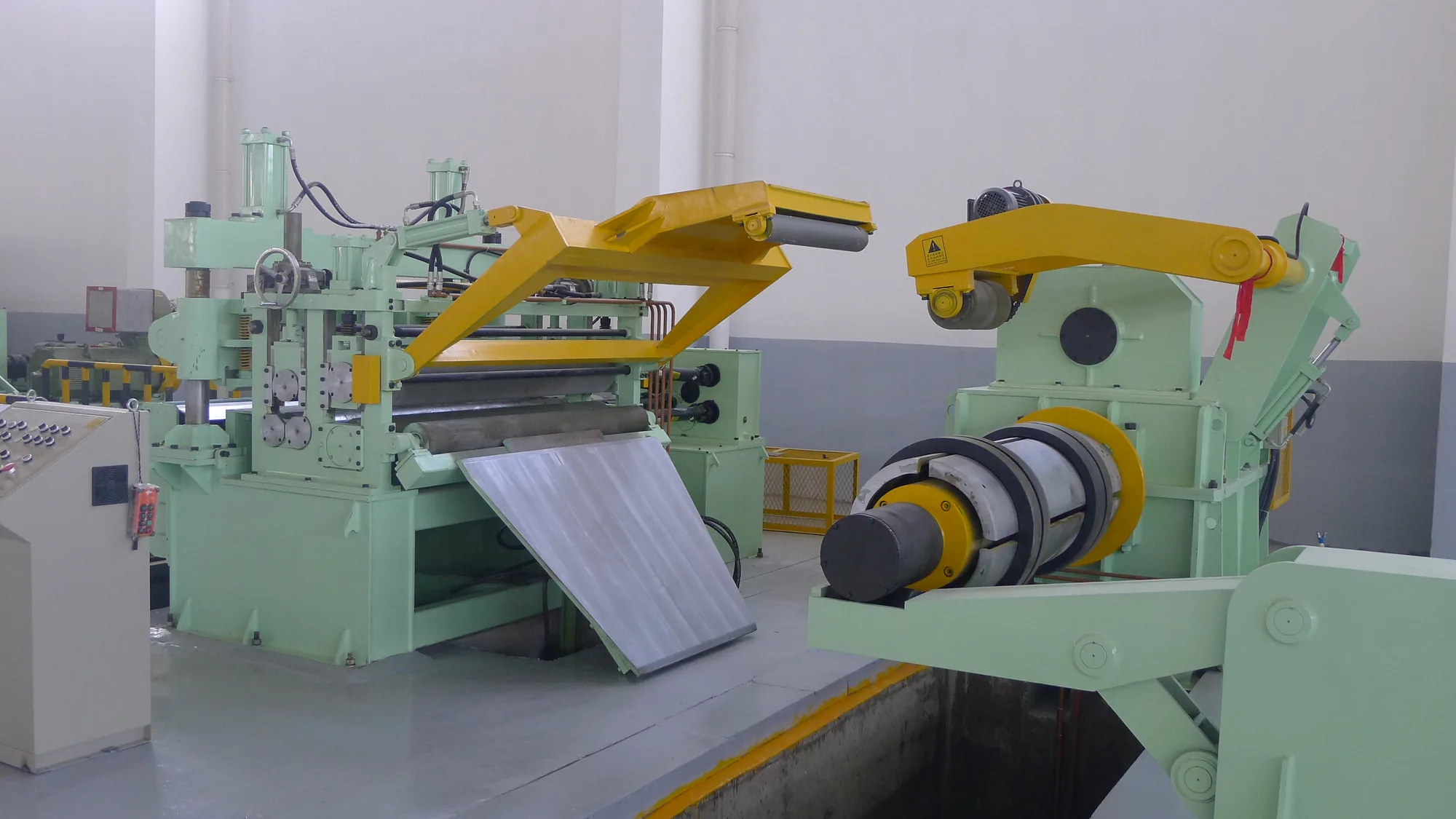
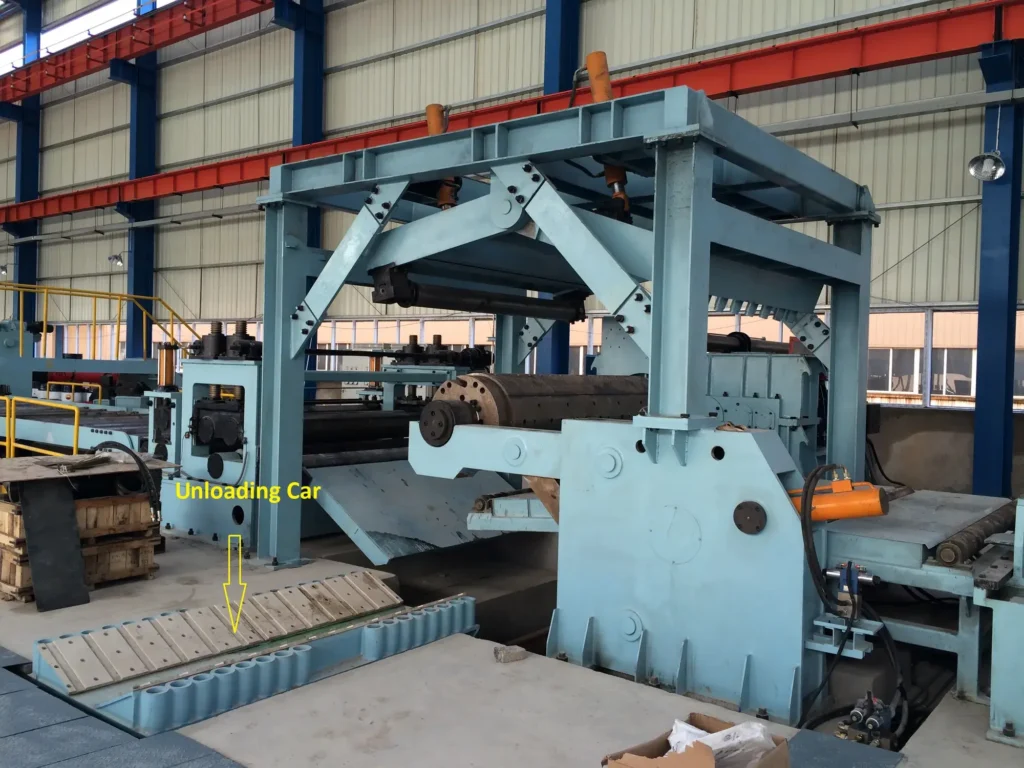
The line processes material 1 to 12 mm thick and 800 to 2000 mm wide, at coil weights up to 32 tonnes; the main units are a double-head uncoiler, the slitter and a recoiler rated for coils up to 32 tonnes. The material window should be read together with the tolerances.
Knife-set capacity is a function of thickness, and the two points are the ends of the working range: at 2 mm strip thickness the set can take 15 strips, and at 8 mm it can take 4.
The cause-and-effect chain is that poor knife-set configuration, tension or looper control produces out-of-tolerance width, camber and telescoping, and that the downstream consequence is material the next line cannot use.
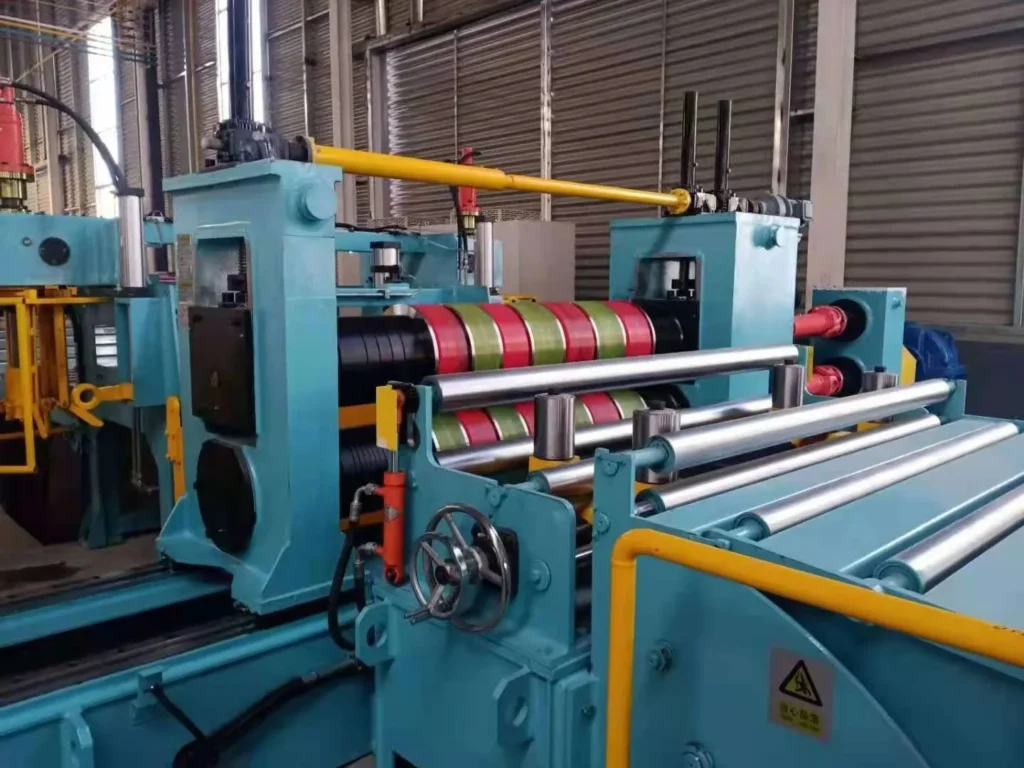
Strip width tolerance
Width tolerance is the value most often quoted and most often misread. What we offer is ±0.2 mm on slit width, held by configuring knives, spacers and rubber sleeves to the strip thickness being run. It is a slitting-side figure attached to a specific mechanism.
Downstream, that width tolerance is what the tube mill inherits. The users are the slitting line’s own operators and inspectors; the beneficiaries are welded pipe plants, forming plants and steel service centres, whose concerns are slit width accuracy, camber, burr and rewind telescoping control.
The process flow behind those values runs as follows: coil loading, uncoiling, levelling, hydraulic shear, slitting or cross-cutting, scrap-edge winding, looper, separation, tensioning and rewinding.
Standards Behind These Tolerances
These standards relate to pipe products and other equipment families rather than to the slitting line: GB/T 9711 on both spiral bands with GB/T 5037 on the 820 band and API 5L on the 1620 band, API 5L for the API line-pipe family, GOST R 58966-2020 for the H-beam line, and the enterprise standard Q/GYLTT01-2023 covering HGF150 high-frequency welded pipe equipment.
Step-by-Step Procedure
In outline, the flow is: load the coil, uncoil, level, hydraulic shear, slit or cross-cut, wind the scrap edge, pass the looper, separate, tension, rewind.
Two control points sit inside that flow, each with its own failure modes. The knife set is configured to the strip thickness before the run, which is what holds width and burr. Tension and looper control run through the whole pass and are what hold camber and telescoping.
Worked Example — Fifteen Strips From 2 mm Coil
On 2 mm strip, the knife set cuts 15 strips across the width; on 8 mm, it cuts 4. A worked example can be built at the two thickness points. In both cases the width tolerance held by that configuration is ±0.2 mm and burr is not more than 4 per cent of the strip thickness — which at 2 mm means a burr limit of 0.08 mm and at 8 mm means 0.32 mm.
Two operating modes, and which one the tolerances cover
The line has two operating modes: slitting, which cuts the coil lengthwise into narrower strips, and cut-to-length, which shears it crosswise into sheet. Both run on the same machine, as the two working modes of a slitting and cross-cutting line.
Cut-to-length output is sheet: it is not rewound, so telescoping does not apply to it at all, and its defining characteristics — cut length accuracy, squareness, flatness of the cut sheet, stack quality — are different measurements taken on a different product.
How each of the four is actually caused
Keeping the four apart pays off when something goes wrong, because each is tied to a different part of the line.
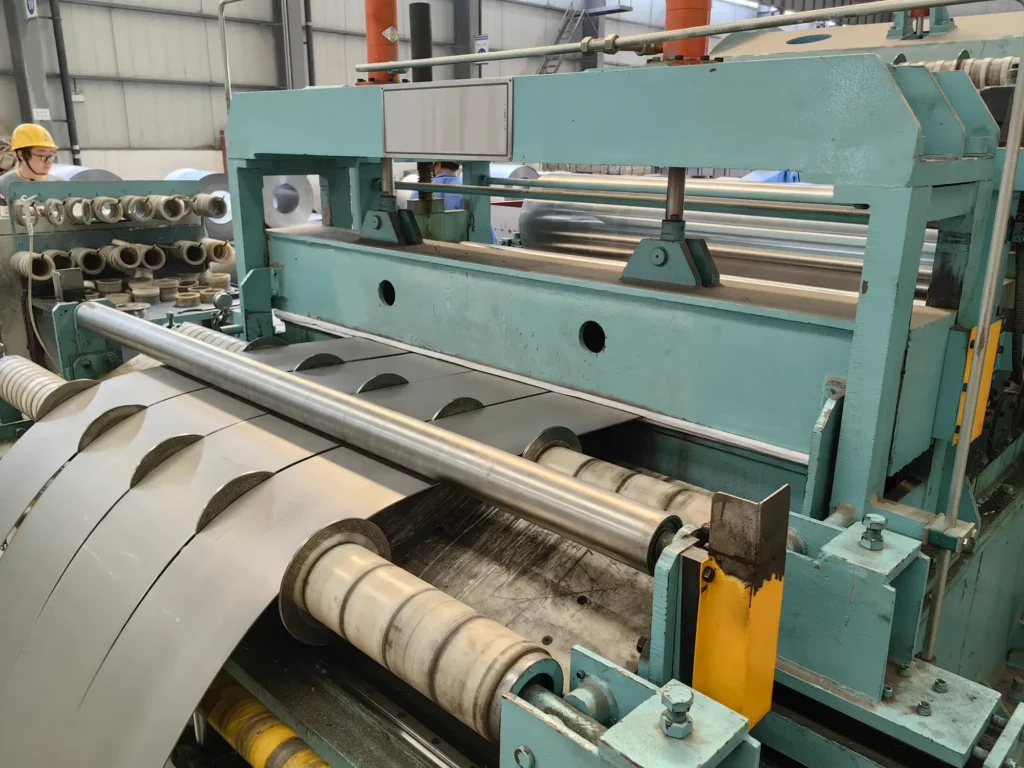
Width and burr are knife-set problems. The configuration of knives, spacers and rubber sleeves to the strip thickness is what holds them, and worn knives or spacers, or a wrongly built set, is what loses them.
Camber and telescoping are tension problems. Tension, looper and rewind control are what limits them, and loss of tension or looper control is what produces them. The hydraulic shear, looper and tension unit form the equipment group responsible for holding strip quality through the pass.
There is one crossover worth knowing: worn or wrongly configured knives produce camber as well as width and burr defects. So camber appearing on a coil does not by itself point at the tension side — it is one of the few symptoms that both halves of the line can cause.
Why the downstream mill cares about these four numbers
The purpose of this equipment is to supply compliant narrow coil or cut sheet to welded pipe and forming lines, and the beneficiaries are welded pipe plants, forming plants and steel service centres. Their concerns are exactly the four characteristics above: slit width accuracy, camber, burr and rewind telescoping control, together with suitability for 32-tonne coils.
That is not an abstract list. On the tube mill downstream, incoming strip is checked for grade, thickness tolerance and flatness, and the consequences of poor incoming material are forming wander, seam inclusions and uneven wall thickness — which is to say that a camber problem created on the slitting line reappears as a weld problem two machines later.
The process consequence closes the loop explicitly: when knife-set configuration, tension or looper control is poor, the result is out-of-tolerance width, camber and telescoping, and the downstream effect is material the next line cannot use.
What to ask the factory for
Three requests turn these figures into a specification. Ask for the cut-to-length tolerances separately and in writing, because none of the four slitting figures applies to that mode. Ask which measurement method and sample length the camber figure of 0.5 mm per 1000 mm is quoted against, since camber is sensitive to gauge length.
And ask for the knife-set configuration at your own strip thickness — the two reference configurations cover only 2 mm and 8 mm.
Reading a tolerance quote without being misled
Three habits protect a buyer when comparing slitting quotations.
The first is to ask which product a figure belongs to. A single line runs two modes, and a specification sheet that lists one accuracy number without saying whether it is slit width or cut length has collapsed two different measurements into one. Treat Tengtian’s four values as slitting-side values, and have cut-to-length accuracy quoted separately rather than borrowed from them.
The second is to ask what the figure is held by. Each of the four has a mechanism attached — width and burr by knife-set configuration to thickness, camber and telescoping by tension, looper and rewind control. A tolerance quoted without a mechanism cannot be checked at acceptance, because there is nothing to look at when it drifts.
The third is to ask over what window it holds. The material window is 1 to 12 mm thickness and 800 to 2000 mm width, with coil weights up to 32 tonnes, and the knife-set capacity is defined at two thickness points inside that window rather than across all of it.
What to request separately
Request the following for your application: cut-to-length tolerances, knife-set configuration at other thicknesses, knife life, change-over time and cost per tonne.
The four tolerance values (slit width, camber, burr and telescoping) all belong to the slitting mode, as characteristics of a slit and rewound strip.
Resource Downloads
From the Workshop
 Slitting vs Cut-to-Length
 Slitting Line Running Cost
 Steel Coil Slitting Machine
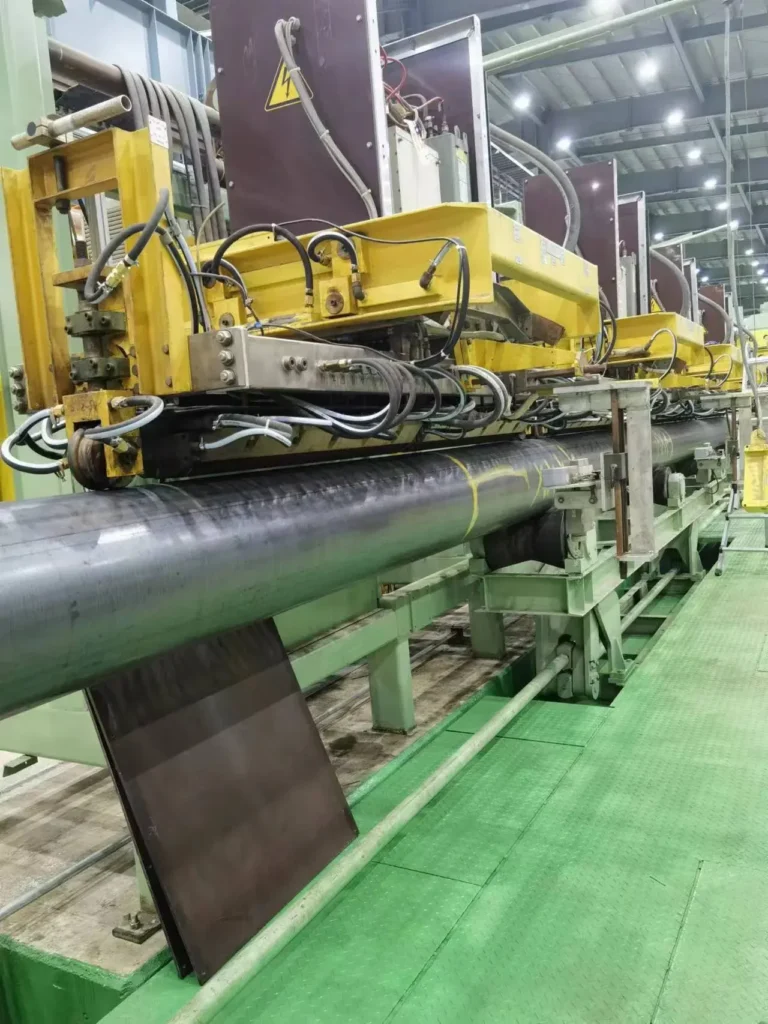 The API Pipe Mill Inspection Chain
Send Your Enquiry
Tell us the pipe outside-diameter range, the wall thickness and the output you need. An engineer reads every enquiry — it does not land in a general sales inbox.