
 Scan on WeChat
Home › Steel Coil Slitting Line › Slitting Line Running Cost
In This Line
Quick Contact
Hebei TengtianYuanle@tentubemill.com
+86-311-83025332
WhatsApp +852 5425 3155
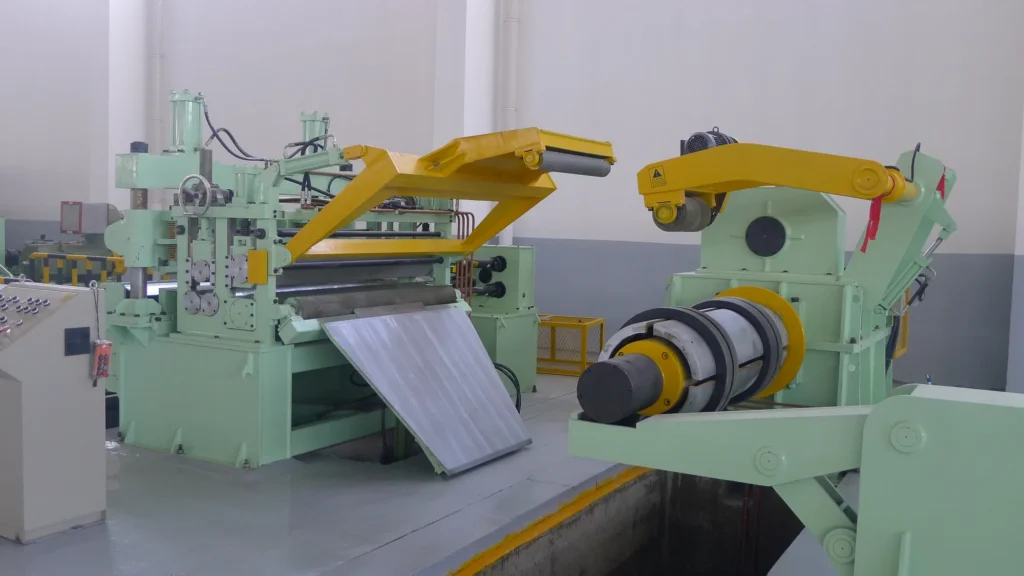
Knife change on a slitting line is a configuration task, not a swap: knives, spacers and rubber sleeves are set up according to strip thickness, and that setup is what holds ±0.2 mm width and burr within 4 per cent of thickness. The two reference configurations are 15 strips at 2 mm and 4 strips at 8 mm.
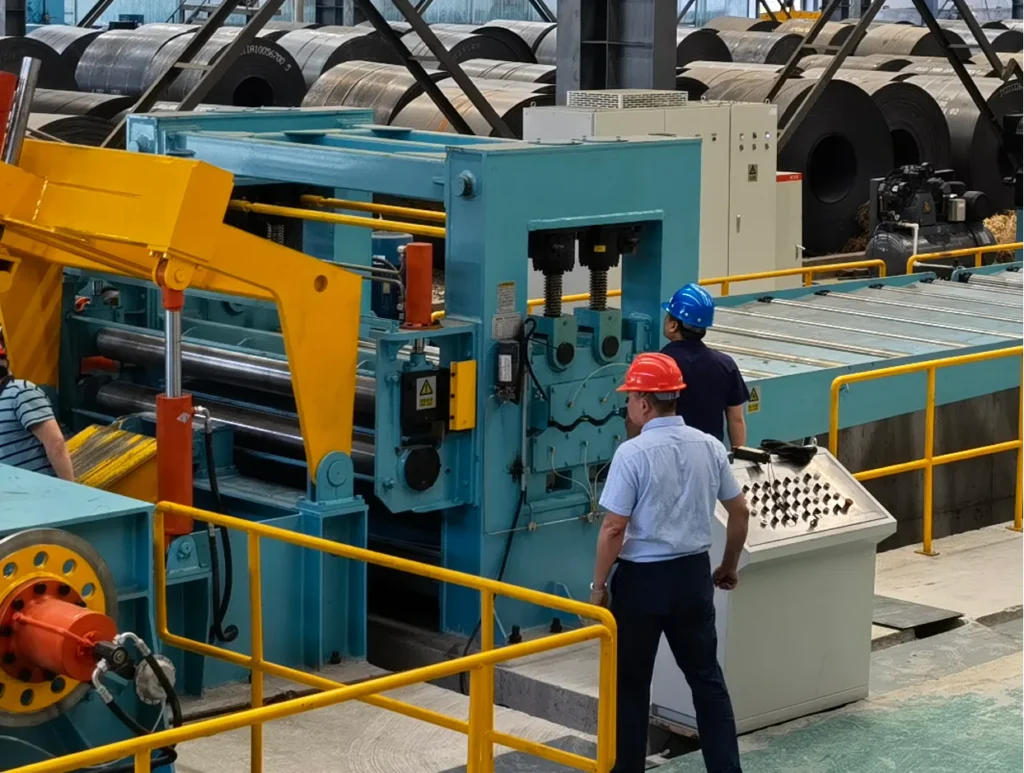
What Is in a Knife Set, and What It Controls
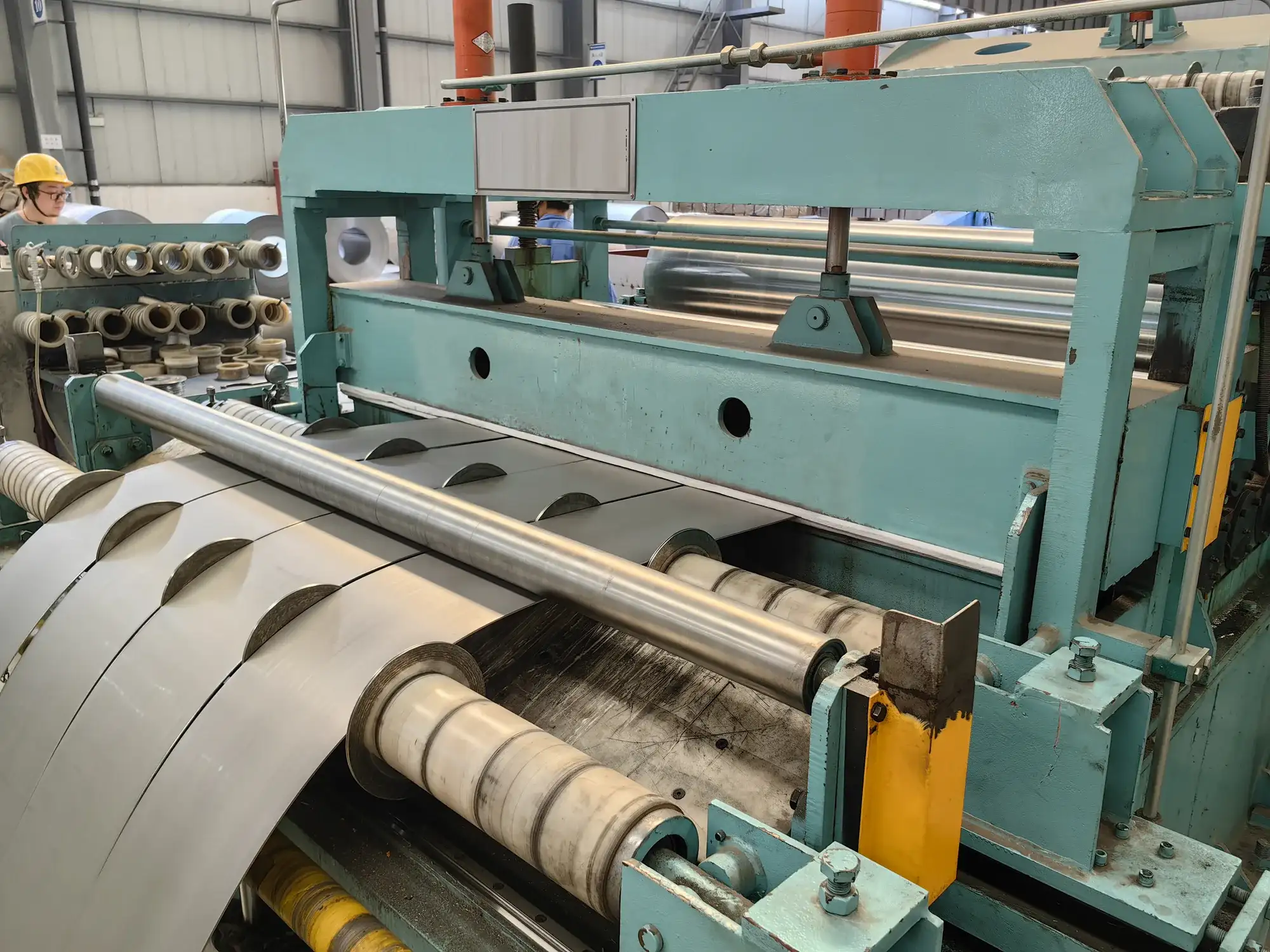
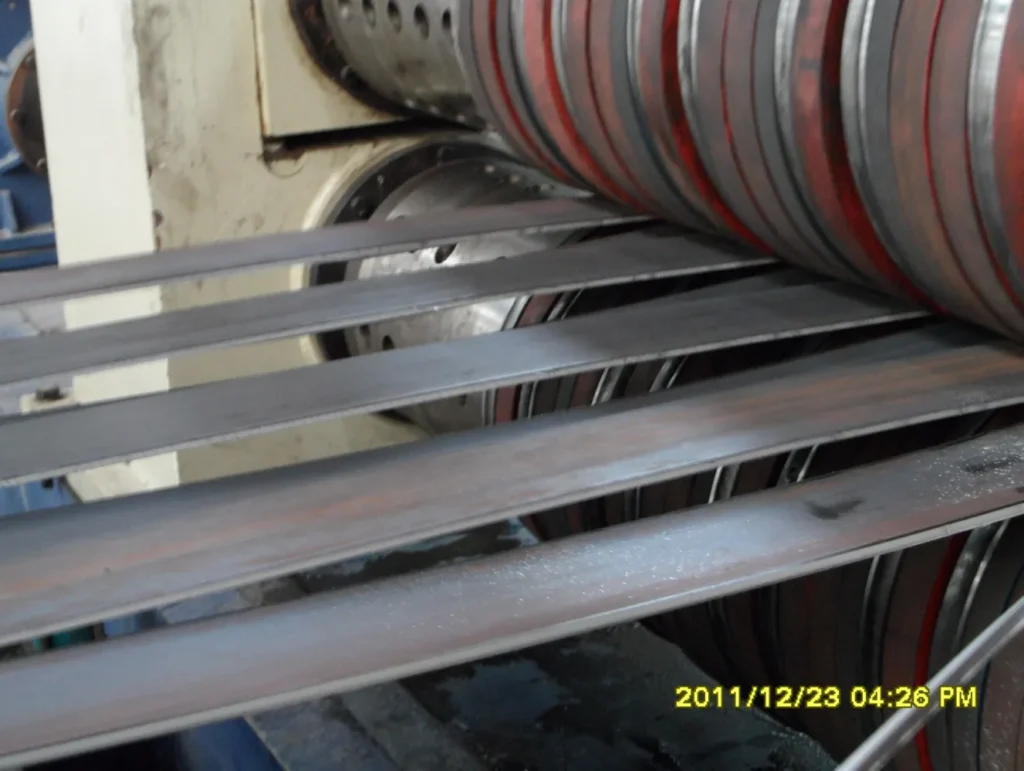
- The knife set is four items: slitting knives, spacers, rubber sleeves and separator discs.
- The set is configured per strip thickness — 15 strips at 2 mm, 4 strips at 8 mm.
- That configuration is what holds width to ±0.2 mm and burr to not more than 4 per cent of thickness.
- Worn knives or spacers, or a wrong configuration, produce out-of-tolerance width, heavy burr and camber.
- Tooling and spacers are supplied as a matched set.
What Is Slitting Line Running Cost
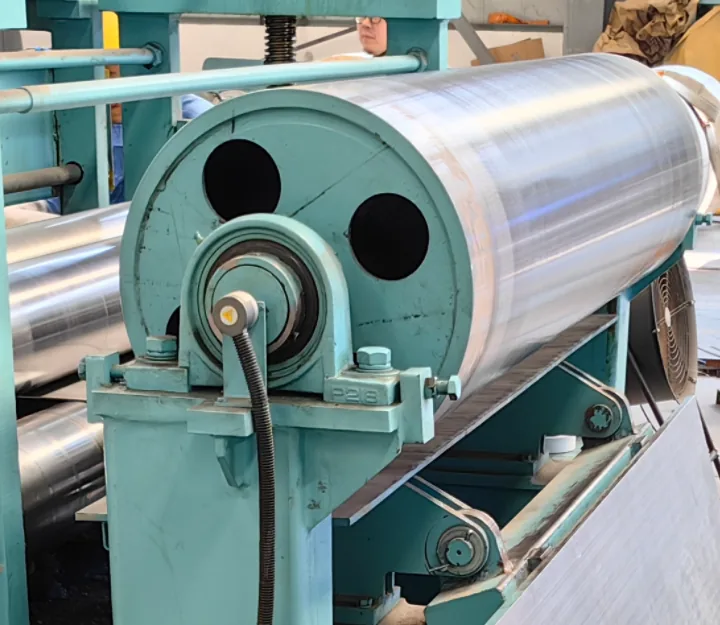
The knives, spacers and rubber sleeves are configured per strip thickness in order to hold the width tolerance and burr limit; the two configuration points are 15 strips at 2 mm and 4 strips at 8 mm. Running cost on a slitting line has three components that buyers usually bundle together but that are worth keeping apart: the tooling that wears, the time the line is not running while that tooling is changed, and the material lost when the setup is not right. Of the three, only the tooling is defined in the line specification, and only by type, not by price or service life.
Slitting knife change
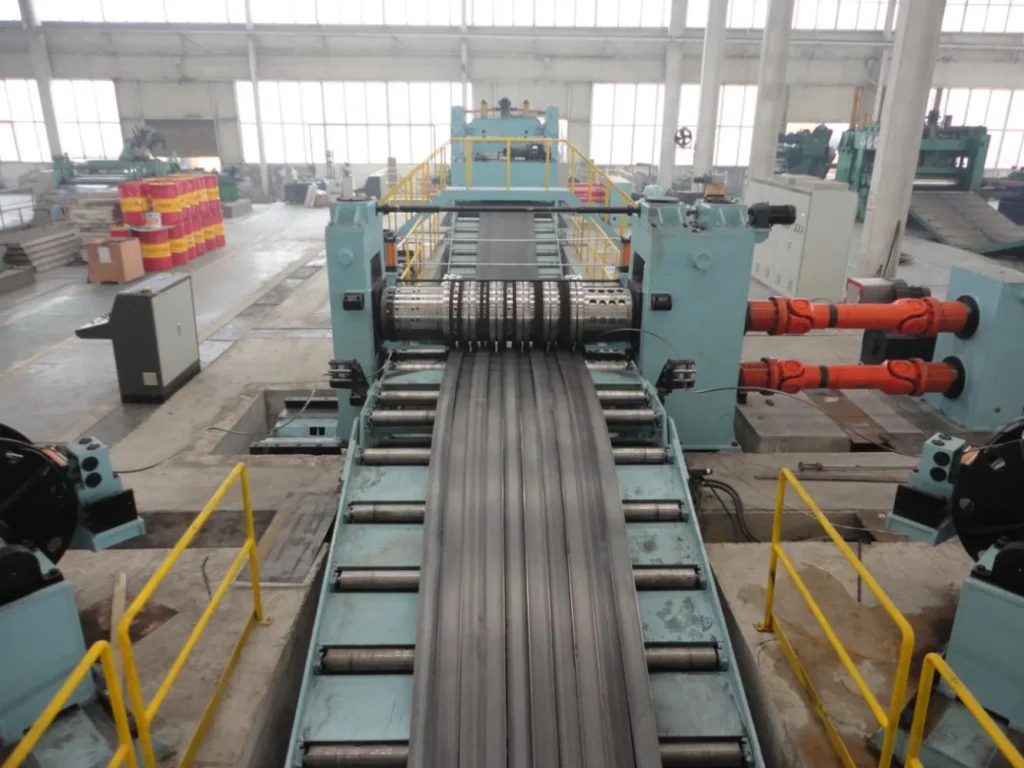
What a knife change actually consists of is a configuration decision keyed to strip thickness.
The reason the configuration is the whole job is in the failure mode. It is not that a blunt knife cuts badly in isolation — it is that knives, spacers and sleeves work as a set, and that either wear or a wrong build of that set produces the same three defects: width out of tolerance, heavy burr, and camber in the finished strip.
Slitting line running cost drivers
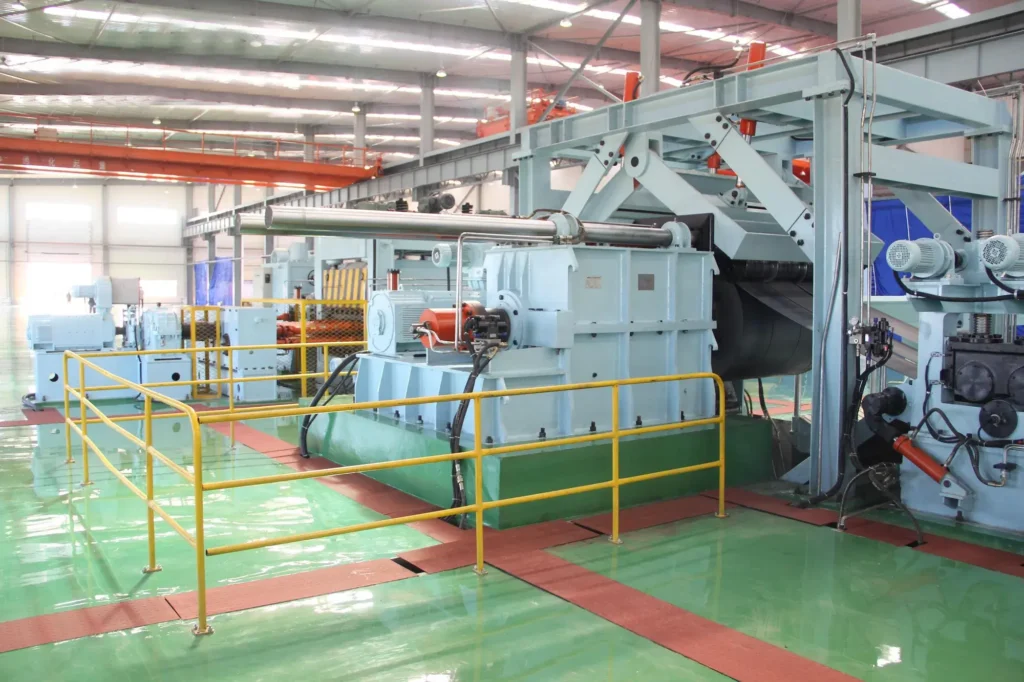
The cost drivers are clear even though the costs are not. On the tooling side, the knife set is consumed and reconfigured by thickness, and tooling and spacers are supplied as a matched set.
On the process side, tension, looper and rewind control are what limits camber and telescoping, with telescoping held within ±10 mm — and a coil that fails on camber or telescoping is a coil the downstream mill will not accept.
Running cost on this line therefore comes down to three things: tooling wear, setup discipline and rejected material. All three are real costs, but none can be reduced to a single figure without knowing your material and operating conditions.
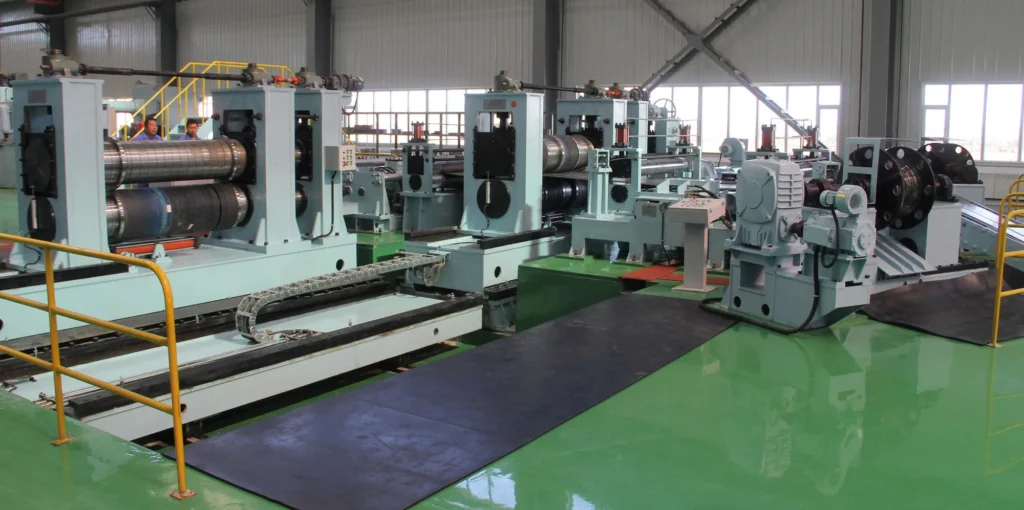
The knife set is four items working together — slitting knives, spacers, rubber sleeves and separator discs — and it is classed as a core component because it determines slit width accuracy, burr and edge quality. The consequence of wear or wrong configuration is out-of-tolerance width, heavy burr and camber.
Slitting Line Running Cost — Method and Measured Values
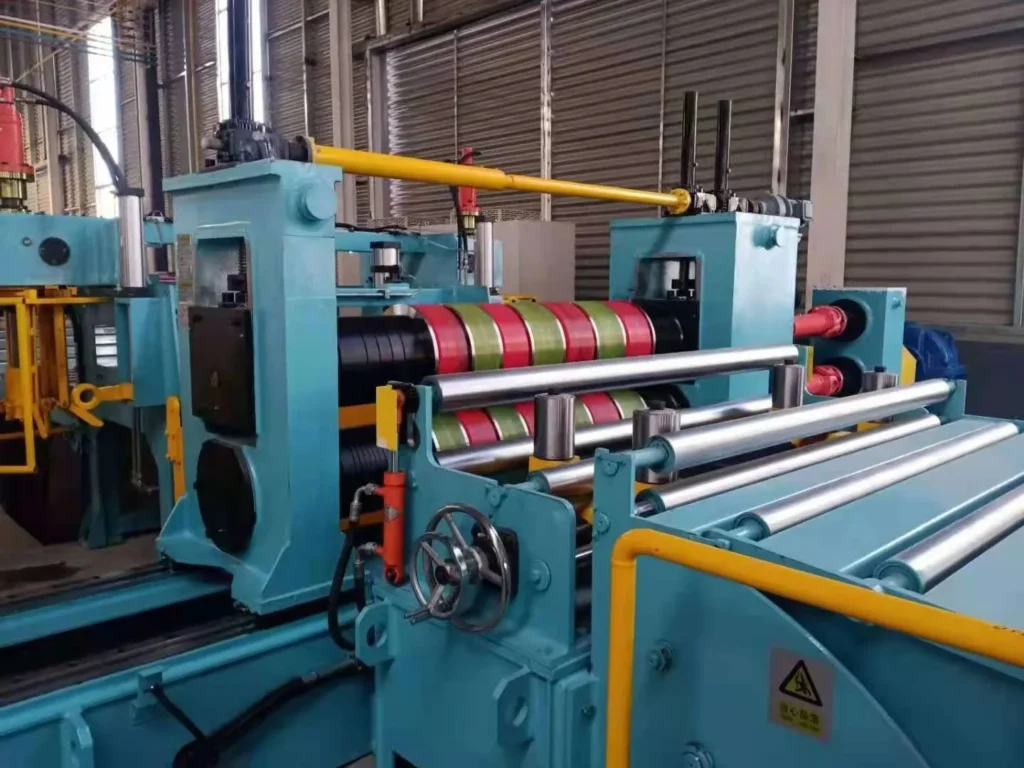
Slit width is held to ±0.2 mm, burr to not more than 4 per cent of strip thickness, camber to not more than 0.5 mm per 1000 mm, and telescoping to within ±10 mm. The measured values that bear on running cost are the quality limits the tooling has to hold, because those are what decide whether output is saleable.
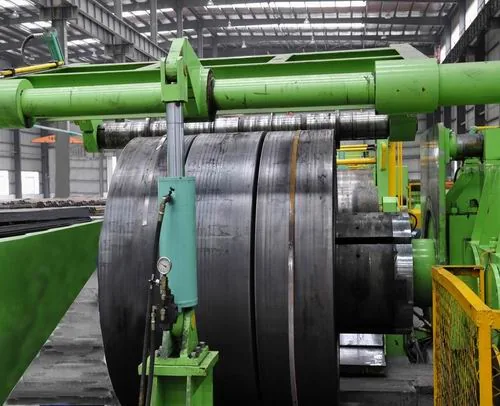
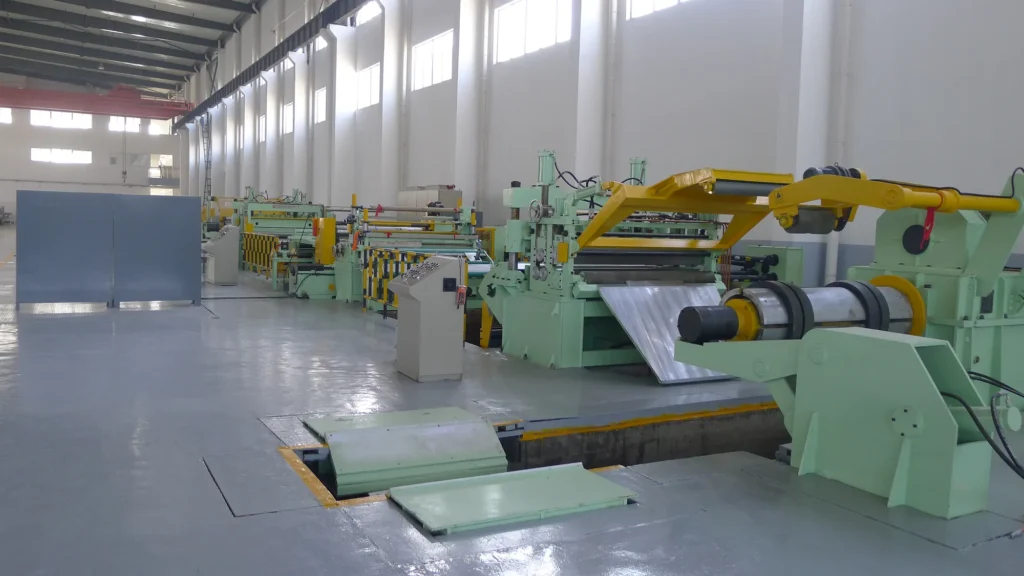
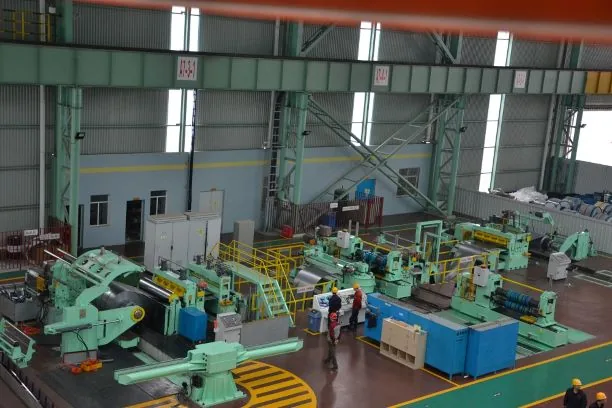
The line’s material window bounds the tooling question: 1 to 12 mm thick, 800 to 2000 mm wide, coils up to 32 tonnes, handled by a double-head uncoiler, slitter and 32-tonne recoiler.
Two quality factors are the ones an operator can actually move. Knife-set configuration and clearance by thickness is the factor governing width and burr; tension, looper and rewind control is the factor governing camber and telescoping.
Standards Behind the Knife-Change Figures
The standards referenced for Tengtian’s pipe and beam equipment — GB/T 9711 and GB/T 5037 on the spiral bands, API 5L on the API line-pipe family, GOST R 58966-2020 on the H-beam line, and the enterprise standard Q/GYLTT01-2023 covering HGF150 high-frequency welded pipe equipment — govern pipe products and welding equipment. None of these standards covers slitting tooling or slitting-line running cost.
Step-by-Step Procedure
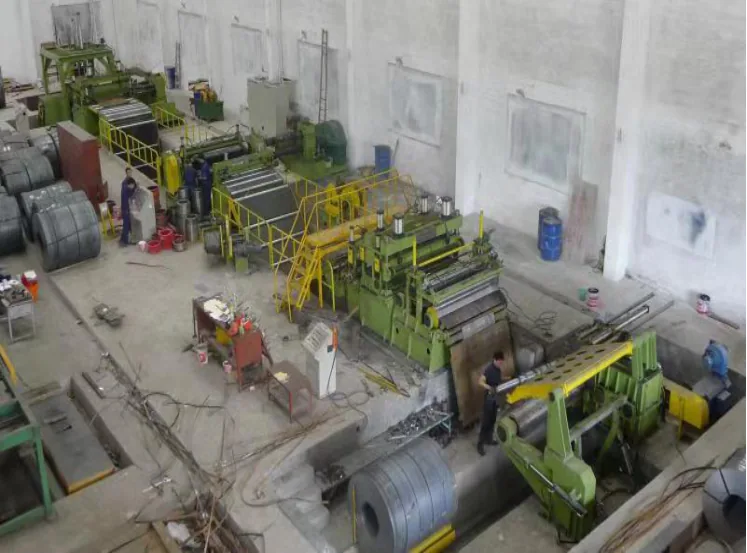
The line flow that a knife change sits inside is: load coil, uncoil, level, hydraulic shear, slit or cross-cut, wind the scrap edge, pass the looper, separate, tension, rewind. The knife set is configured to the strip thickness before that run begins, and tension and looper control are held through it.
Worked Example — Knife Set and Burr Limit on 2 mm Strip
Running 2 mm strip, the knife set is built to take 15 strips; the width each strip has to hold is ±0.2 mm and the burr limit at that thickness is 4 per cent of 2 mm, that is 0.08 mm. This is a configuration example, not a cost example. Running 8 mm strip, the set takes 4 strips and the burr limit is 4 per cent of 8 mm, that is 0.32 mm.
What to ask the factory for
Three requests turn these figures into a running-cost model. Ask for the knife-set configuration table across the full 1 to 12 mm thickness range, not just the two reference points. Ask for knife life expressed in tonnes or metres slit at your own material grade and thickness.
And ask for the change-over time on the specific slitter offered, measured from last coil out to first coil in — that is the number that turns tooling wear into downtime.
What the four tooling items each do
Separator discs keep the slit strips apart after the cut so they do not interleave before the recoiler.
Together, the four items count as one core component rather than four independent parts, and the reason is in the failure mode: it is the wear of knives or spacers, or a wrong configuration of the set as a whole, that produces out-of-tolerance width, heavy burr and camber. Width tolerance in particular is a property of the built stack, not of the knife edge alone.
Supply is handled at set level too: tooling and spacers are supplied together as a matched set. That settles continuity of supply; it says nothing about knife life.
Where the money actually goes on a slitting line
Running cost on this equipment comes from three sources.
The first is tooling that wears. The knife set is consumed and rebuilt by thickness, and its wear is a direct cause of out-of-tolerance output.
The second is time lost to configuration. The set has to be built to the strip thickness before the run, and the two reference configurations show how much the build changes across the range — 15 strips at 2 mm against 4 strips at 8 mm is a different stack, not a different setting.
The third, and usually the largest, is rejected material. A coil that fails on width, burr, camber or telescoping is material the downstream line cannot use — and on a 32-tonne coil that is a substantial quantity of steel decided by a tooling and tension setup that costs comparatively little to get right.
The line the tooling has to keep in tolerance
Tooling cost only makes sense against the tolerances it has to hold, and those are clearly specified. Slit width is held to ±0.2 mm and burr to not more than 4 per cent of strip thickness by the knife-set configuration; camber is held to not more than 0.5 mm per 1000 mm and telescoping to within ±10 mm by tension, looper and rewind control.
The material window those figures apply across is 1 to 12 mm thickness and 800 to 2000 mm width, at coil weights up to 32 tonnes, handled by a double-head uncoiler, the slitter and a 32-tonne recoiler; the hydraulic shear, looper and tension unit carry the strip-quality side.
What a buyer can compare between suppliers
Even without life and time figures, three things can be compared between suppliers.
Whether the tolerance set is quoted as four separate characteristics or rolled into one accuracy claim — on this line, width, camber, burr and telescoping are specified separately, each with its own mechanism and failure mode.
Whether the knife-set configuration is given as a function of strip thickness at all, and over what range — this line specifies it that way, with two reference points across a 1 to 12 mm working window.
And whether tooling is supplied as a matched set, as it is on this line, rather than as loose items a buyer has to build a stack from.
Why tooling discipline is worth more than tooling price
The arithmetic of this line runs in one direction. Tooling is a set of consumable precision parts. The output it protects is coil weighing up to 32 tonnes. A setup fault does not degrade that output gracefully — it shows up as out-of-tolerance width, heavy burr and camber, and the result is material the next line cannot use.
That asymmetry is why the control points are configuration and tension rather than inspection. Knife-set configuration and clearance by thickness is the factor governing width and burr; tension, looper and rewind control is the factor governing camber and telescoping. Both are things set before and during the run, not measured after it.
Tooling Supply, Stack Configuration and Knife Life
On supply, the answer is clear. Slitting knives, spacers, rubber sleeves and separator discs are supplied as a matched set, which answers whether tooling can be obtained over the life of the line.
On configuration, the picture is only partly complete. Two reference points are given across a working range of 1 to 12 mm, which is enough to show that the stack changes substantially with thickness and not enough to specify a stack at an arbitrary thickness.
Knife life, change-over time and cost per tonne are the three numbers a maintenance manager would build a budget from. None of them is a fixed catalogue figure; they depend on the material being slit and the slitter supplied.
One related figure should not be confused with a tooling figure: on the direct-forming square tube line, a roll saving of more than ninety per cent applies to changing rolls at every size change. That is a different family, a different tooling class and a different comparison — it says nothing about slitting knife consumption.
The knife set is four items, and they are worth separating because a buyer replacing “knives” is usually replacing rather more than that. Slitting knives make the cut. Spacers set the distance between cuts and therefore the finished strip width. Rubber sleeves sit between the elements on the arbor.
Resource Downloads
From the Workshop
 Slitting vs Cut-to-Length
 Slitting Precision
 Steel Coil Slitting Machine
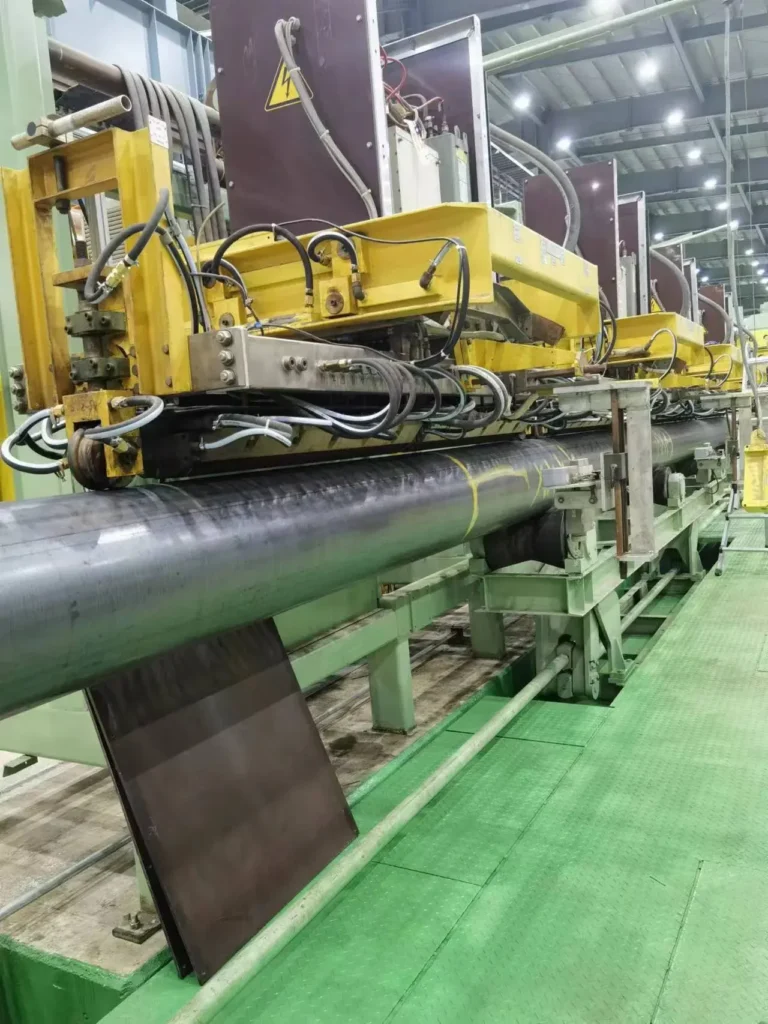 The API Pipe Mill Inspection Chain
Send Your Enquiry
Tell us the pipe outside-diameter range, the wall thickness and the output you need. An engineer reads every enquiry — it does not land in a general sales inbox.