
 Scan on WeChat
Home › Direct Forming Square Tube Mill › Roll Saving in Direct Forming
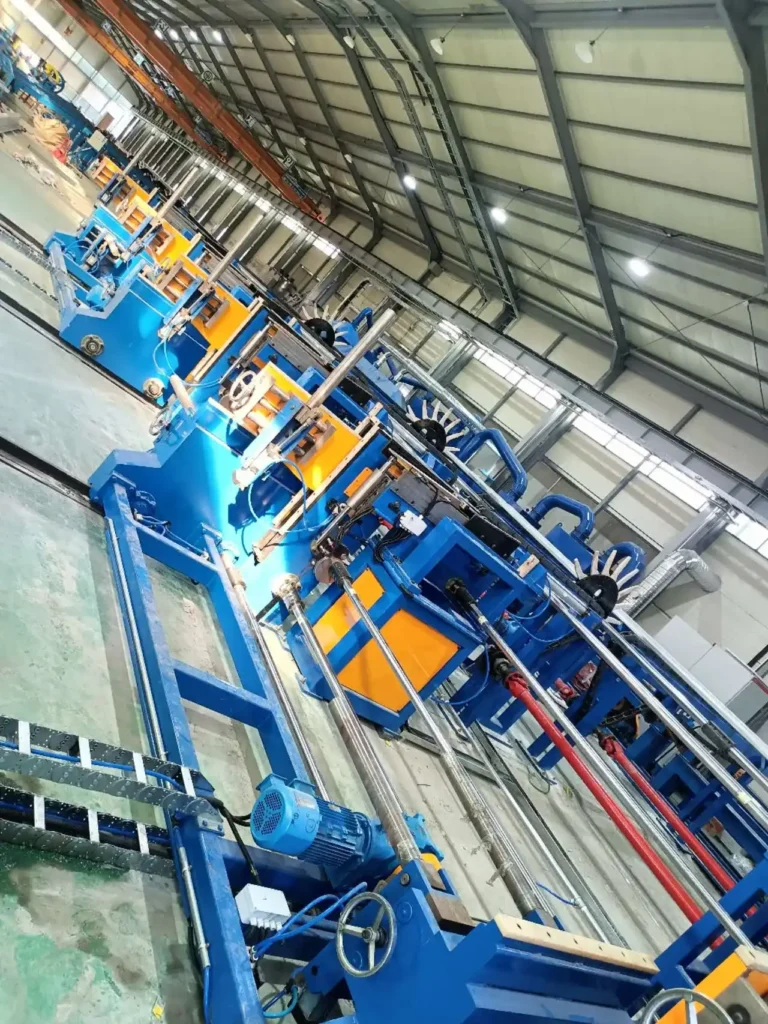
Direct forming makes different square sizes from one combined mould set, changing size by servo adjustment instead of by changing rolls.
In This Line
Quick Contact
Hebei TengtianYuanle@tentubemill.com
+86-311-83025332
WhatsApp +852 5425 3155
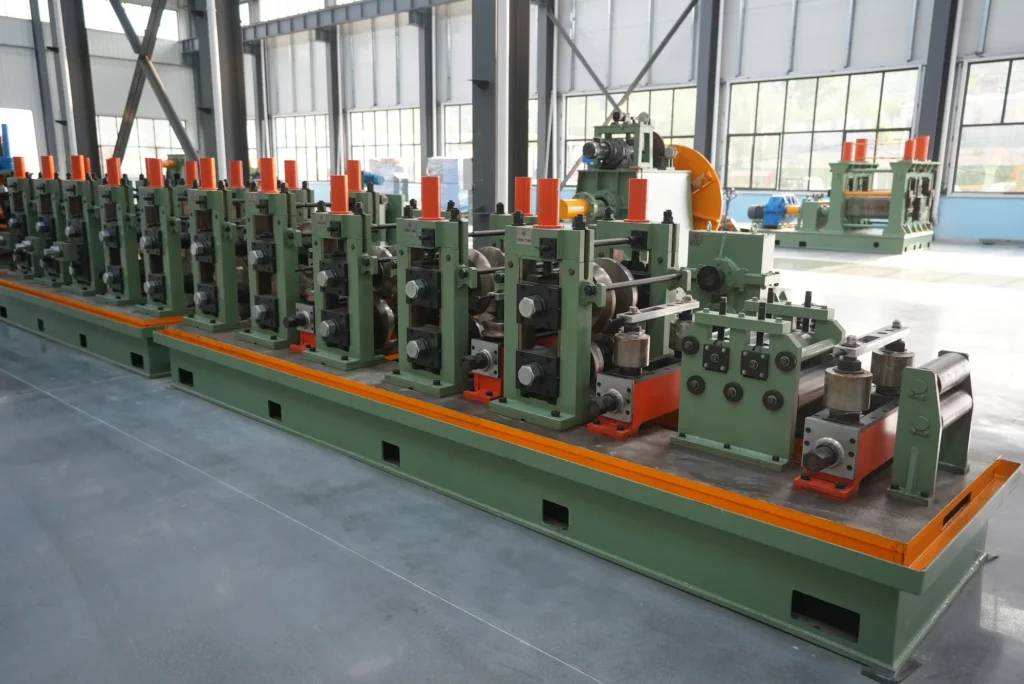
The benefit is a roll saving of more than 90 per cent together with longer roll life, and the mechanism for it is point contact in the combined roll design. There is one exception: making 100 × 100 mm tube needs the upper roll on the final open stand changed.
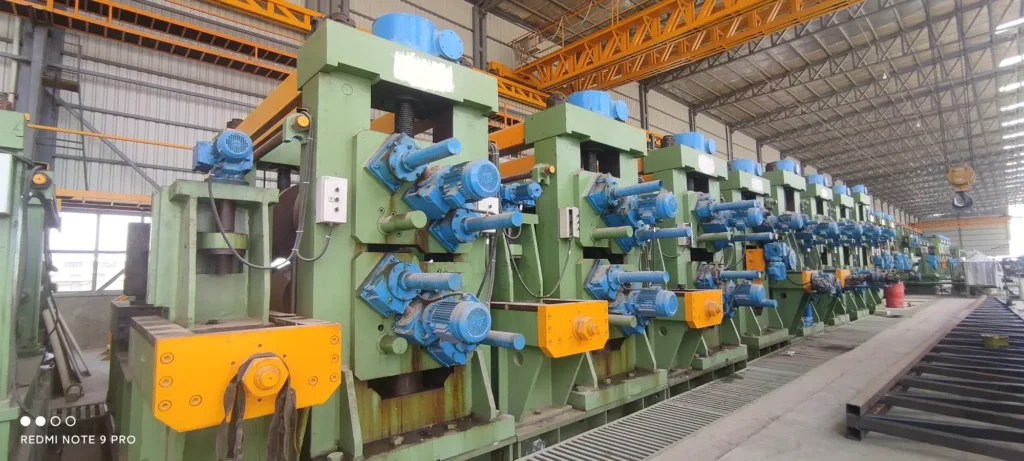
How the Combined Mould Saves Rolls
- One combined mould set produces different square sizes; a size change is a servo adjustment, not a roll change.
- Roll saving: more than 90 per cent, with longer roll life.
- Mechanism: point contact in the combined roll design lowers roll wear.
- Size envelope: 30×30 to 500×500 mm at 1.5–13 mm wall by band.
- Against the alternative: direct forming needs fewer forming passes and fewer roll changes than round-to-square.
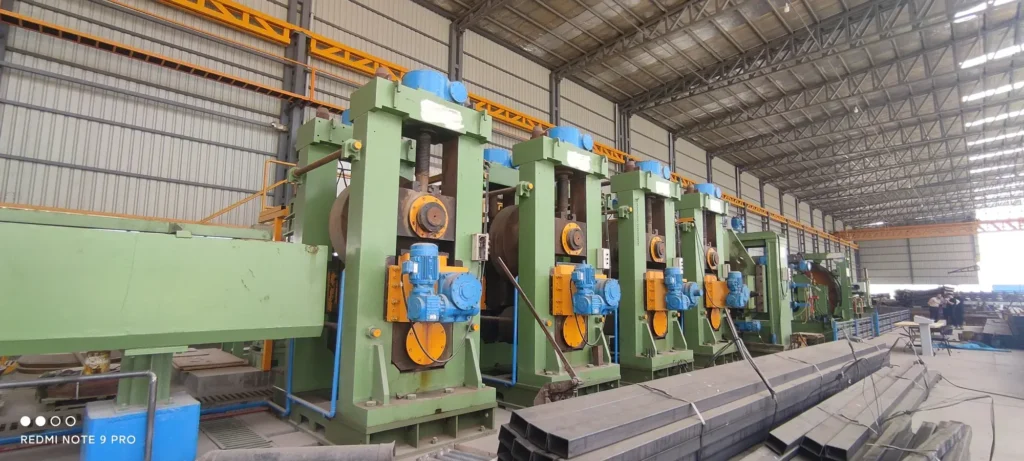
What Is Roll Saving in Direct Forming
Because the rolls are not changed at each size change, the roll saving is more than 90 per cent.
Roll saving is a comparison, not an absolute property, so it matters what it is compared against. A conventional welded tube line changes its forming rolls when the target size changes; the direct-forming square line does not. One combined mould set covers the size range and the change is made by servo adjustment.
The users are the square tube plant’s operators and its die-change crew; the beneficiaries are buyers of construction, furniture and mechanical structural sections.
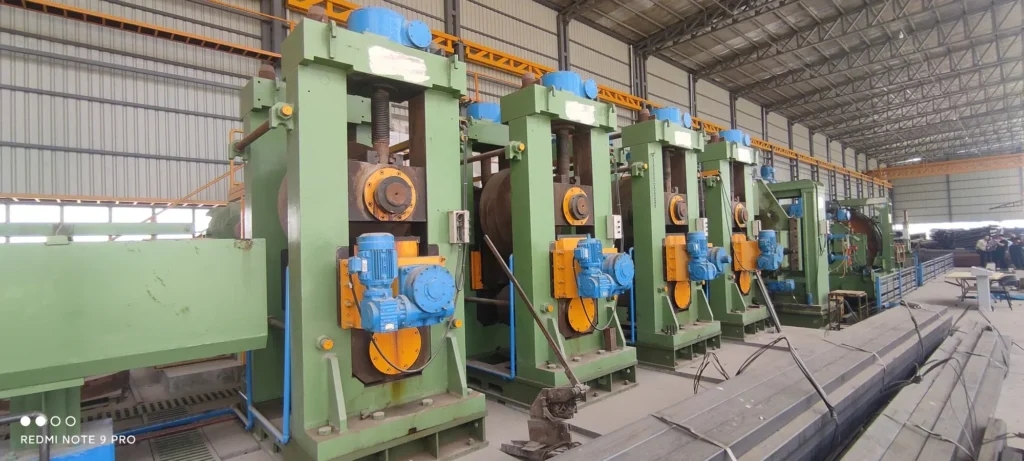
The question buyers usually raise
Buyers ask two things: is changing specification troublesome, and how long is the line down for a roll change?
The concern comes from end-user pipe plants and is about day-to-day use and efficiency. It is based on real experience with roll changes on conventional welded lines, not on a misunderstanding.
Our answer has three parts: a combined mould with no roll change, a roll saving of more than 90 per cent, and servo adjustment.
The same pairing appears on the supplier-switching side. Slow changeovers and high roll costs are a reason pipe plants change equipment supplier, and what they then look for is a direct-forming line that changes specification without changing rolls and keeps roll consumption low.
And on the buyer-segment side, regional pipe and section makers are watching quick size change, roll saving and yield together as one running-cost question.
Typical downstream application groups for the range include construction structure and scaffolding, mechanical and automotive components, home and furniture, and solar mounting, and square section fits several of them.
Two related lines show where this mill fits within a plant. The fully-automatic tube mill is a separate product line, built on the standard welded line with a higher degree of automation, and its technology shares the same base as direct forming and roll forming.
And the automatic spray line is a companion line for surface coating that suits square section from 25 by 25 to 125 by 125 mm at 1.0 to 4.0 mm wall and 6 to 12 metres long, running at up to 60 metres per minute.
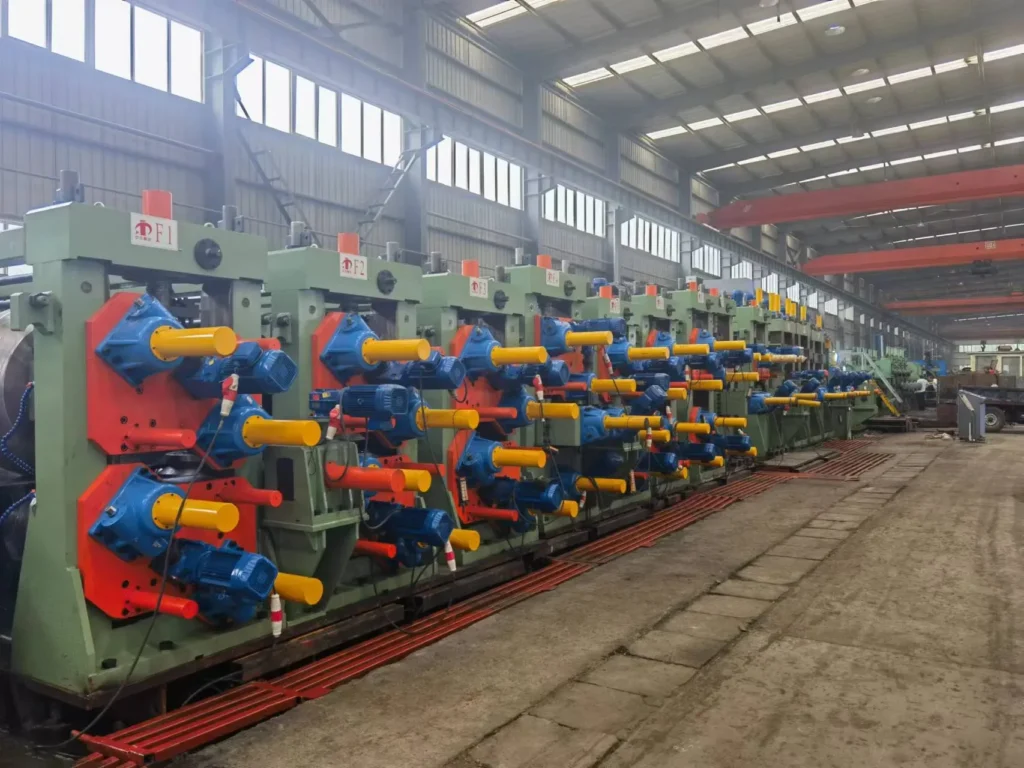
Direct forming square tube mill
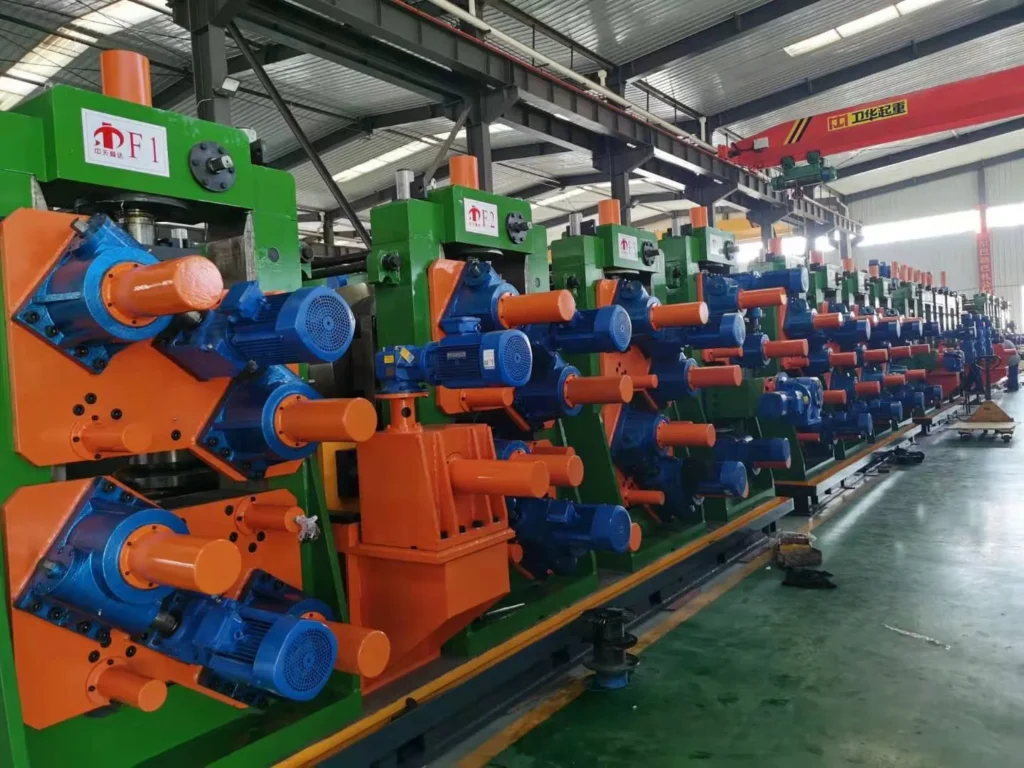
The line itself is a square and rectangular tube line using direct forming square technology, where one combined mould set produces different square sizes and a size change needs only servo adjustment with no roll change. The finished product envelope is 30 by 30 to 500 by 500 mm at 1.5 to 13 mm wall thickness by band.
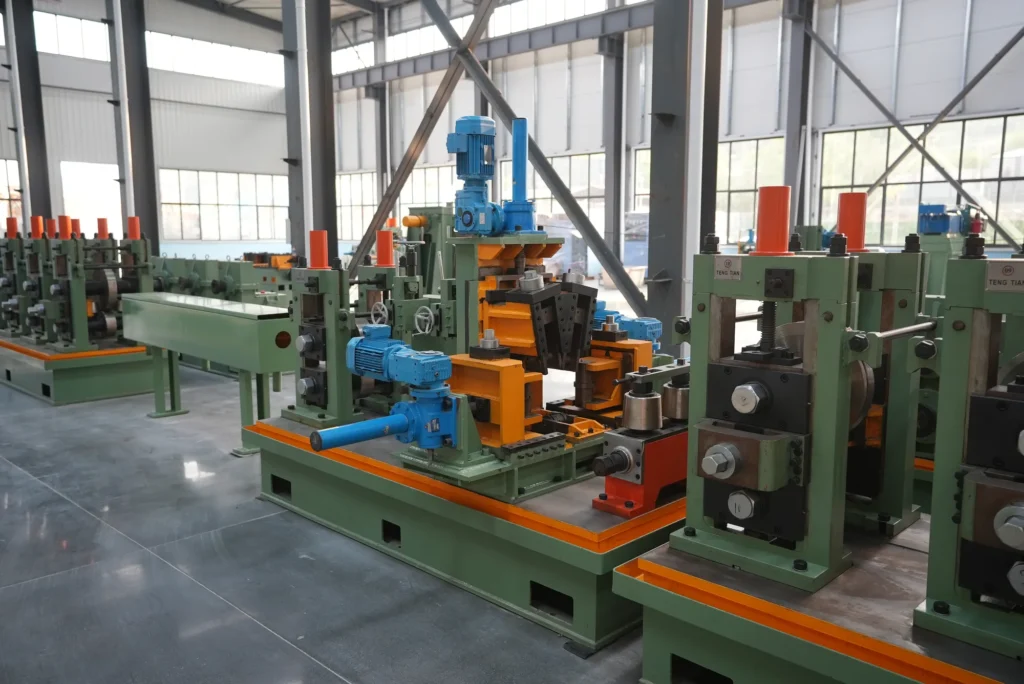
Compared with ordinary round-to-square forming — forming a round tube first and then sizing it square — direct forming needs fewer forming passes and fewer roll changes, and is faster to change size. The core difference is the combination of the combined mould and servo adjustment.
The line is aimed at square tube plants that run many sizes and change size often. On a conventional welded line, those plants lose time changing rolls and carry a high roll consumption cost.
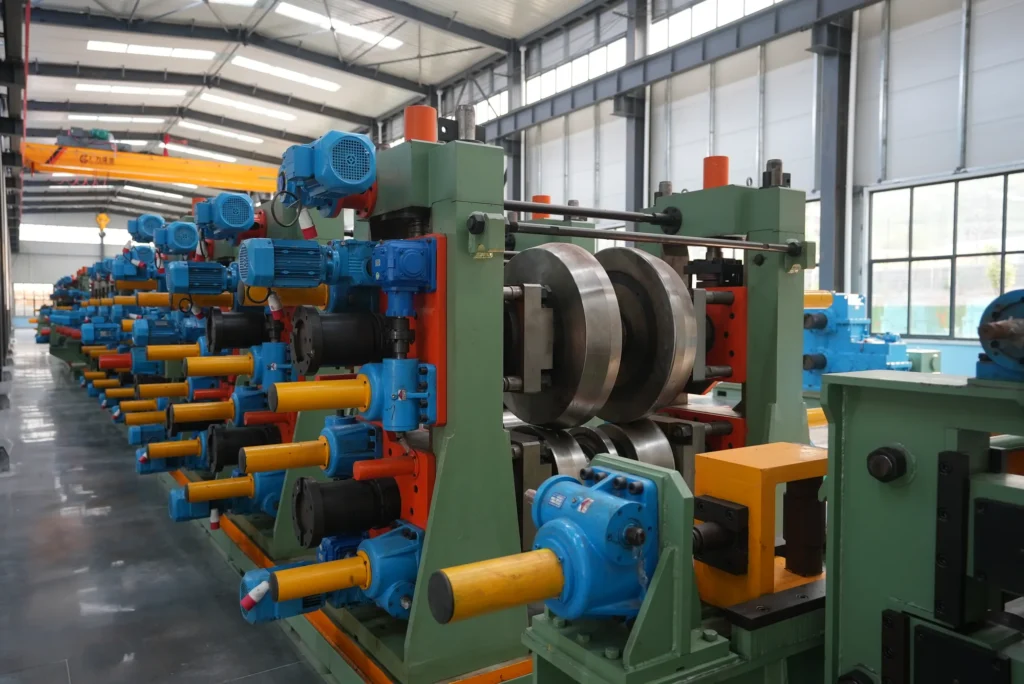
Roll Saving in Direct Forming — Method and Measured Values
The measured values are the roll saving of more than 90 per cent and the size envelope of 30 by 30 to 500 by 500 mm at 1.5 to 13 mm wall. Alongside these two measured values there is one mechanism: point contact in the combined roll design, which lowers roll wear.
The same figure is part of Tengtian’s wider case for fast changeover: changing specification without changing rolls, a roll saving of more than 90 per cent, servo adjustment and quick die change, with longer roll life as a result.
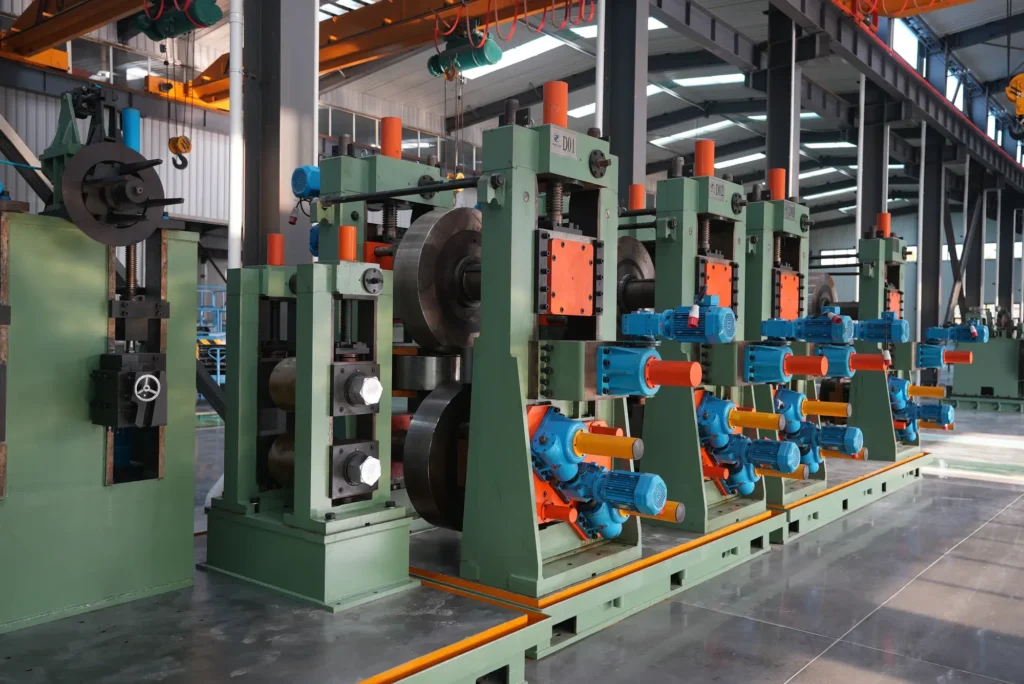
Multi size square tube machine
Multi-size capability matters commercially for a simple reason. Square tube plants need to switch frequently across the 30 by 30 to 500 by 500 mm range; the cost of doing that on a conventional line is high roll consumption and long downtime for the roll change, and the requirement is therefore adjustment without a roll change.
Buyers typically judge this on three measures: size-change time, roll saving rate and tooling life.
Roll saving rate is more than 90 per cent. Tooling life is longer, though not expressed as a figure. Size-change time is not a fixed catalogue figure either.
For running cost, roll consumption goes together with material yield: low roll consumption, high yield and quick changeover are what keep long-term operating cost under control.
Standards and Patents Behind the Roll Saving
The enterprise standard Q/GYLTT01-2023, covering HGF150 high-frequency welded pipe equipment, was issued on 31 August 2023, took effect on 15 September 2023, and is published on the national enterprise-standard information platform as a twelve-page document. The standards that apply to Tengtian’s own equipment are enterprise-level for this subject.
Tengtian holds granted patents covering the direct-forming square route: an invention patent for a square tube production line, and utility model patents covering a direct-forming horizontal frame unit, a square tube production line, a square tube direct-forming extrusion unit, a square tube sizing roll unit,
an extrusion roll frame forming unit, a large-diameter direct-forming flat roll unit, and a square tube direct forming machine.
For direct forming specifically, the reference point is a patent set rather than a standard.
Step-by-Step Procedure
On the direct-forming square line the same step is servo adjustment only, with no roll change.
The consequence of getting that setup wrong is shape drift after the change and scrap pipe during commissioning of the new size, and the mitigations are change-over training and quick die change. The operation needs a trained die-change crew.
The mitigation side is a people-and-training factor rather than a machine factor. Operator setup and quick die change are what reduce scrap on a specification change, so the result depends on the operators: if the change is done badly, it leads to shape drift and scrap during commissioning.
Who makes and maintains the tooling also matters, because it is part of what keeps the roll saving holding over the life of the line. Forming rolls and other key parts are machined and maintained in house on Tengtian’s own CNC equipment, with the reason being that buying tooling in puts lead time, cost and consistency outside the supplier’s control.
Tengtian also has an in-house manufacturing base open to factory audit and a research team of twenty engineers averaging twenty years of experience.
The size-change step differs between the two routes. On a conventional welded line the step is to set the line to the target pipe diameter, and on that line it means a roll change with roll gap, servo parameters and alignment all reset afterwards.
Worked Example — One Mould Set, 30×30 to 500×500 mm
The basis for the example: one combined mould set covering 30 by 30 to 500 by 500 mm at 1.5 to 13 mm wall by band; a size change made by servo adjustment with no roll change; a roll saving of more than 90 per cent against changing rolls at every size change; and point contact in the combined roll design as the reason roll wear falls.
Turning this into a saving in money or hours needs four more inputs: a roll consumption baseline in sets, hours, metres or tonnes for each route, the roll price, the size-change time on each line, and the number of size changes per period.
Without those four, the saving can only be expressed as the percentage, together with what it is compared against. Wall thickness, line speed and shift output are confirmed against your pipe size, material grade and cut length at quotation. Send us those three and we will state the figures.
What to ask the factory for
Three questions convert the percentage into a number a buyer can use. Ask for the roll consumption baseline the 90 per cent is measured against — sets per year, or per tonne of output, on the conventional line it is compared with.
Ask for the size-change time measured on the shop floor for the two or three sizes you actually run.
And ask which items in the combined mould set are treated as consumables and how they are supplied over the life of the line — Tengtian can already answer that last one: it machines rolls and key parts in house on CNC equipment and supplies spares on an ongoing basis.
Resource Downloads
From the Workshop
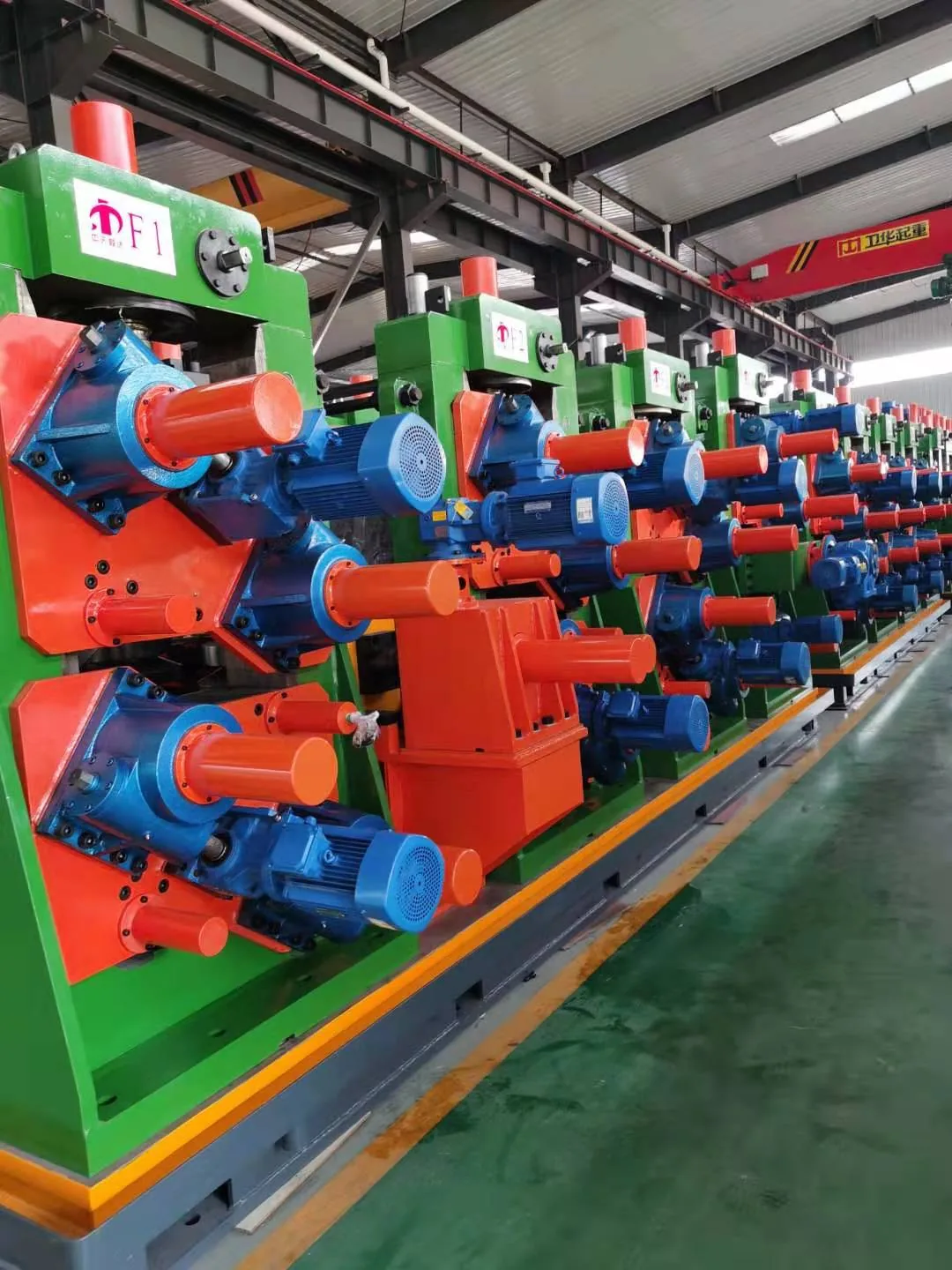
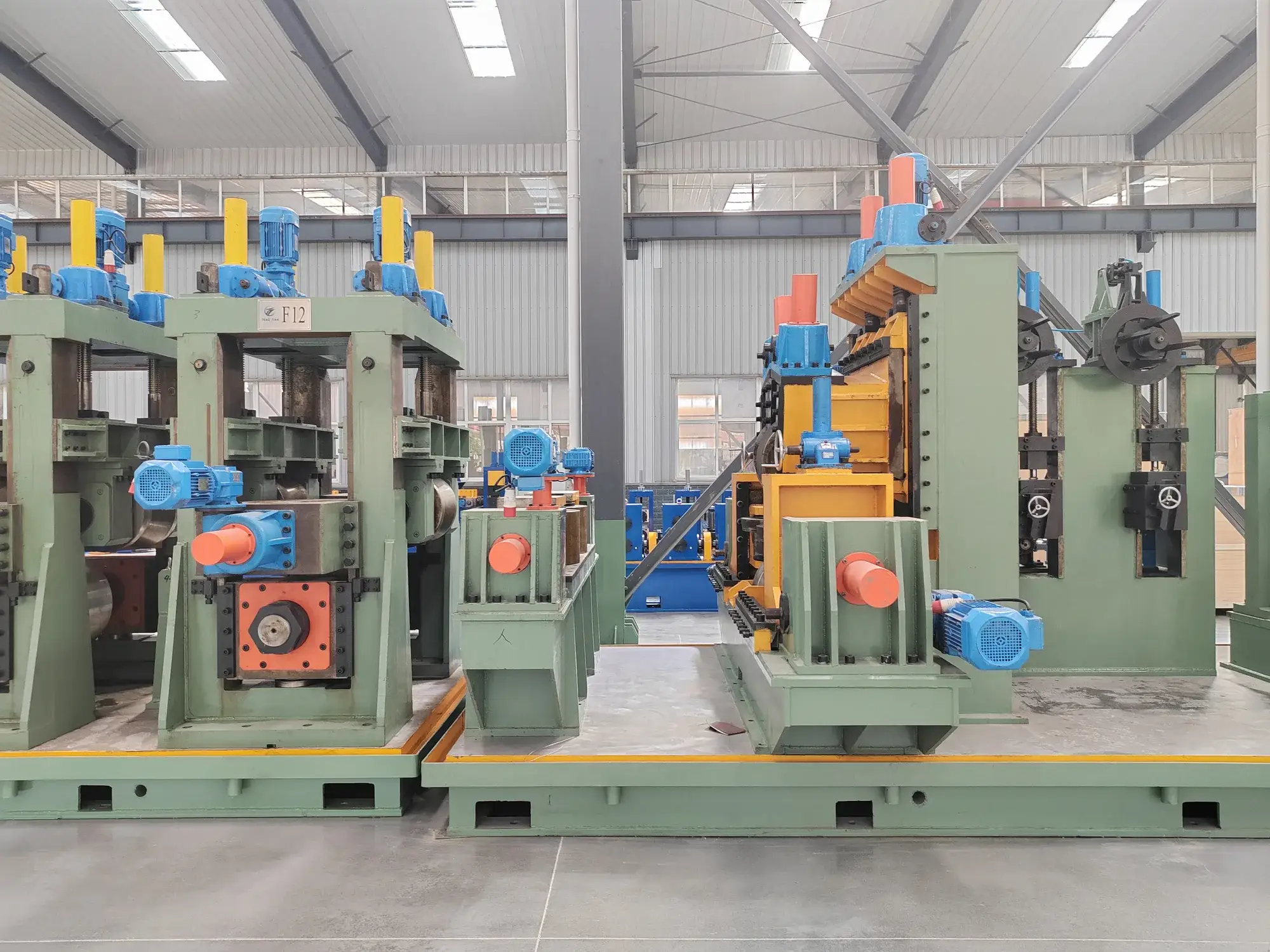
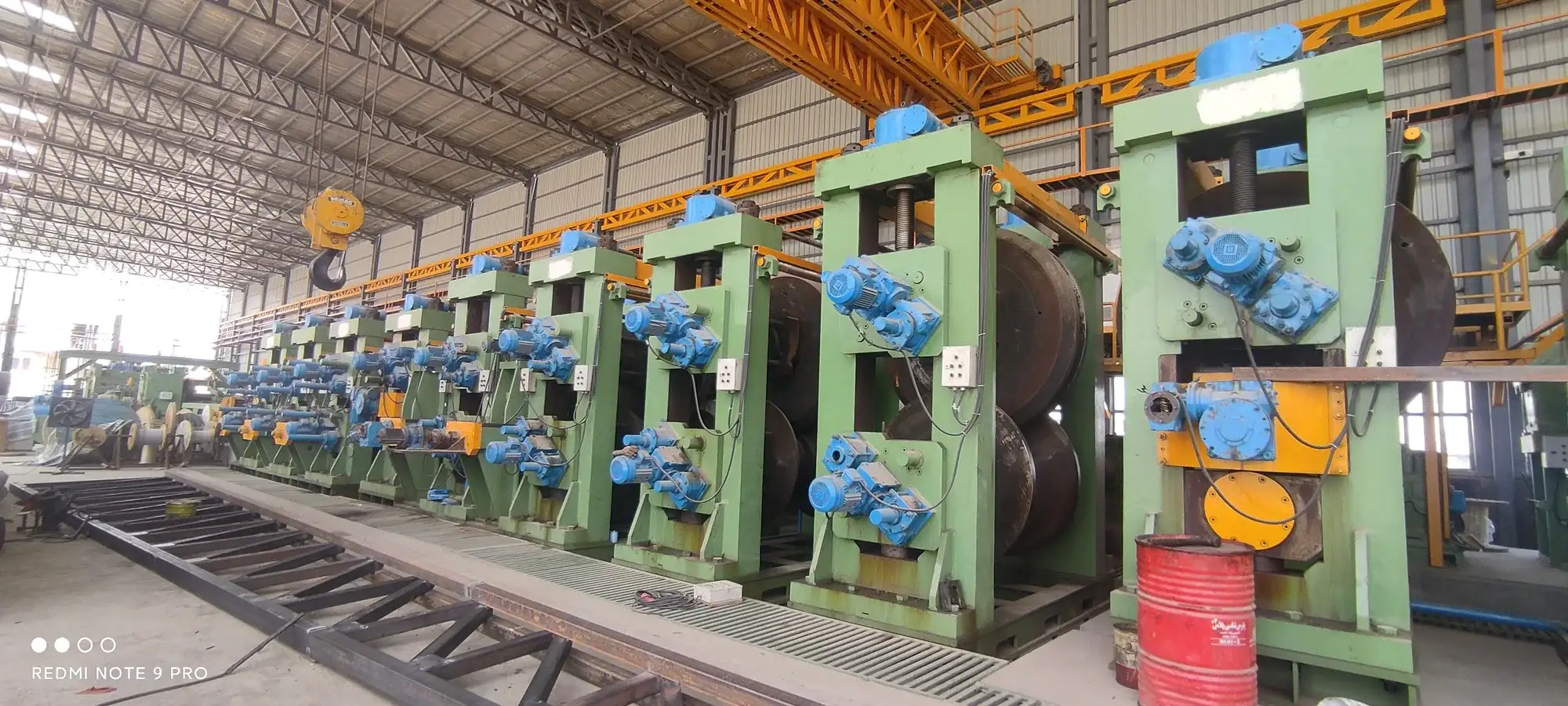
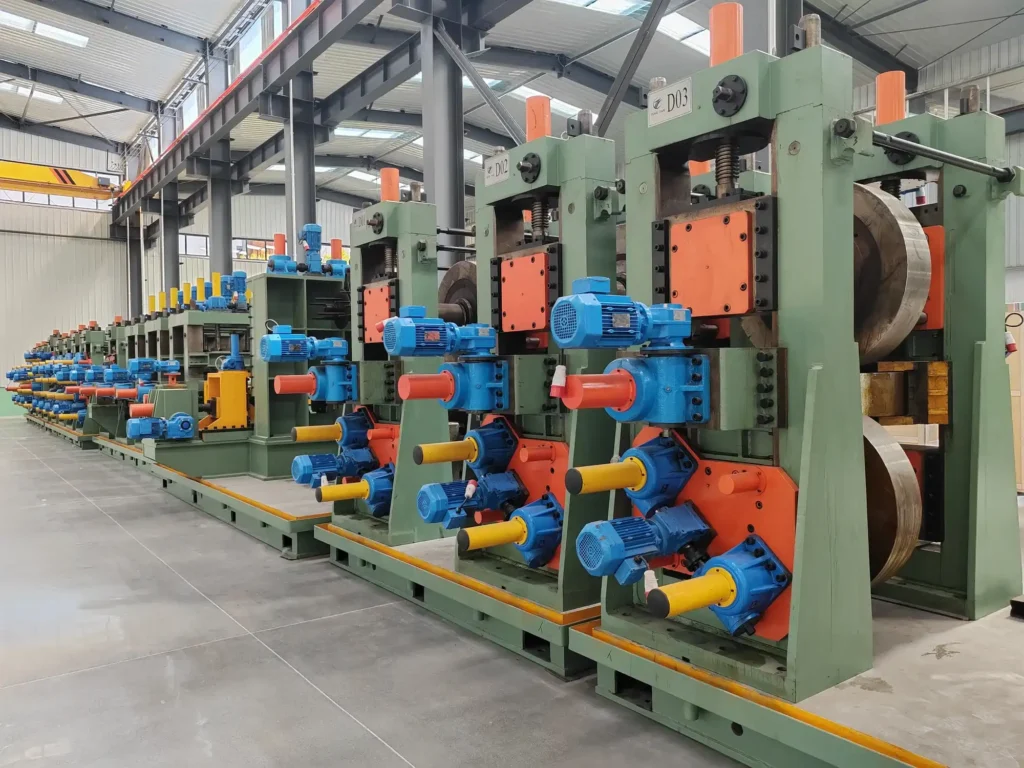
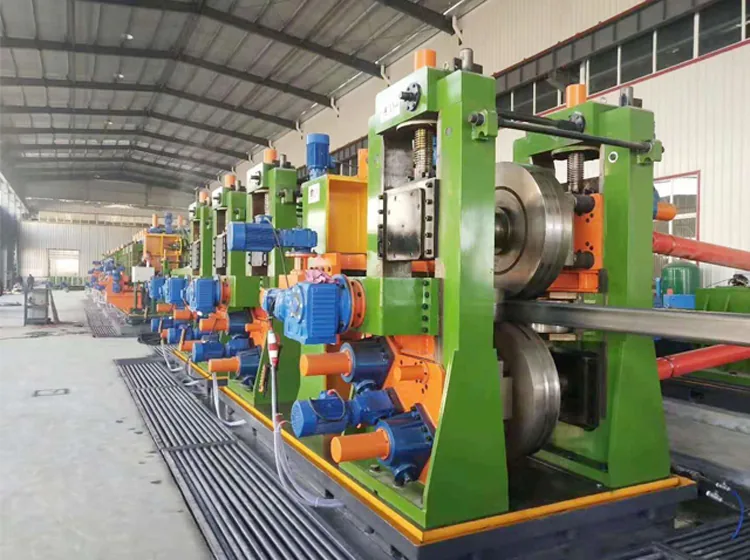
 Direct Forming Size Range
 Two Routes to Square Section, Side by Side
 The API Pipe Mill Inspection Chain
 Pipe Coating Line Configuration
Send Your Enquiry
Tell us the pipe outside-diameter range, the wall thickness and the output you need. An engineer reads every enquiry — it does not land in a general sales inbox.