
 Scan on WeChat
Home › Direct Forming Square Tube Mill › Direct Forming Size Range
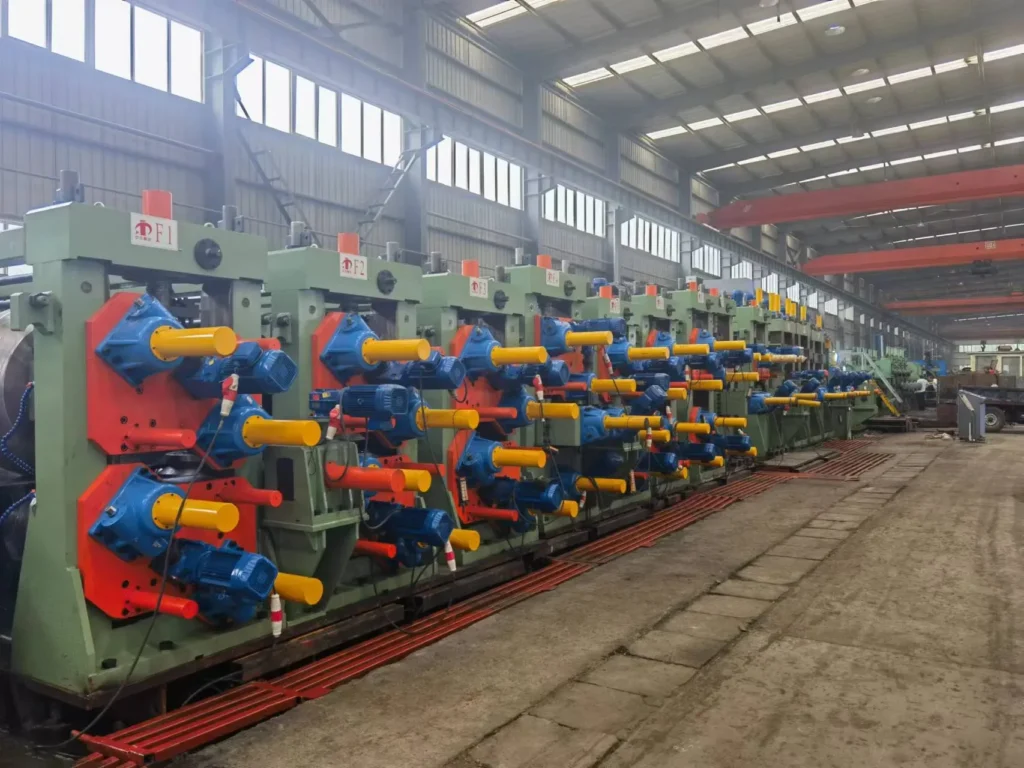
A direct forming square tube mill covers 30×30 to 500×500 mm from one combined die set.
In This Line
Quick Contact
Hebei TengtianYuanle@tentubemill.com
+86-311-83025332
WhatsApp +852 5425 3155
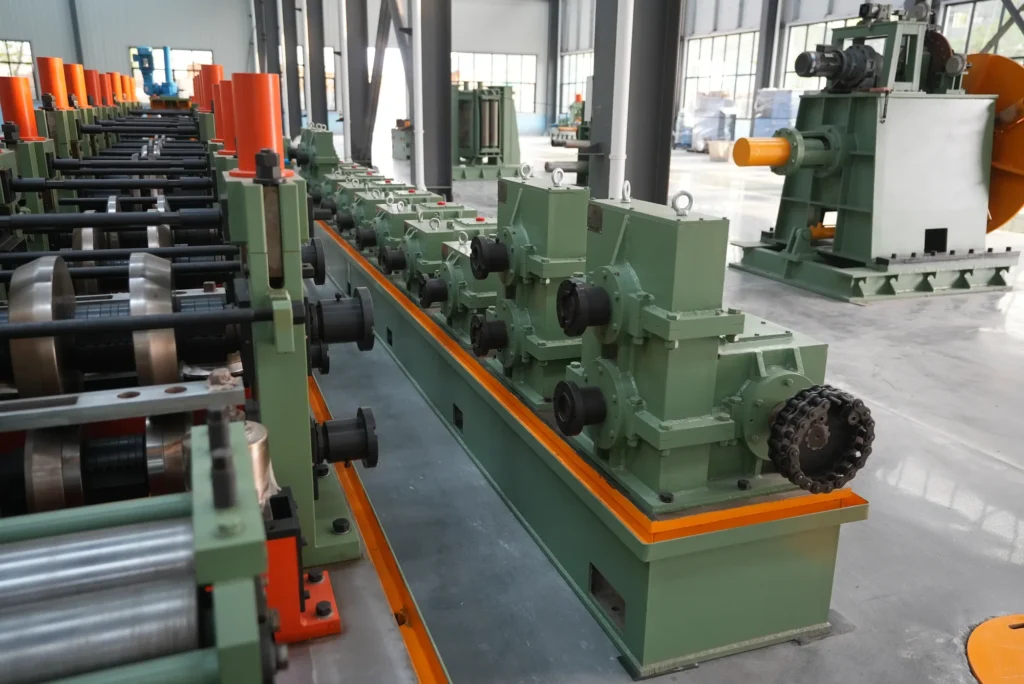
Changing section is a servo adjustment rather than a roll change, and the roll saving is above 90%. There is one exception: making 100 × 100 mm tube needs the upper roll on the final open stand changed.
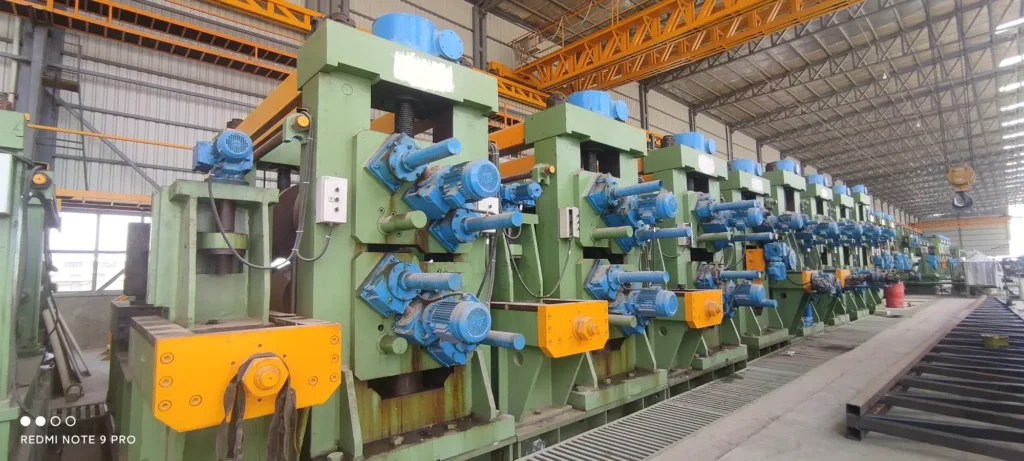
Technical Specification Table
Finished section — square: 30×30 mm to 500×500 mm Finished section — rectangular: produced on the same line as square and round section on our welded pipe mills Wall thickness: 1.5–13 mm, by size step Forming principle: direct forming square — a combined die set, adjusted by servo, rather than a roll set changed per size Welding process:
high-frequency induction welding Roll saving versus conventional: above 90% Material yield: 93% or better by line design
Read the coverage figure carefully. The 30×30 to 500×500 mm span is the coverage of the technology, not of any single quoted machine. Which portion of the span a given line is built for is fixed in the quotation.
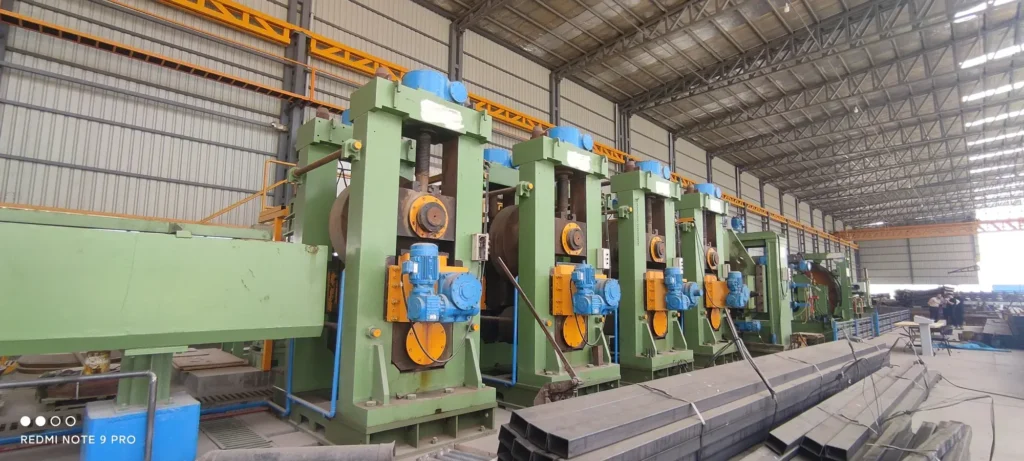
Line Configuration and Scope of Supply
The welding physics is the same as on any of our high-frequency lines: current concentrates at the open edges through skin and proximity effect, heats them to welding temperature, and squeeze rolls press them together to form the seam under pressure. The difference between this line and a conventional square tube mill sits in one unit, and everything else about the train is shared.
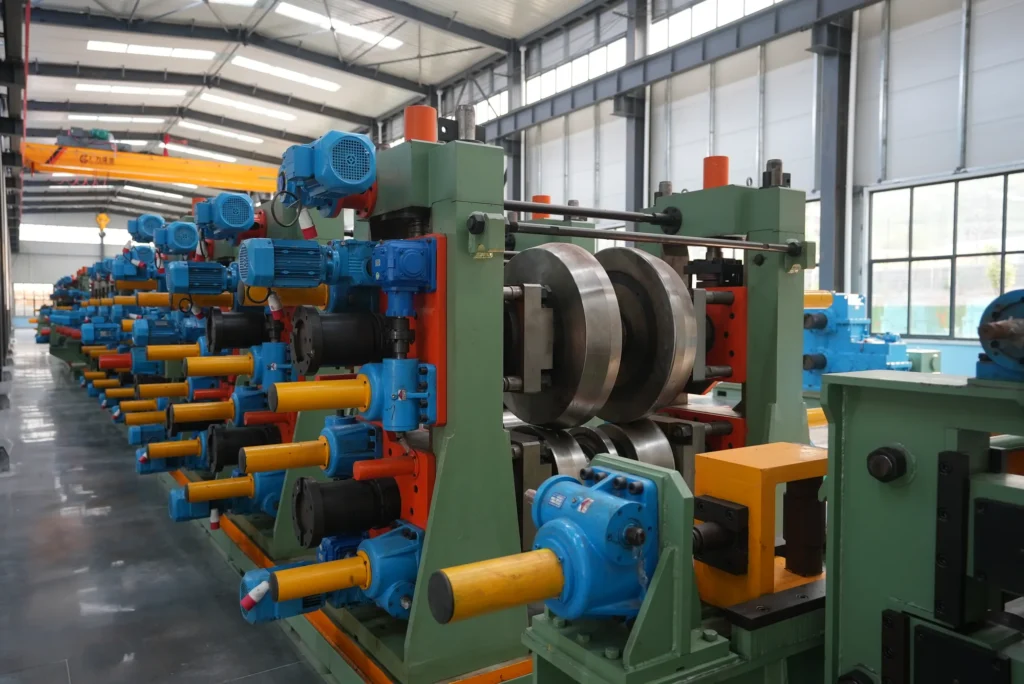
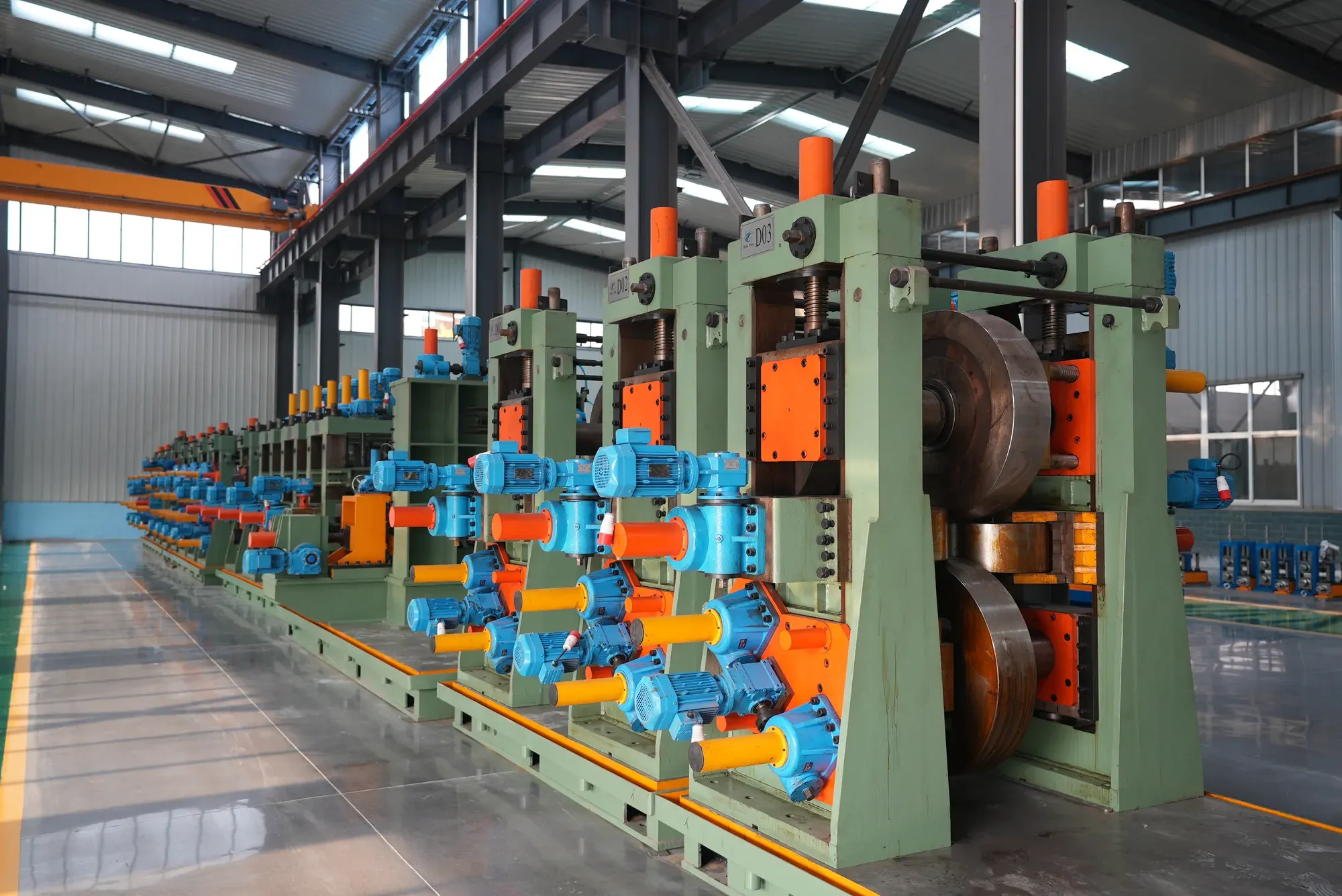
On a direct-forming build, a combined die set forms the square section directly, and the change from one size to the next is made by servo adjustment of that die set rather than by replacing it.
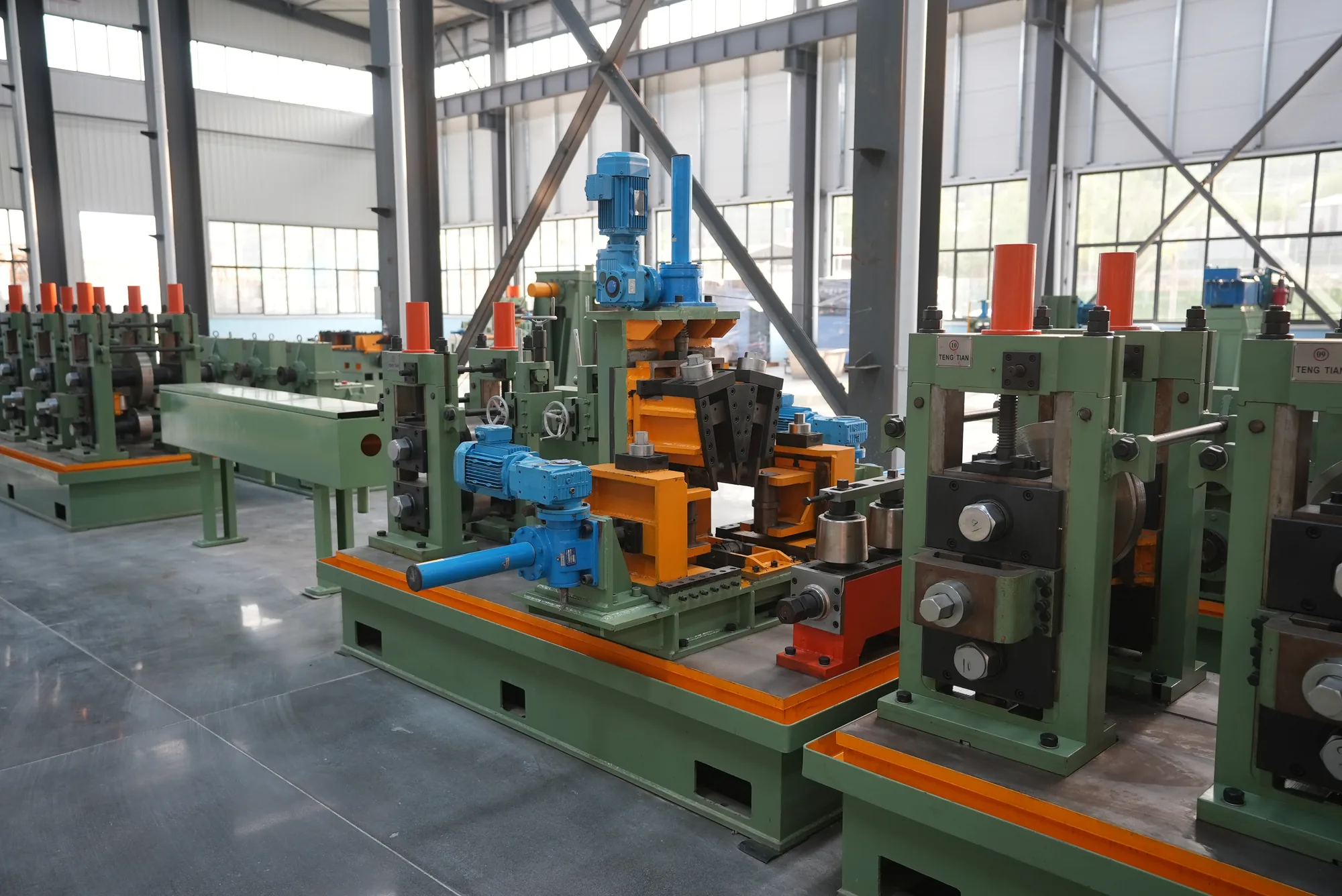
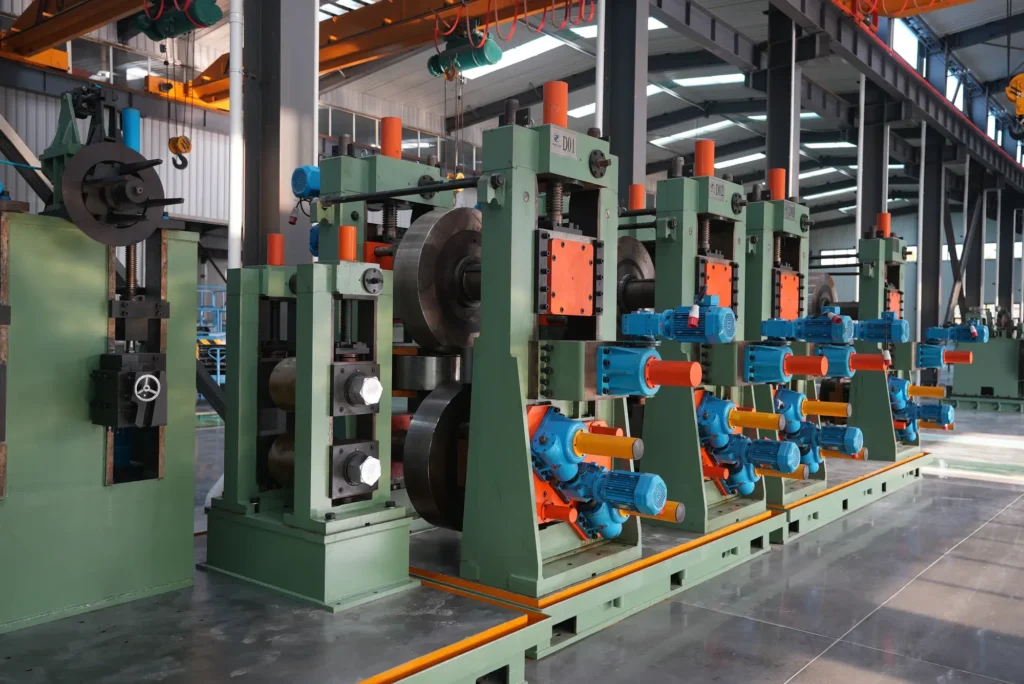
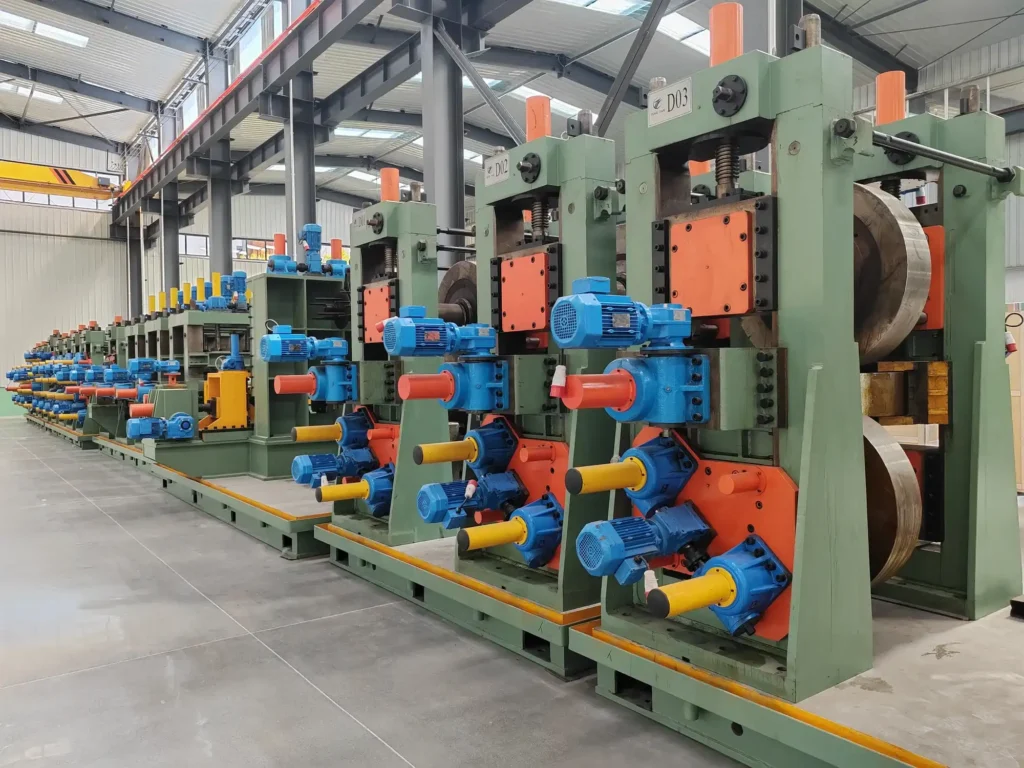
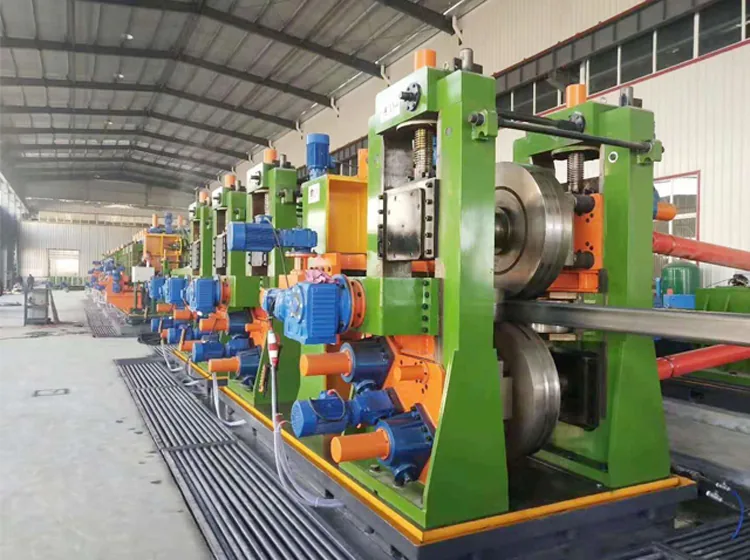
The rest of the line is the standard welded pipe train, and it is worth listing so that the scope of supply is not misread as being only the forming section.
- Coil car and expanding-mandrel uncoiler, tensioning the coil into the line.
- Five-roller leveller, flattening the strip before forming.
- Automatic shear-welder, joining coil to coil.
- Spiral accumulator, buffering strip so forming continues through a coil change.
- Forming and sizing mill — on this build, the combined die set with servo adjustment.
- High-frequency induction welder, sized to the section range.
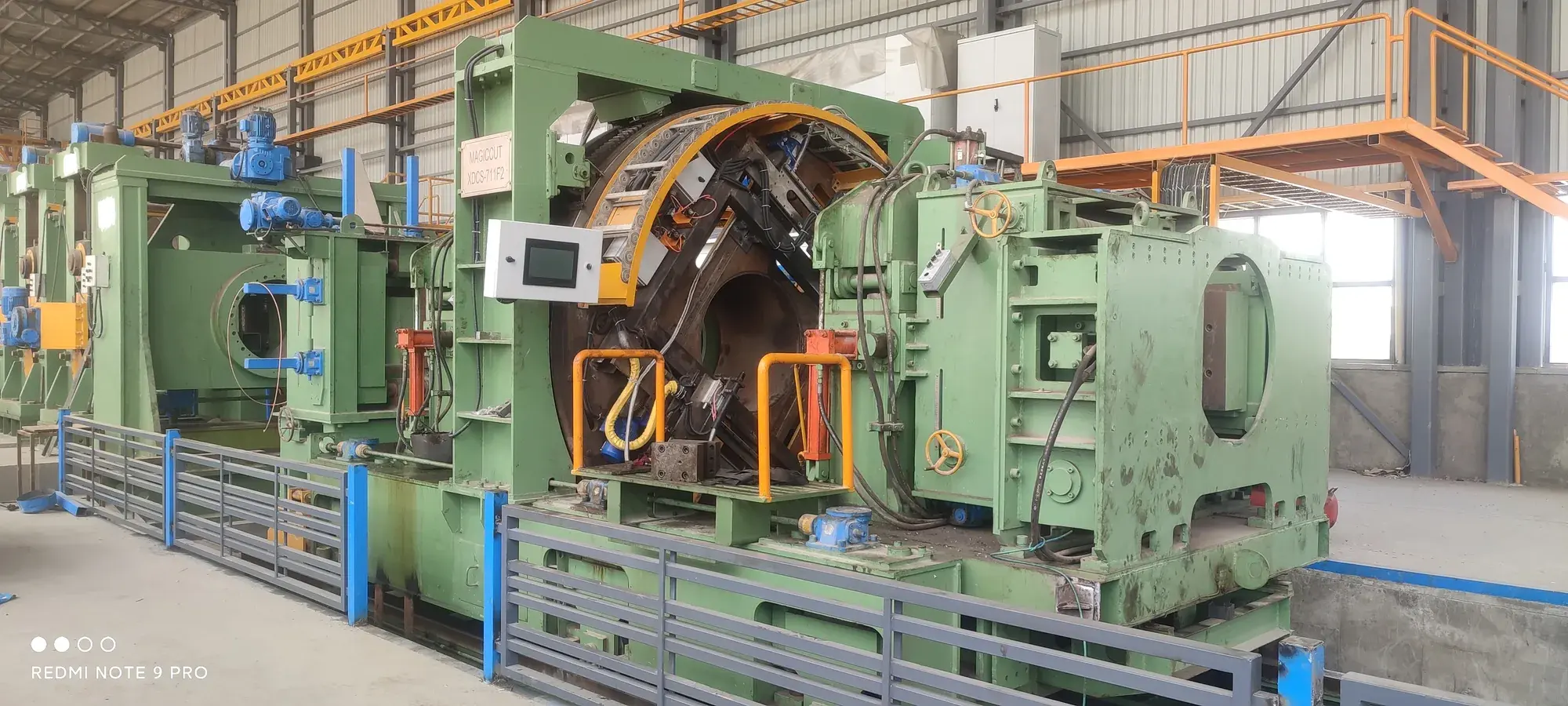
- Flying saw, cutting to length at speed.
- PLC and variable-frequency control, tying speed, sequence and cut length together.
No filler metal is used.
A granted invention patent covers the square tube production line: ZL 2019 1 0764631.3 / CN 110355611 B.
On a conventional build, the strip is roll-formed progressively into shape and, if square section is wanted, formed round first and then sized into square. Each size needs its own roll set, so a size change means changing rolls.
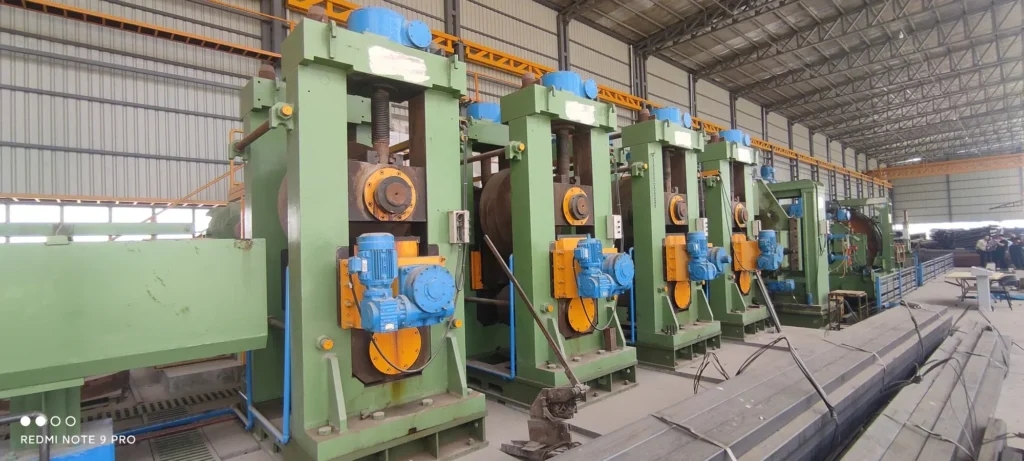
Size Change, Roll Wear and Running Cost
Roll saving is above 90%. Direct forming is bought for changeover economics, not for a specification a conventional line cannot meet.
Two costs dominate a multi-section square tube plant, and this technology addresses both: the tooling cost of changing size, and the downtime of the change itself.
The operator side of a size change still matters: on a conventional build a size change means a roll change, while on a direct-forming build it is a servo adjustment without a roll change. Either way the change crew needs training, and setup practice is what decides how much scrap a size change costs.
Servo setup and direct forming also reduce drift after a size change, which is what batch-to-batch consistency actually depends on.
The saving comes from two mechanisms. Contact between the combined die and the strip is point contact rather than full-face contact, which reduces tooling wear; and because size is changed by servo adjustment, the tooling is not swapped out per size at all.
- The wear items on this line are the usual tube mill items:
- Saw blades and cutting tools, consumed against cutting volume.
- Impeders and induction coils, replaced against welding hours.
- Cooling water and emulsion, and hydraulic oil and grease — specification from us, purchase local.
- Forming tooling as a wear replacement item, backed by in-house CNC machining.
Applications and Output Examples
The typical buyer is a square tube plant that switches frequently between sections across the 30×30 to 500×500 mm range, and for which high tooling cost per change and long changeover downtime are the operating problem.
That plant measures three things: changeover time, roll saving rate, and tooling life. Roll saving is above 90%. Wall thickness, line speed and shift output are confirmed against your pipe size, material grade and cut length at quotation. Send us those three and we will state the figures.
Section coverage is worth one more paragraph, because the way it is quoted differs from how buyers usually think about it. A conventional square tube plant thinks in size steps, and asks which steps a machine covers. A direct-forming plant thinks in a domain, and asks where the domain starts and stops.
That is why the coverage is expressed as a single span from 30×30 to 500×500 mm rather than as a list of sizes — the whole commercial point of the technology is that the sizes inside the span are not separate machine configurations.
Two switching triggers point straight at this line. Slow changeover and high roll cost on existing equipment is one of the reasons plants change supplier, and the requirement they state is for a direct-forming line that changes size without changing rolls.
Entering a new product type — square section among them — is another, because a plant moving into a category it has not produced before needs a line built for it rather than an adaptation of the one it has.
Where responsibility sits follows the same division as our other welded pipe equipment. The mill controls welding power, seam alignment and squeeze; sizing sets dimensional accuracy; line design supports material yield above 93%.
Incoming strip grade, thickness tolerance and flatness stay with the buyer — and on a square section, incoming flatness shows up in corner definition rather than being absorbed.
The users are the plant’s operators and its die-change crew; the beneficiaries are buyers of construction, furniture and machinery structural sections.
Delivery, Installation and Training
Lead time is 50–90 days.
Training on this line has one emphasis that a conventional mill does not. Setting a new size is a servo operation rather than a mechanical one, and the change crew needs dedicated training in size setting and die-change adjustment.
The other four operating steps are as on any of our tube mills: coil loading and threading, and shear-welding a coil join in time with the accumulator, need operator training; setting welder power, welding speed and squeeze needs process-level training; cutting and collecting is routine.
After handover, support is a first reply through a single named point of contact, all-hours online support, on-site dispatch when required, and direct spare-part shipment.
Commissioning a multi-section plant has one scheduling consequence worth flagging early. The value of this line is realised across a section list rather than on a single size, so commissioning is normally run across several sizes rather than one — which makes the change crew’s training the pacing item rather than the mechanical installation.
Plants that plan for that get to steady production faster than plants that treat the size change as an afterthought. Behind that sits in-house CNC machining of tooling and key wear parts, an engineering team of twenty averaging twenty years each, and an owned production base open to factory audit.
Certificates and patent: GB/T 19001-2016 / ISO 9001:2015 (quality management system, certificate No. 18524Q11269R2S); CE for welded pipe equipment, UDEM No. M.2022.206.C72171; invention patent ZL 2019 1 0764631.3 / CN 110355611 B, square tube production line. The product standard the finished section is made to depends on the destination market and the buyer’s specification.
Export packing is specified per item. Control cabinets, impeders and induction coils, forming tooling and cutting tools travel in moisture-protected wooden cases with a spare-parts pack; heavy frames ship bare, braced on cradles with designated lifting points and rust protection.
Rectangular tube mill for construction
Square tube mill machine
Watch This Line Running
Direct Forming Square Tube Mill 120×120 mm — No Roll Change
Direct Forming Square Tube Mill 150×150 mm — No Roll Change
Direct Forming Square Tube Mill 200×200 mm — No Roll Change
Direct Forming Square Tube Mill 400×400 mm — No Roll Change
From the Workshop
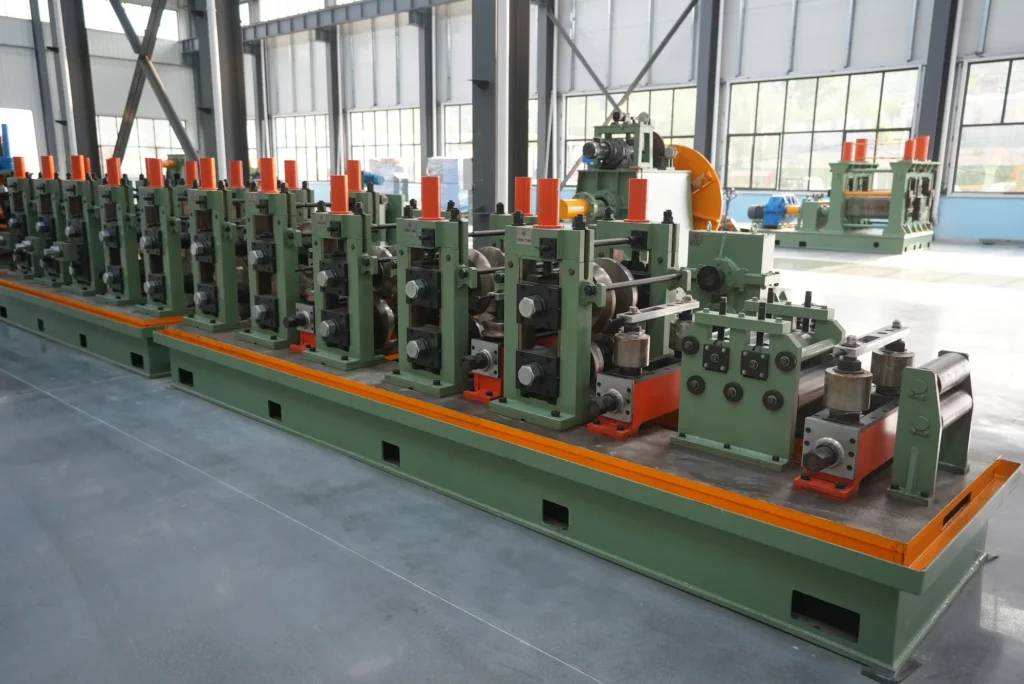 Roll Saving in Direct Forming
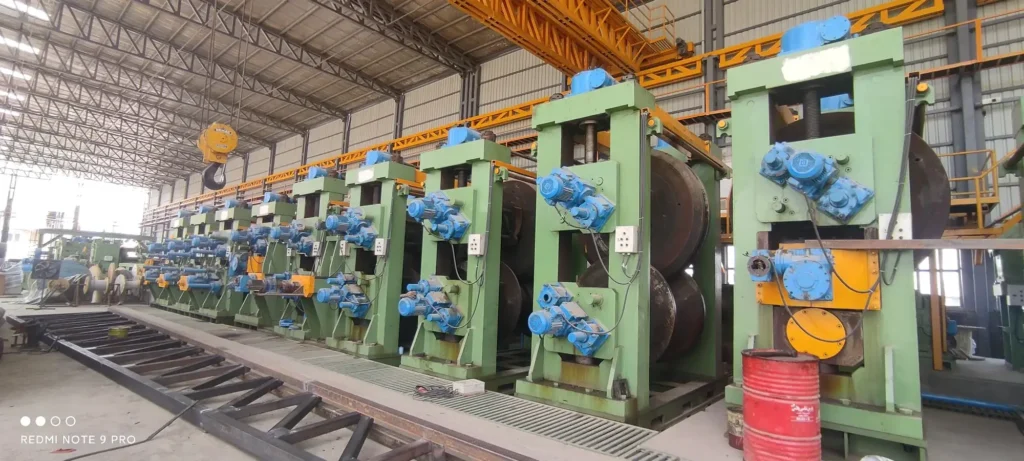 Two Routes to Square Section, Side by Side
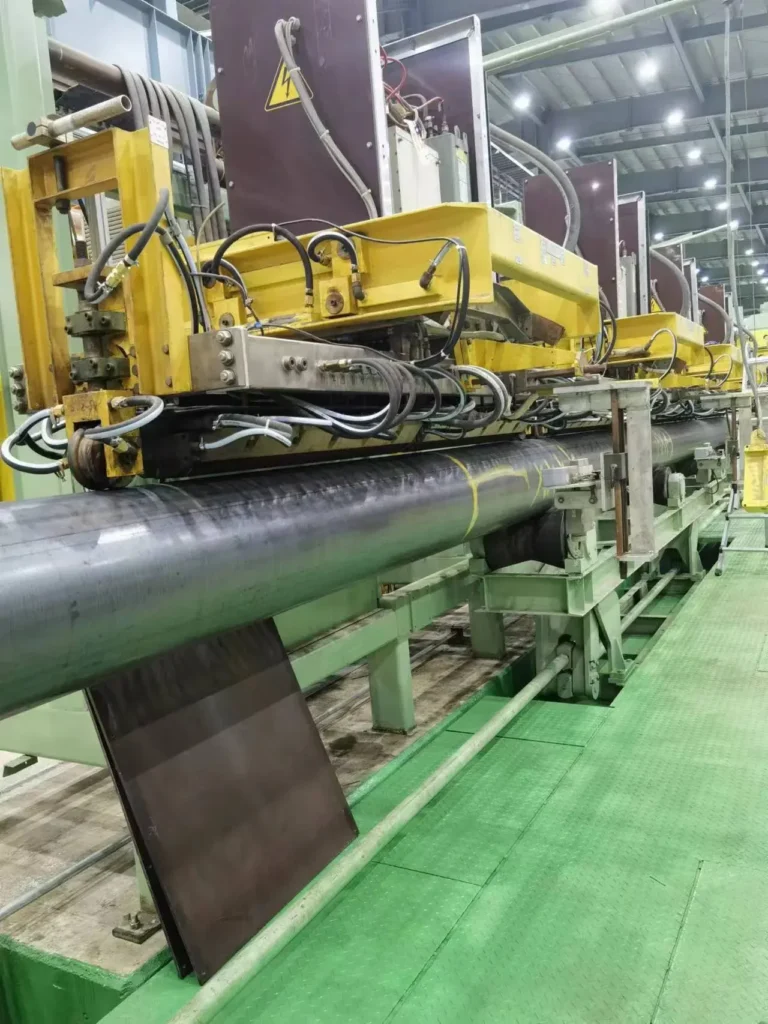 The API Pipe Mill Inspection Chain
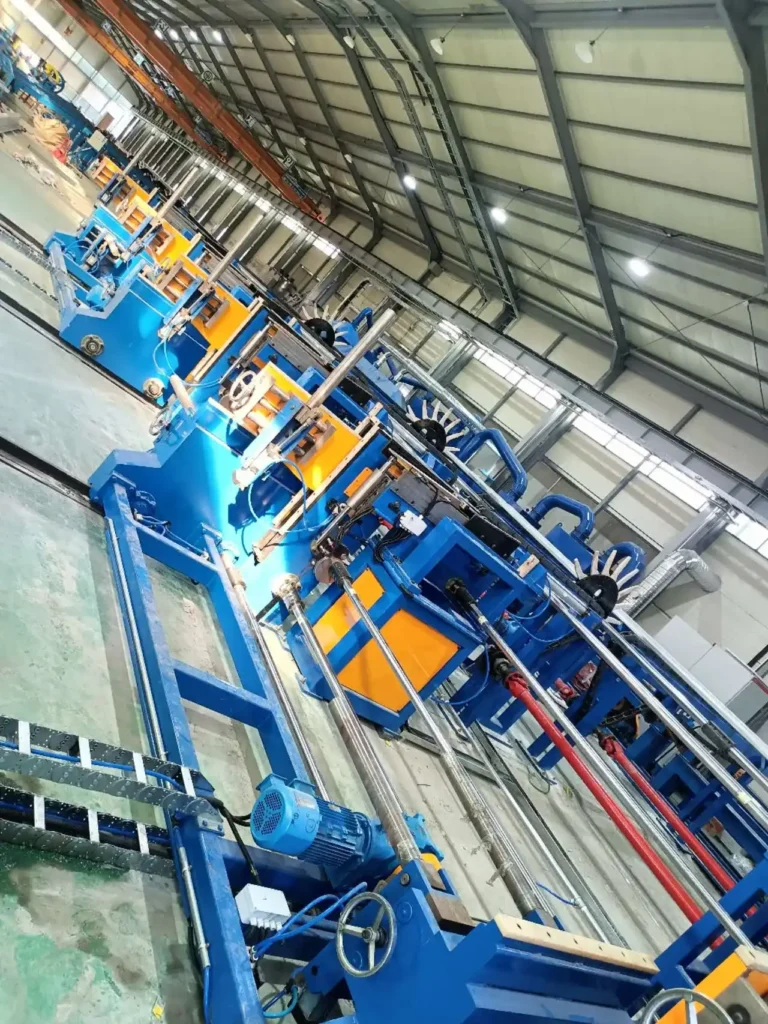 Pipe Coating Line Configuration
Send Your Enquiry
Tell us the pipe outside-diameter range, the wall thickness and the output you need. An engineer reads every enquiry — it does not land in a general sales inbox.