
 Scan on WeChat
Tengtian’s H-beam line is built to produce beams to GOST R 58966-2020. It covers beam height 147 to 450 mm, flange width 80 to 350 mm, and web and flange thickness 4 to 16 mm. For the detailed requirements, refer to the standard itself.
The H-Beam Line and the Standard It Is Built To
- The line is built to produce HFW H-beams to GOST R 58966-2020.
- Size envelope: beam height 147–450 mm, flange width 80–350 mm, web/flange 4–16 mm, optionally to 20 mm.
- Steel grade coverage: 235–590 MPa, including С255, С345, С375, С390, С440, Powerweld 420 and 460.
- Annual capacity: not less than 100,000 tonnes.
- The standard is mandatory for Russian and CIS H-beam orders.
Why GOST R 58966-2020 Matters for the H-Beam Line
The question buyers ask is whether the equipment can meet their required technical standard, and they name API 5L and GOST together. We answer by showing the API inspection chain and the GOST H-beam equipment with its grade coverage.
The standard matters to Tengtian’s H-beam line in three ways. First, it defines the line: the H-beam line is built to produce high-frequency welded H-beams to GOST R 58966-2020.
Second, it is mandatory for Russian and CIS H-beam orders: a producer whose beams do not meet it cannot enter Russian-standard H-beam projects.
Third, it defines a market: Tengtian’s target markets are split by standard into conventional structural and fluid pipe, API 5L line pipe, GOST Russian-standard H-beam, and GB.
To be precise: we offer a line built to produce beams to this standard, with the equipment configured for it.
That is a statement about the machine, not a certification claim about the finished beams, and the two are not interchangeable.
Gost h beam production line
Entering a new standard market is one of the triggers that lead buyers to change supplier.
The buyers behind that trigger have a well-defined profile.
Large energy and infrastructure groups are a customer segment whose decisions are driven by technical standards and delivery date, with the purchasing decision sitting with an engineering or procurement committee, and what they need is equipment compliant with API 5L or GOST, full non-destructive testing, and long-term parts and service.
Entry into a new product type — square tube, API line pipe or H-beam — is a purchase trigger in its own right, because each of those needs a dedicated line.
The H-beam line is also one of the four business categories into which Tengtian organises its product range: welded pipe equipment lines, slitting and cut-to-length lines, cold-forming equipment, and H-beam lines, with the automatic spray line supplied as an accessory to them.
Commercially, the standard is a procurement requirement rather than a technical one.
Beam Sizes and Steel Grades This Line Covers
The size envelope is beam height 147 to 450 mm, flange width 80 to 350 mm, and web and flange thickness 4 to 16 mm with 20 mm noted as an option. These size ranges describe what the machine can make. Annual capacity is set at not less than 100,000 tonnes.
The material envelope is defined separately and in more detail. The line runs low-carbon and low-alloy hot-rolled strip, supplied as slit coil, across a strength band of 235 to 590 MPa; the named grades are С255, С345, С375, С390, С440, and Powerweld 420 and 460.
The dependency is direct: the strip grade determines the mechanical properties of the finished beam, and if the grade or the strip quality does not match, the beam fails on yield and tensile strength and its weldability suffers.
Measurement Method and Tolerance
Standard dimensional tolerance, straightness and squareness values are not specified for the H-beam line. For reference, the slitting line is specified to slit width of plus or minus 0.2 mm and camber of not more than 0.5 mm per 1000 mm.
How the H-Beam Line Is Configured to Satisfy It
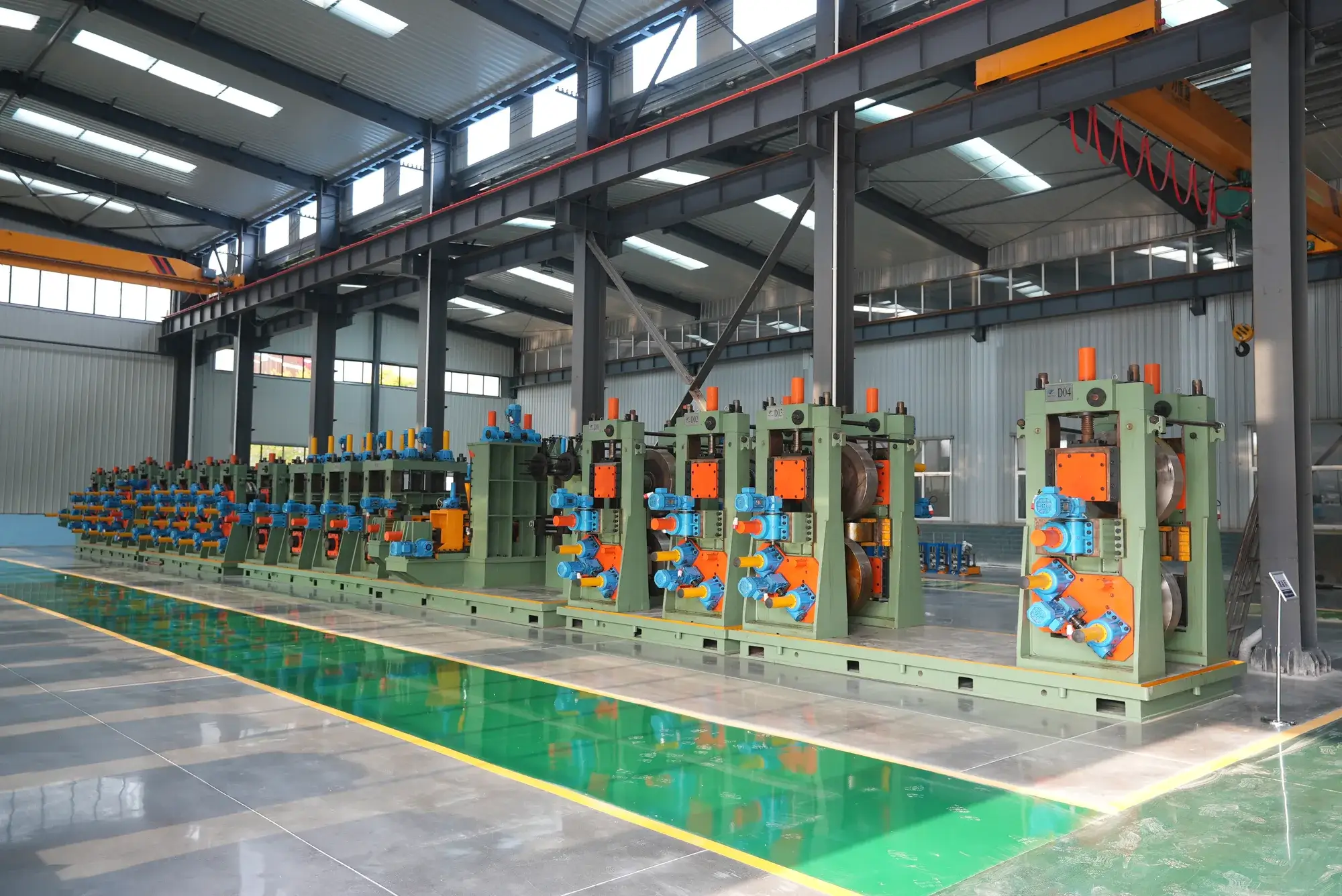
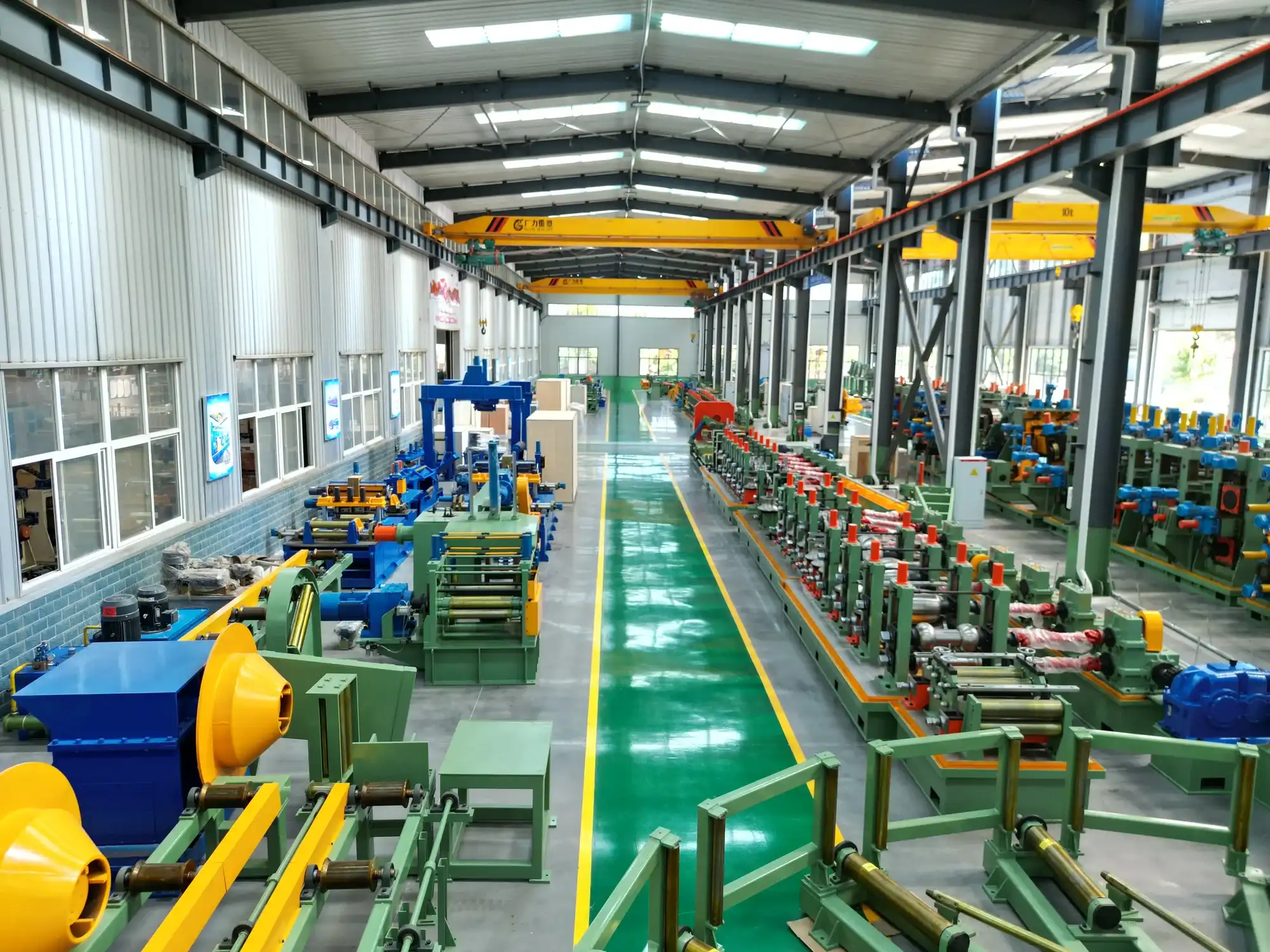
The forming and welding unit is a high-frequency welded H-beam line that welds and forms the beam, covering beam heights of 147 to 450 mm.
The quality-control point for the line is the pairing of strip grade with welding: grade and welding must match the GOST beam properties. This is a raw-material-and-process factor, and a mismatch leads to mechanical non-conformance.
Together, the unit and the grade–welding pairing define how the line is set up for this standard.
The line is run by the H-beam plant’s operators and inspection staff, and its beams go into load-bearing buildings, steel structures and bridges. Buyers for these projects watch three things: grade coverage across yield strengths of 255 to 590 MPa, the flange and web thickness range, and hourly and annual output.
One comparison explains why a welded line exists alongside a rolling mill. Against hot-rolled H-beam, the advantage of the high-frequency welded route is specification flexibility — small batches across many sizes — and coverage of low-carbon and low-alloy steel from 235 to 590 MPa.
We do not claim any strength, cost or lead-time advantage over hot rolling.
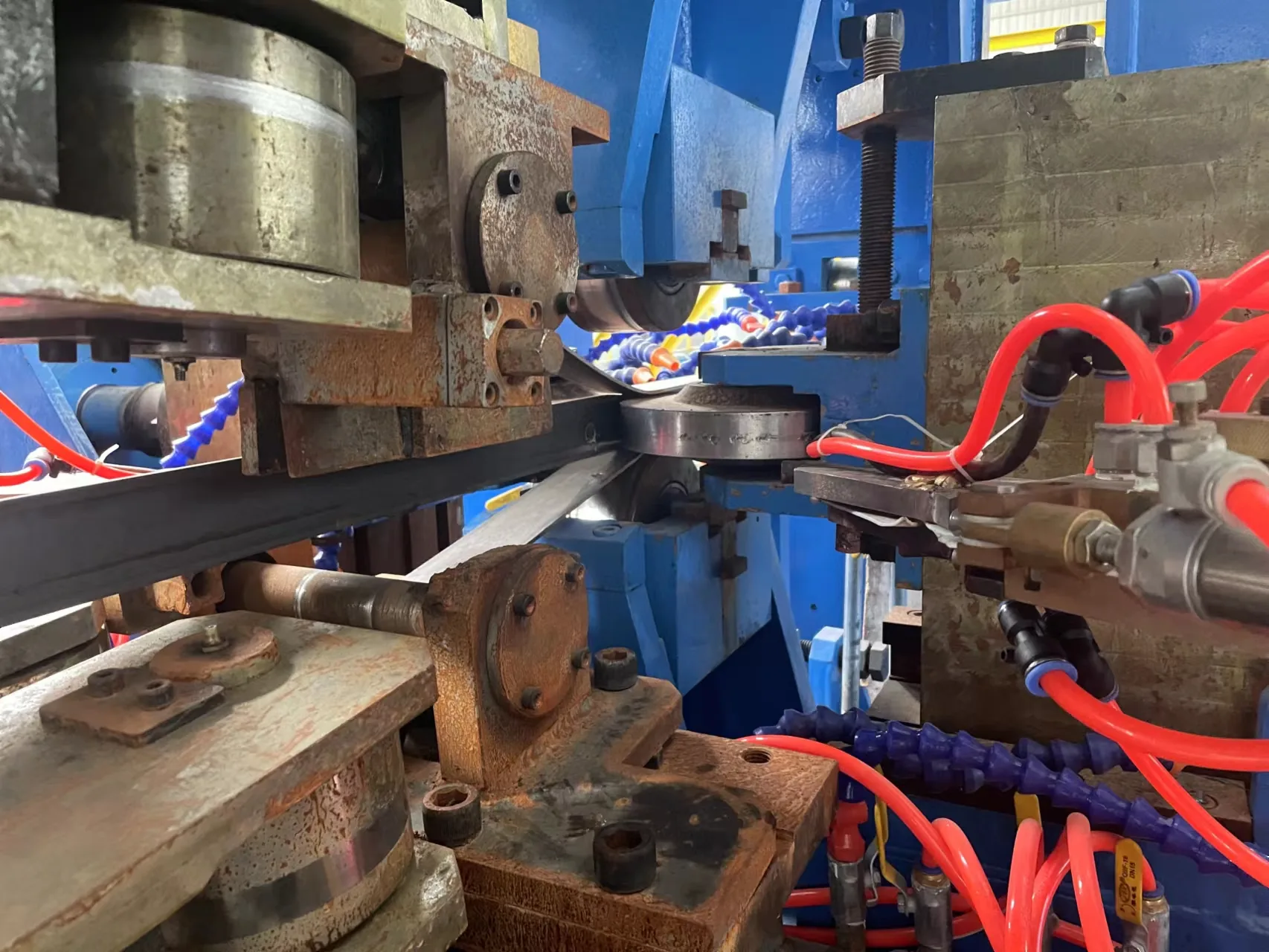
The failure mode for the unit is that poor welding or forming produces flange and web dimensions, or mechanical properties, that do not conform.
Resource Downloads
More from the knowledge base
From the Workshop
Send Your Enquiry
Tell us the pipe outside-diameter range, the wall thickness and the output you need. An engineer reads every enquiry — it does not land in a general sales inbox.