
 Scan on WeChat
Home › H-Beam Production Line › H Beam Welding Line
An h-beam welding line produces welded H-sections from hot-rolled strip by high-frequency welding, to GOST R 58966-2020.
In This Line
Quick Contact
Hebei TengtianYuanle@tentubemill.com
+86-311-83025332
WhatsApp +852 5425 3155
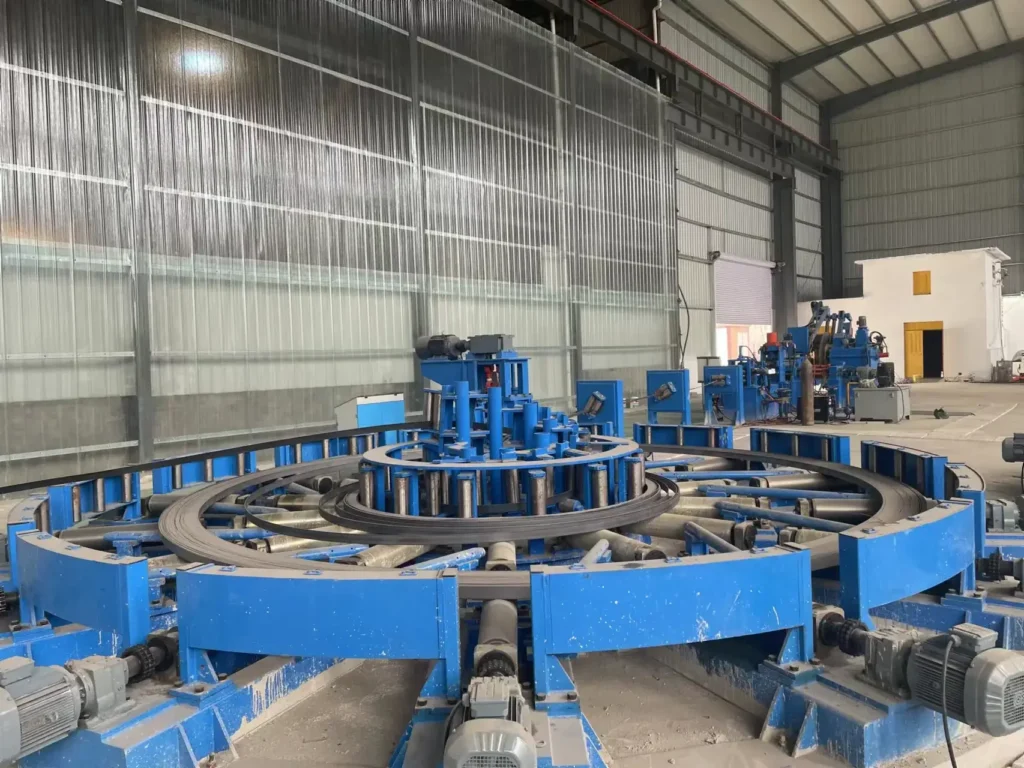
Beam height 147–450 mm, flange width 80–350 mm, web and flange 4–16 mm, optionally to 20 mm.
Technical Specification Table
Standard the line produces to: GOST R 58966-2020 (welded H-beams) Beam height: 147–450 mm Flange width: 80–350 mm Web and flange thickness: 4–16 mm, optionally to 20 mm Steel grades covered: low-carbon and low-alloy strip, 235–590 MPa Named grades: С255, С345, С375, С390, С440, Powerweld 420, Powerweld 460 Welding process:
high-frequency welding Annual capacity: 100,000 t/year or more Raw material: hot-rolled strip in slit coil form
Where they are not matched, the failure is not subtle: the beam does not meet its yield and tensile requirement, or the weld does not perform, and the section is rejected at inspection.
The grade list is the part of this table buyers spend longest on, because grade is what makes a welded beam acceptable on a Russian or CIS project. Strip grade decides the mechanical performance of the finished beam — yield, tensile and weldability — so the grade on the coil and the welding practice have to be matched to each other rather than chosen separately.
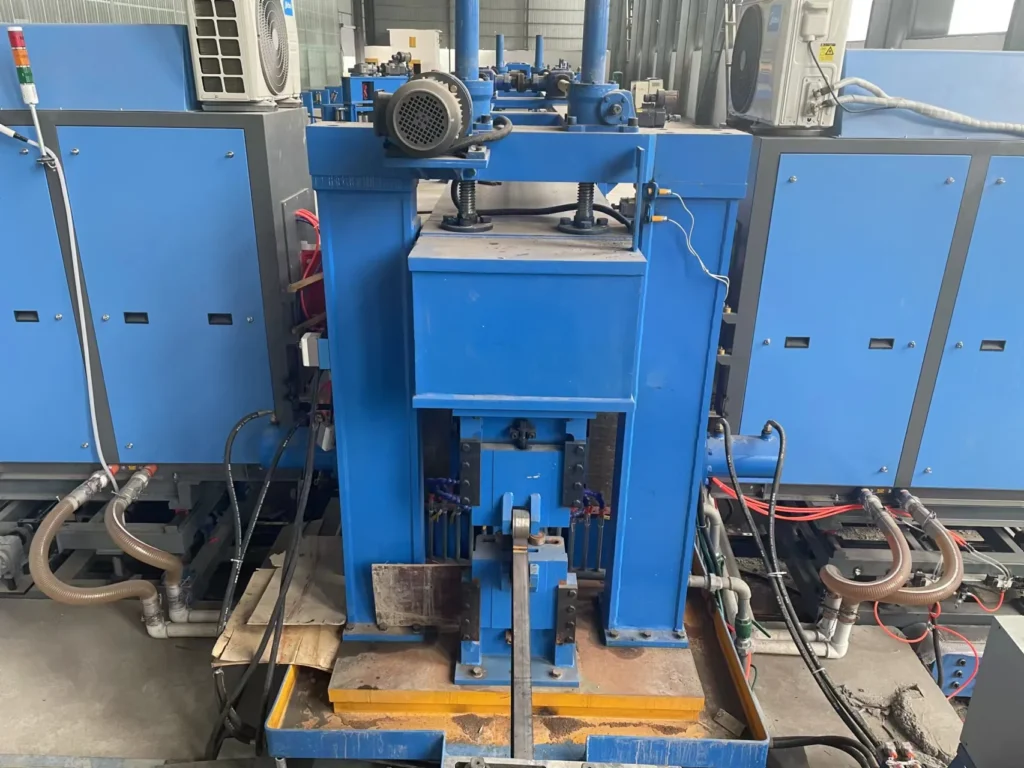
Line Configuration and Scope of Supply
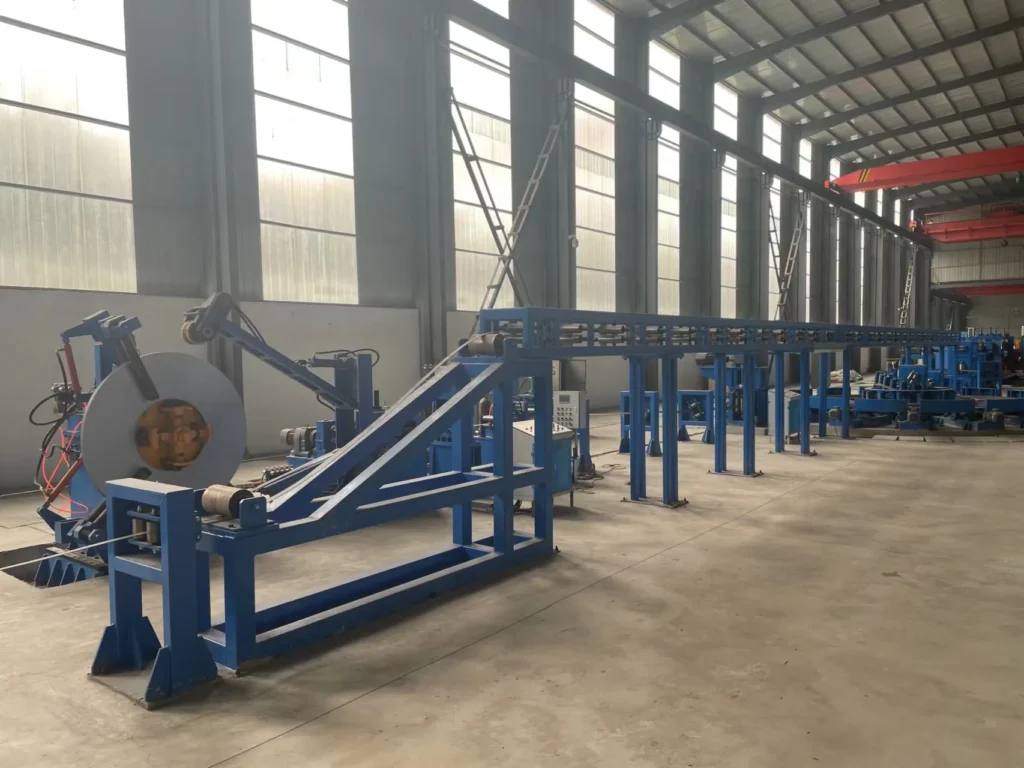
Our slitting and cut-to-length line exists precisely for that step — it uncoils, levels, slits or cuts to length and recoils wide coil into compliant narrow coil for downstream forming and welding lines, holding slit width to ±0.2 mm and camber to 0.5 mm per 1000 mm, on coils up to 32 t.
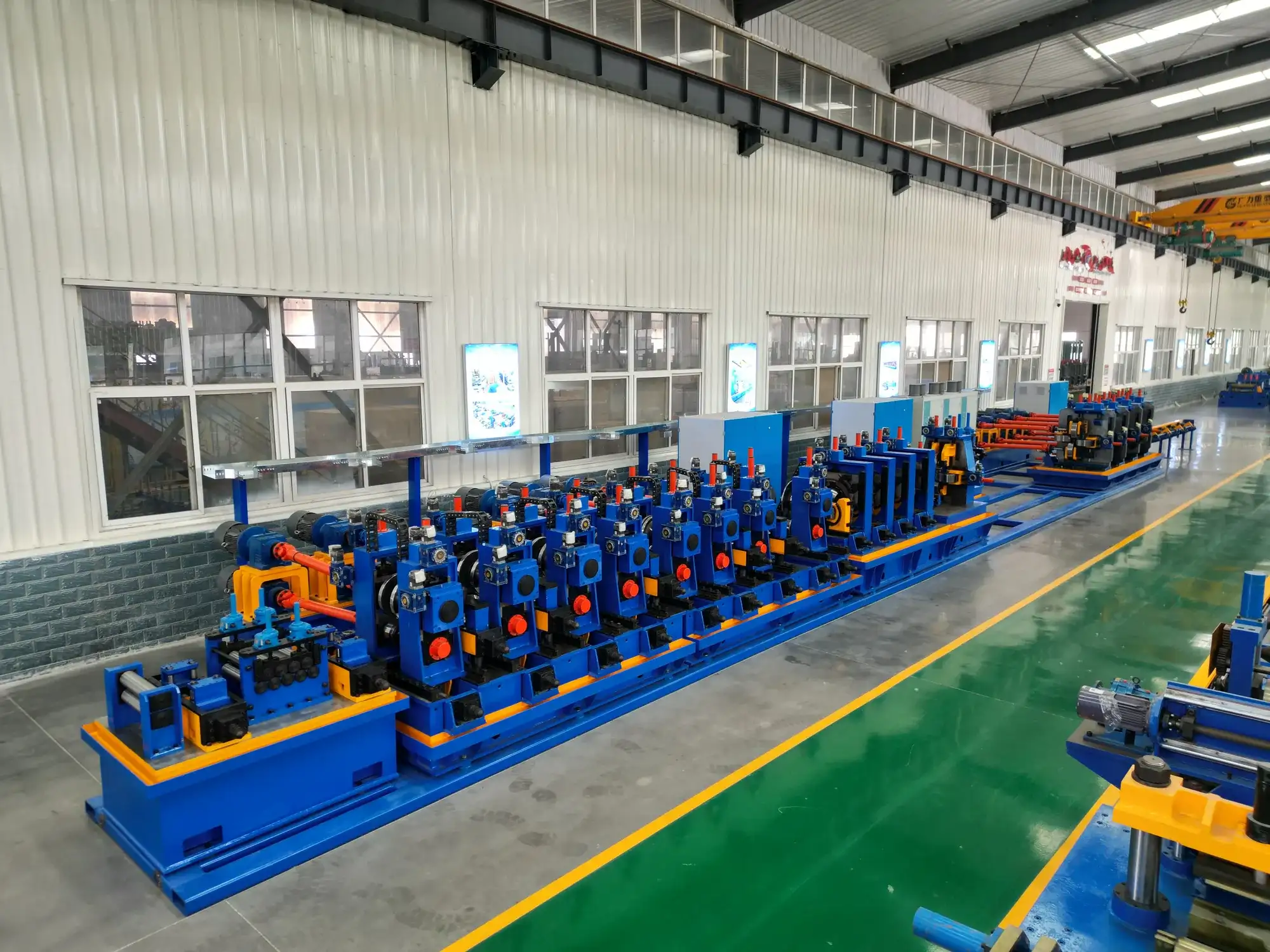
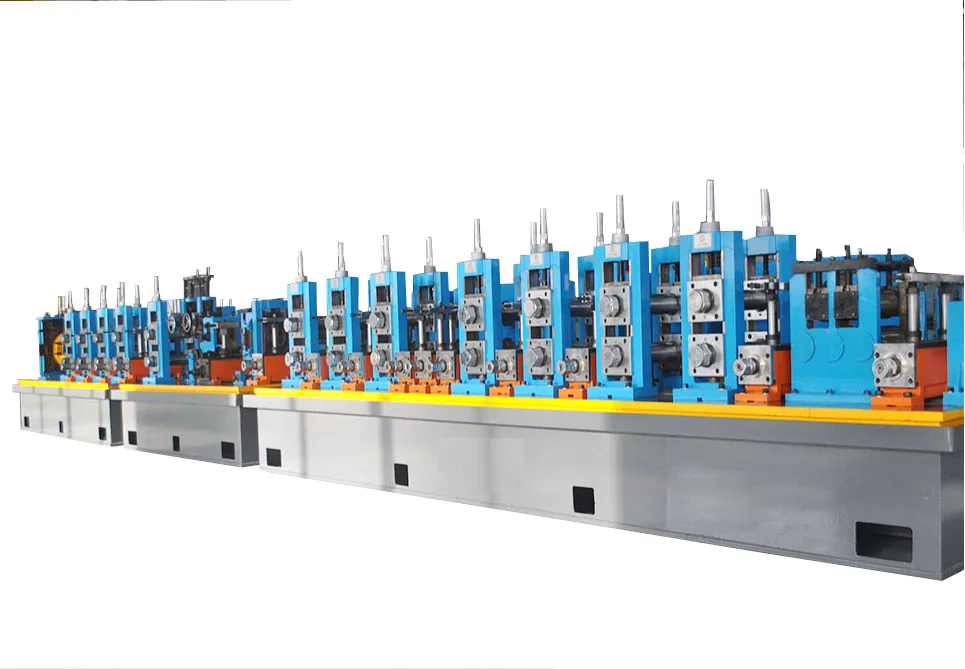
The line takes hot-rolled strip in slit coil form and produces a welded H-section by high-frequency welding, to the section range in the table above.
That raw-material line is worth following backwards, because it is the part buyers most often have not planned. The input is slit coil, not plate: web and flange come from strip that has already been cut to the right width.
Because that upstream step decides what arrives at the assembly station, its tolerances are worth spelling out. The slitting line handles strip from 1 to 12 mm thick and 800 to 2000 mm wide, in coils up to 32 t.
Slit width is held to ±0.2 mm, camber to 0.5 mm per 1000 mm, burr to 4% of material thickness, and telescoping on the recoiled coil to ±10 mm. The knife set is configured to thickness — around fifteen strips at 2 mm, around four at 8 mm — so the same machine produces very different strip counts depending on what is being cut.
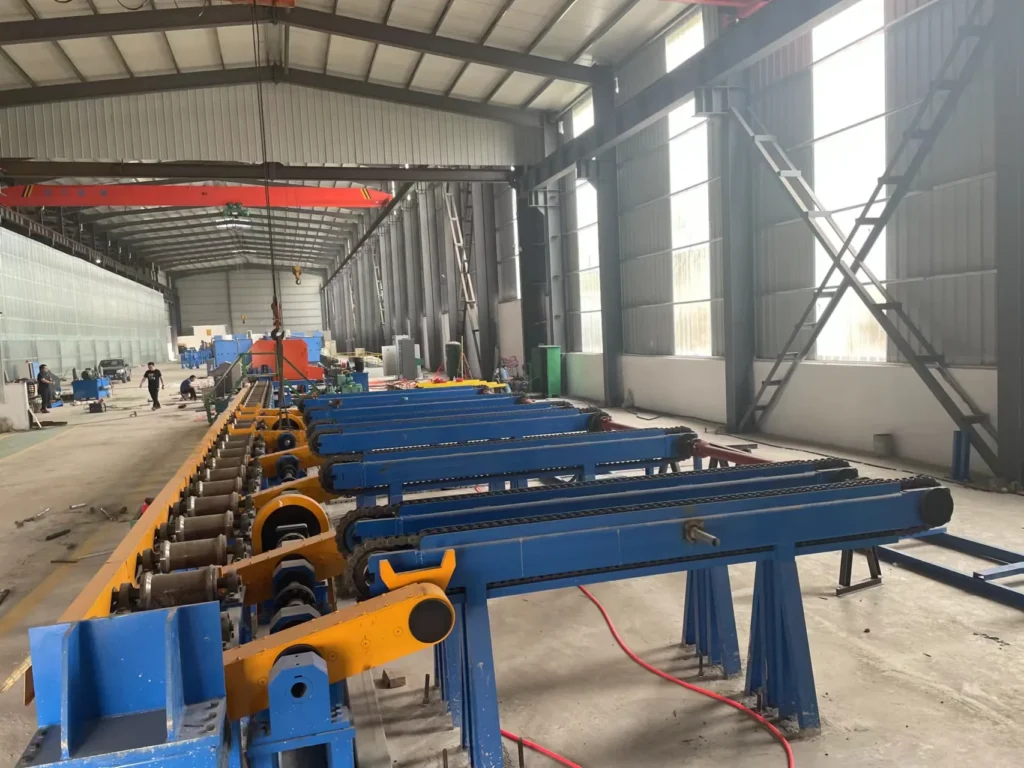
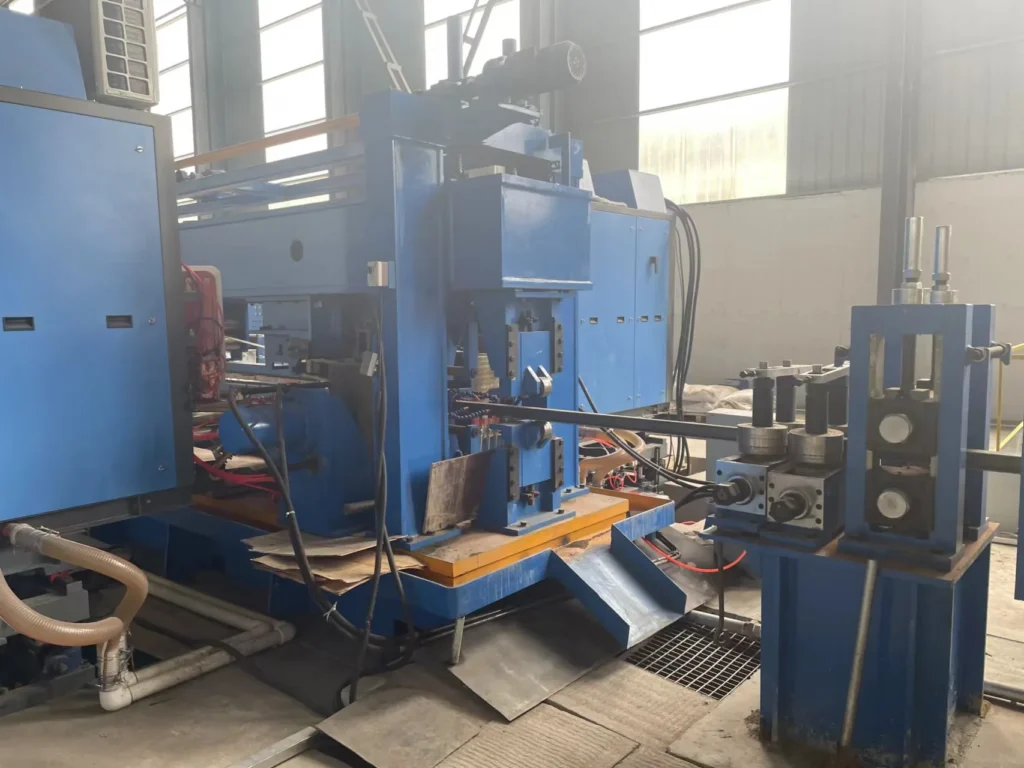
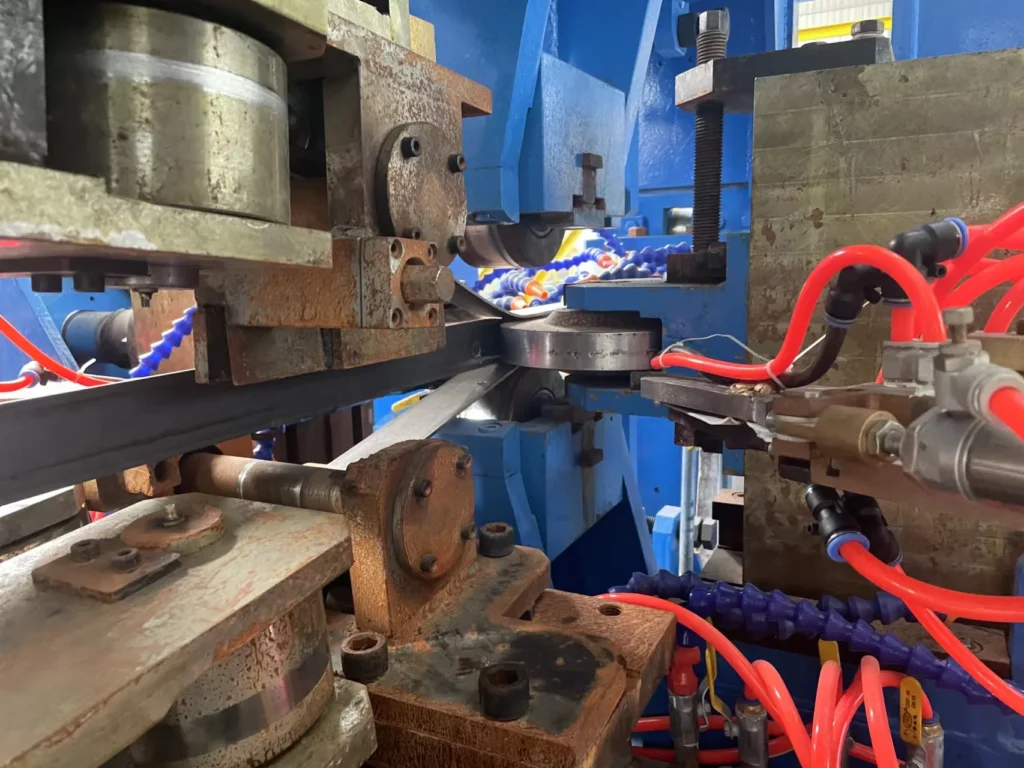
One design element deserves a mention, because it is the part of an h-beam line that is genuinely hard: assembly. Holding web and flange in correct relative position while the weld is made is what determines whether the finished section is square. A granted invention patent covers an h-beam assembly device — ZL 2022 1 1713036.5 / CN 115676238 B.
Camber is the tolerance that matters most to a welded section: strip that curves along its length does not hold position against its mating piece, and the assembly station has to fight it for the length of the coil.
Size Change, Roll Wear and Running Cost
A welded h-beam line makes sense against hot-rolled supply precisely when the section list is wide and the batches are small: welded beams give specification flexibility and allow small quantities of many sections, across the low-carbon and low-alloy grades from 235 to 590 MPa.
For a structural fabricator that has to hold a catalogue of sections rather than a few high-volume ones, that is the whole argument, and it is an argument about inventory and lead time rather than about unit cost per tonne.
Among general consumables, hydraulic oil and grease also apply to this line: both are specified by us and purchased locally.
One further cost sits with tooling replacement rather than tooling wear, and the distinction is worth keeping. Hydraulic oil and grease are consumed on a maintenance interval, and their specification comes from us while purchase is local — which means the cost is predictable and the availability is not a supply-chain question.
Everything else on this line that wears is section-tooling, and section-tooling life depends on the section mix a plant actually runs. A plant cycling through twelve sections a month does not wear tooling the way a plant running three does, which is why a single life figure would be misleading.
The one running-cost variable that can be pinned down is upstream rather than inside the line. Strip grade, thickness tolerance and flatness govern what happens downstream, and levelling and incoming checks are offered by the equipment while the strip itself remains the buyer’s responsibility.
On an h-beam line that matters more than usual, because grade non-conformance does not show up as a cosmetic defect — it shows up as a beam that fails its mechanical requirement.
Applications and Output Examples
What those buyers measure is a short list, and it maps directly onto the specification table: grade coverage across yield strengths of 255 to 590 MPa, the web and flange thickness range, and hourly and annual output.
Grade coverage is the named grade list in the specification table. Web and flange thickness is 4–16 mm, with 20 mm as an option. Annual capacity is 100,000 t or more, and hourly output is not less than 20 t for each listed section.
Who buys a line like this, and when, is best described by purchase and switching triggers rather than by market.
Three triggers bring a buyer to a new line. Capacity expansion or an automation upgrade drives a new purchase from a plant that already produces. Entering a new product type — square tube, API line pipe, or H-section — needs a dedicated line, because the existing one cannot be adapted to it. A large downstream order pushes a plant to add capacity quickly enough to deliver on time.
Three more triggers bring a buyer away from an incumbent supplier. Poor after-sales or spare parts supply is the first. Slow changeover and high tooling cost is the second.
Entering a standard-governed market — API 5L or GOST — is the third, and it is the one most relevant to this line: the new market requires compliant equipment, and equipment that was never built to the standard cannot be certified into it afterwards.
Two reasons explain why plants tend to come back to the same supplier once the first line is running. Expanding plants reorder from the same source for compatibility across the shop rather than for price. And support for new specifications and standards is what retains technically driven buyers, who are the ones most likely to be adding sections to a catalogue rather than repeating one.
Standards compliance is the reason most enquiries for this line exist, so it is worth being precise. GOST R 58966-2020 is mandatory for welded h-beam orders in Russia and the CIS: a plant without equipment built to it cannot enter those projects at all. Our line is built to produce to that standard across the named grades.
The comparison buyers actually run is welded against hot-rolled, and it can be summed up in one sentence: relative to hot-rolled H-beam, HFW welded H-beam offers specification flexibility and small-batch, multi-section production, across low-carbon and low-alloy grades. How large that advantage is varies by section and market.
The line serves structural fabricators producing welded H-sections to Russian and CIS standards. Users are the plant’s operating and inspection staff; the beneficiaries are load-bearing construction, steel structure fabrication and bridge projects.
Delivery, Installation and Training
Lead time is 50–90 days.
After handover, support is a first reply through a single named point of contact, all-hours online support, on-site dispatch when required, and direct spare-part shipment. Behind that sits an engineering team of twenty averaging twenty years each, and an owned production base open to factory audit.
For a buyer entering a new standard market, the reason to care about the support line is specific: entering API 5L or GOST markets is itself a trigger for changing equipment supplier, because the new market requires compliant equipment and the incumbent supplier cannot provide it.
Standards referenced: GOST R 58966-2020 (welded H-beams); GB/T 19001-2016 / ISO 9001:2015 (quality management system, certificate No. 18524Q11269R2S). Patent: ZL 2022 1 1713036.5 / CN 115676238 B, h-beam assembly device.
Export packing is specified per item. Control cabinets and precision components travel in moisture-protected wooden cases with a spare-parts pack; heavy frames ship bare, braced on cradles with designated lifting points and rust protection.
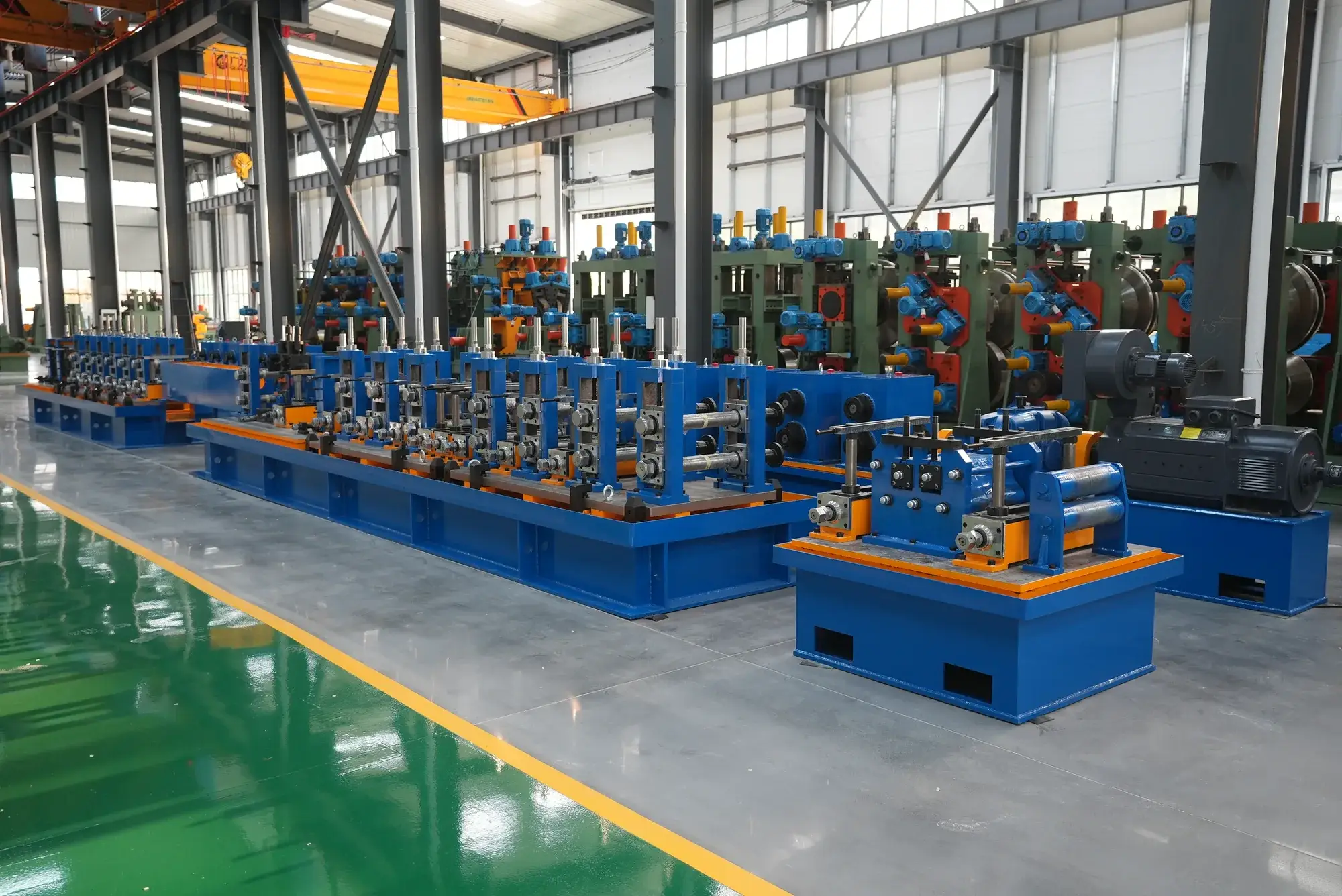
Steel structure h beam machine
Hfw h beam production line
Watch This Line Running
H-Beam Production Line — HFW H-Beam to GOST R 58966-2020
More from this line
From the Workshop
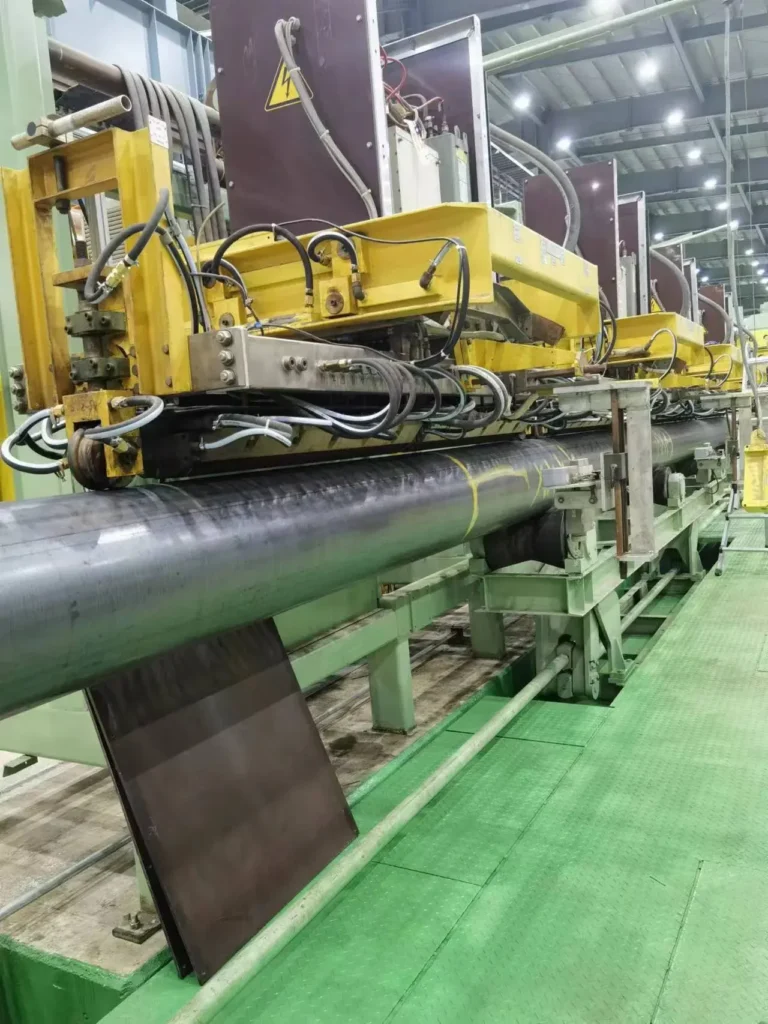 The API Pipe Mill Inspection Chain
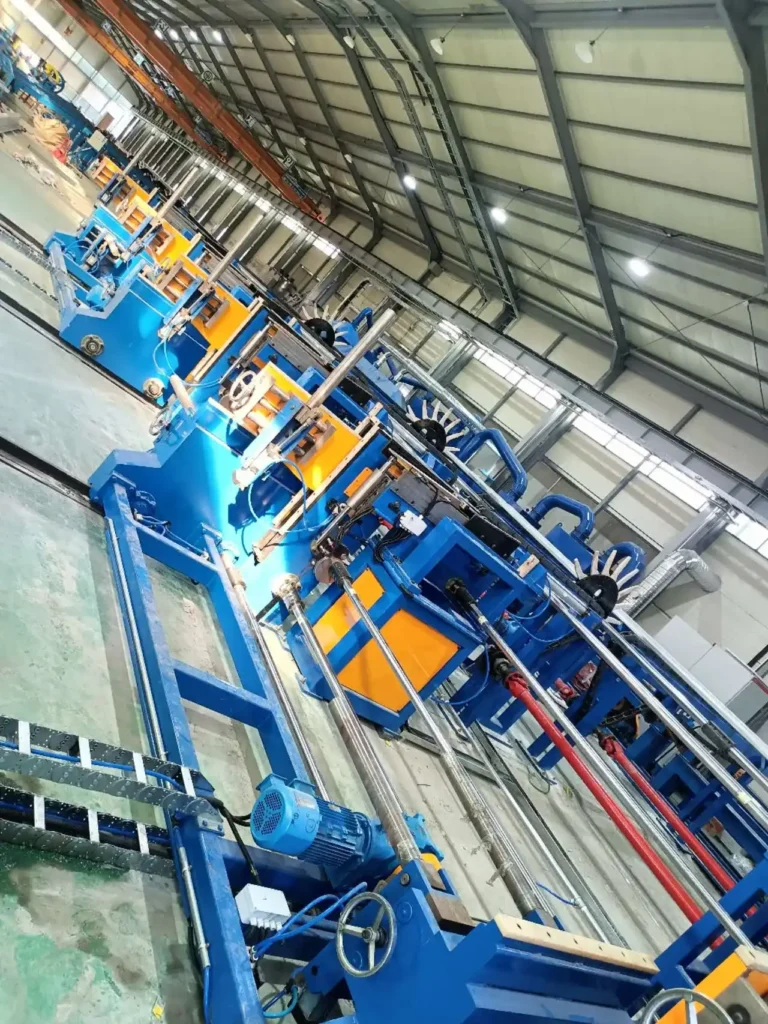 Pipe Coating Line Configuration
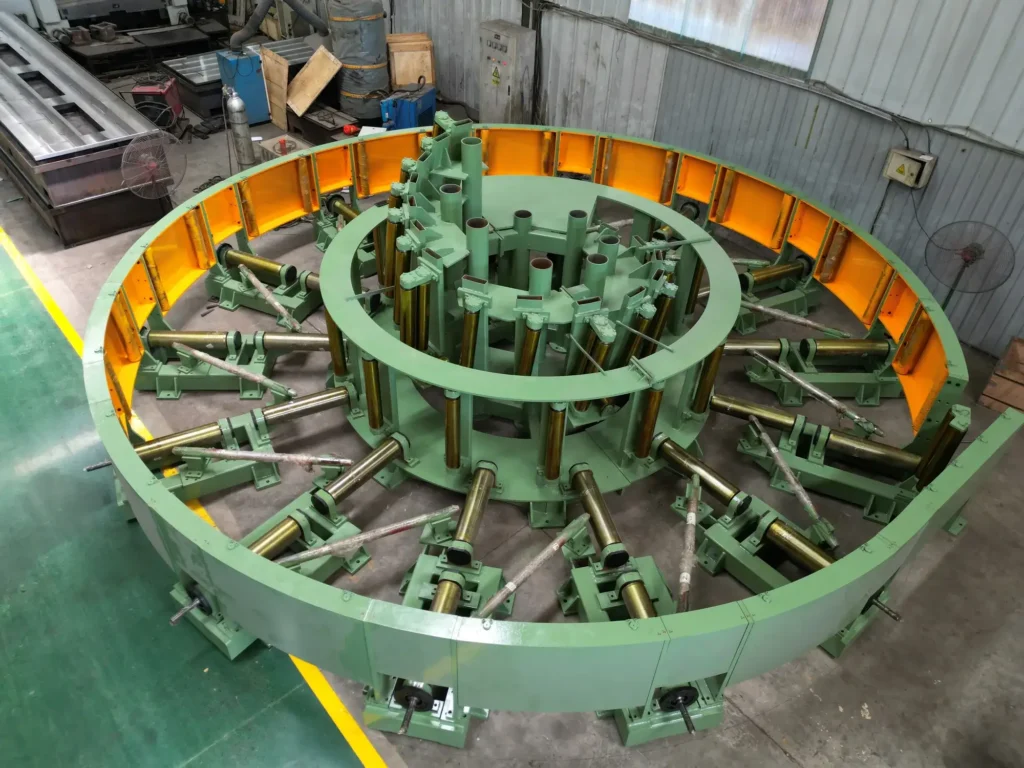 Tube Mill Supply Scope, Commissioning & Acceptance Criteria
 Configuration Tiers Behind a Pipe Making Machine Price
Send Your Enquiry
Tell us the pipe outside-diameter range, the wall thickness and the output you need. An engineer reads every enquiry — it does not land in a general sales inbox.