
 Scan on WeChat
Why Coil Preparation Decides Weld Quality
More Articles
Quick Contact
Hebei TengtianYuanle@tentubemill.com
+86-311-83025332
WhatsApp +852 5425 3155
Published 14 September 2026
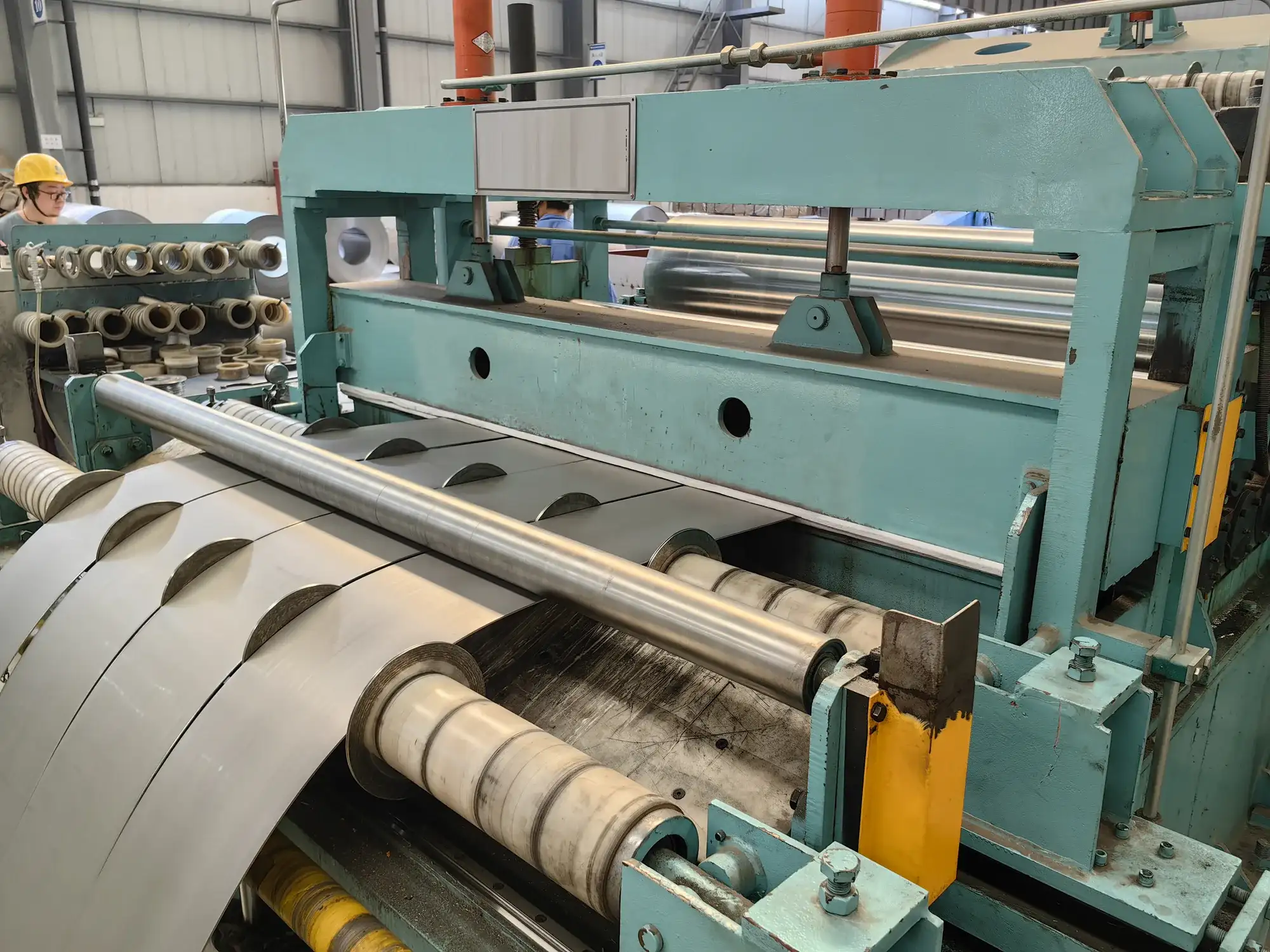
The weld starts at the slitter
Often the weld box is fine, and the problem arrived on the coil.
A tube mill takes a flat strip and closes it into a circle. Everything the forming section can do depends on the strip it is given. Four properties of that strip matter more than most buyers expect.
Strip width
Width determines the circumference, and therefore the diameter. A strip that drifts wider than nominal forces the edges together with extra pressure at the weld box; a strip that drifts narrower leaves the edges short and the seam opens.
Neither is a weld problem. Both show up as one. The tolerance you need at the slitter is tighter than the tolerance on the finished pipe, because forming does not correct width error — it converts it into seam error.
Edge condition
The two strip edges are the two halves of the future weld. Burr, rollover and a wavy cut all change how the edges meet under heat. A clean, square, consistent edge is worth more to weld quality than an extra kilowatt at the weld box.
This is a direct argument for slitting in-house, or for buying slit coil from a source whose knife setting and clearance you can actually audit.
Camber and coil set
Camber is sideways curvature along the strip length. A cambered strip does not track straight through the forming stands; it wanders, and the seam wanders with it.
Coil set — the memory of the coil’s curl — makes the leading and trailing sections of each coil behave differently from the middle. Both are largely decided in slitting and levelling. Both are very hard to fix downstream.
Cut-to-length has its own reasons
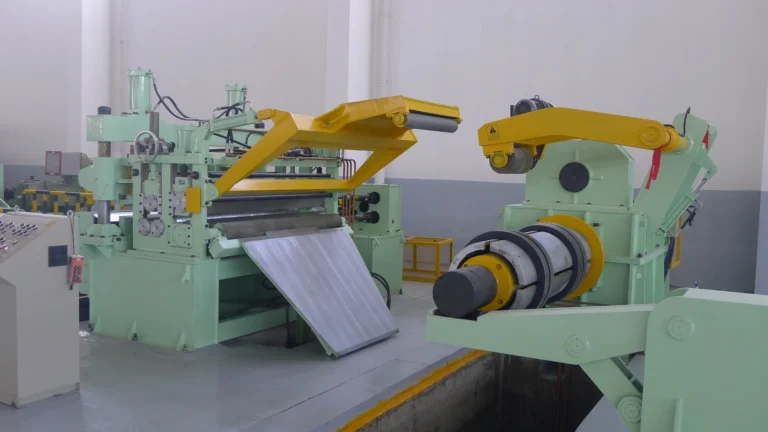
Not all coil goes to a tube mill. A cut-to-length line turns coil into flat sheet, levelled and cut square.
For a pipe producer this matters in two ways: it lets you sell the part of your coil intake that does not suit tube production, and it gives you a levelling capability you can apply to strip as well.
Before you blame the welder
When seam quality drifts, work upstream in this order.
- Measure the strip width on the actual coil running, not the mill certificate
- Inspect both edges for burr and rollover
- Check whether the drift correlates with coil changes rather than with time
- Look at strip tracking through the first forming stands
- Only then adjust the weld box
Talk to Us About Coil Preparation for Your Line →
If the problem follows the coil, it is a coil problem. That is a purchasing and slitting question, and it has a capital answer.
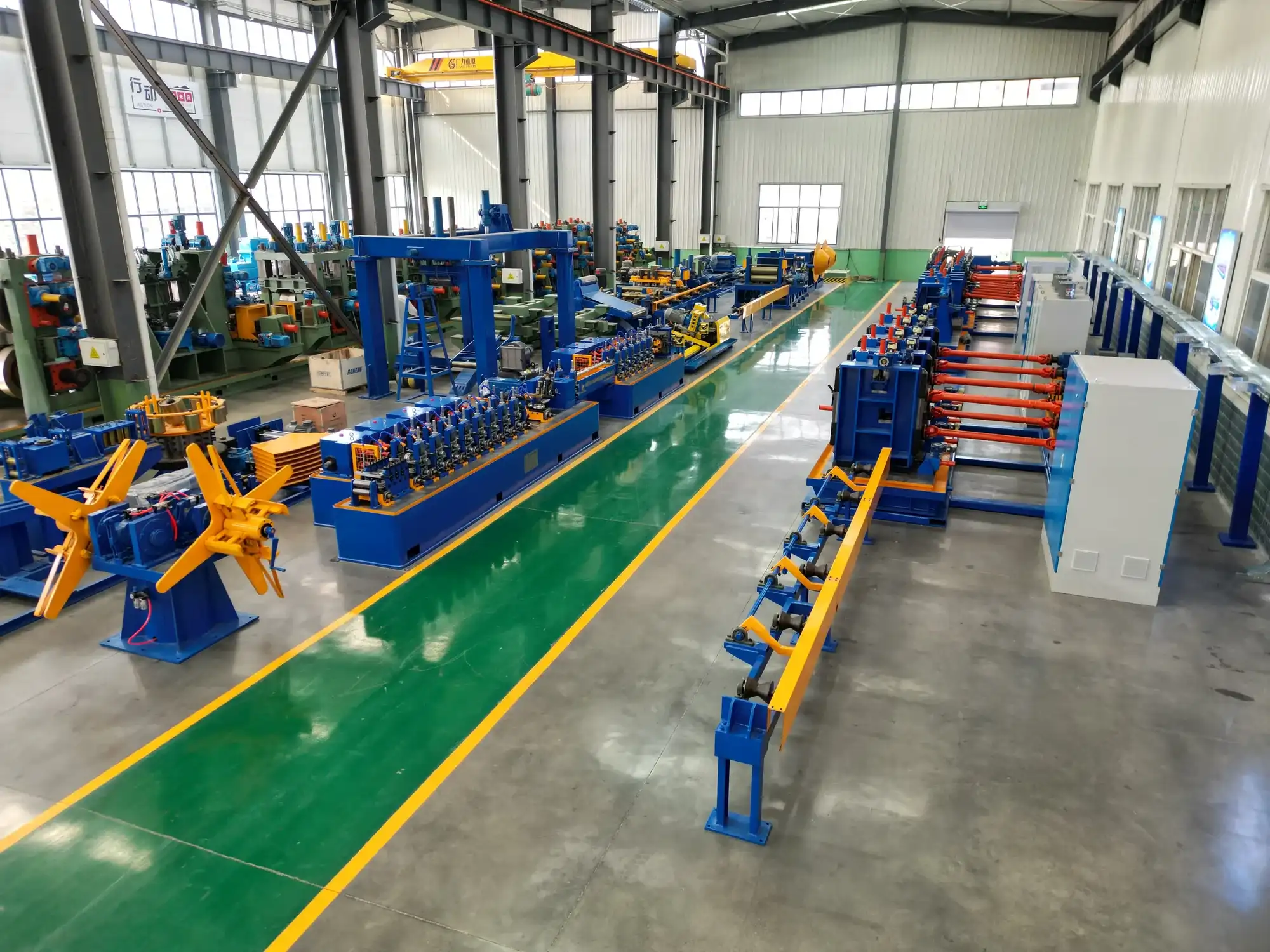
From the Workshop
Send Your Enquiry
Tell us the pipe outside-diameter range, the wall thickness and the output you need. An engineer reads every enquiry — it does not land in a general sales inbox.