 Scan on WeChat
Home › Steel Coil Slitting Line › Slitting vs Cut-to-Length
At Tengtian these are not two machines.
In This Line
Quick Contact
Hebei TengtianYuanle@tentubemill.com
+86-311-83025332
WhatsApp +852 5425 3155
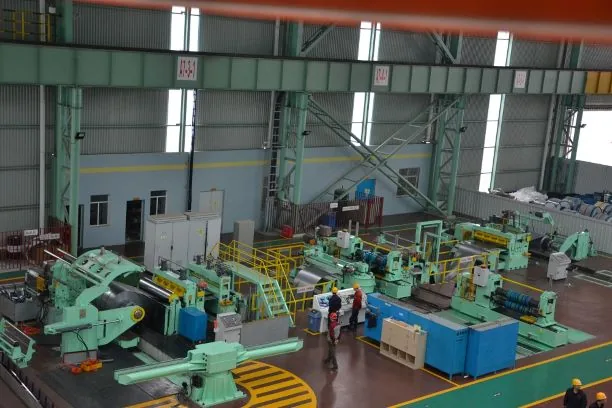
They are two operating modes of one line — the slitting and cut-to-length line — with the detailed figures below covering the slitting mode; figures specific to cut-to-length are available on request.
One Line, Two Modes — and What Changes
- One line, two modes: slitting and cut-to-length are the two operating modes of the same coil processing line.
- Coil envelope: 1–12 mm thick, 800–2000 mm wide, coils up to 32 tonnes.
- Slitting accuracy: strip width to ±0.2 mm, camber not more than 0.5 mm per 1000 mm, burr not more than 4% of thickness, telescoping within ±10 mm.
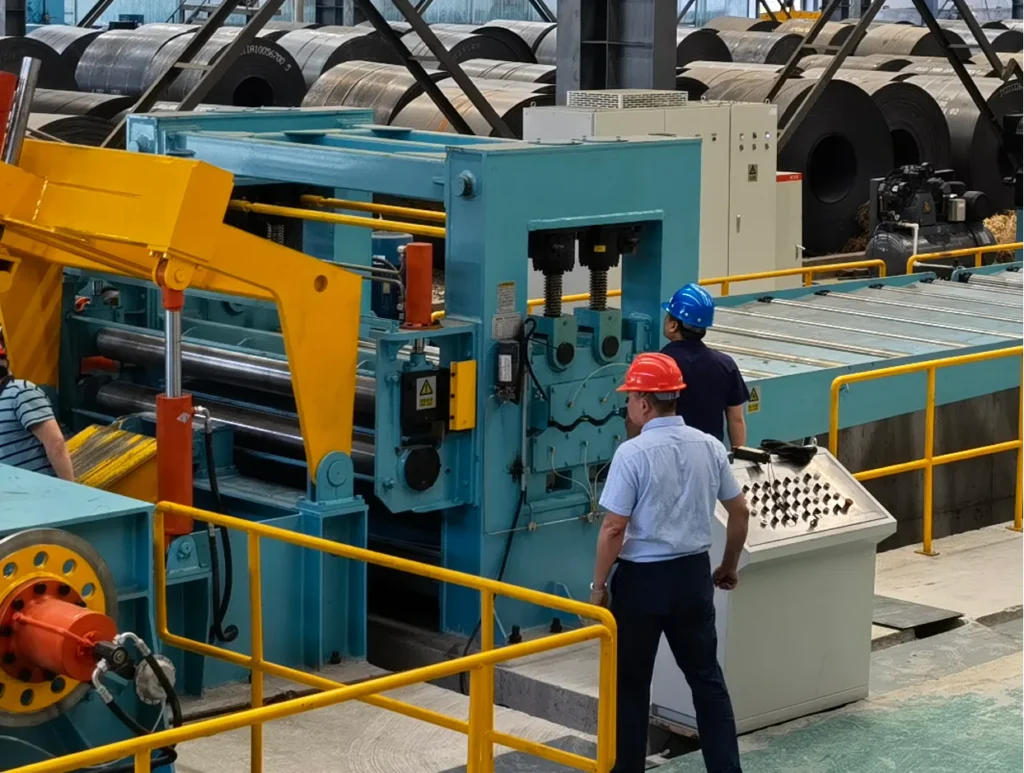
- Main units: double-head uncoiler, slitter and 32-tonne recoiler, plus hydraulic shear, looper and tension separation.
- Both modes run on the same line; the difference is the cut. Cut-to-length figures (length accuracy, cut length tolerance, stacking cycle time, and the cross-cut shear and stacker specification) are available on request.
What Is Slitting vs Cut-to-Length
The envelope is 1 to 12 mm thick, 800 to 2000 mm wide, with coil weight up to 32 tonnes. Both are ways of turning a wide coil into something a downstream line can actually run. Slitting cuts the coil lengthwise into narrower strips and recoils them; cut-to-length cuts it crosswise into flat sheets of a set length. At Tengtian these are the two operating modes of a single line rather than two separate machines.
The output of each mode is different in kind, and that is what makes the choice real. Slitting produces narrow coil that goes on being coil; cut-to-length produces flat sheet that stops being coil. A downstream tube mill or forming line runs coil, so it is fed by the first; a press shop runs sheet, so it is fed by the second.
Its position in the plant is upstream. It is the coil preparation equipment for the pipe and forming lines, solving the problem of incoming coil whose width, edge condition or length does not match what the downstream line needs.
That position also places it inside the company’s own four business categories, where it appears as the second of four: welded pipe equipment lines, slitting and cross-cutting lines, cold-forming equipment, and H-beam lines.
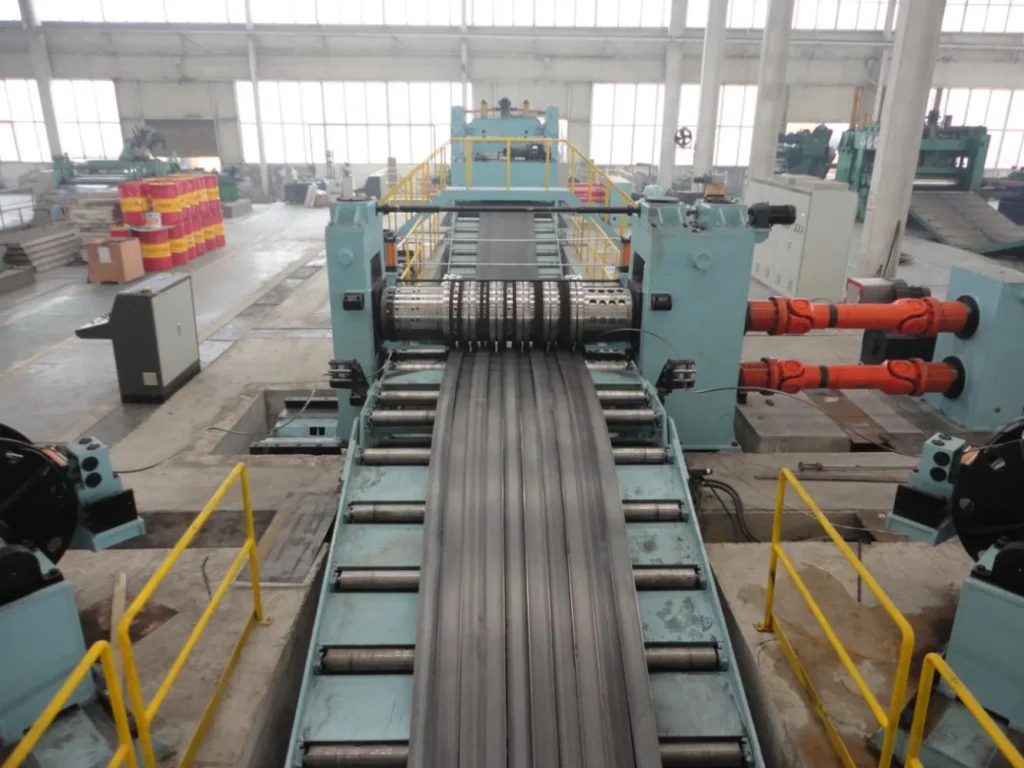
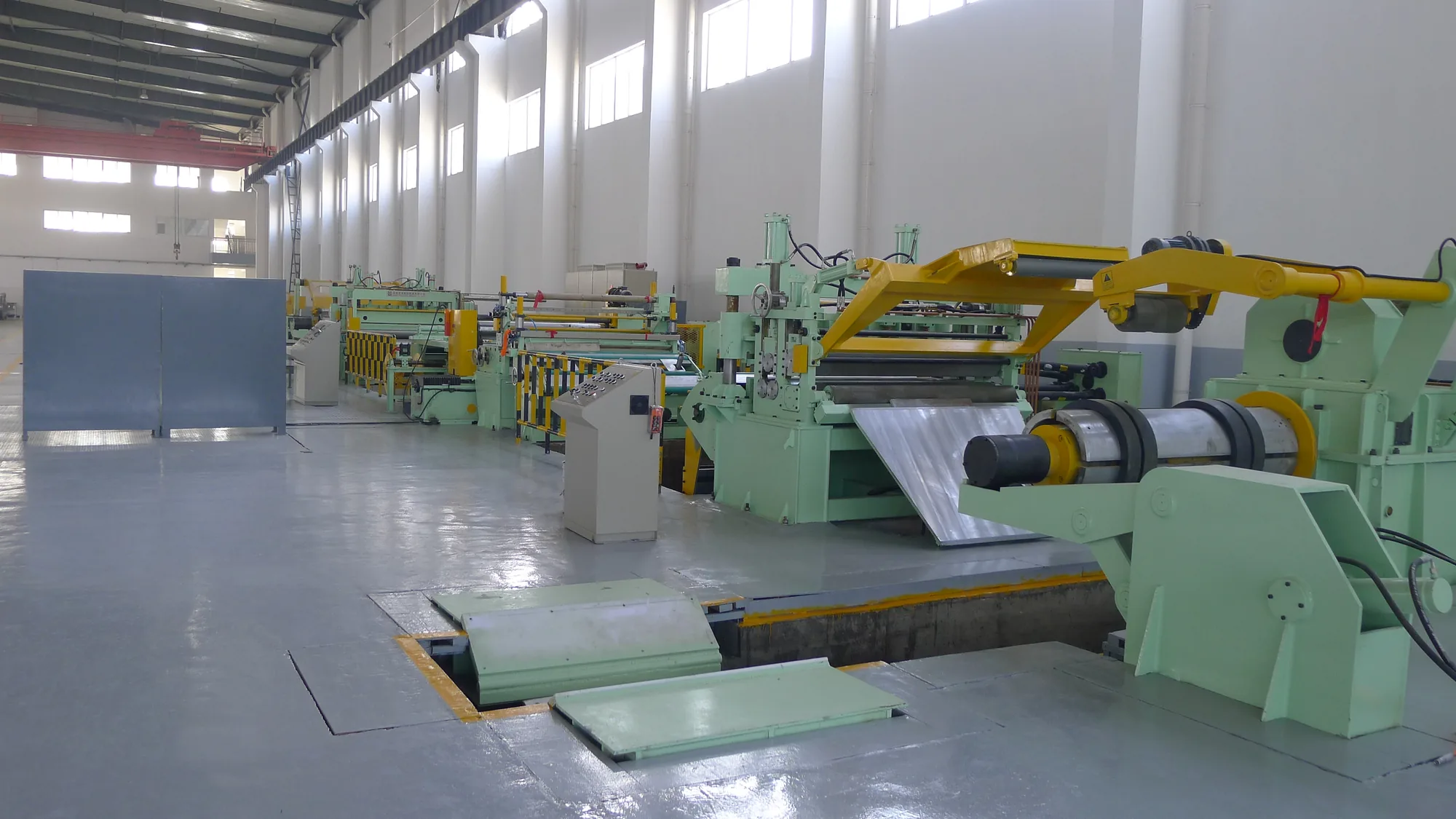
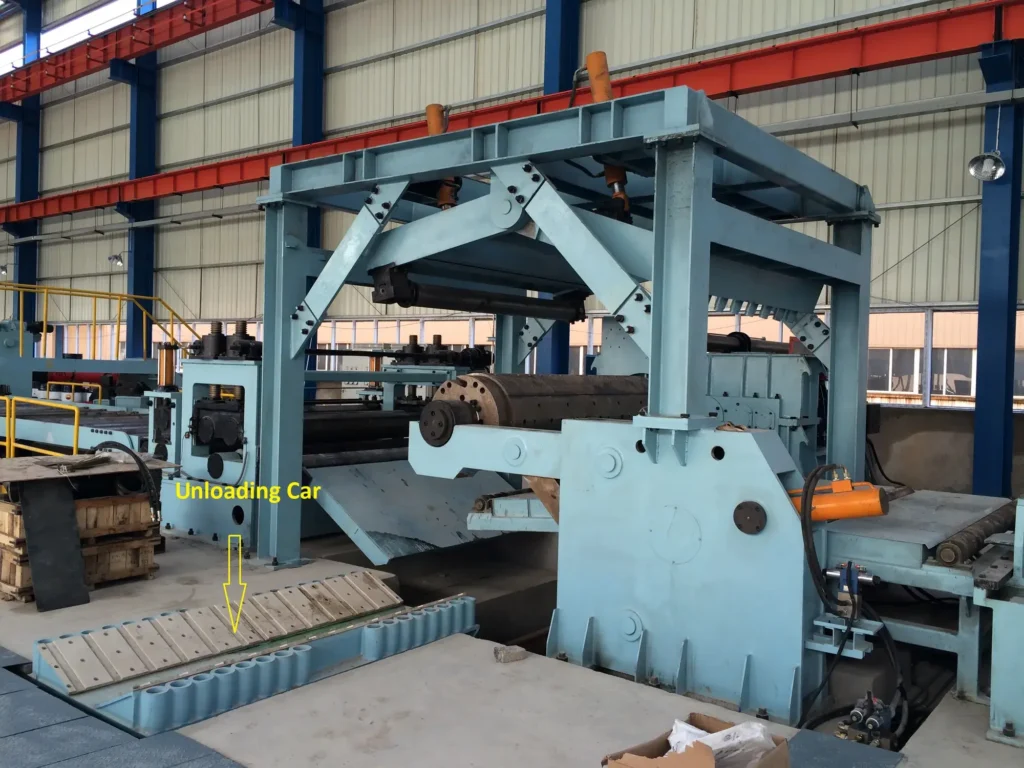
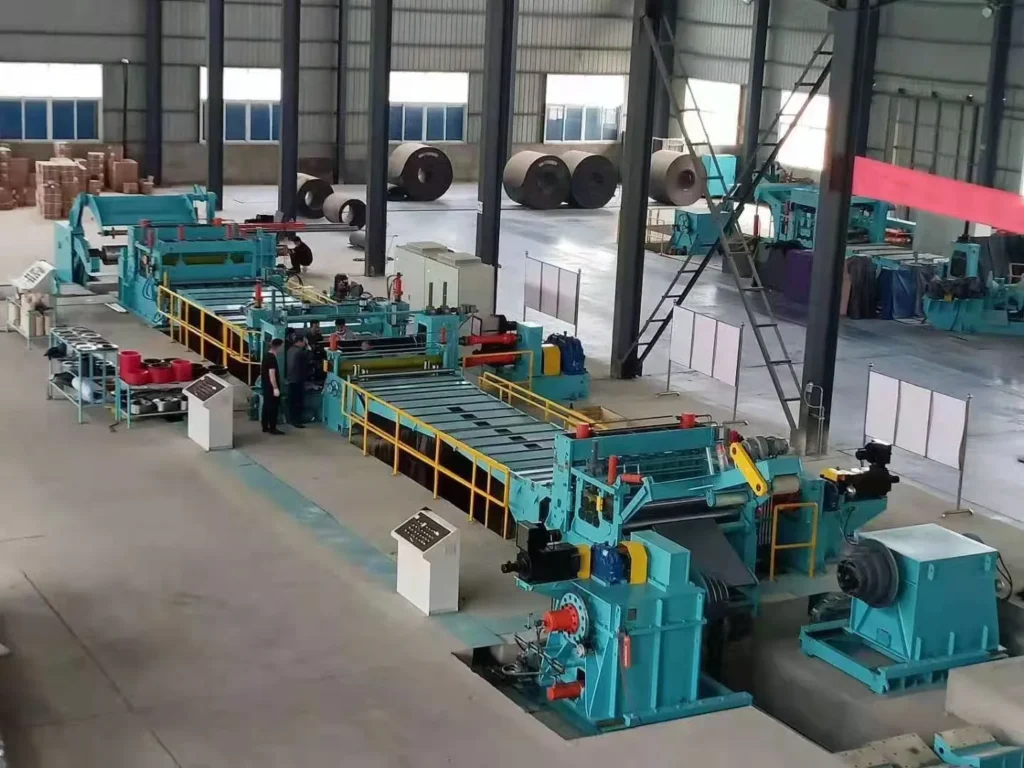
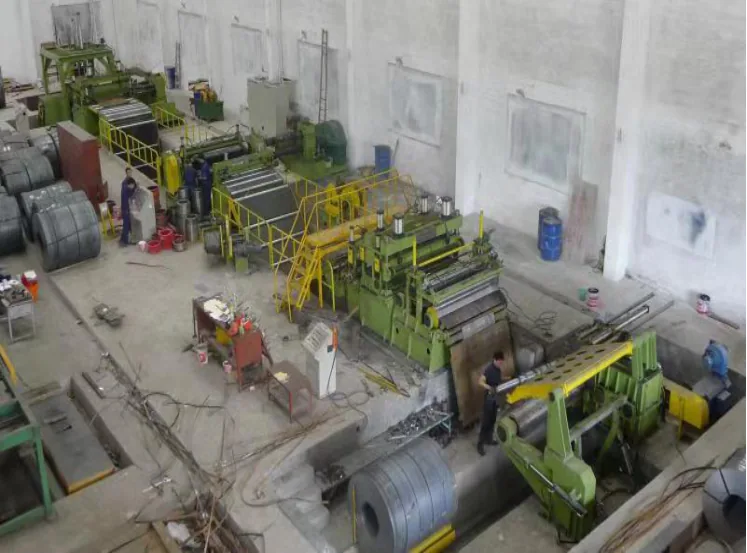
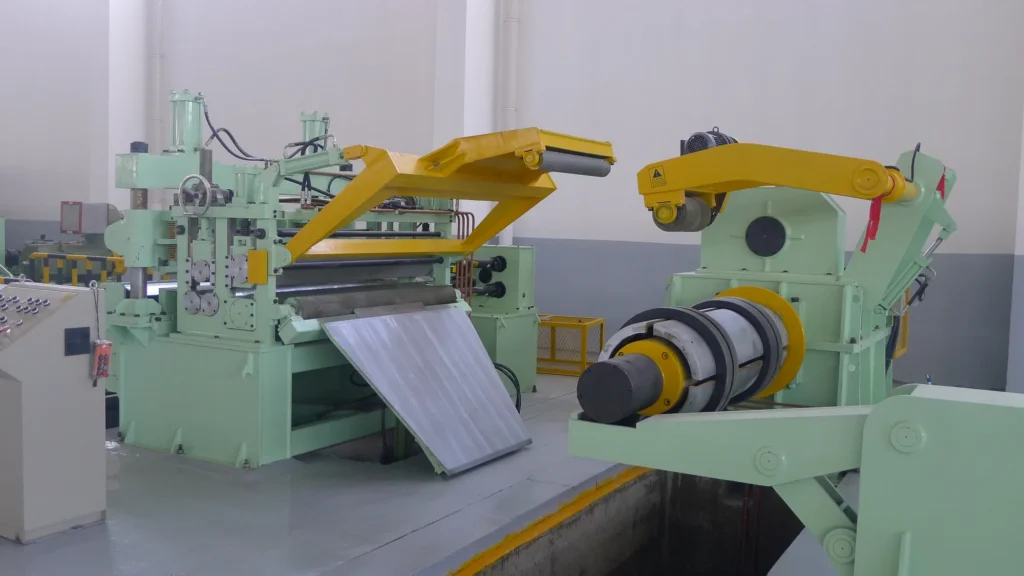
Cut to length and slitting machine
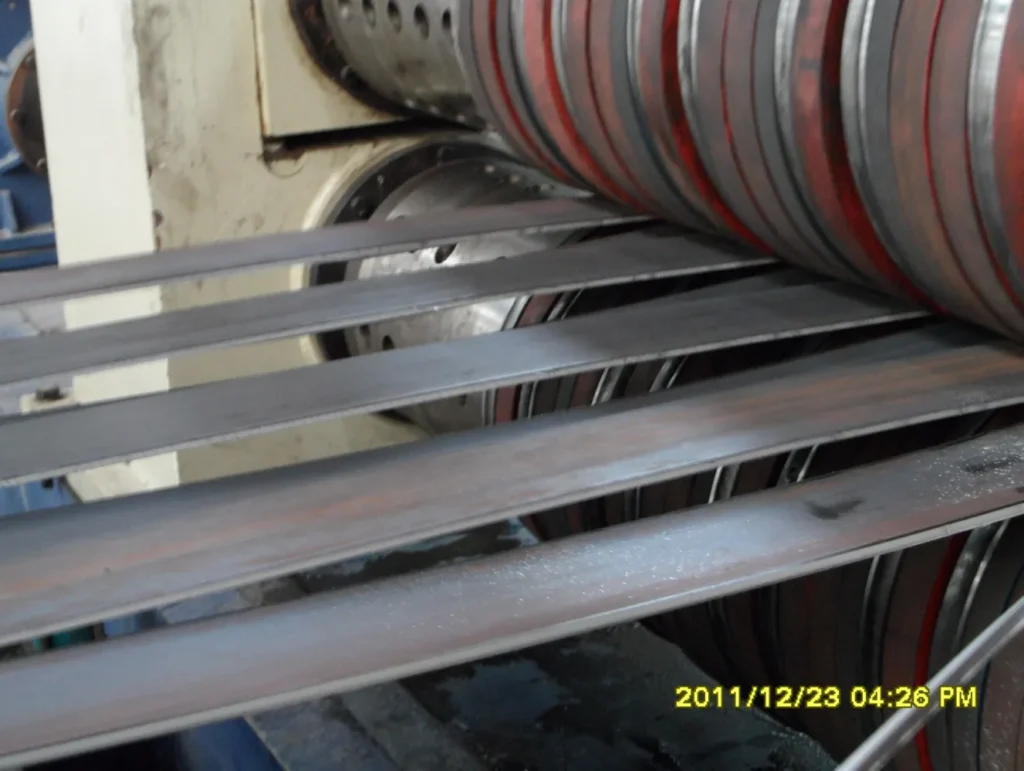
What applies to slitting: width accuracy of ±0.2 mm, camber not more than 0.5 mm per 1000 mm, burr not more than 4% of thickness, and telescoping held within ±10 mm on the recoil. The knife set is configured by strip thickness, with two reference points — about 15 strips at 2 mm and about 4 strips at 8 mm.
Cut-to-length has its own figures: length accuracy, cut length tolerance, stacking cycle time, and the specification of the cross-cut shear and the stacker. All four are available on request, and the four slitting figures above are not carried across to stand in for them.
The line itself is a CNC uncoil-slit-recoil line: the wide coil is uncoiled, levelled, slit lengthwise or cut to length, and recoiled, so that welded pipe and forming lines downstream get compliant narrow coil or cut sheet.
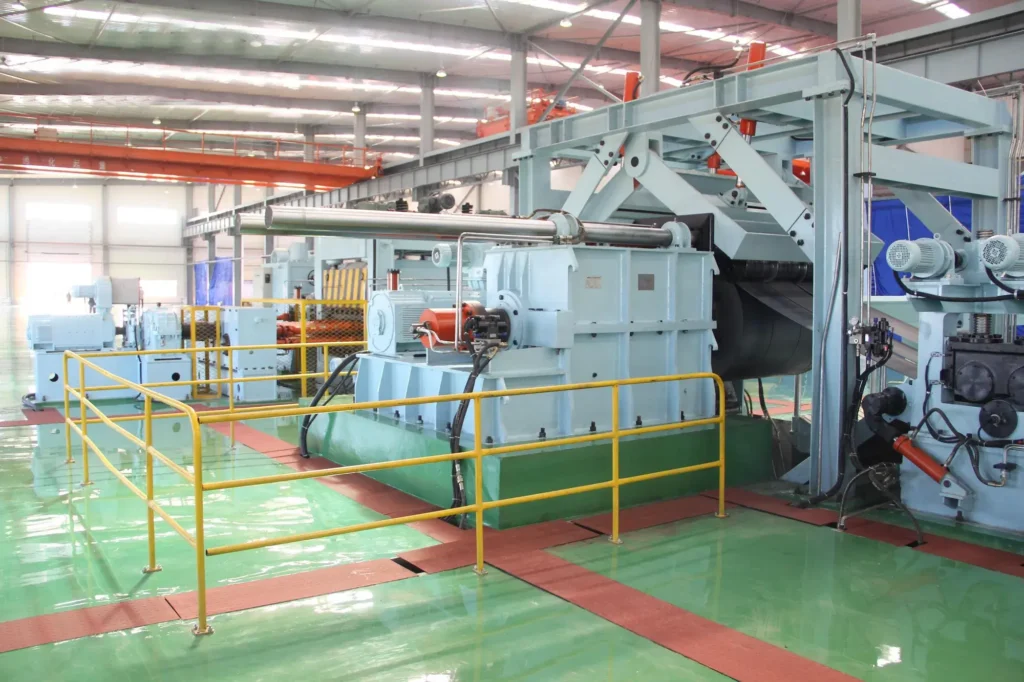
Slitting vs Cut-to-Length Explained
The double-head uncoiler, the slitter and the 32-tonne recoiler form the uncoil-slit-recoil main group, and insufficient accuracy in those machines shows up as out-of-tolerance width and telescoping. The process flow is one sequence with a branch in the middle. Coil is loaded and uncoiled, then levelled, then it passes a hydraulic shear, then it either goes to the slitter or to the cross-cut — that is the branch — then scrap edge is coiled off, the strip runs through a looper, is separated, tensioned and recoiled.
That whole flow is decisive for width accuracy and edge quality, and the failure chain is direct: poor knife-set configuration, tension or looper control produces out-of-tolerance width, camber and telescoping, and the downstream consequence is material the next line cannot run.
Main units are by group rather than individually.
The hydraulic shear, the looper and the tension separation mechanism form the group that holds strip quality, with loss of tension or looper control producing camber and telescoping.
Two of those stations deserve separating because they are where the defects come from rather than where the cut happens. The looper stores strip so the line does not have to stop when the shear works, and the tension section holds the strip steady into the recoiler. Camber and telescoping are caused by loss of control at exactly those two points, not by the knives.
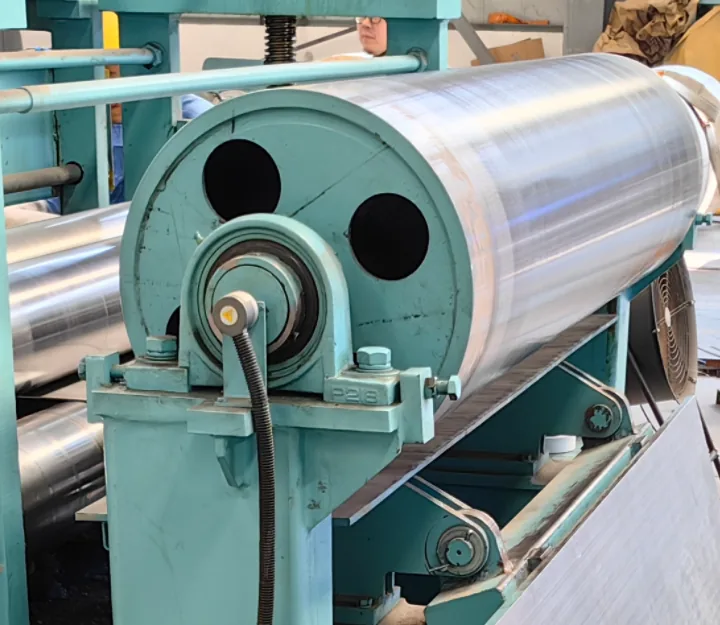
Consumables sit with the knives. The slitting knives, spacers, rubber sleeves and separator discs are the core component group, because they decide width accuracy, burr and edge condition; they are also supplied as a matching set.
Two process controls are the things that keep the results inside those numbers: knife set and clearance configured per strip thickness, and tension, looper and recoil control.
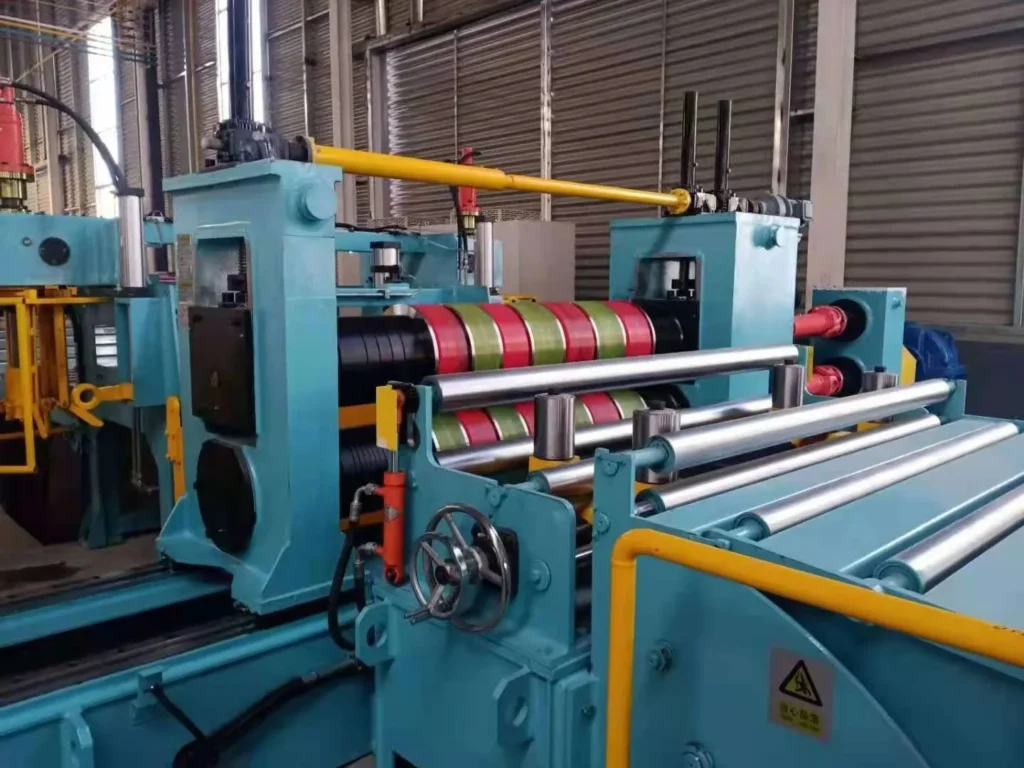
Slitting and cut to length line
Because it is one line, the buying question is usually not “which of the two” but “which mode will I actually run, and how often”. The mode-change procedure, mode-change time and any configuration for running one mode versus the other are available on request.
It is clear who runs the line and who it serves. The operators are the shear-line operating and inspection staff; the beneficiaries are the pipe plants, forming plants and steel service centres downstream. The four things those users are watching are slit width accuracy, camber, burr and telescoping control on the recoil.
Named out in order, that flow is: load coil, uncoil, level, hydraulic shear, slit or cross-cut, coil off the scrap edge, looper, separate, tension, recoil. Ten stations, of which only the fifth differs between the two modes — which is the mechanical reason they are one line rather than two.
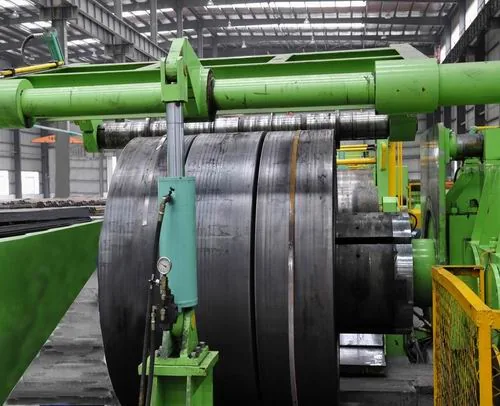
Slitting and Cut-to-Length — Same Line, Two Modes
Both modes run on the same line, so the envelope, the main units and the process flow are identical. They differ only at the cut: slitting divides the coil lengthwise into strips, cut-to-length crops it crosswise into sheets.
How to Decide: Target Diameter, Application and Volume
The envelope is 1 to 12 mm thick and 800 to 2000 mm wide, at up to 32 tonnes per coil. The first question is what the downstream line eats. If it is a tube mill or a forming line, it needs narrow coil, and the mode is slitting with its four accuracy figures. If it is a press or a fabrication shop that needs flat sheet at a set length, the mode is cut-to-length — and accuracy figures for that mode are available on request.
The third question is how many strips the line can slit in one pass. We have figures for two thicknesses: about 15 strips at 2 mm and about 4 strips at 8 mm, with the knife set configured to thickness.
The fourth question is who else in the plant this line has to satisfy, and it is a supply-chain question rather than a machine one.
The line’s job is to solve incoming coil whose width, edge or length does not match the downstream line — so the specification that matters is the one the downstream tube mill or forming line imposes, not the one this line can reach in isolation.
That is also why this line is part of Tengtian’s one-stop range alongside the pipe, square, API, H-beam, cold-forming and coating lines: a buyer adding pipe capacity is often needing the coil preparation step in the same project.
The second question is the incoming coil. A coil outside that envelope is outside what this line is built to handle; no extended range is specified.
Frequently Asked Questions
In practice, how do slitting and cut-to-length differ? Direction of cut; the rest of the line is shared. Slitting cuts the coil lengthwise into narrower strips and recoils them; cut-to-length cuts it crosswise into flat sheet.
Both are operating modes of the same line, sharing the same uncoiler, leveller, shear, looper and tension section, and diverging only at the cutting station.
Which mode suits my coil width and what I make? There is no diameter on this line — it processes coil, not pipe. The selection dimensions are strip thickness, width and coil weight: 1–12 mm, 800–2000 mm, up to 32 tonnes. Application decides the mode: narrow coil for a tube or forming line means slitting; flat sheet at set length means cut-to-length.
How do the running costs of the two compare? The slitting knives, spacers, rubber sleeves and separator discs are the wear group; they are configured per thickness and supplied as a matching set. There are no standard figures for knife life, cost per tonne or consumable spend; these are available on request.
Which standards apply to slit coil and to cut sheet? The applicable standards — GB/T 9711, GB/T 5037, API 5L, GOST R 58966-2020 and Q/GYLTT01-2023 — all cover finished pipe or beam, not slit coil or cut sheet. For the machinery itself, no single certification is mandatory in every market; requirements depend on the destination.
Which line ships and gets commissioned faster? Since both are modes of one line, there is no shipping difference to state. Delivery is quoted as one range for the whole line: 50 to 90 days with plant-level customised scheduling. Commissioning time is confirmed per project.
Can one supplier give me both modes on one line? Yes, and in this case it is a single line rather than two purchases. The slitting and cut-to-length line is one of Tengtian’s four business categories, and the wider range covers welded pipe lines Φ10–630 mm, direct-forming square, API, H-beam, cold-forming and coating.
From the Workshop
 Slitting Precision
 Slitting Line Running Cost
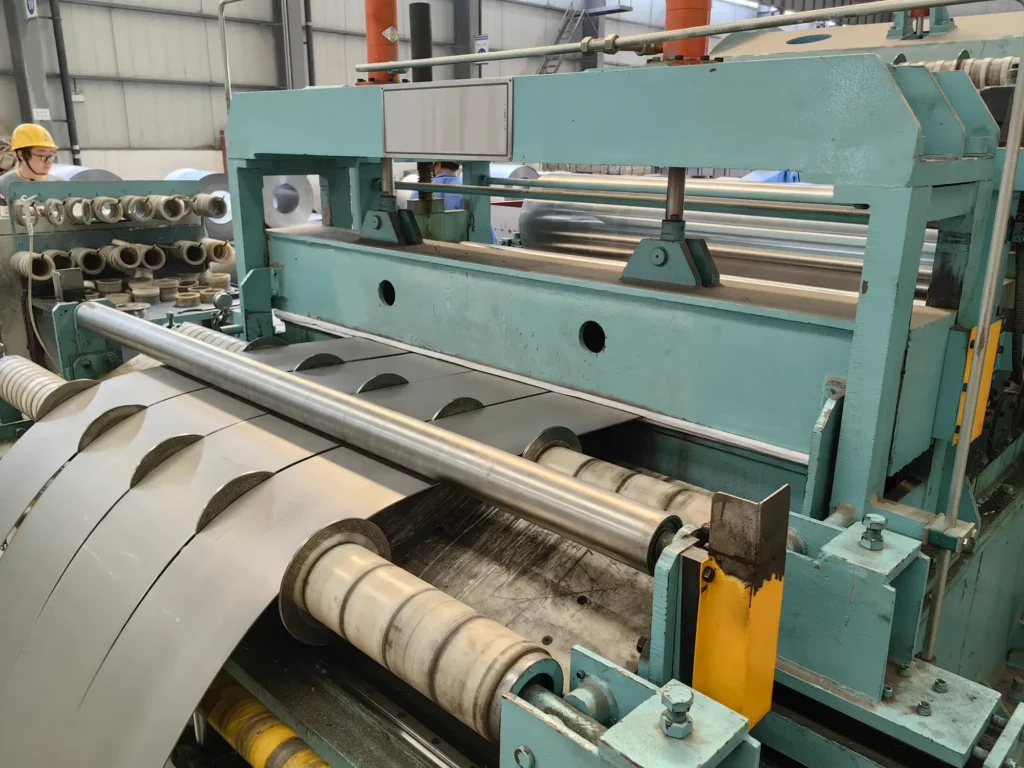 Steel Coil Slitting Machine
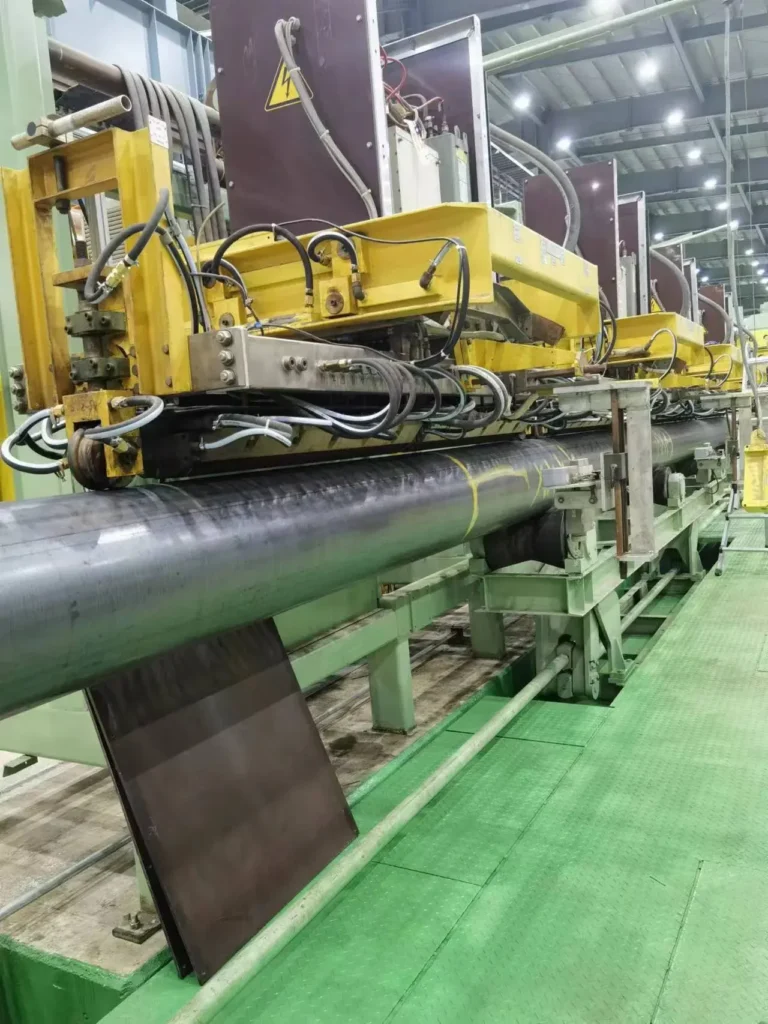 The API Pipe Mill Inspection Chain
Send Your Enquiry
Tell us the pipe outside-diameter range, the wall thickness and the output you need. An engineer reads every enquiry — it does not land in a general sales inbox.