 Scan on WeChat
Home › SSAW Spiral Welded Pipe Mill › What the Large-Diameter Tier Adds
In This Line
Quick Contact
Hebei TengtianYuanle@tentubemill.com
+86-311-83025332
WhatsApp +852 5425 3155
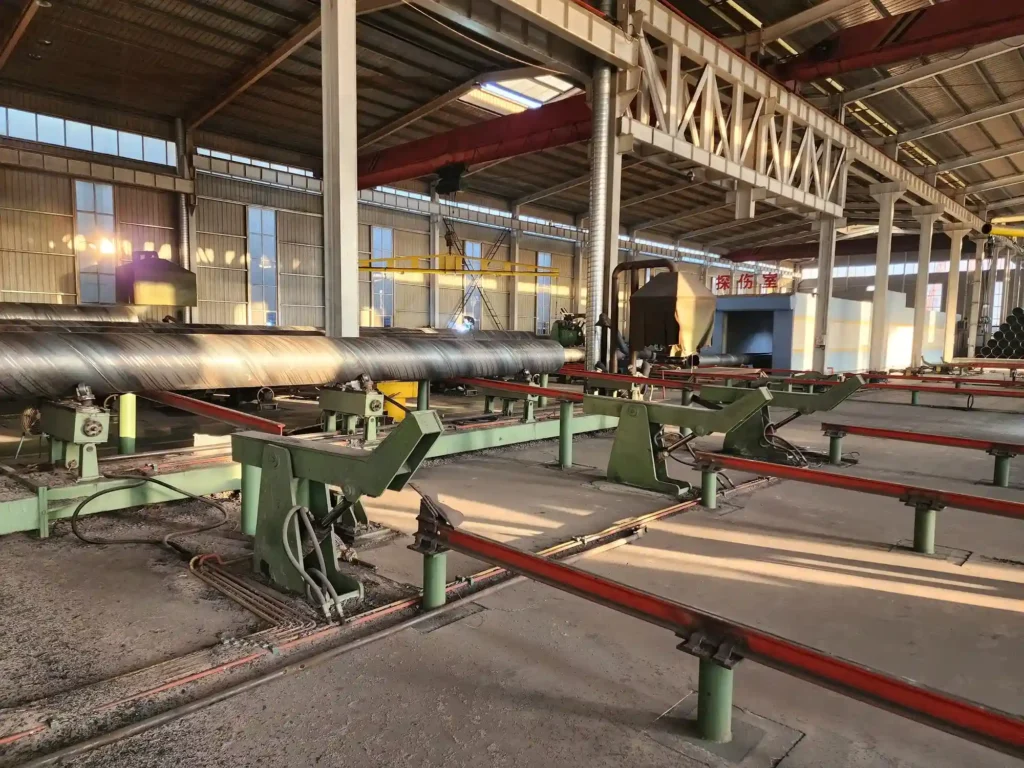
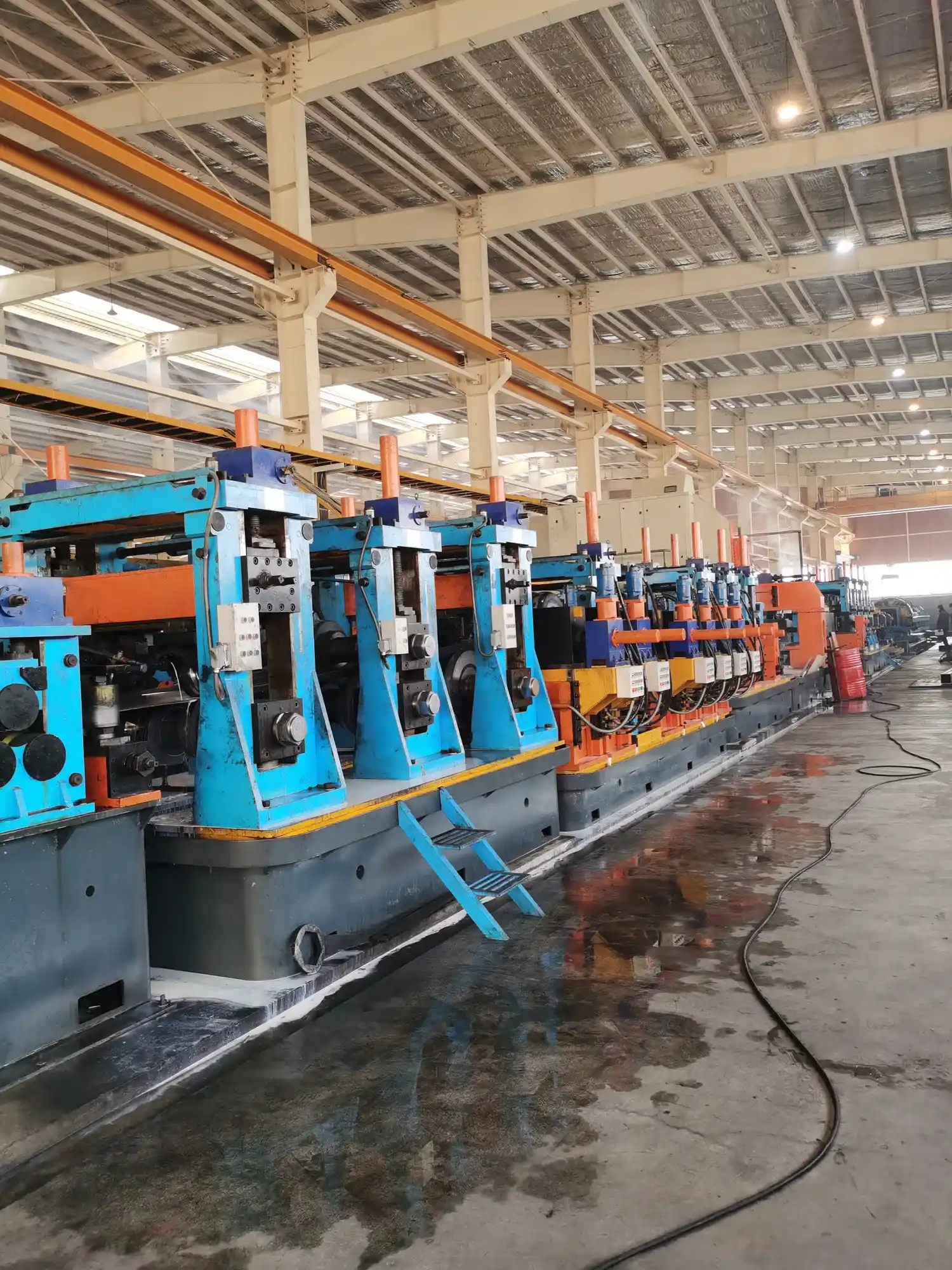
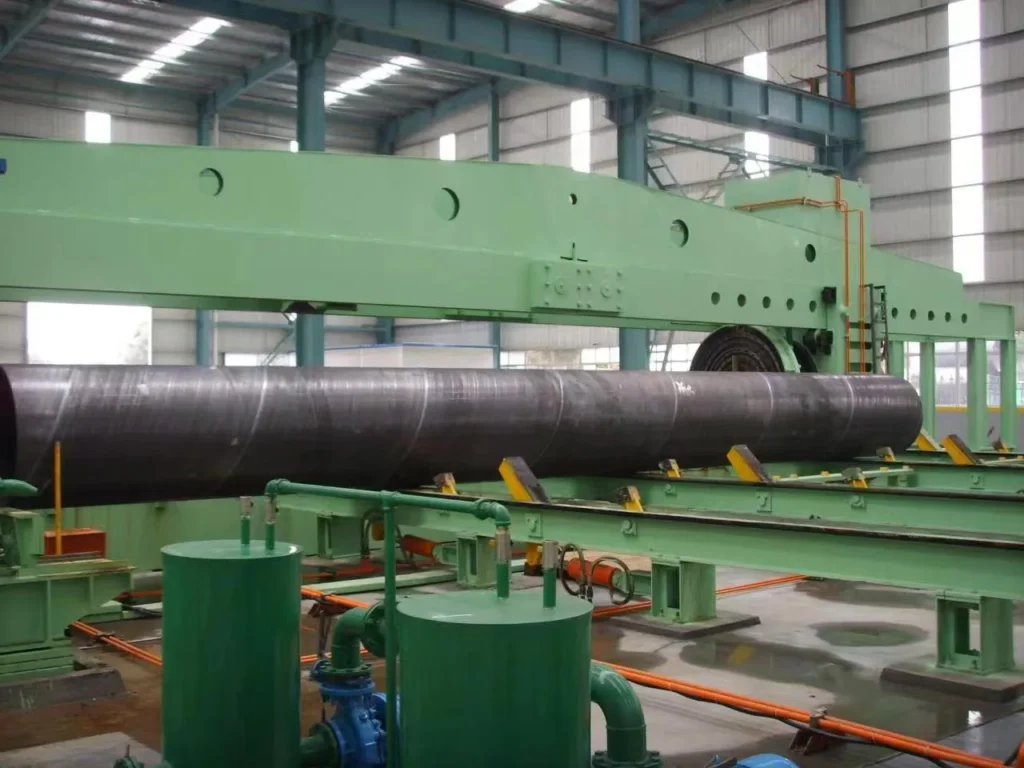
The large-diameter spiral line (Spiral Welded Pipe Equipment, forward-swinging type) makes Φ219–1620 mm × 5–16 mm pipe in 8–12 m lengths, up to 7.5 t per pipe, welded inside and out by submerged arc.
Technical Specification Table
| Parameter | Value |
|---|---|
| Pipe outside diameter | Φ219–1620 mm |
| Wall thickness | 5–16 mm |
| Pipe length | 8–12 m |
| Single-pipe weight | up to 7.5 t |
| Machine type | Forward-swinging, centre-located, discontinuous |
| Forming | Three-roll bending, external sizing |
| Forming angle | 39°–80° |
| Maximum pitch | 1900 mm |
| Delivery speed | 0.6–3 m/min |
| Welding speed | 0.5–3 m/min |
| Submerged-arc arrangement | Outer double / inner single |
| Main installed power | 300 kW |
| Welding power source | Lincoln DC-1500 × 2 + AC-1250 |
| Edge preparation | Edge miller, Φ500 cutter, 190 m/min, width 500–1250 mm, 2 × 22 kW |
| Flying cut-off | Plasma LGK-200 |
| Incoming strip width | 500–1250 mm, tolerance within ±5 mm |
| Incoming coil | OD Φ1200–1800 mm, ID Φ508–760 mm, up to 20 t |
| Pressure rolls | GCr15, HRC56-60 |
| Feed / levelling / pre-bending rolls | 42CrMo, HRC52-58 |
| Operative standards | GB/T 9711, API SPEC 5L |
| Output | ≈ 120 t per 8-hour shift |
| Manufacturing lead time | 150 days |
| Workshop required | 36 × 24 m, 32 t crane, 6.5 m hook height |
| Power / air supply | 220 / 380 V 50 Hz, compressed air 0.6 MPa |
Line Configuration and Scope of Supply
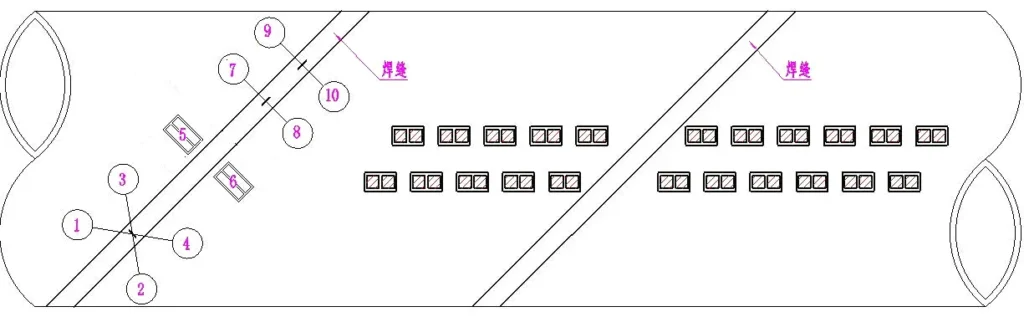
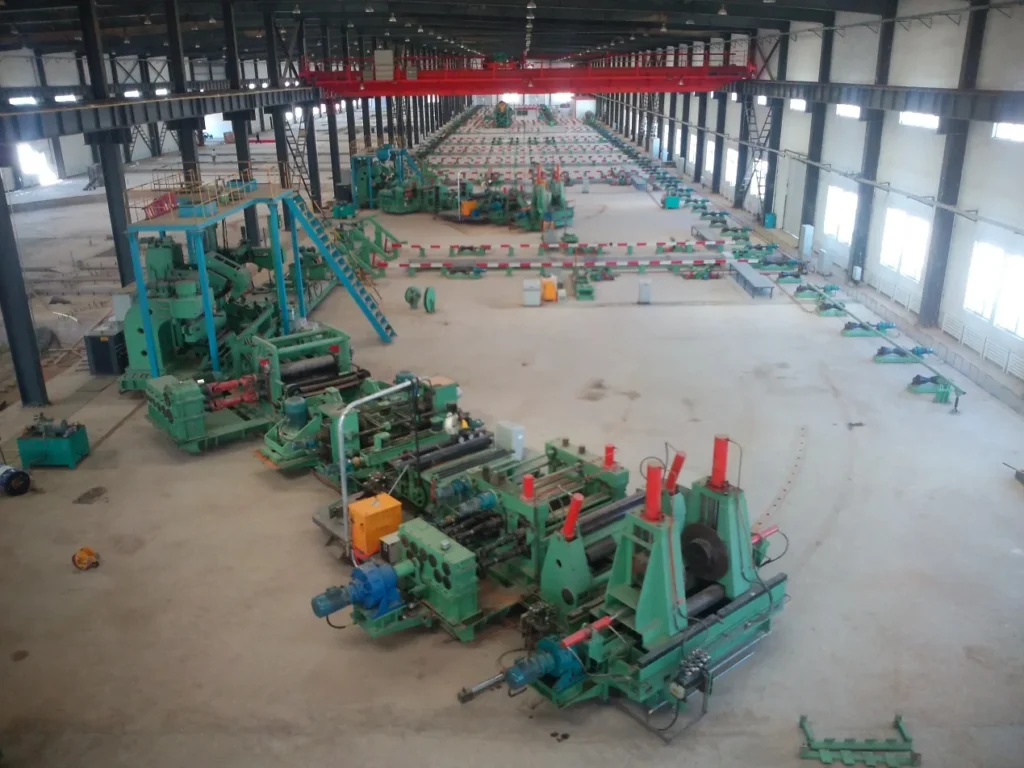
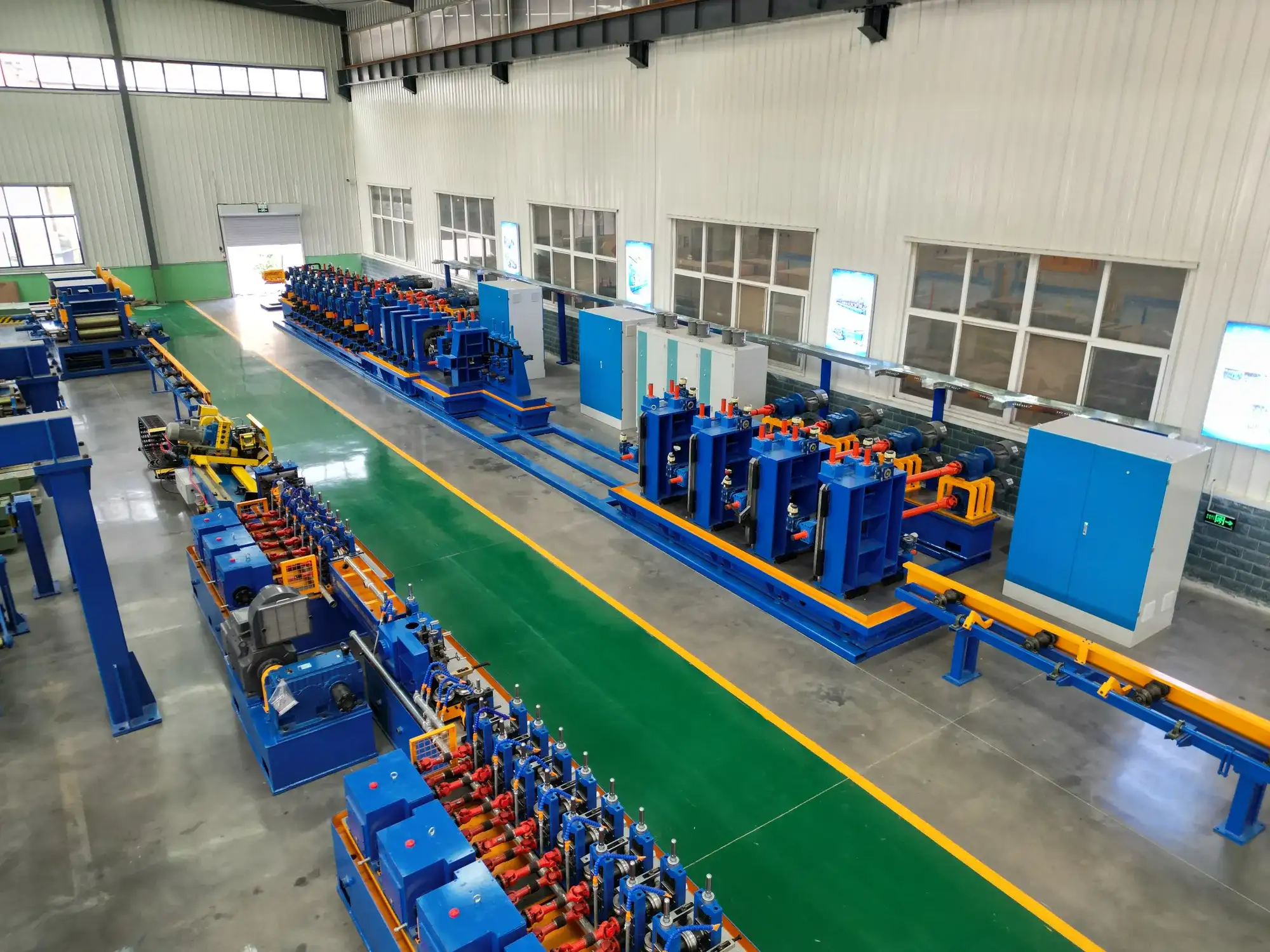
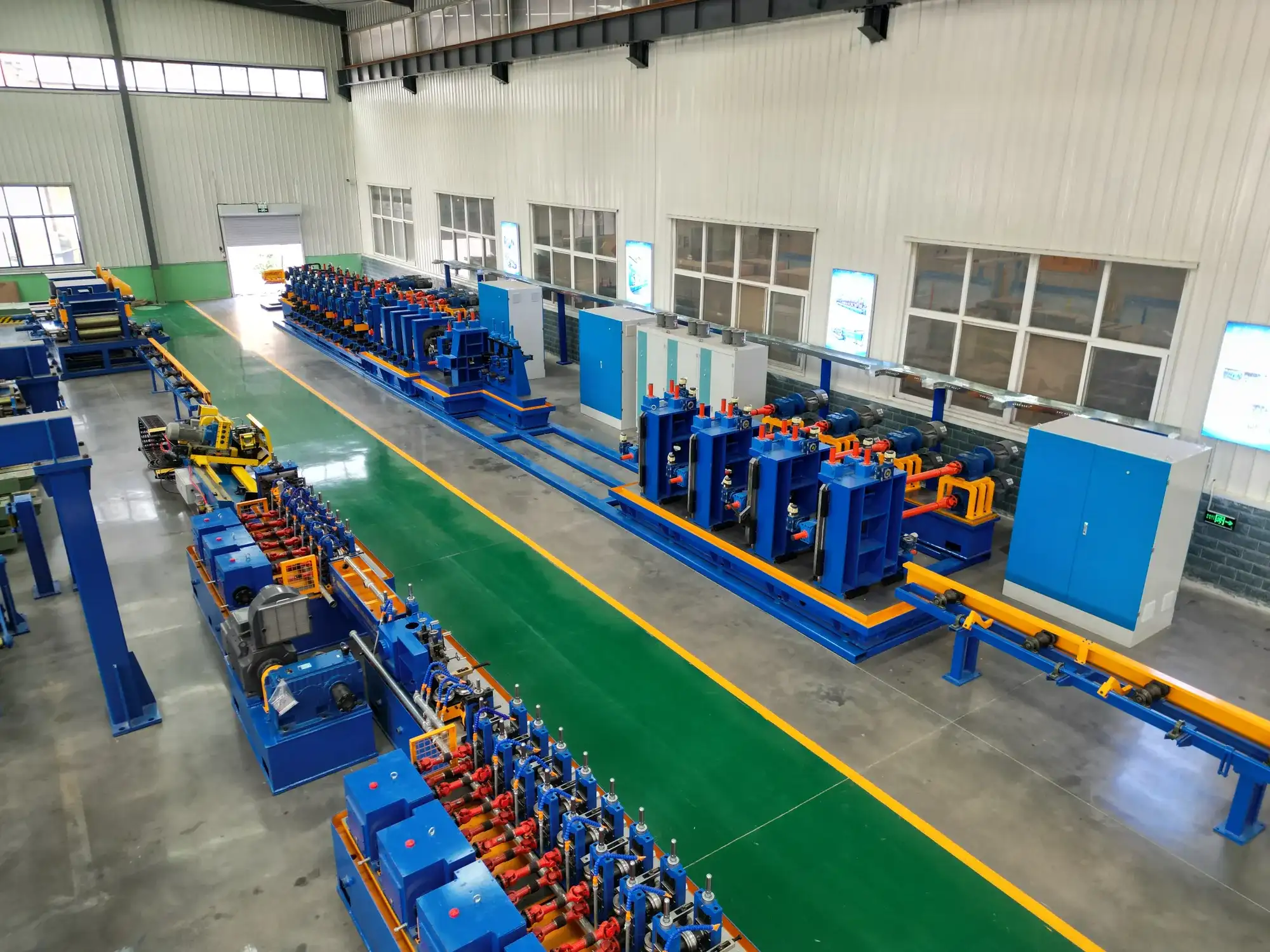
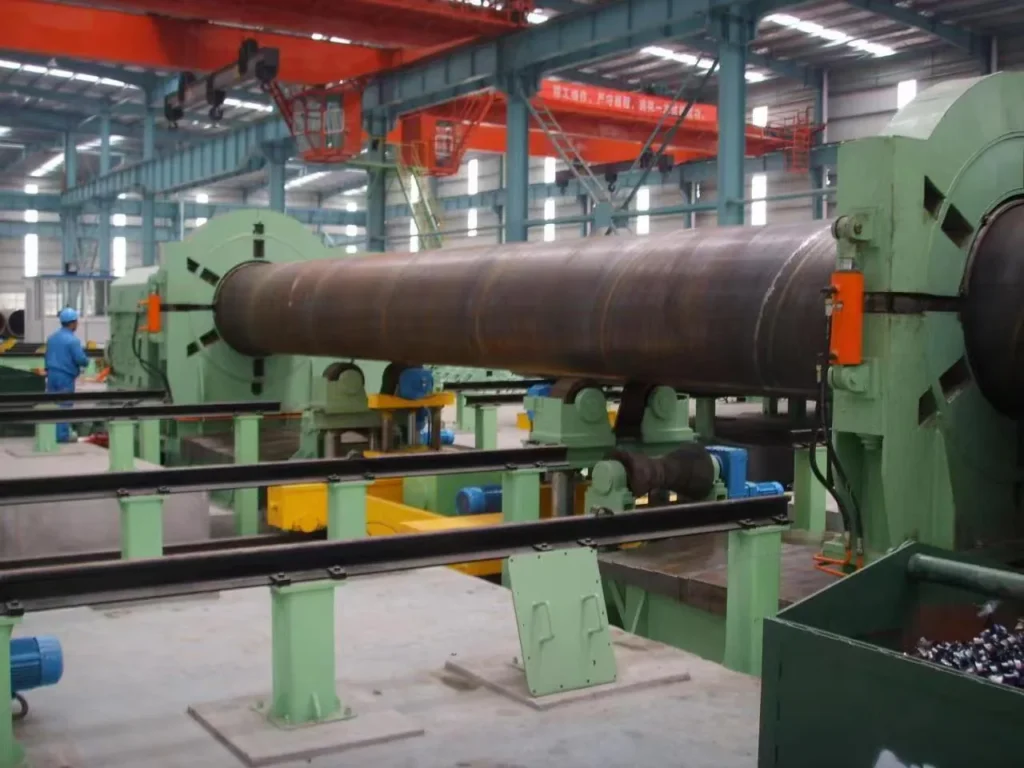
The Φ1620 class in full configuration runs nine stages: double-cone uncoiling → clamping and five-roll levelling → hydraulic shear and submerged-arc butt welding (MZ-2000) → edge milling → delivery and guide-plate pre-bending → three-roll spiral forming → inner and outer submerged-arc welding → plasma flying cut-off and slag removal → finishing and inspection.
Three of those nine are worth expanding, because they are where this class differs from the smaller one and where most of the quotation difference sits.
Edge milling. The Φ1620 class prepares both strip edges with a milling head rather than a disc shear: a Φ500 cutter running at 190 m/min, milling width adjustable across 500–1250 mm, driven by two 22 kW variable-frequency climb-milling drives. What it buys is a consistent bevel and a repeatable strip width, and those two together set the joint gap at the spiral seam.
When milling inserts wear or the width drifts, the gap goes uneven and the result is lack of penetration or edge mismatch — visible later as an X-ray reject rather than as a forming problem.
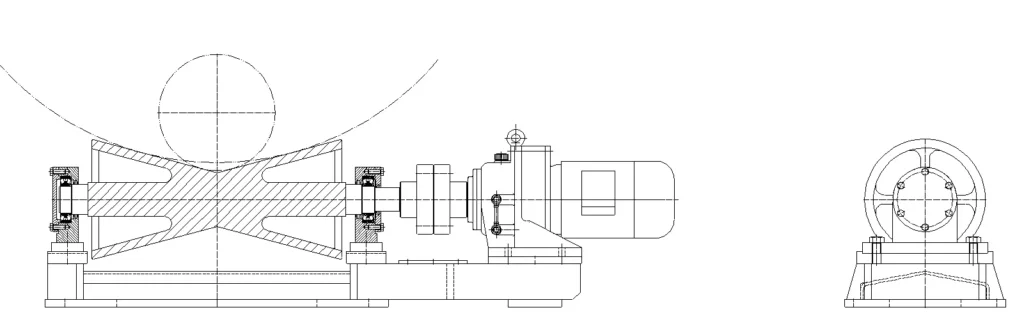
Delivery and pre-bending. The delivery machine is the line’s main drive — planetary reducer, forged Φ360 42CrMo rolls, two 15 kW drives — and the guide-plate assembly carries 42CrMo pre-bending rolls hardened to HRC52-58 that curve the strip edges before they reach the forming rolls.
Under-bent edges arrive as a straight segment on a curved blank; that is the “straight-edge effect”, and it surfaces as ovality out of tolerance and mismatch at the seam.
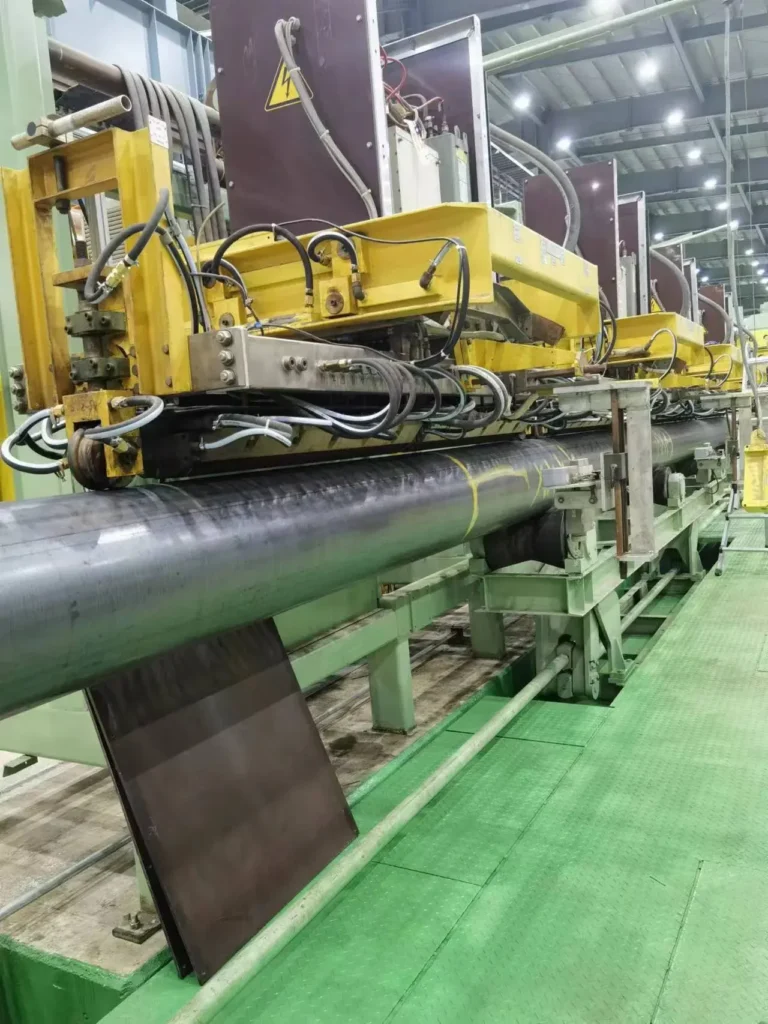
Double-sided submerged-arc welding. On this class the arrangement is outer-double, inner-single, with heads following the spiral seam at 0.5–3 m/min synchronised to delivery speed. Flux is dried and magnetically separated before it covers the weld zone and recovered after.
Current, voltage, travel speed and flux condition all have to stay matched — mismatch gives lack of penetration, slag inclusion, porosity or undercut, and those fail at the X-ray or hydrostatic station rather than on the mill.
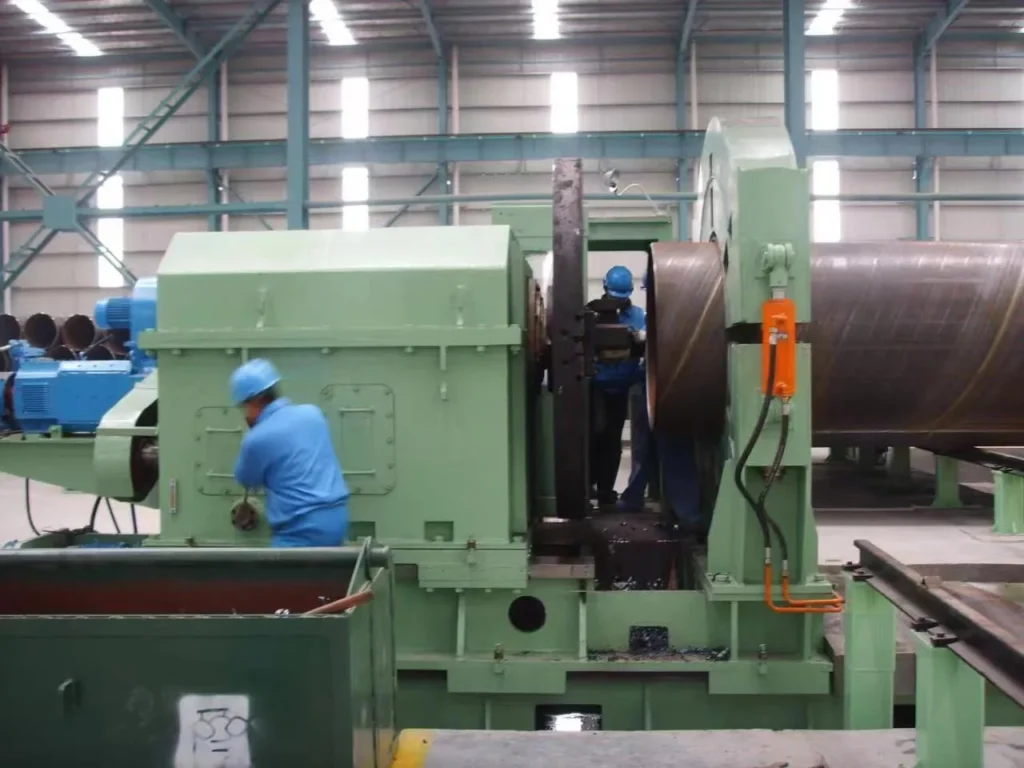
- Finishing on this class is the full chain: slag removal → weld repair → pipe-end alignment → X-ray → hydrostatic test → off-line ultrasonic → end facing and bevelling. Quantified inspection capability, since it is what the order usually turns on:
- X-ray 225 kV / 8 mA, penetration 40 mm Fe, static sensitivity 0.8–1.2%, 0.5–10 m/min
- Hydrostatic 1200 t frame, Φ800 mm main cylinder, 31.5 MPa pump, four tension beams at safety factor 4, PLC and computer monitoring with a printed record
- Off-line ultrasonic 0.5–15 MHz, weld 100%, HAZ 25 mm each side, pipe body ≥ 35%, false-call ≤ 2%, zero missed calls on the sample pipe Weld tracking uses laser image capture. Acceptance to GB/T 9711-2017 and API SPEC 5L (46th edition).
The question this configuration answers is a specific one that large-diameter buyers ask directly: can a spiral weld pass X-ray, hydrostatic and ultrasonic in one pass? It is not a quality question to them — it is the order threshold, because a pipe that leaves the works with a missed defect becomes a claim against the mill owner.
Our answer is a set of numbers with a standard behind each, not a reassurance.
One boundary belongs with them. The equipment supplies the stations, their quantified capability and the standards reference; daily calibration, reference-block verification and pass/fail adjudication sit with the operator’s qualified NDT personnel. Calibration drift or a skipped check is how a fully specified line still releases a defective pipe.
Repaired welds go back through the chain, and the pipe-end dead zone of 300 mm or less is handled by the operator’s own procedure.
Key bought-in components are listed by brand so they can be priced and checked independently: Lincoln welding power sources, Siemens PLC and motors, Delta drives, Schneider (partly CHINT) electrical components, Jiangsu Guomao cycloidal reducers, Jiangsu Tongli planetary reducers, Harbin or Wafangdian bearings, Beijing Huade hydraulic valves.
Flux drying, magnetic separation and recovery units are inside the supply scope rather than optional extras — flux condition is a direct input to weld soundness.
Scope is quoted at one of three levels, and the difference between them is the reason two quotations stop being comparable: mill only; mill plus finishing (slag removal, weld repair, end facing, hydrostatic, X-ray); or full, which on this class adds off-line ultrasonic and the edge miller.
Size Change, Roll Wear and Running Cost
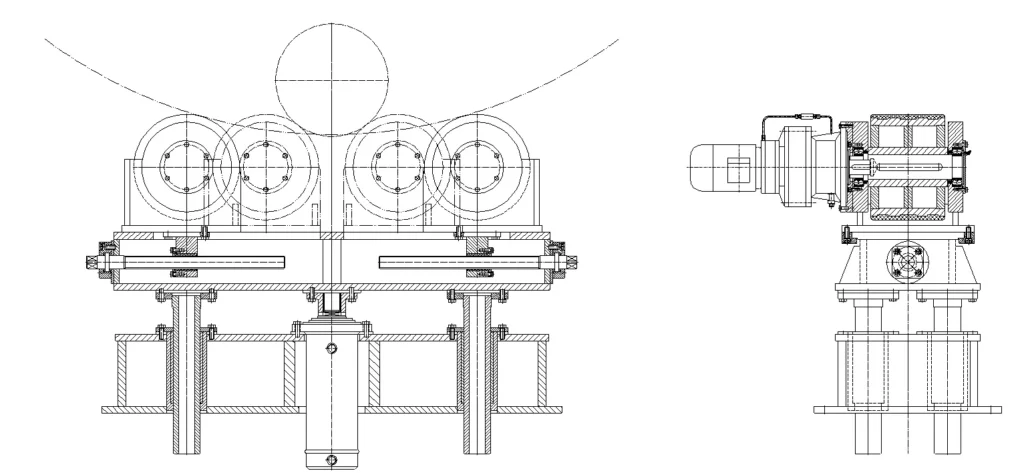
Size change does not involve changing rolls. Diameter is set by the forming angle — the front bridge swings between 39° and 80° — with external sizing holding pipe shape. This is where a spiral line differs most sharply from a straight-seam mill, and where the running-cost arithmetic changes shape.
One machine therefore covers Φ219–1620 mm without a roll set per size.
What does wear on this technology is different: welding wire and flux by tonne of steel, plasma cutting tips by cut, and milling inserts by milling volume. Spiral submerged arc is a consumables-intensive process, which is why continuity of that supply channel is what brings buyers back rather than the machine price.
Roll materials are specified so the geometry holds: pressure rolls GCr15 at HRC56-60; feed, levelling and pre-bending rolls 42CrMo at HRC52-58.
What actually costs time is not changeover but strip width drift. Incoming width must hold within ±5 mm; outside that window the forming angle needs repeated correction and the result is diameter drift and edge mismatch at the seam.
That makes the incoming-coil specification a commercial term rather than a technical footnote: a plant buying strip on price alone will pay for it in forming-angle corrections and rejected welds, and no amount of mill capability compensates for material that arrives outside the stated window.
Rolls and key wear parts are machined at the works on its own CNC equipment, which is what makes continuous supply possible years after handover — the practical difference being that a replacement set ordered three years on matches the set delivered with the line, rather than matching whatever an outside shop can quote that quarter.
Applications and Output Examples
Φ820–1620 mm line pipe made to GB/T 9711 or API 5L has to be X-rayed, hydrostatically tested and ultrasonically inspected pipe by pipe before release — a missed defect becomes a claim, so the inspection chain is the order threshold rather than a selling point. The line serves four downstream uses: oil and gas transmission line pipe; urban gas and low-pressure fluid pipe; water supply and drainage pipe; industrial structural pipe.
Output: approximately 120 tonnes per 8-hour shift.
For water and drainage work the constraint moves to geometry rather than certification: large diameter at thin wall wants to go out of round, and external sizing is what holds it, with pipe cut to 8–12 m and single-pipe weight up to 7.5 t. For structural pipe the grade-to-diameter-to-wall relationship has to be settled first, because the maximum wall differs by steel grade.
Buyers reach this class through three routes, and each one changes what the first conversation should cover. A plant that has just taken a large-diameter order its existing straight-seam mill cannot fill needs diameter coverage and a lead time that holds against a project date.
A plant already running high-frequency lines and moving into large-diameter spiral needs the line to fit an existing building, an existing crane and an existing supply — which is why workshop size, hook height and feed direction are quoted up front rather than discovered at installation.
And a plant replacing an incumbent spiral line usually does so because that line cannot produce certifiable pipe: no X-ray, or no ultrasonic. That last case is a configuration problem before it is a machine problem, and it is worth checking against the three scope levels above before concluding the mill itself has to go.
There is also a step-up path worth knowing at purchase. Plants that start on the Φ820 class and later add the Φ1620 class from the same works keep the same process route, the same spare-parts system and the same contact — which is most of what makes a second purchase cheaper than a first one from someone else.
On this class specifically, the line-pipe case is the one that decides configuration.
Delivery, Installation and Training
Manufacturing lead time for this class is 150 days.
Shipping is planned into scope. This class ships as bare heavy units — forming machine, the 1200-tonne hydrostatic frame, test-bay bases and roller tables — strapped to reinforced frames with designed-in lifting points and rust-protected. The line ships with 195 sets of test-bay bases, 47 sets of driven roller tables, 45 sets of idle roller tables and 45 suction units.
Plant requirements: workshop 36 × 24 m, 32 t crane at 6.5 m hook height, supply 220 / 380 V 50 Hz, compressed air 0.6 MPa. Feed direction can be set left or right to suit an existing building.
Installation, commissioning and operator training sit inside the after-sales scope; engineers are dispatched to site and support continues online after handover. NDT adjudication itself — daily calibration, reference-block verification, pass/fail decisions — stays with the operator’s qualified personnel; the equipment supplies the stations and their quantified capability, not the judgement.
Acceptance is defined rather than left open: continuous production of two different pipe sizes is the basis on which the line is signed off — a single run at one diameter would prove nothing about the changeover the forming-angle design exists to make possible.
Forward swinging spiral welding pipe unit
Spiral pipe mill for large diameter pipe
Watch This Line Running
SSAW Spiral Welded Pipe Mill — Φ219-1620 mm, Double-Sided SAW
From the Workshop
 SSAW or HFW
 X-Ray, Hydrostatic and Ultrasonic, Station by Station
 Changing Bore Without Changing Rolls
 The API Pipe Mill Inspection Chain
Send Your Enquiry
Tell us the pipe outside-diameter range, the wall thickness and the output you need. An engineer reads every enquiry — it does not land in a general sales inbox.