
 Scan on WeChat
Home › SSAW Spiral Welded Pipe Mill › SSAW or HFW
Both make welded pipe from coil, and Tengtian supplies lines for both.
In This Line
Quick Contact
Hebei TengtianYuanle@tentubemill.com
+86-311-83025332
WhatsApp +852 5425 3155
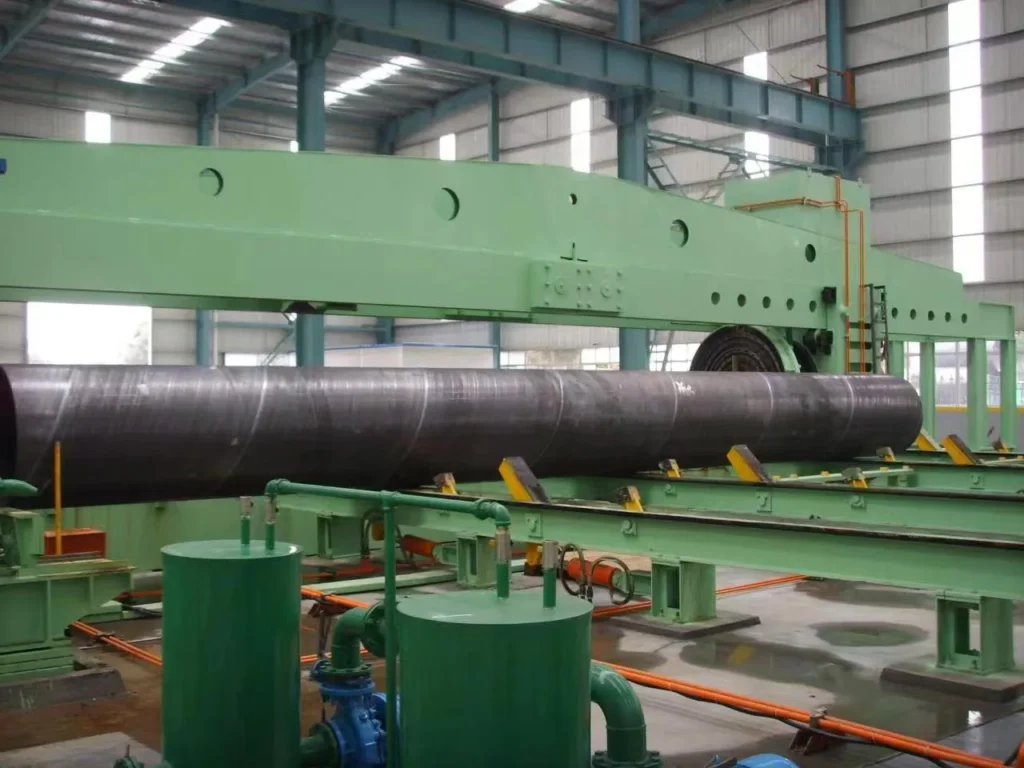
The high-frequency line runs a straight seam continuously up to Φ630 mm; the spiral line runs a spiral seam discontinuously from Φ219 to Φ1620 mm and changes diameter by changing the forming angle. Between Φ219 and Φ630 both are possible.
Where the Two Routes Differ
- Ranges: HFW Φ10–630 mm across twelve classes; SSAW Φ219–820 × 3–12 mm and Φ219–1620 × 5–16 mm across two classes.
- Diameter-change method: HFW conventional lines change rolls; the spiral line changes the forming angle, at 39° to 80°.
- Production mode: HFW continuous, kept fed by a spiral accumulator; SSAW discontinuous — one pipe cut, then the next.
- Standards by spiral class: GB/T 9711 and GB/T 5037 on Φ820; GB/T 9711 and API 5L on Φ1620.
- Spiral output with its calculation basis: about 62 t per 8-hour shift on Φ820 and about 120 t on Φ1620.
What Is the Difference Between SSAW and HFW
The high-frequency line forms strip into a round or square shell and closes a straight seam with high-frequency induction heat and squeeze rolls. The seam runs in a different direction, and almost everything else follows from that. The spiral line winds strip helically into a large-diameter tube and closes the spiral seam with submerged-arc welding on both the inside and the outside.
The trade-off, in short: against the high-frequency route, the spiral route substitutes a spiral seam plus submerged arc for a straight seam plus high-frequency welding, and changes diameter by changing the forming angle rather than by changing rolls.
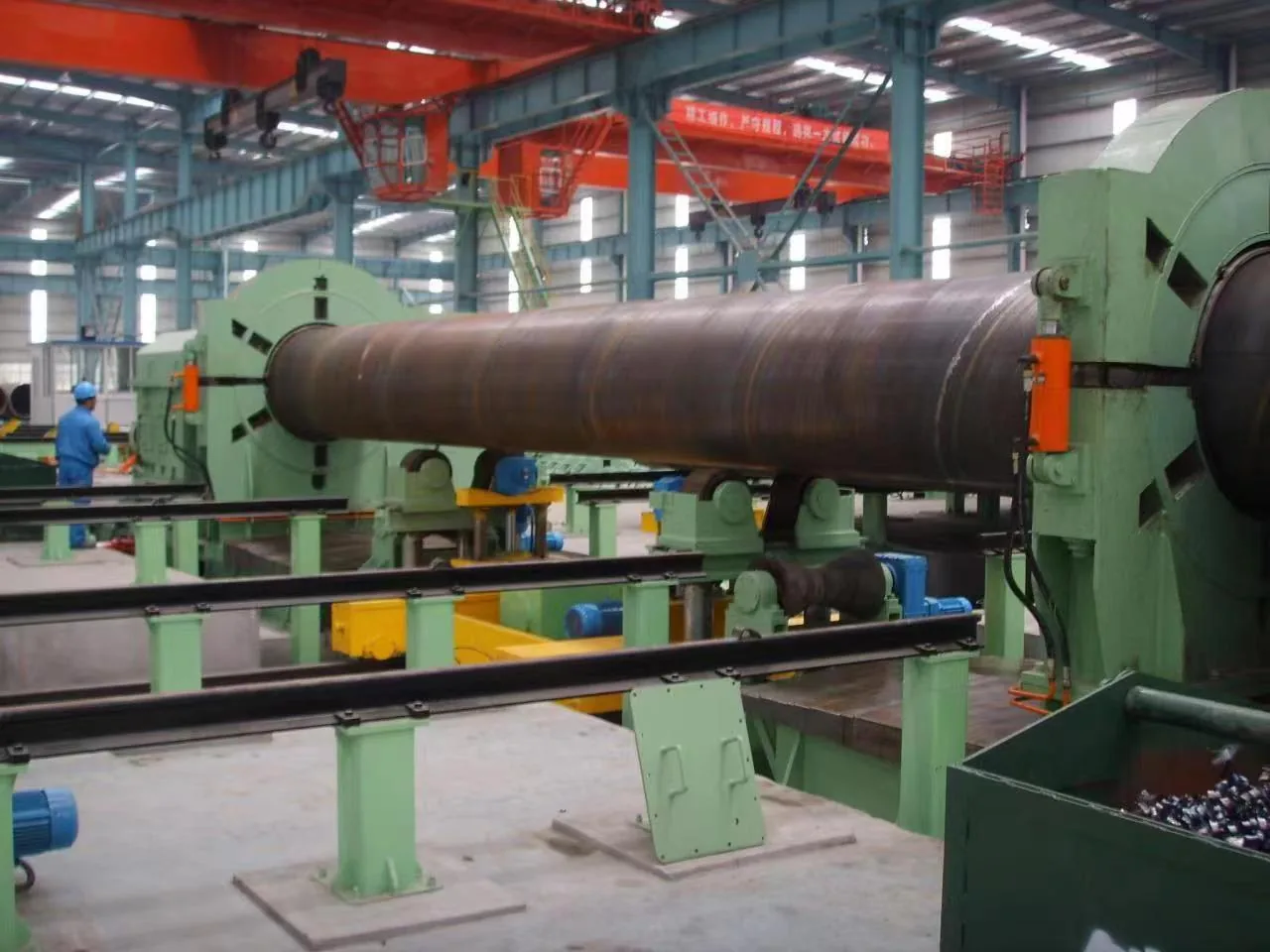
That buys one machine a wide diameter span and large-diameter heavy wall — up to Φ1620 × 16 mm at 7.5 tonnes per pipe — at the cost of a lower welding speed, 0.5 to 3 m/min, and discontinuous production. That profile suits large diameters in small to medium batches.
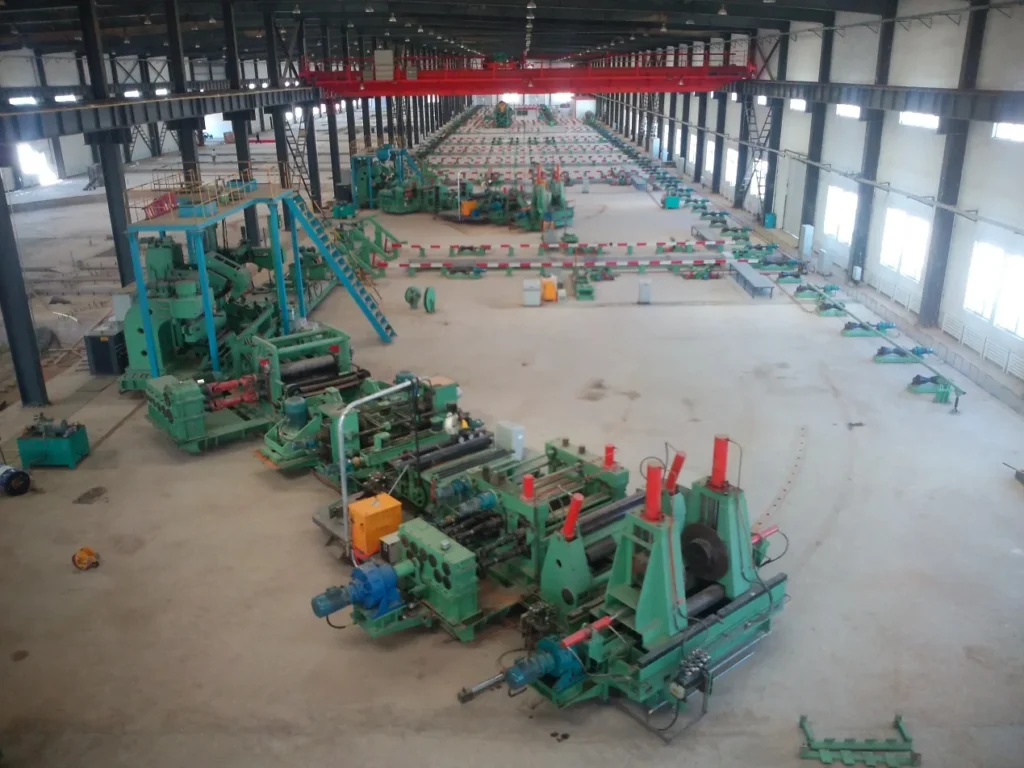
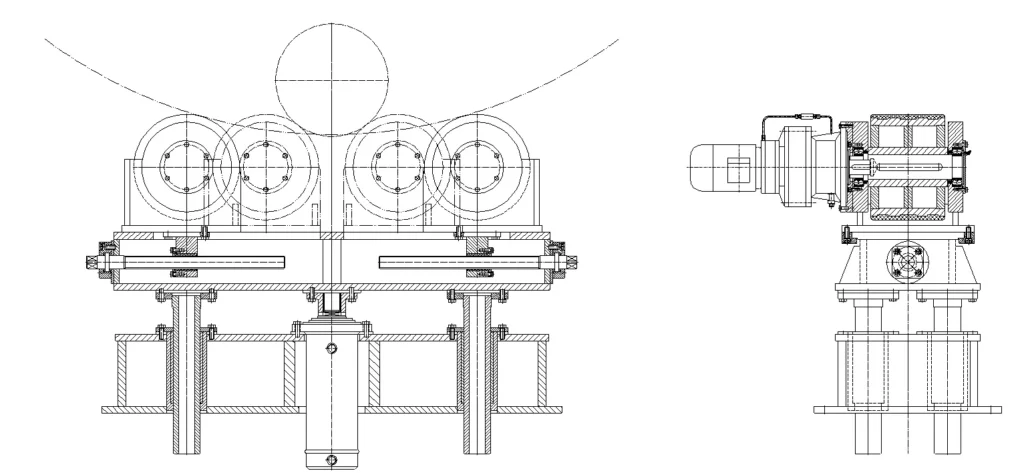
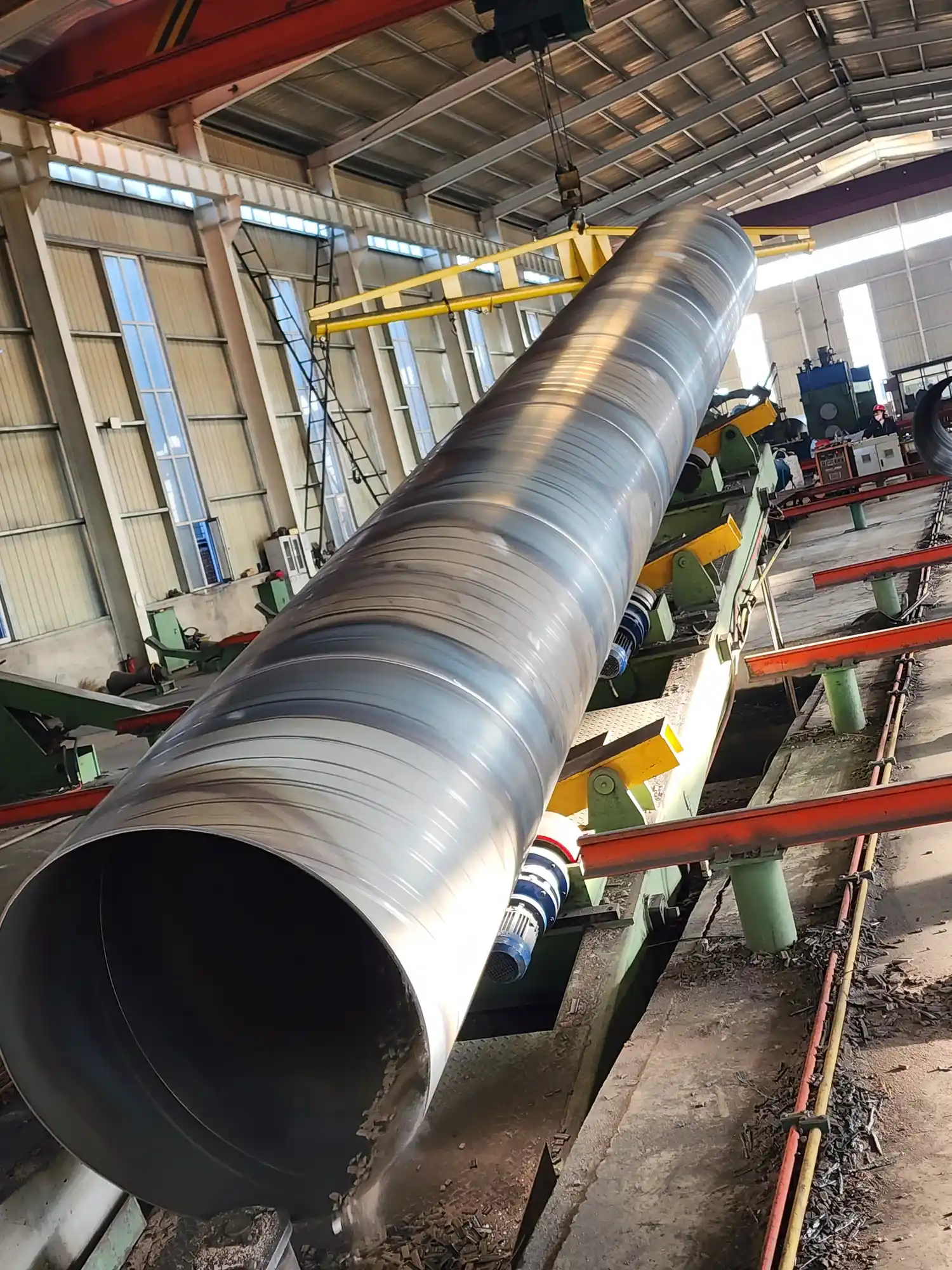
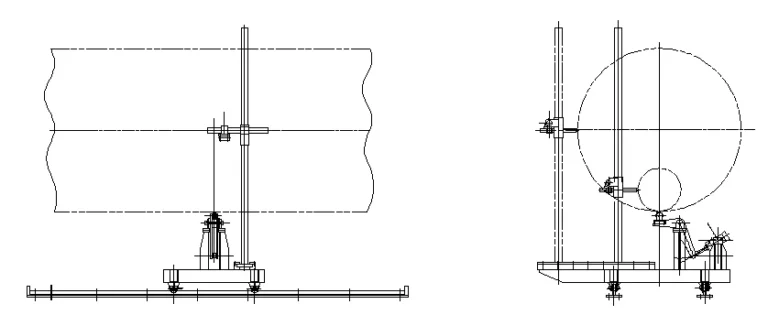
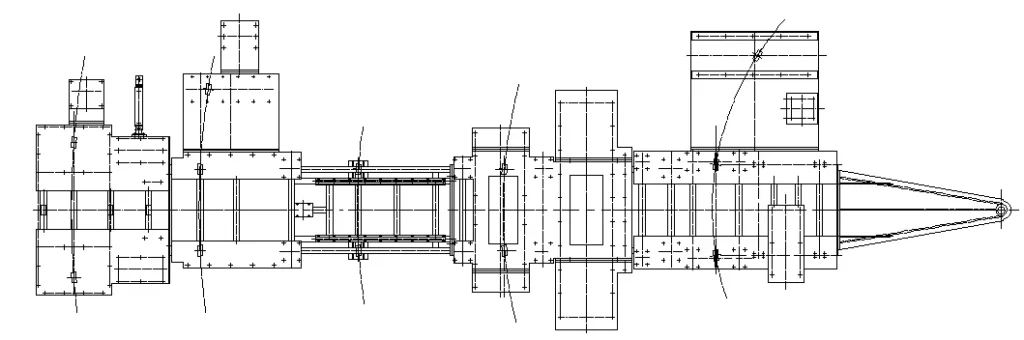
How the spiral line actually changes diameter is worth stating because it is the mechanism behind the whole comparison. The equipment before the forming point sits on a swinging front bridge and the equipment after it on a rear bridge; swing cylinders change the angle between the two bridges, which changes the forming angle and therefore the pipe diameter.
The machine holds centre positioning so that the strip and the forming point stay aligned after the change.
Both processes are available from the same plant: high-frequency longitudinal and spiral submerged-arc welding, with diameters from Φ10 through to Φ1620 mm, so a buyer does not need a second source when the diameter goes up.
From the other side of the comparison, the high-frequency route is the faster one: higher welding speed, a straight seam, and a fit with structural and ordinary fluid pipe.
The Φ219–630 mm Overlap: When Either Process Will Work
The high-frequency range is reaching Φ630 mm at its top class; the spiral range is starting at Φ219 mm. The overlap is arithmetic, not opinion. Between those two numbers both processes are able to make the pipe.
Within the overlap, several facts bear on the choice. On the high-frequency side, production is continuous and the accumulator keeps the mill fed through coil changes, so output is a function of running speed rather than of cycle time; the top class covers Φ325–630 mm.
On the spiral side, production is discontinuous, welding speed is 0.5 to 3 m/min, and the Φ820 class covers Φ219–820 × 3–12 mm — meaning the whole overlap band sits inside its lower half.
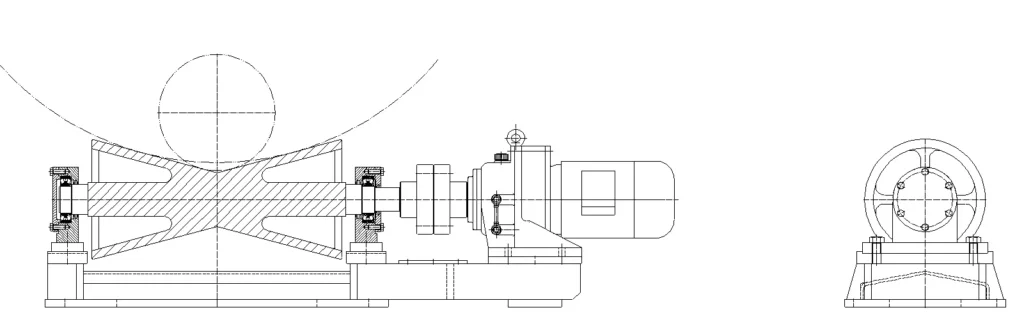
Worked Example at Φ406 mm
A worked example at a given diameter needs figures for that diameter on both sides, and neither route has them. On the spiral side, the only two output examples are at Φ820 and at Φ1620, each with its own strip width, wall thickness, pipe length and pipe count; there is no Φ406 example and no formula for deriving one. On the high-frequency side, there are no shift-output, line-speed or per-class throughput figures at any diameter.
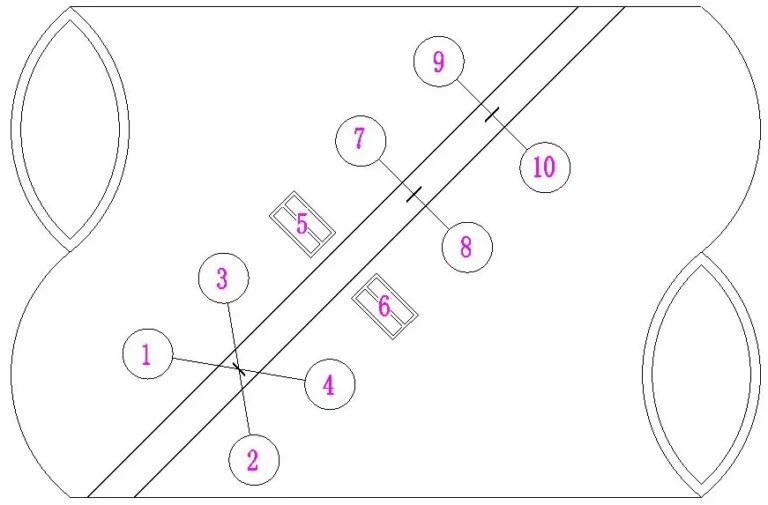
Worked Example at Φ820 mm
At Φ820 there is a full example, with its calculation basis. On the Φ820 spiral class, output is set at about 62 tonnes per 8-hour shift, calculated on 1050 mm strip width, 12 mm wall, Φ820 outside diameter and 12 m pipe length — roughly 21 pipes at about 3 tonnes each.
Two-shift annual output on that class is set at 10,000 to 20,000 tonnes.
The comparison at this diameter is not a choice, because Φ820 is above the high-frequency ceiling of Φ630 mm. That constraint is the reason the spiral line exists: a buyer who needs line pipe, water pipe or structural pipe above Φ630 has to move to spiral submerged-arc.
One selection constraint applies at this diameter and is easy to miss: maximum wall thickness is per steel grade, not as a single number.
A capacity table sets the maximum wall for each grade and diameter across Q235, Q355 and L360, and the failure mode for exceeding it is that forming force falls short, the strip will not roll, or the pipe shape comes out wrong. Grade is therefore chosen before wall.
Decision Rule by Target Diameter and End Use
Below Φ219 mm only the high-frequency lines cover the size. Diameter is the first rule and the primary selection dimension on both sides. Above Φ630 mm only the spiral lines do. Between them both lines cover the size, and the choice inside that band is the buyer’s decision.
Section shape is a third rule that often settles the matter before diameter does. The high-frequency lines are making round, square and rectangular tube; the spiral line is making large-diameter round pipe. A square or rectangular section therefore points to the high-frequency route regardless of the overlap.
Batch shape is the fourth rule and it follows from production mode. The spiral profile suits large diameters in small to medium batches, because production is discontinuous — one pipe cut, then the next — while the high-frequency line is running continuously with the accumulator carrying it through coil changes.
End use is the second rule, and for the spiral line the end uses are explicit: oil and gas line pipe, low-pressure fluid and urban gas pipe, water supply and drainage pipe, and industrial structural pipe. On the high-frequency side the uses are fluid transport pipe and structural and scaffolding tube.
Sources: GB/T 9711-2017 and API SPEC 5L, and What Each Process Is Tested To
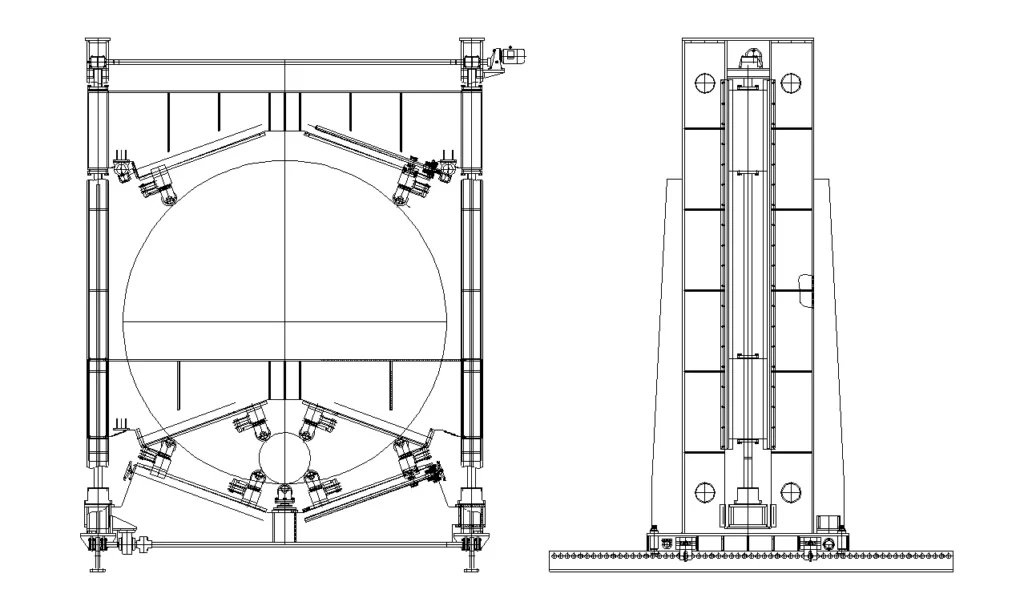
The spiral line can be supplied with a complete inspection chain — a 225 kVA X-ray unit, a 1200-tonne hydrostatic tester and offline ultrasonic — covering 100% of the weld, 25 mm either side of the heat-affected zone, and not less than 35% of the pipe body, with laser image capture used for weld tracking.
Applicable standards are given per machine class, not as a blanket claim. The Φ820 spiral class is built to GB/T 9711 and GB/T 5037; the Φ1620 class is built to GB/T 9711 and API 5L. Both editions are named where the inspection stages are described: GB/T 9711-2017 and API SPEC 5L, 46th edition.
For the machinery itself, no single certification is mandatory in every market: what governs is the destination market’s machinery-safety rules plus the standard the finished pipe has to meet. Tengtian holds CE marking and an ISO 9001 quality system certificate.
What the pipe is actually tested to is set out in numbers rather than as a general assurance.
Frequently Asked Questions
What actually makes SSAW pipe different from HFW pipe? Seam direction and welding method. The high-frequency route closes a straight seam with induction heat and squeeze rolls and runs continuously; the spiral route winds the strip helically and closes the spiral seam with submerged arc on both faces, running discontinuously at 0.5 to 3 m/min.
The spiral route changes diameter by changing the forming angle, at 39° to 80°, instead of changing rolls.
Both lines can make 219-630 mm pipe – which one should I buy? Inside that band there is no single right answer — the choice is the buyer’s. Below Φ219 only the high-frequency lines cover the size, above Φ630 only the spiral lines, and inside the band both do. Section shape, batch size and end use are the axes that narrow it further.
How different are the two welds, and does the heat input matter? The high-frequency route heats only the strip edges: skin effect and proximity effect concentrate the current at the open seam, and the heated edges are then forged together by squeeze rolls; the process is classed as solid-state or fusion pressure welding.
Which standards do buyers usually test each type of pipe to? By class rather than by process. The Φ820 spiral class is built to GB/T 9711 and GB/T 5037; the Φ1620 class to GB/T 9711 and API 5L, with GB/T 9711-2017 and API SPEC 5L (46th ed.) named at the X-ray and ultrasonic stages.
Which process gives better output for large-diameter pipe above 630 mm? Only one of the two reaches large diameter at all, so the comparison resolves itself. Above Φ630 mm the high-frequency line is out of range.
On the spiral line, output at Φ1620 is set at about 120 tonnes per 8-hour shift, on 1250 mm strip at 16 mm wall making Φ1620 × 12 m pipe — roughly 15 pipes at 7.5 tonnes each.
Can I buy both lines from the same supplier? Yes. The same plant offers both high-frequency longitudinal and spiral submerged-arc welding and covers Φ10 to Φ1620 mm; the spiral family was the ninth product family added to that range.
The spiral route uses submerged-arc welding on both the inside and the outside of the spiral seam. There are no published heat-input, frequency or welding-current values for either route.
From the Workshop
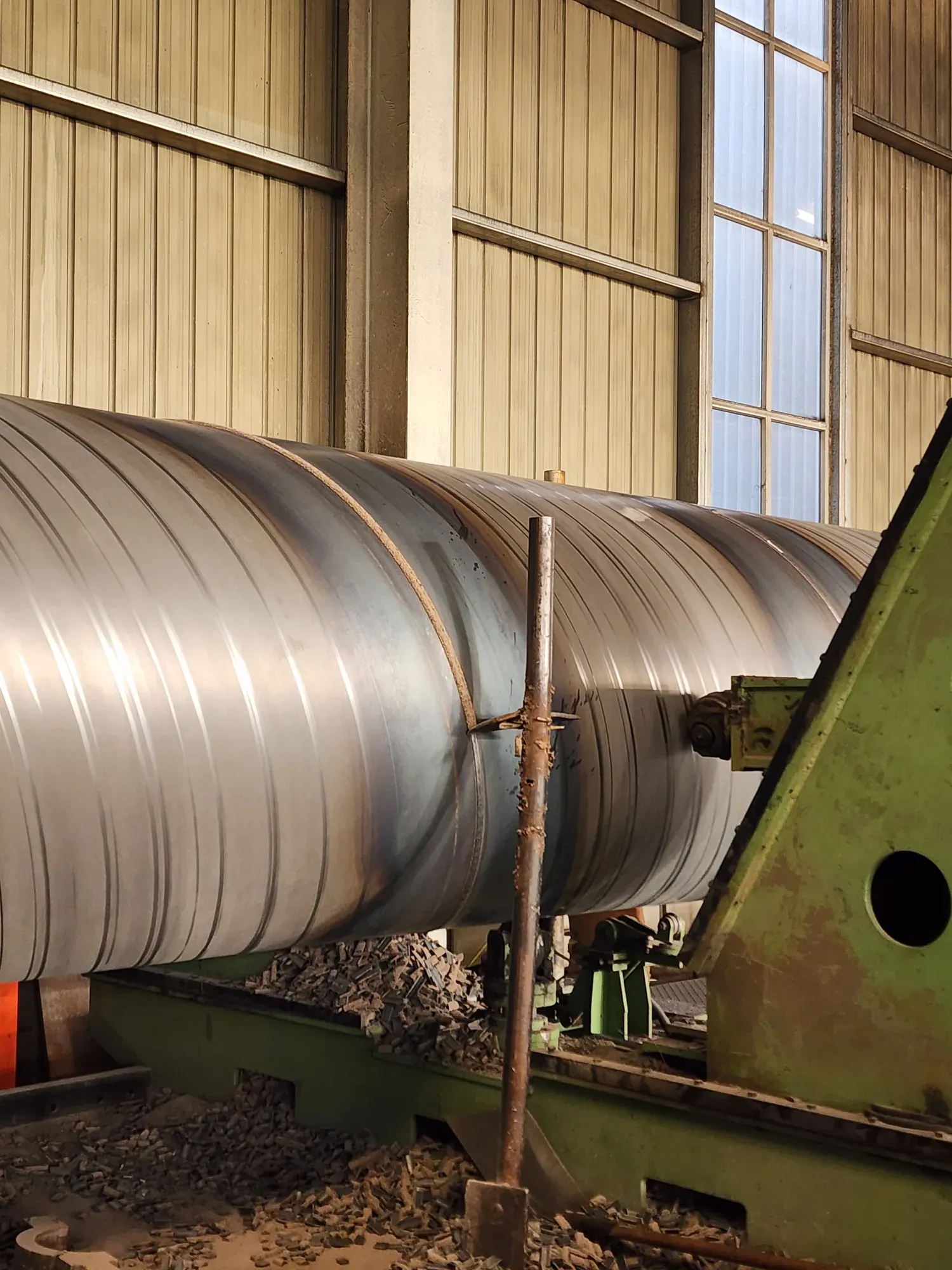
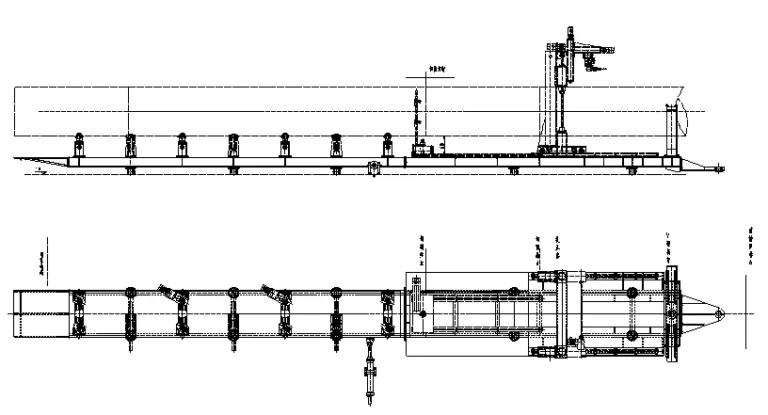
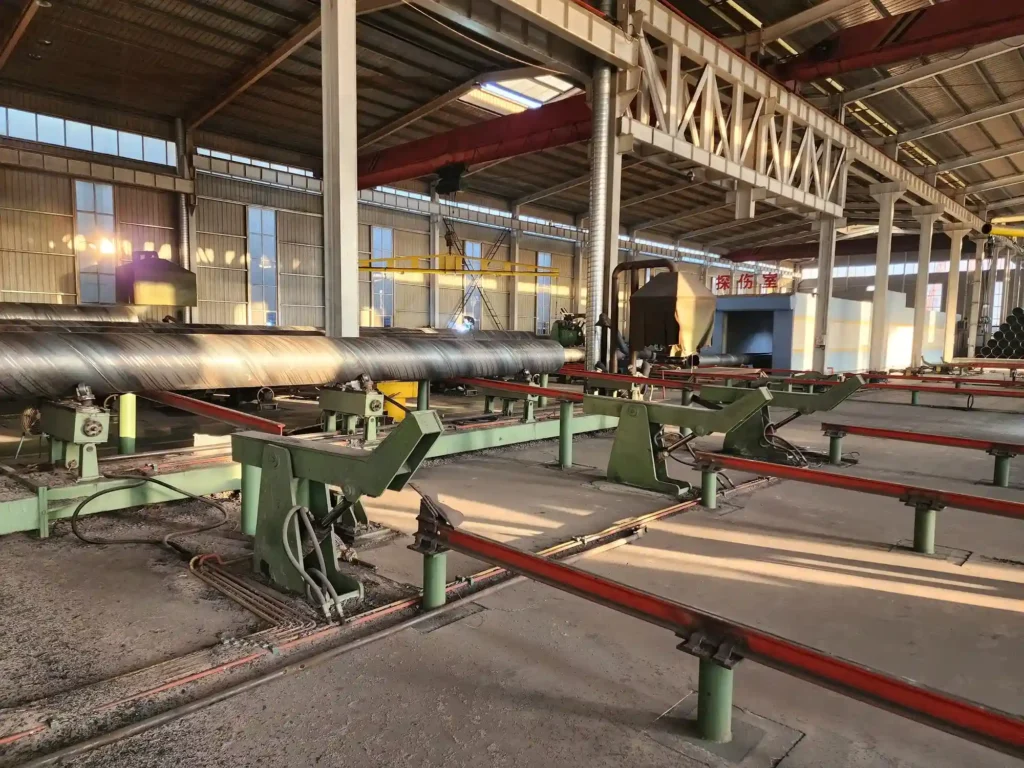 What the Large-Diameter Tier Adds
 X-Ray, Hydrostatic and Ultrasonic, Station by Station
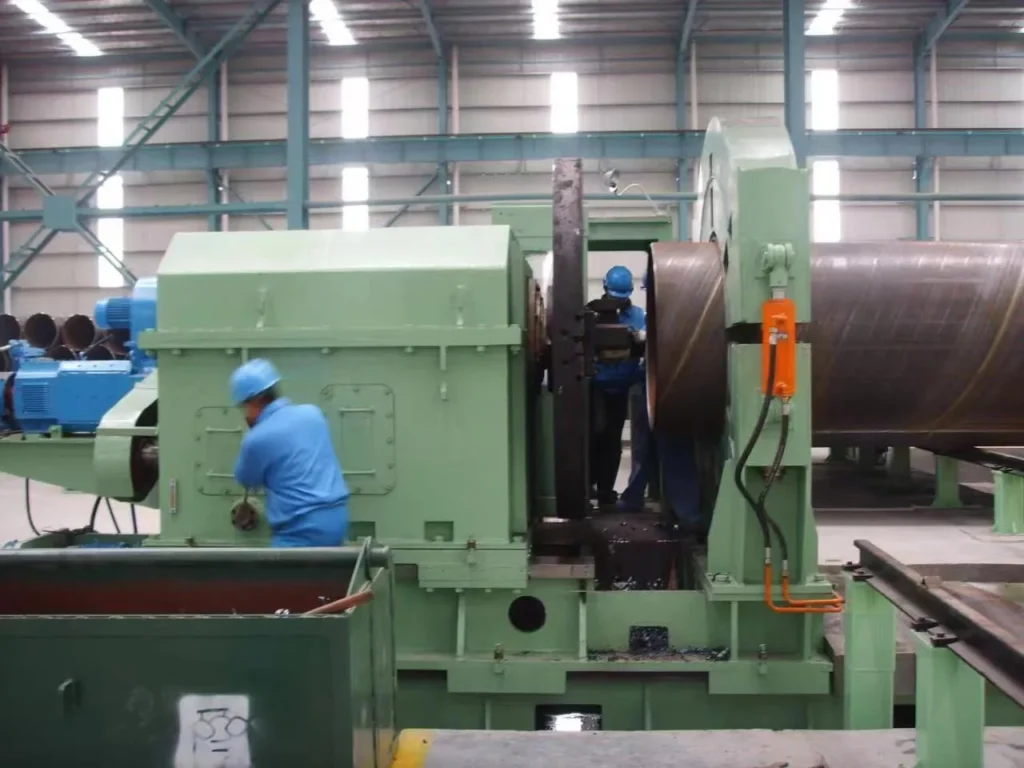 Changing Bore Without Changing Rolls
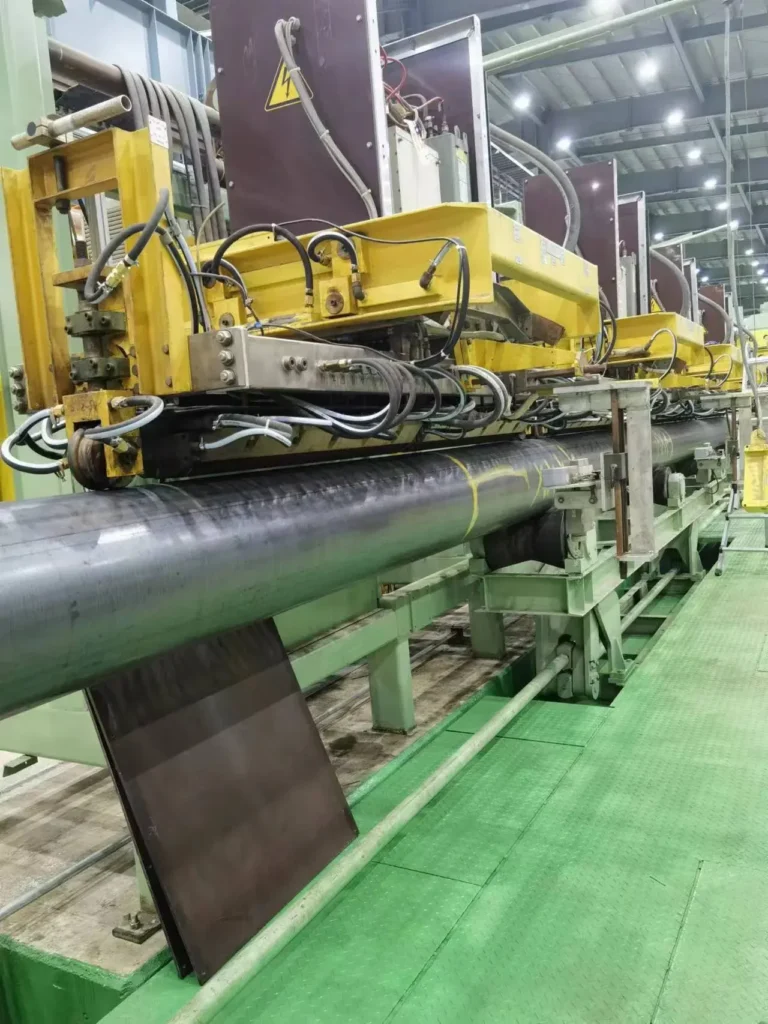 The API Pipe Mill Inspection Chain
Send Your Enquiry
Tell us the pipe outside-diameter range, the wall thickness and the output you need. An engineer reads every enquiry — it does not land in a general sales inbox.