
 Scan on WeChat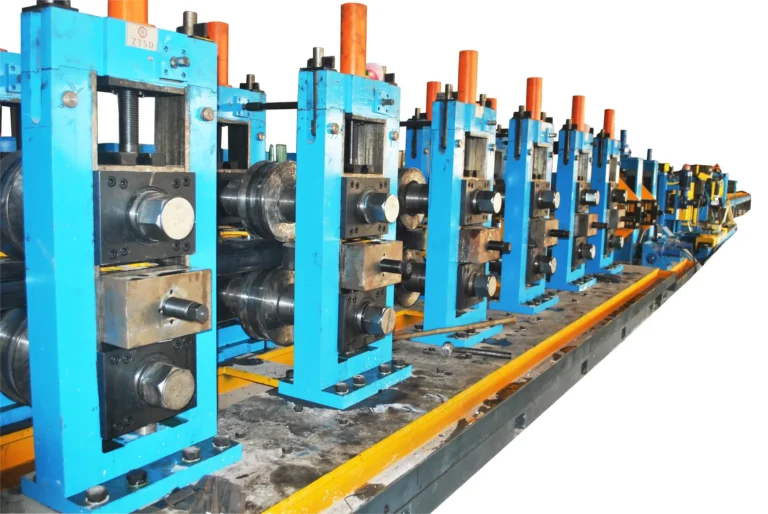
Large Diameter Tube Mill
Twelve steps, HG32 to HG630, finished outside diameter Φ10 to Φ630 mm, wall 0.5 to 16 mm.
In This Line
Quick Contact
Hebei TengtianYuanle@tentubemill.com
+86-311-83025332
WhatsApp +852 5425 3155
The large-diameter HFW tube mills are the upper seven of twelve diameter steps, HG165 through HG630, covering finished pipe from about Φ60 up to Φ630 mm. Each step is a separate machine size. These are the figures for the series as a whole; each step has its own specification.
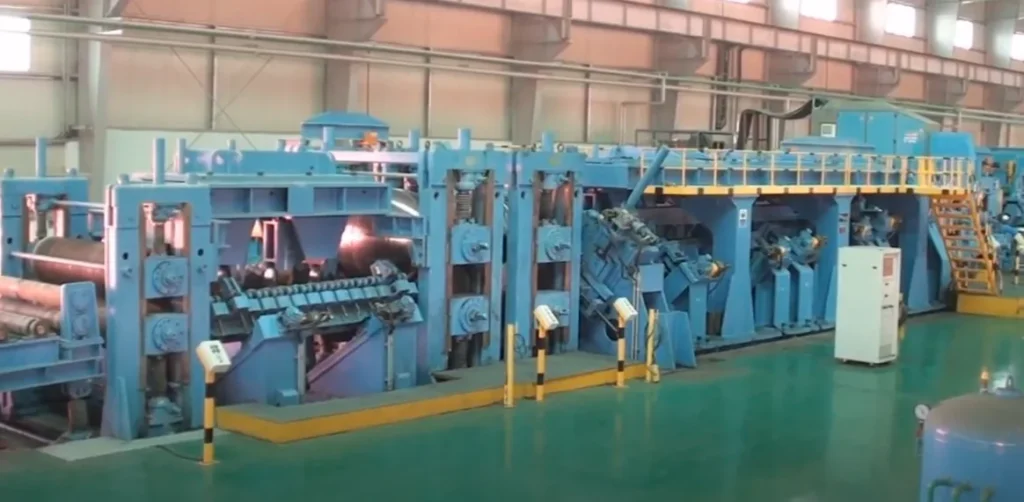
What Is Large-Diameter HFW Tube Mill
The process is the same one that runs the whole family: continuous uncoiling, roll forming, high-frequency induction welding, sizing and cutting, producing straight-seam welded pipe from coil.
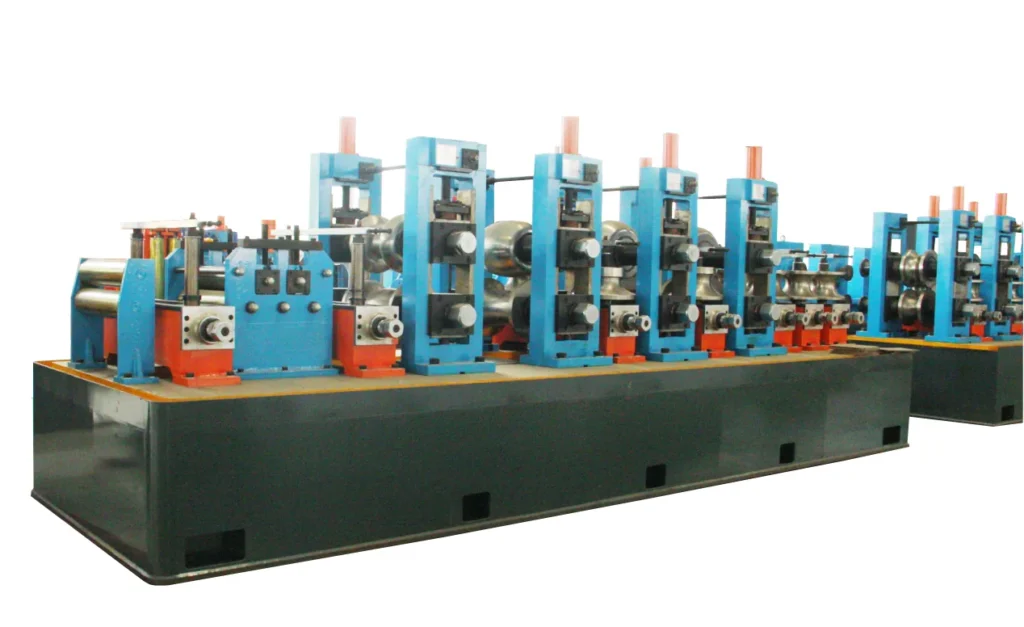 HG165 Tube Mill Line for Φ60–165 mm PipeThe sixth of the twelve model steps — Φ60 – Φ165 mm round pipe and 50×50 – 130×130 mm square section, on a 400 kW high-frequency welder.See the line →
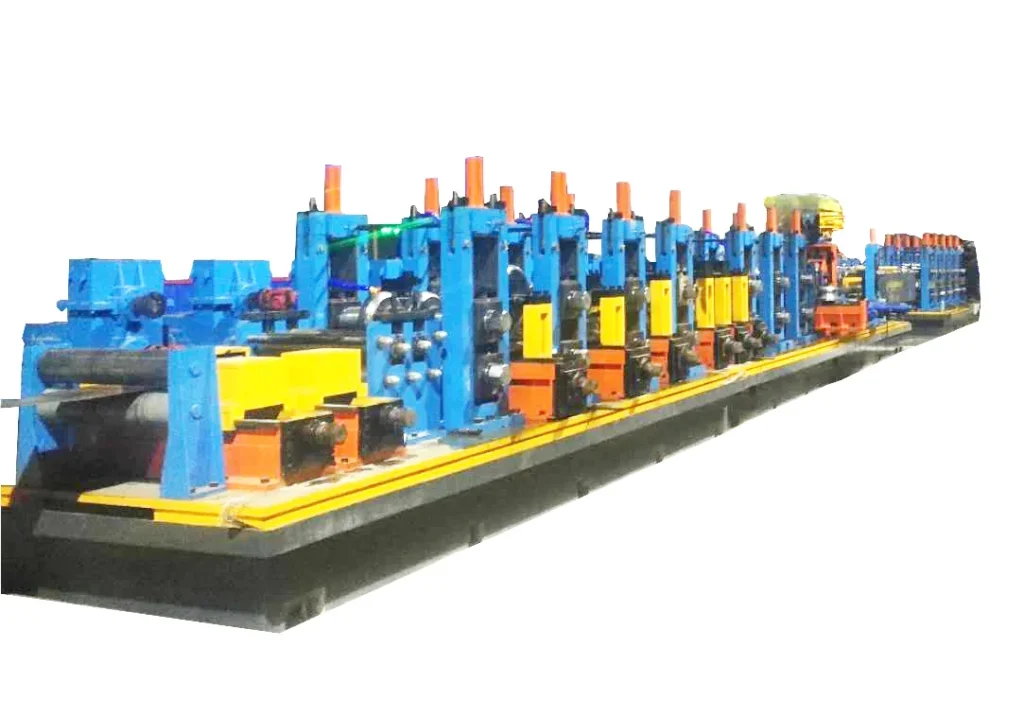 HG219 Tube Mill Line for Φ114–219 mm PipeThe seventh of the twelve model steps — Φ114 – Φ219 mm round pipe and 90×90 – 170×170 mm square section, on a 500 kW high-frequency welder.See the line →
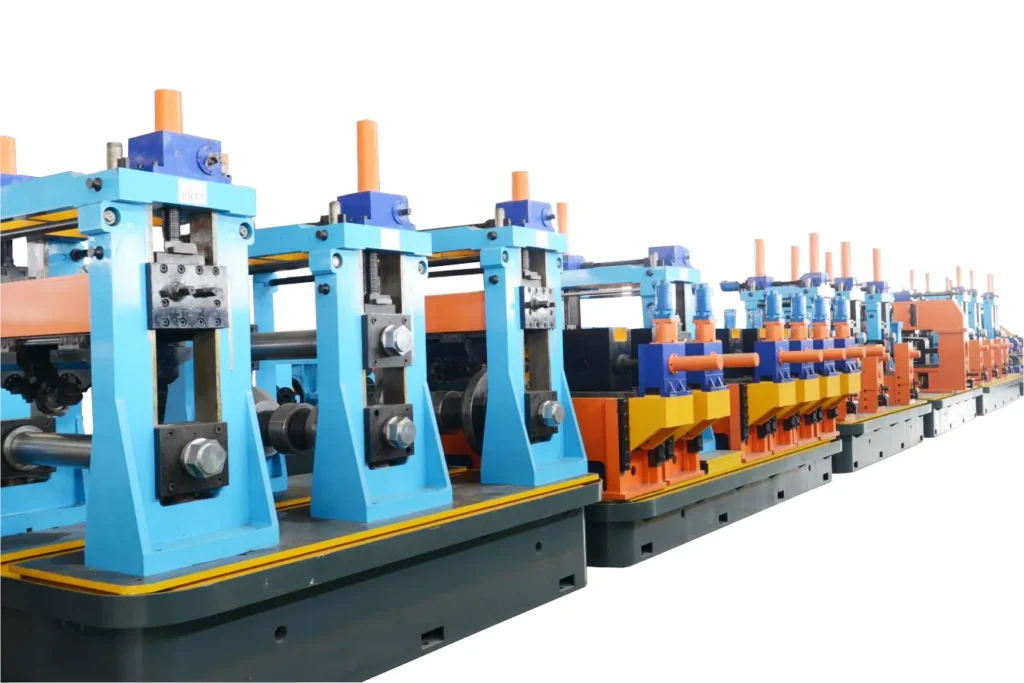 HG273 Tube Mill Line for Φ114–273 mm PipeThe eighth of the twelve model steps — Φ114 – Φ273 mm round pipe and 90×90 – 215×215 mm square section, on a 600 kW high-frequency welder.See the line →
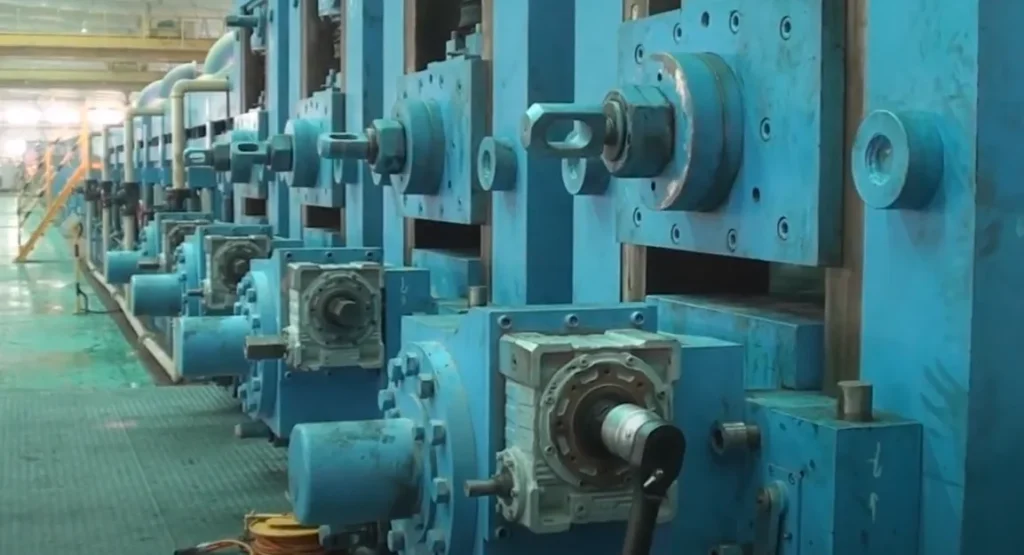 HG325 Tube Mill Line for Φ165–325 mm PipeThe ninth of the twelve model steps — Φ165 – Φ325 mm round pipe and 130×130 – 250×250 mm square section, on a 600 kW high-frequency welder.See the line →
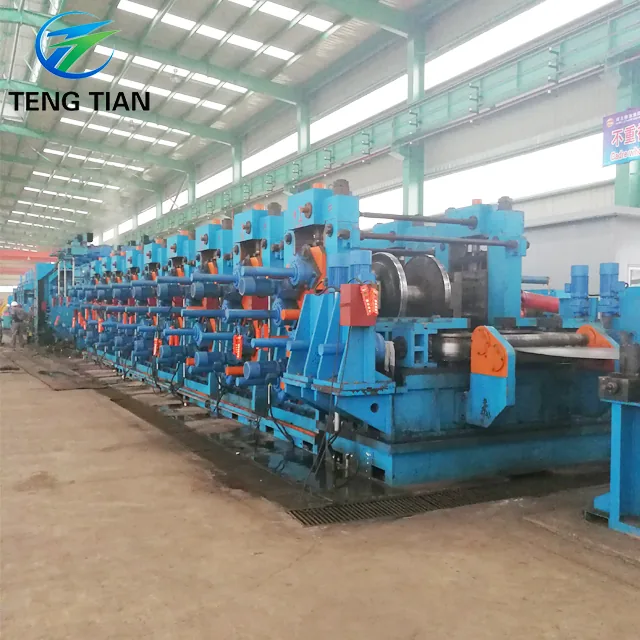 HG426 Tube Mill Line for Φ165–426 mm PipeThe tenth of the twelve model steps — Φ165 – Φ426 mm round pipe and 130×130 – 330×330 mm square section, on a 800 kW high-frequency welder.See the line →
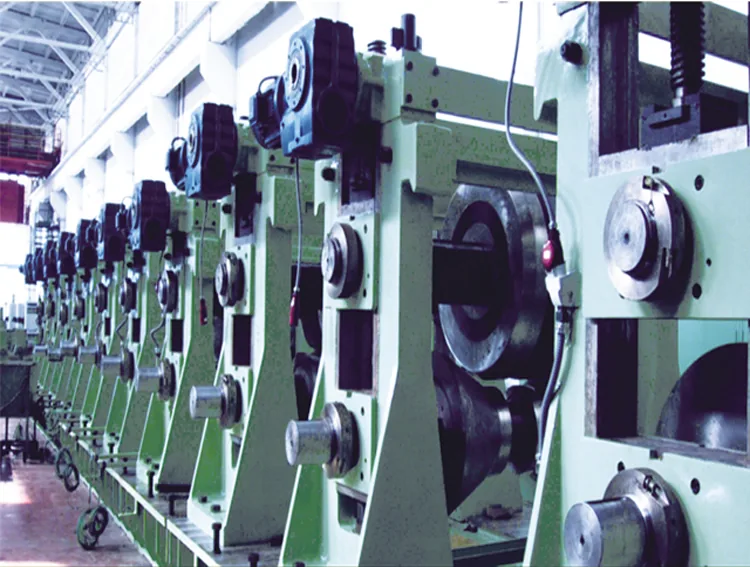 HG508 Tube Mill Line for Φ219–508 mm PipeThe eleventh of the twelve model steps — Φ219 – Φ508 mm round pipe and 170×170 – 400×400 mm square section, on a 1000 kW high-frequency welder.See the line →
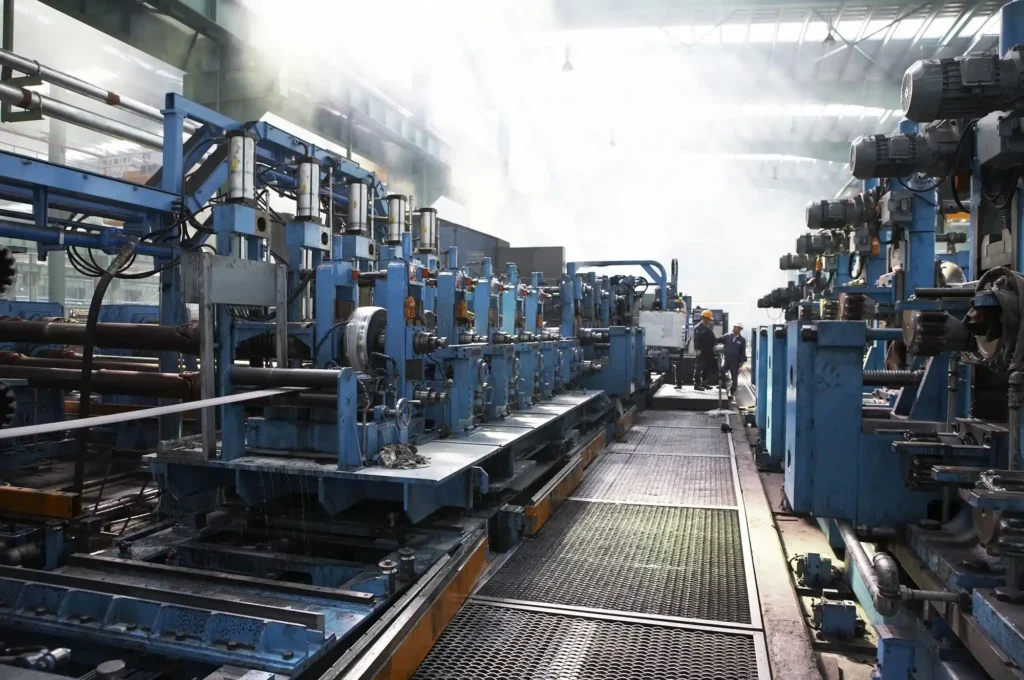 HG630 Tube Mill Line for Φ325–630 mm PipeThe twelfth of the twelve model steps — Φ325 – Φ630 mm round pipe and 250×250 – 500×500 mm square section, on a 1500 kW high-frequency welder.See the line →
The upper seven steps and their diameter windows are HG165 at Φ60–165 mm, HG219 at Φ114–219 mm, HG273 at Φ114–273 mm, HG325 at Φ165–325 mm, HG426 at Φ165–426 mm, HG508 at Φ219–508 mm and HG630 at Φ325–630 mm.
Those windows overlap heavily at the lower end — HG219 and HG273 share the same Φ114 start, HG325 and HG426 share Φ165 — so the differentiating figure between adjacent steps is the top of the window, not the bottom.
We also build a second process that reaches large diameters, and the boundary between the two is clear. Spiral submerged arc welding forms hot-rolled strip by three-roll bending at a set forming angle and welds the spiral seam inside and out by submerged arc.
Relative to that route, high-frequency straight-seam welding is faster in welding speed and suited to structural and general fluid pipe; relative to seamless rolling and UOE or JCOE, it is lower in investment and running cost, more continuous, and suited to medium and small diameters in volume.
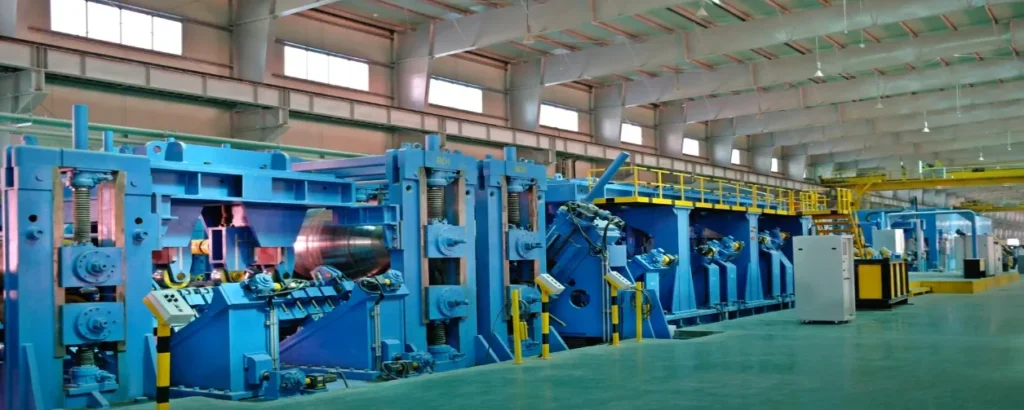
Large-Diameter HFW Tube Mill — Range, Configuration and Output
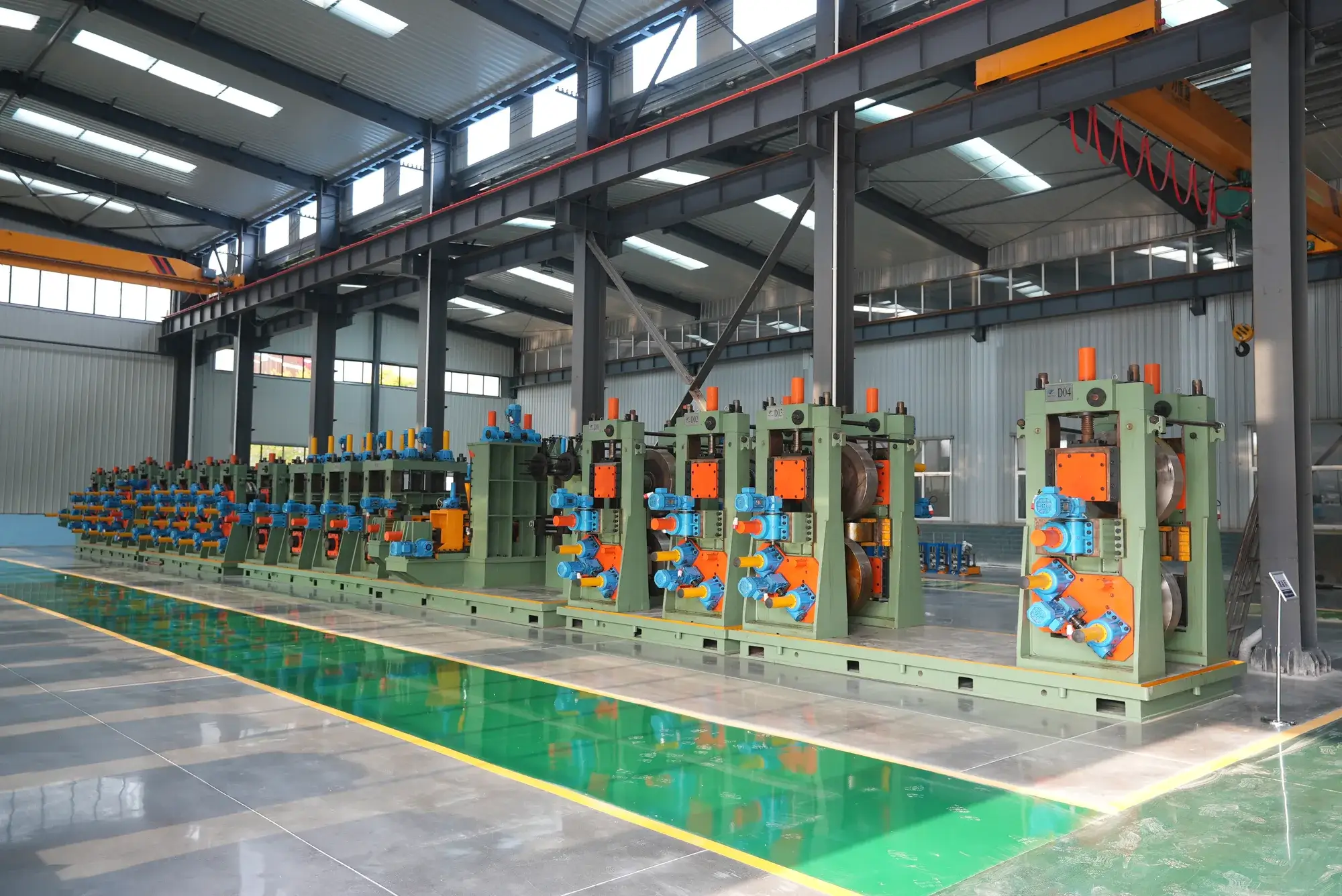
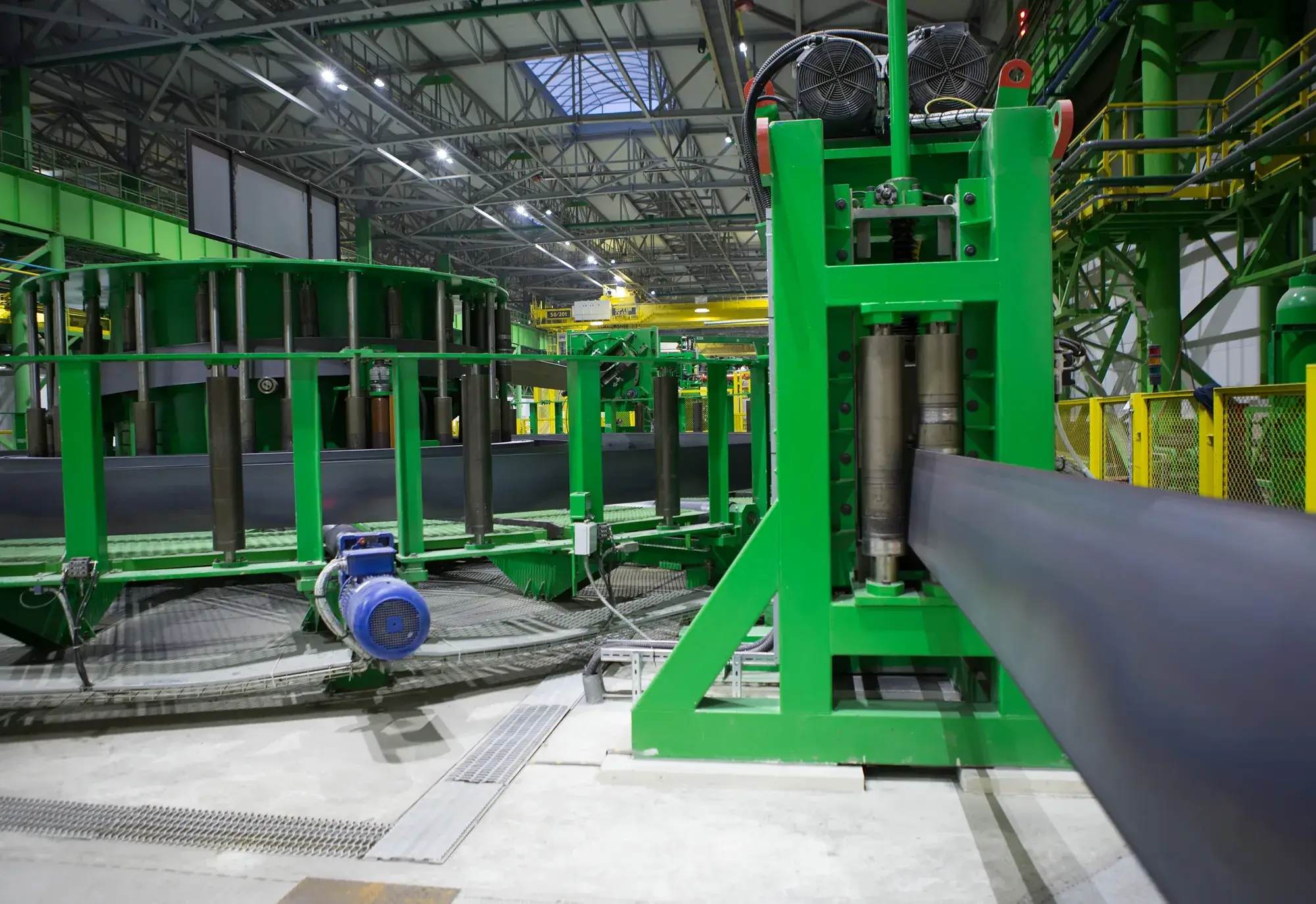
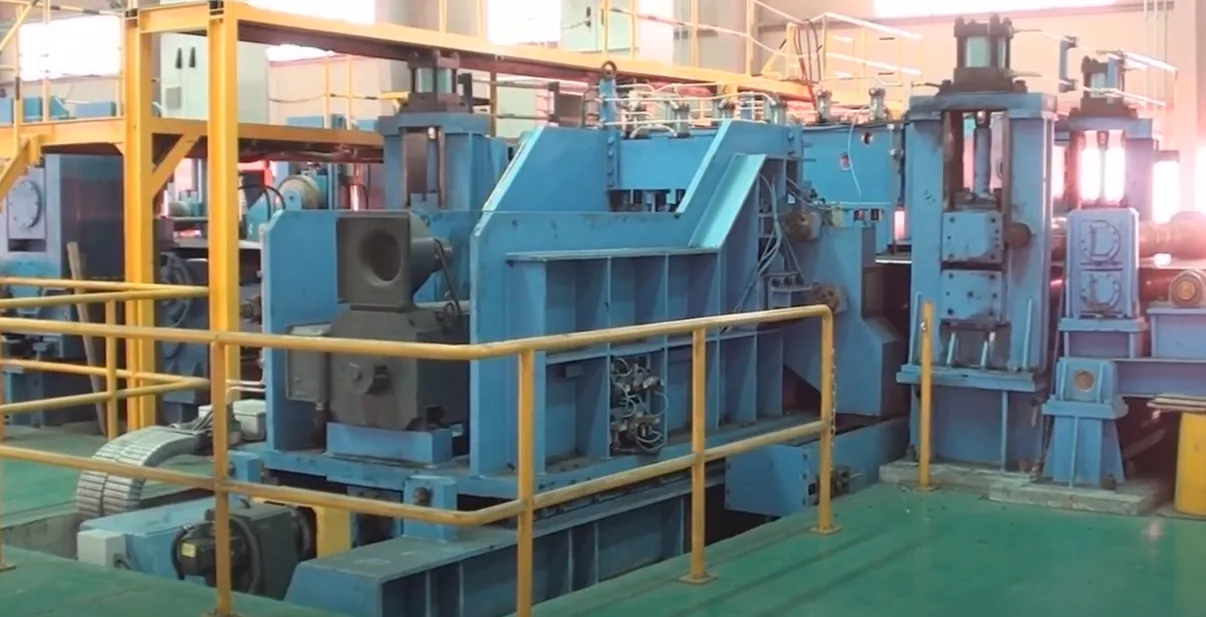
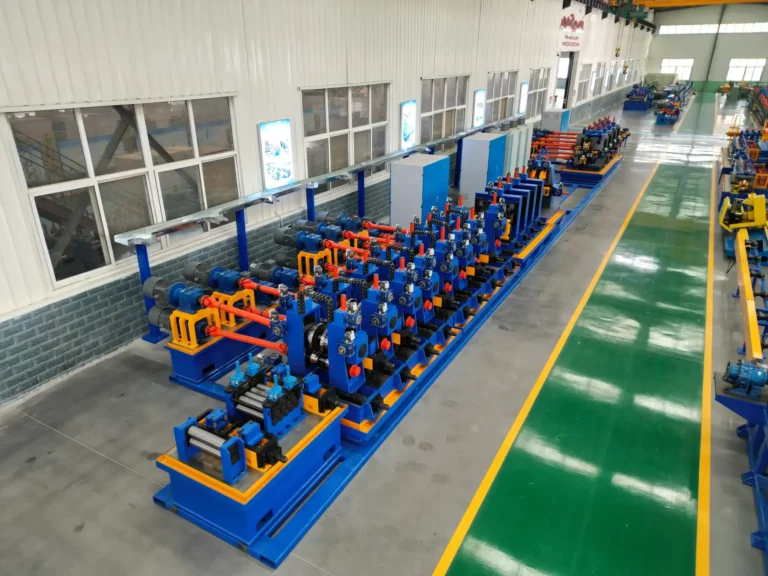
Unit train — the same eight units as the rest of the family. Expanding-mandrel uncoiler, five-roller leveller, automatic shear and butt welder, spiral accumulator, forming and sizing mill, high-frequency induction welder, flying saw, PLC and variable-frequency control.
The seven steps and their windows.
| Model | Finished OD Range |
|---|---|
| HG165 | Φ60–165 mm |
| HG219 | Φ114–219 mm |
| HG273 | Φ114–273 mm |
| HG325 | Φ165–325 mm |
| HG426 | Φ165–426 mm |
| HG508 | Φ219–508 mm |
| HG630 | Φ325–630 mm |
Welding. High-frequency induction welding across the family.
Section shapes. Round, square and rectangular; most steps produce all three.
Key Parameters: Size Range, Wall Thickness, Line Speed and Welder Power Band
| Item | Family Level (HG165–HG630) | By Model |
|---|---|---|
| Welder power | HG630 runs a 1500 kW welder; welder power scales down with diameter to 150 kW on HG32 | Wall thickness and output for HG165, HG219, HG273, HG325, HG426 and HG508 are quoted to your specification. |
- HG165 / HG219 / HG273 / HG325 / HG426 / HG508
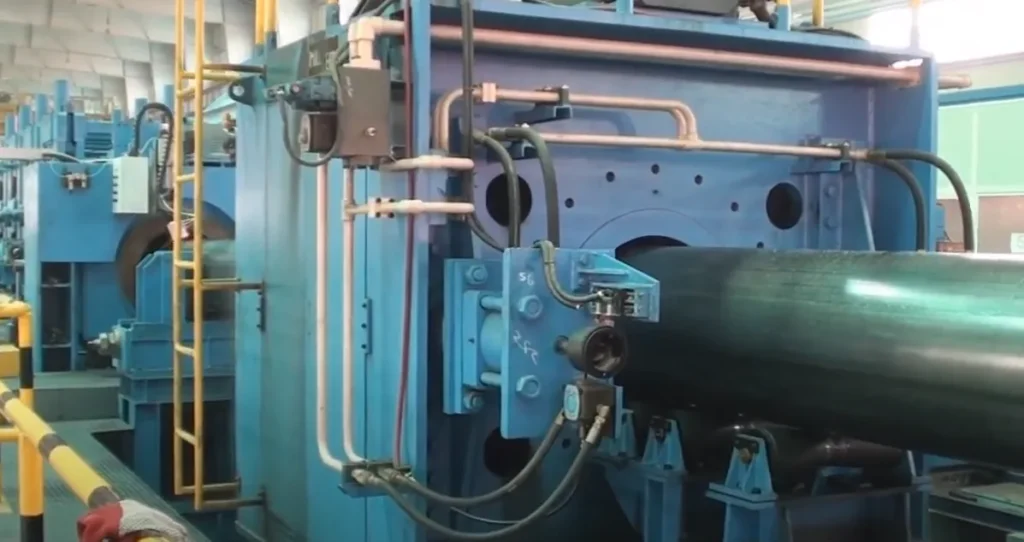
Where This Family Meets the Spiral Line
The upper steps of this range overlap in diameter with the spiral submerged arc family, and the overlap is real rather than notional.
Both routes can produce pipe in the same diameter band at the top of this range, by entirely different mechanisms: straight-seam high-frequency induction welding of roll-formed strip on one side, three-roll spiral bending with inner and outer submerged arc welding on the other.
High-frequency straight seam is faster in welding speed and suited to structural and general fluid pipe. Relative to seamless rolling and to UOE or JCOE forming, it is lower in investment and running cost and more continuous. Wall thickness, line speed and shift output are confirmed against your pipe size, material grade and cut length at quotation.
Send us those three and we will state the figures.
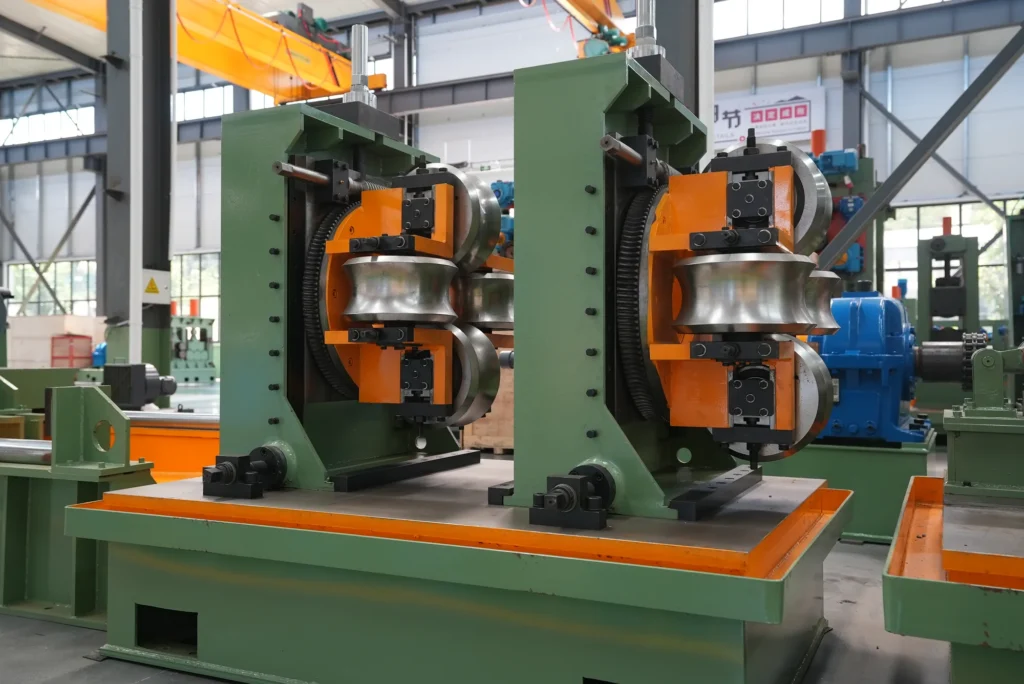
Field Evidence in This Diameter Band
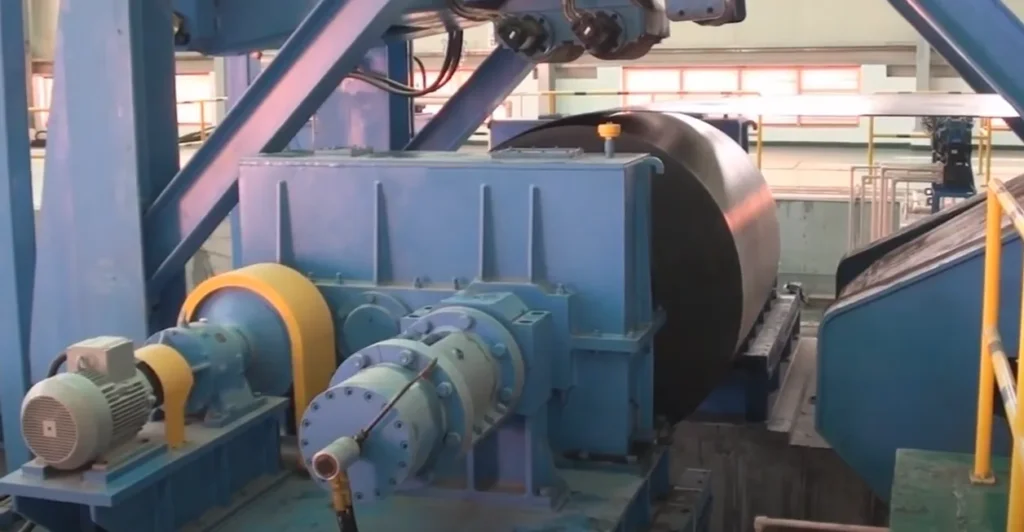
Deliveries at or above roughly Φ127 run from Afghanistan at 250 × 250 and 165 × 5, through Korea at 200 × 200 × 12 and 254 × 8, Turkey at 200 × 200, and Russia at HG165 × 6 and 168 × 7.
Kyrgyzstan is at HG168 × 5, Thailand at 165 × 6, Kenya at 150 × 150 × 6 and Italy at 150 × 150, and Pakistan and Mexico at 127 × 6 with Uzbekistan at HG127 × 3. Every one carries a site photograph, and nearly all are construction-sector deliveries.
Who Buys at This End of the Range
Regional pipe and section makers buy on payback, changeover efficiency, yield and energy cost, and our answer is tiered configuration, quick tooling change with reduced roll consumption, and material yield above 93%.
Large energy and infrastructure groups buy against technical standards and delivery dates, with long-term service as a stated criterion, and our answer to them is standards-compliant equipment, a full inspection set where the product requires it, and long-term spares and service.
The concern that most often comes with a large-diameter enquiry is whether the equipment can meet a technical standard such as API 5L or GOST. That is a real risk rather than a perception, because orders are gated on the standard. Two cases show this in practice: the API line inspection chain and the GOST R 58966-2020 H-beam capability.
One general point on certifying the machinery itself also applies here: no single mandatory certificate covers the equipment, and what governs is the destination market’s machinery-safety requirement together with the product standard the buyer’s own pipe must meet.
Two buyer profiles meet at the large-diameter end, and they judge the same machine by different criteria.
What Decides Weld Quality at Large Diameter
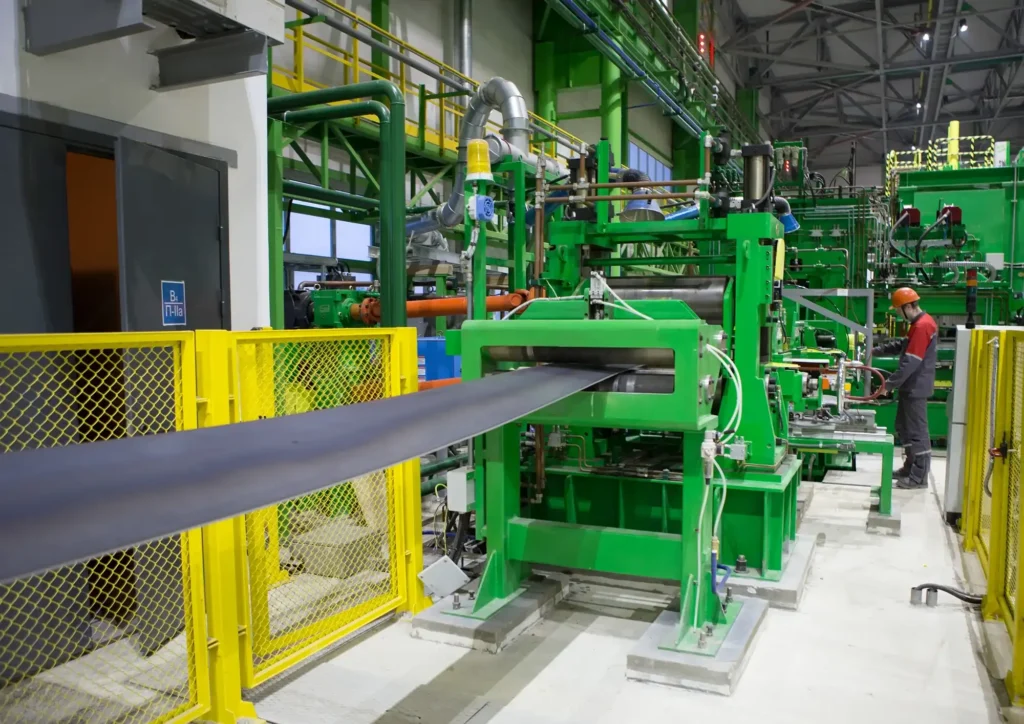
Weld fusion comes first. High-frequency power, frequency and welding speed control seam fusion, and the failure modes are lack of fusion, cold welds and burn-through — all of which show up as pressure or inspection failures rather than as visible defects.
Squeeze and seam alignment come second: the failures are seam offset, mismatch and excessive flash.
Dimension comes third. Sizing and straightening set final outside diameter and straightness, with oversize, bow and ovality as the failures; on the equipment side sizing accuracy and straightening capability are the levers, while incoming wall-thickness tolerance sits on the buyer’s side.
Then the parts that quietly govern all three: impeder and induction coil condition, which concentrate the welding current and whose wear disperses weld energy and raises consumption; control and servo stability, which keep line speed and cut length repeatable; and post-weld cooling, which stabilises the seam structure and must be matched to weld speed.
The quality chain is the same across the family, but its consequences scale with diameter and wall, which is why it matters across the whole range, not only at one step.
Continuous Running and What It Costs to Interrupt
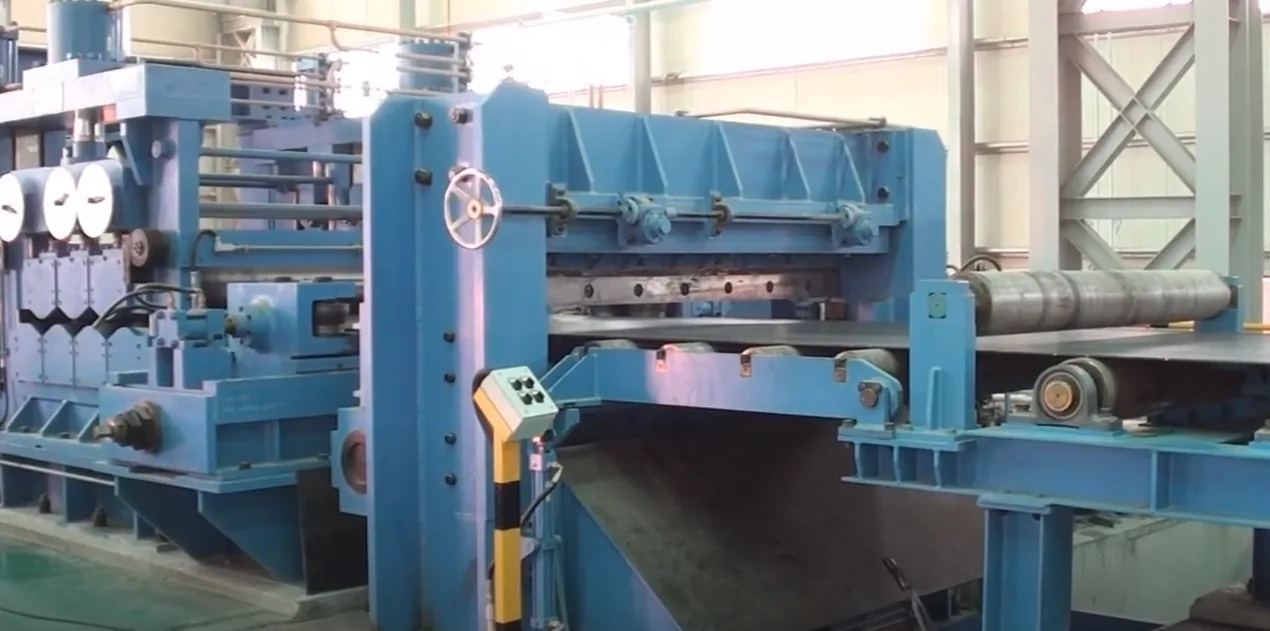
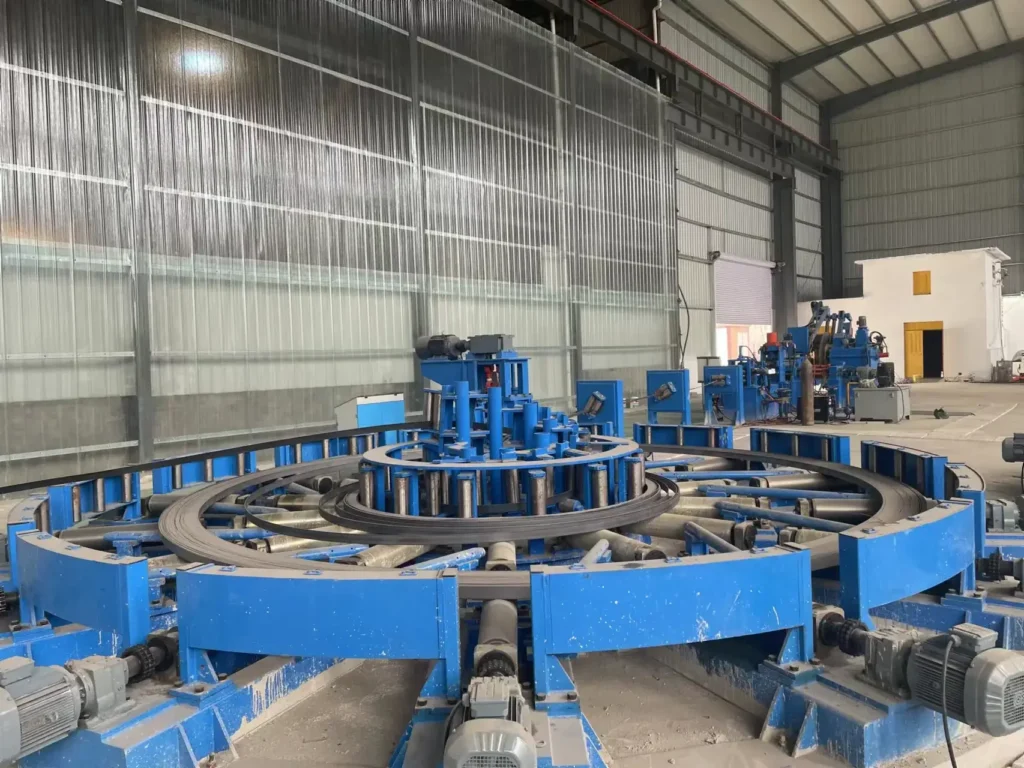
Two of the eight units exist to keep the line from stopping: the automatic shear and butt welder joins successive coils, and the spiral accumulator stores strip so the forming and welding section keeps running through the join. Insufficient stored material causes the main mill to starve and judder.
The uncoiling and levelling units serve the same end. An expanding-mandrel uncoiler tensions the coil accurately, with unstable tension producing strip wander and loose coil; a five-roller leveller flattens the strip before forming, because residual curvature left at that point reappears later as a wandering seam. At large diameter both effects are amplified by the mass of strip involved.
Spec-change consistency is a quality dimension in its own right: drift after a size change produces batch-to-batch dimensional variation, mitigated on the equipment side by tooling change without roll change and by servo positioning, and on the customer side by a disciplined changeover procedure.
Not stopping to change coils is one of the four things buyers come here to fix, alongside covering several sizes on one line, holding yield and weld quality, and quick changeover.
How to Choose the Right Model
Yield above 93% is supported by the line design and also depends on the plant’s own operation and scheduling. Choose by the top of your range. With seven overlapping windows, the diameter that decides the machine is the largest pipe in the plan.
Then decide between straight seam and spiral. The distinction is process-level: HFW straight seam is faster welding and suited to structural and general fluid pipe; spiral submerged arc uses three-roll bending and inner-outer submerged arc welding and reaches the very large diameters. We build both routes, and a separate selection guide compares them.
Then check the responsibility split. The mill controls weld power matching, seam alignment and squeeze; sizing and straightening set dimensional accuracy; the buyer controls incoming strip quality, wall-thickness tolerance and operation.
Then check consistency after a size change. Spec-change drift is a distinct quality risk with batch-to-batch dimensional variation as the symptom, mitigated on the equipment side by quick tooling change and servo setup and on the customer side by disciplined changeover procedure.
The process variables that decide weld quality apply across the whole range rather than to one step: high-frequency power, frequency and welding speed; squeeze amount and seam alignment; sizing and straightening; impeder and induction coil condition; control and servo stability; and post-weld cooling.
Scope of Supply, Installation and Commissioning
HG508 to HG630 lines and API lines are packed differently.
Installation and commissioning are included with engineers dispatched on site and support after handover; delivery is 50 to 90 days with plant-level customisation from our own manufacturing base.
Large diameter tube mill for 325mm pipe
Φ325 mm is the top of the HG325 window, which runs Φ165–325 mm, and it also sits inside HG426 (Φ165–426 mm) and HG508 (Φ219–508 mm). If 325 is genuinely the largest pipe planned, HG325 is the match; if the plan later extends past it, the larger step avoids a second machine.
Large diameter tube mill for 426mm pipe
Φ426 mm is the top of the HG426 window (Φ165–426 mm) and sits inside HG508 (Φ219–508 mm). The same selection logic applies. One further note specific to this diameter: the number 426 also appears as an API line step designation, and the two are different families with different windows.
The heavy large-diameter and API lines ship partly bare: main frames braced and fixed to frames or pallets with lifting points, which lowers packing cost but requires professional lifting and rust protection. Precision parts still travel crated with moisture protection, and a spare-parts pack ships with the container.
More from this line
More on this line — specifications, model steps and photographs.
From the Workshop
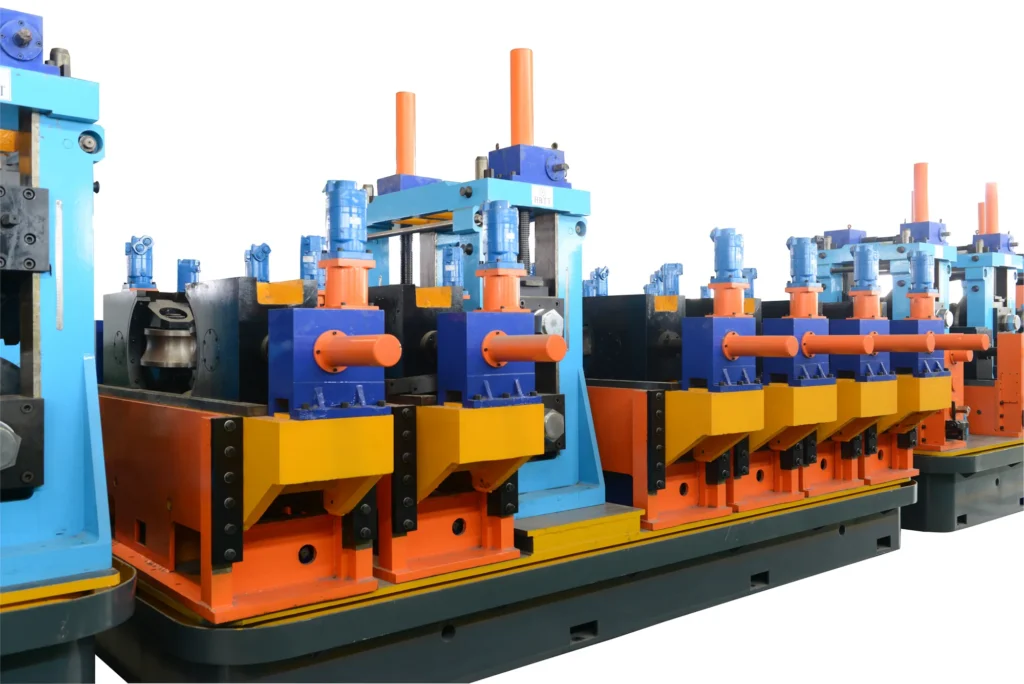
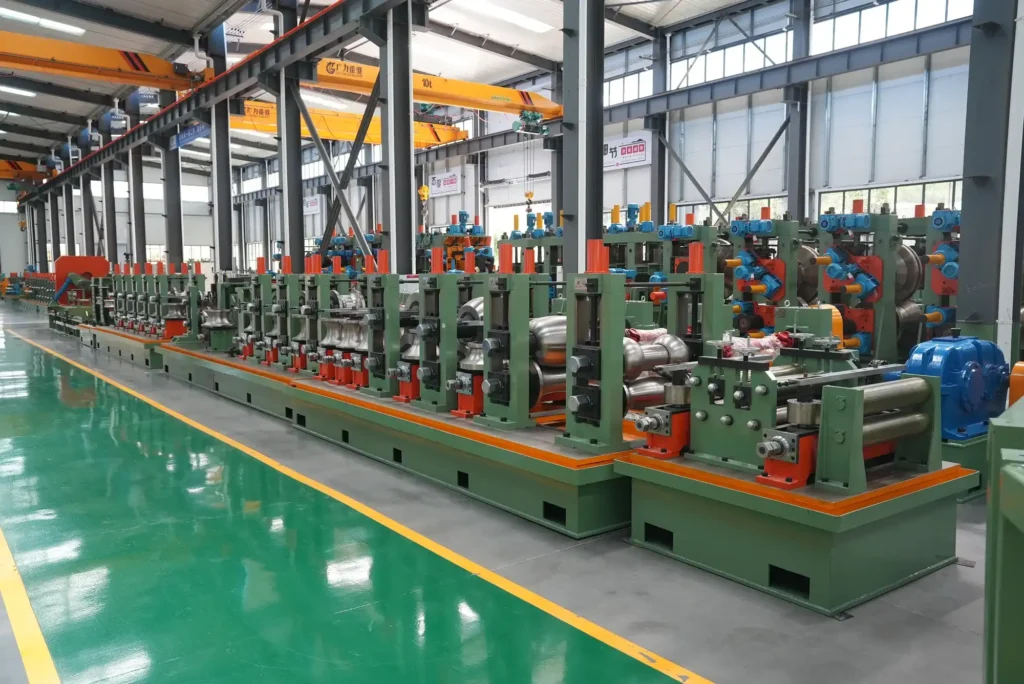
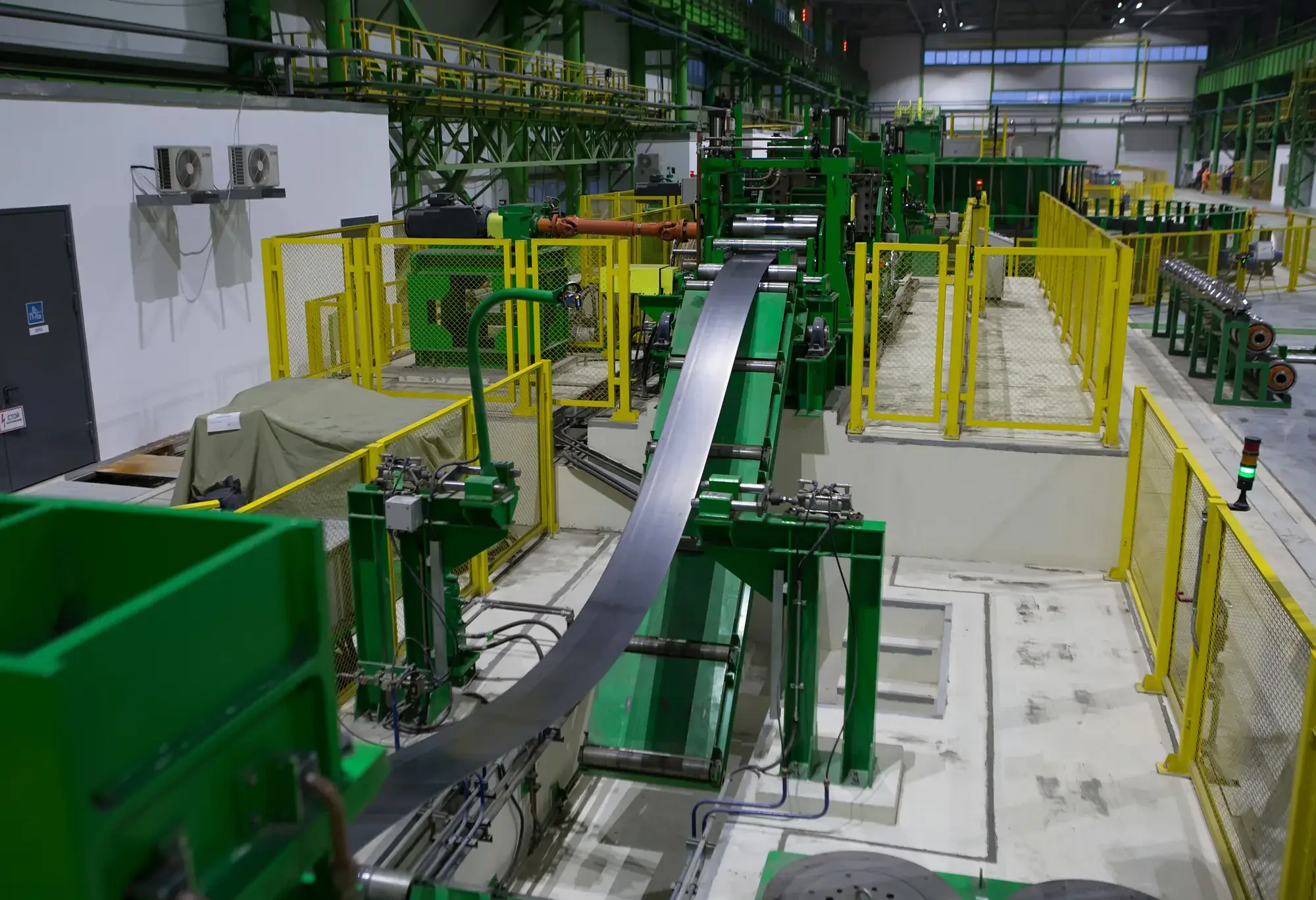
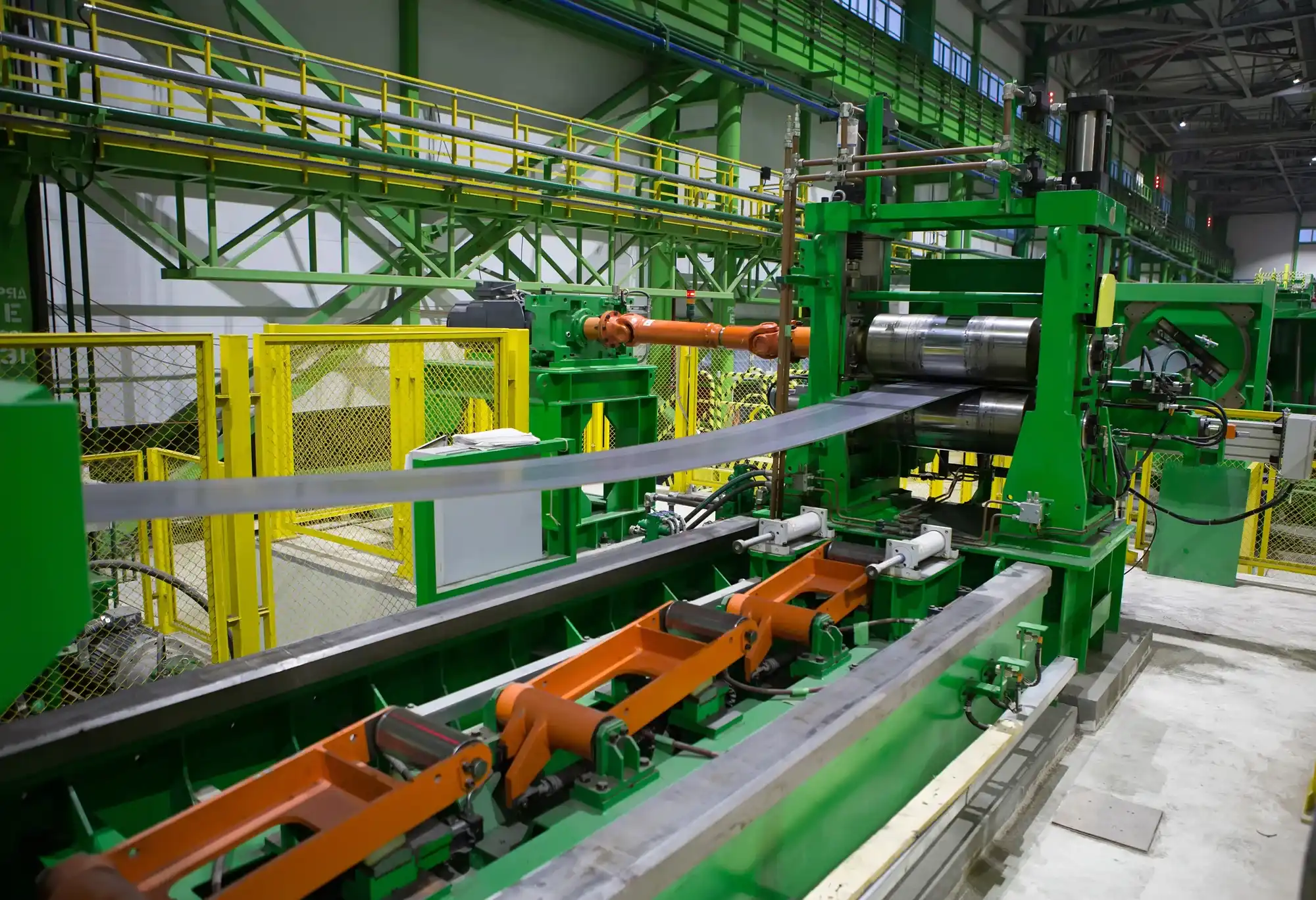
 High-Frequency Welded Pipe Mill
 H-Beam Production Line
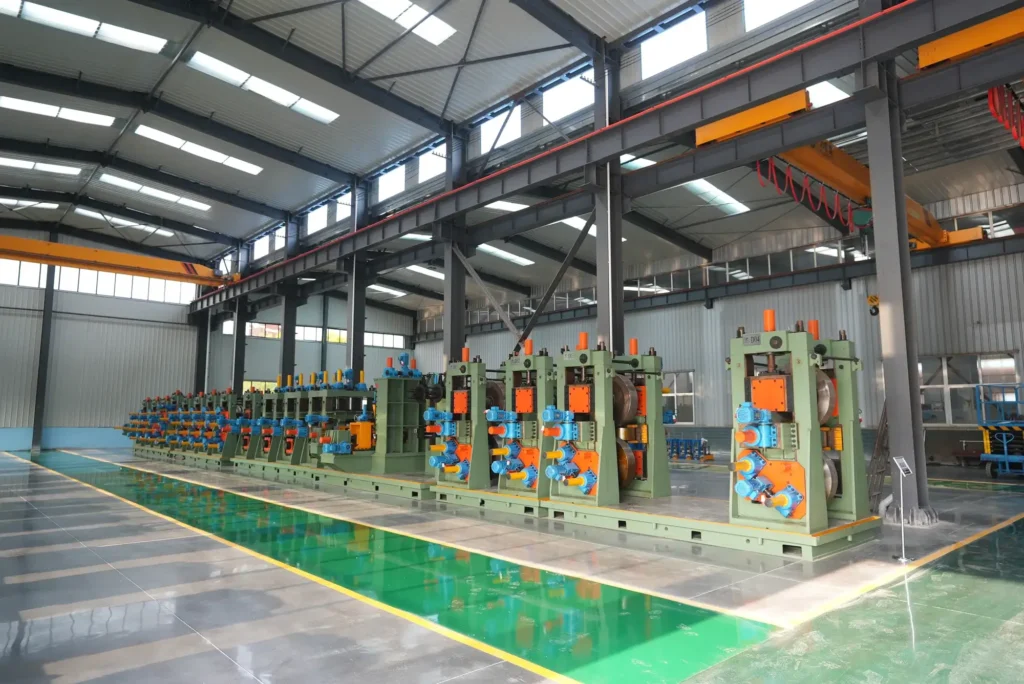 Direct Forming Square Tube Mill
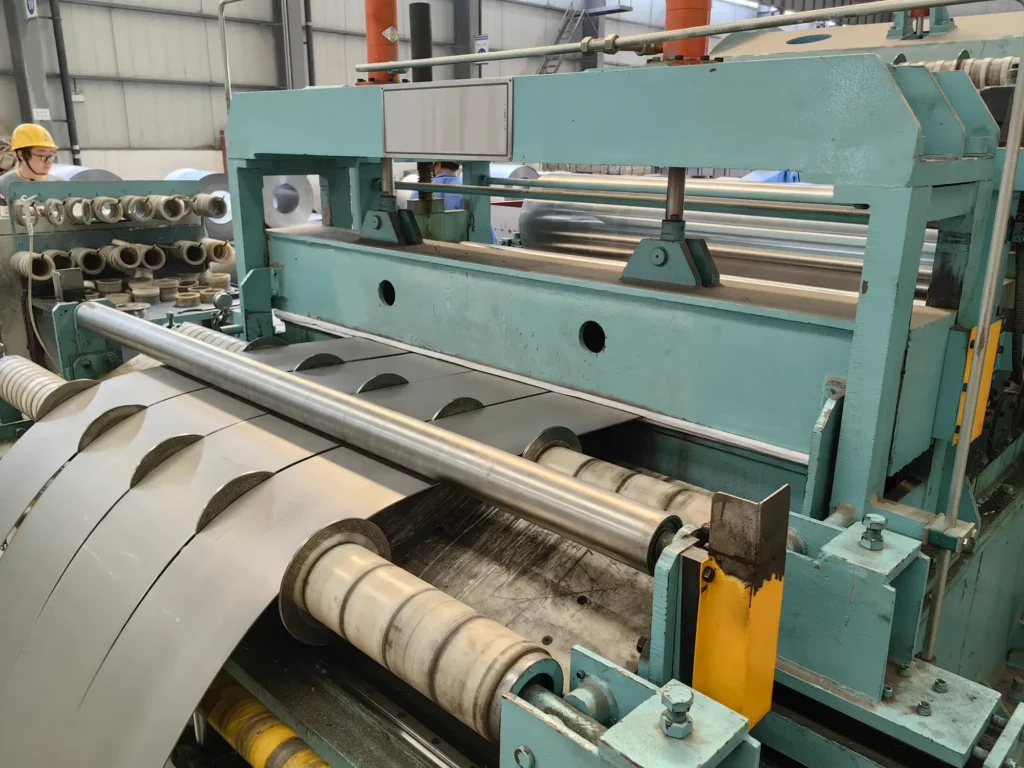 Cut-to-Length Line
Send Your Enquiry
Tell us the pipe outside-diameter range, the wall thickness and the output you need. An engineer reads every enquiry — it does not land in a general sales inbox.